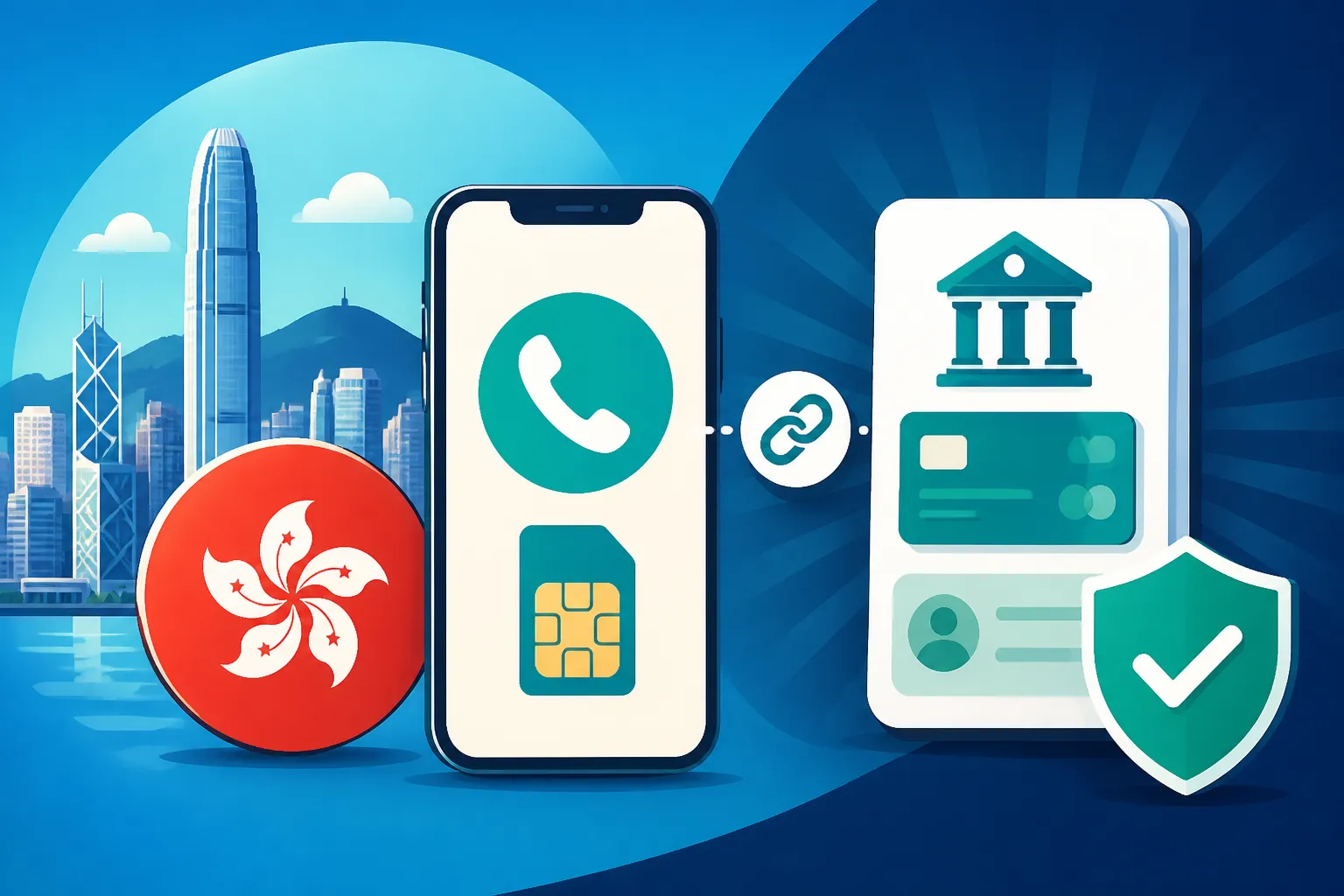
Why You Need a HK Phone Number to Use Virtual Banks
Arriving in a new city like Hong Kong, you’re keen to get everything set up – finding your apartment, exploring the food, and, of course, sorting out your finances. It seems straightforward, right? You’ve got your passport, maybe even a shiny new HKID, and you’re ready to dive into the world of digital banking. But then, you hit a snag: every virtual bank asks for a local Hong Kong phone number. I remember the frustration of trying to get set up when I first arrived, thinking I could just use my old number, only to be constantly rejected. This guide is here to unravel why a Hong Kong phone number isn't just a convenience but an absolute necessity for expats and tourists looking to tap into the city’s thriving virtual banking scene, and how you can easily get one.
The Non-Negotiable Requirement: Why HK Virtual Banks Demand a Local Number
Let’s be frank: Hong Kong’s financial ecosystem, particularly its virtual banks, operates with an unwavering reliance on local phone numbers. This isn't just a quirky local preference; it's deeply embedded in regulatory requirements, security protocols, and the very design of digital financial services here. You might think, "My home country's number works fine everywhere else!" but Hong Kong is a different beast entirely, built on a dense, hyper-connected digital infrastructure that prioritizes local connectivity.
Firstly, the primary reason boils down to strict "Know Your Customer" (KYC) and Anti-Money Laundering (AML) regulations. Financial institutions, virtual or traditional, are legally obligated to verify the identity and residency of their customers to prevent financial crime. While your passport and HKID establish your identity, a local phone number acts as a crucial layer of proof of your connection to Hong Kong. It signals to the bank that you have a genuine presence and, more importantly, a stable point of contact within the jurisdiction. Without this, verifying your transactional activities and reaching you for critical security alerts becomes a regulatory headache for the bank. They’re not just being difficult; they’re following the rules set out by the Hong Kong Monetary Authority (HKMA) to maintain the integrity of the financial system.
Secondly, security, security, security! In our increasingly digital world, two-factor authentication (2FA) and One-Time Passwords (OTPs) sent via SMS are the bread and butter of secure online transactions. Virtual banks in Hong Kong, such as ZA Bank, Mox, Livi Bank, and Ant Bank, rely heavily on these methods to protect your account. Imagine trying to log into your virtual bank account or authorize a large transfer, only for the OTP to be sent to an international number that might not even be roaming or could incur hefty charges. The system is designed for instant, reliable delivery, which only a local Hong Kong number can guarantee. This prevents delays, ensures you receive crucial security codes without fail, and safeguards your funds from unauthorized access. If your international number has intermittent service or drops signals, that could leave you locked out of your own money, which is a scenario no bank wants to be responsible for.
Finally, the seamless integration of virtual banks into Hong Kong's broader digital payment infrastructure absolutely necessitates a local number. The Faster Payment System (FPS), for instance, allows instant transfers between bank accounts using just a mobile number or email address. Many virtual banks leverage FPS for quick top-ups, bill payments, and transfers to friends. If your virtual bank account isn't linked to a local mobile number, you're essentially cut off from one of Hong Kong’s most convenient and widely used payment methods. Similarly, popular local payment apps like PayMe, which is ubiquitous for splitting bills and sending small amounts, also require a local HK phone number for registration and verification. It's all part of a cohesive digital ecosystem that values speed and local accessibility. Trying to bypass this fundamental requirement is like trying to drive a car without an engine – it just won't get you where you need to go in Hong Kong.
Beyond Virtual Banks: The Everywhere Need for a Hong Kong Number
While securing a Hong Kong phone number is paramount for virtual banking, its utility extends far beyond just managing your money. Honestly, you'll discover almost every facet of daily life in this city is tethered to having a local mobile connection. It’s not an exaggeration to say that if you don't have a Hong Kong number, you’re missing out on fundamental conveniences and, in some cases, vital services. This can be a real culture shock for expats who are used to getting by with an international roaming plan.
Think about simply getting around. While the physical Octopus Card is king for public transport, many people manage and top-up their cards through the Octopus App, which, you guessed it, often requires a local number for setup or notifications. If you want to use the MTR Mobile app for real-time train information or to plan routes efficiently, having a local number makes registration and personalized alerts far smoother. Beyond transport, almost any service you sign up for – be it a new broadband internet connection for your apartment, setting up electricity and water bills, or even arranging for a grocery delivery – will ask for a Hong Kong mobile number as the primary point of contact. This ensures that utility companies and service providers can easily reach you with appointment confirmations, delivery updates, or any urgent service-related issues. It’s about more than just convenience; it’s about being truly contactable within Hong Kong’s service networks.
Consider also the myriad of local apps that make daily life easier. From ordering takeaway food via Foodpanda or Deliveroo, to booking a doctor's appointment through a clinic's online portal, to even signing up for gym memberships or loyalty programs at supermarkets like Wellcome or ParknShop, a local number is almost always a mandatory field. These platforms use your local number for account verification, order updates, and promotional messages. If you’re trying to navigate Hong Kong without a local number, you'll quickly find yourself hitting digital roadblocks that significantly complicate what should be simple daily tasks. Many local businesses, especially smaller ones, also rely on WhatsApp or local SMS for customer communication, which naturally favours a local number.
Even for international financial transactions, while services like Wise are fantastic for sending money home with competitive exchange rates, you still need a local bank account (which often requires a local phone number to open) to fully integrate your funds within Hong Kong. Imagine you need to receive a local FPS payment from a friend for your share of a dinner bill; without a Hong Kong number linked to your bank account, this simple transaction becomes complicated. For those managing their broader financial picture, including tax obligations, services like Taxes for Expats can help navigate complex international tax laws, but the foundational step of managing day-to-day finances in Hong Kong invariably loops back to that indispensable local phone number. It's truly the key to unlocking seamless living and financial management here.
Getting Your Hong Kong Phone Number: SIM Cards and Mobile Plans
Okay, so you're convinced: a Hong Kong phone number is a must-have. Now, how do you actually get one? The good news is, it's remarkably easy and doesn't require jumping through endless hoops, especially if you're just looking for a prepaid option to get started. Hong Kong's mobile market is competitive, offering plenty of choices for both short-term visitors and long-term residents.
Your quickest and most straightforward option upon arrival is to pick up a prepaid SIM card. These are readily available at the Hong Kong International Airport (HKIA) arrival hall, specifically at the 1O1O or 3HK counters, as well as at countless convenience stores like 7-Eleven and Circle K, or at major mobile network shops across the city. They're perfect for getting immediate connectivity. You simply buy the card, insert it into your phone, and often activate it with a quick phone call or by following on-screen instructions. For most prepaid SIMs, you won't even need to show extensive proof of address, usually just your passport for registration. These plans typically come with a fixed amount of data, local calls, and sometimes international call minutes, and you can top them up online or at convenience stores as needed. This is an excellent solution for tourists or expats in their first few weeks who are still sorting out long-term arrangements.
For those planning a longer stay, considering a postpaid mobile plan is often more economical and offers better value for money, especially if you're a heavy data user. Major network providers in Hong Kong include SmarTone, CSL (which operates 1O1O), 3HK, and China Mobile HK. Getting a postpaid plan usually requires a bit more documentation: your HKID (or passport if you haven't received your HKID yet), proof of address (like a utility bill or bank statement), and sometimes even a deposit or a valid employment visa to prove your ability to pay. The benefits, however, are significant: larger data allowances, unlimited local calls, and often more competitive rates overall. You might also find better roaming packages for regional travel if you're often jetting off to other parts of Asia. It’s worth doing a bit of comparison shopping to see which provider offers the best plan for your needs and budget.
Many modern phones also support e-SIMs, which can be a game-changer for digital nomads and frequent travellers. Some Hong Kong providers, such as SmarTone and CSL, offer e-SIM options. This allows you to activate a local plan digitally without needing a physical SIM card, which is fantastic if your phone has a single physical SIM slot and you want to keep your home country's number active. The activation process for e-SIMs is generally similar to physical SIMs in terms of documentation, but the convenience of not having to physically swap cards is a definite plus. Regardless of your choice, obtaining a local Hong Kong phone number is a swift and simple process that immediately opens up a world of connectivity and financial access.
Here's a quick comparison of typical mobile plan options in Hong Kong:
| Feature | Prepaid SIM Card (e.g., csl, 3HK, China Mobile HK) | Postpaid Mobile Plan (e.g., SmarTone, CSL, 3HK) |
|---|---|---|
| Ideal For | Tourists, short-term expats, low users | Long-term residents, heavy users |
| Setup Ease | Very easy, immediate activation | Easy but requires more documents |
| Documents | Passport (for registration) | HKID/Passport, Proof of Address, sometimes Visa |
| Cost | Per-GB/Per-day, top-up as needed | Monthly fixed fee, often lower effective rate |
| Data Allowance | Varies, often smaller bundles | Generous, often unlimited local data |
| Contract | None | Typically 12-24 months |
| Flexibility | High (can switch easily) | Lower (due to contract) |
| Recharge | Convenience stores, online | Monthly bill (auto-pay common) |
| E-SIM Option | Less common, but growing | Increasingly available for newer phones |
Navigating the Virtual Banking Landscape with a Local Number
Once you've got your shiny new Hong Kong phone number up and running, the door to the city's innovative virtual banking scene swings wide open. This is where the real convenience for expats begins, as these banks often offer a streamlined, digital-first approach to finance that can be a breath of fresh air compared to the sometimes-cumbersome processes of traditional banks.
The onboarding process for virtual banks like ZA Bank, Mox, and Livi Bank is typically designed to be completed entirely through their mobile apps, usually taking just a few minutes once you have all your documents ready. You'll download the bank's app, and it will guide you through the steps. This generally involves scanning your Hong Kong Identity Card (HKID) – or your passport if you're a new arrival awaiting your HKID – taking a selfie for identity verification, and, crucially, inputting your new local Hong Kong phone number. This local number will be used to send you OTPs to confirm your registration and subsequent transactions, ensuring that secure link is firmly established. Many virtual banks have sophisticated AI-driven verification processes that make opening an account remarkably fast, sometimes within minutes, if all goes smoothly. This is a significant advantage over the often lengthy in-person branch visits and extensive paperwork required by traditional banks when you first arrive. You might want to refer to Virtual Banks in HK: Comparing ZA Bank, Mox, Livi, and Ant Bank for a detailed breakdown of different virtual bank offerings.
The benefits for expats are numerous. Virtual banks often boast lower or no monthly fees, which is a welcome relief when you're trying to manage your everyday budgeting in Hong Kong. They also tend to have excellent foreign exchange rates built into their apps for international transfers, making it easier to manage funds if you're regularly sending money home or dealing with multiple currencies. While Wise is a go-to for many expats for sending money home internationally, virtual banks offer complementary services for your local HKD needs. You'll find features like instant notifications for every transaction, categorization of spending for easier personal finance management, and seamless integration with Hong Kong's Faster Payment System (FPS) using your local phone number, allowing you to instantly send and receive money with other local bank accounts – a feature that makes splitting dinner bills with friends incredibly easy. If you're looking for more information on digital payments, check out Linking Your Bank Account to AlipayHK and PayMe.
Furthermore, virtual banks can be a good starting point for building your financial footprint in Hong Kong, even if you eventually open an account with a traditional bank like HSBC or Standard Chartered for more complex services or for your employer's payroll requirements. Having a local phone number is often a prerequisite for even considering how to open a traditional bank account: HSBC, Standard Chartered, and BOC for many expats. It helps establish your presence and shows a commitment to residing in Hong Kong. For those who are constantly on the go or prefer to handle all their banking from the comfort of their phone, virtual banks, powered by your indispensable Hong Kong phone number, offer a modern, efficient, and user-friendly experience that truly makes managing your finances in this fast-paced city much easier. Remember, sound financial planning for expats often extends beyond daily banking, so exploring resources on Hong Kong Tax Guide for Expats: Salaries Tax and Filing (2026) can provide a holistic view of your financial obligations here.
Disclaimer
The information provided in this guide is intended for general informational purposes only and does not constitute financial, legal, or professional advice. While we strive to provide accurate and up-to-date information, regulations and services in Hong Kong can change rapidly. Expats and tourists should always conduct their own research and consult with qualified professionals for advice tailored to their specific circumstances.