What to Bring to Your HKID Appointment (Checklist)
Ah, the Hong Kong Identity Card (HKID) – it's more than just a piece of plastic; it's your key to genuinely feeling settled here. After all the paperwork, the visa applications, and the sheer mental gymnastics of moving to Hong Kong, finally getting your visa approved is a massive relief. But then comes the next hurdle: the HKID appointment itself. The thought of forgetting just one crucial document and having to reschedule can send shivers down any expat's spine, especially when you’re already juggling so many new things. This guide is here to walk you through exactly what you need to bring, step by meticulous step, ensuring your appointment at the Immigration Department is as smooth as possible.
The Absolute Essentials You Cannot Afford to Forget
When it comes to your HKID appointment, there are some documents that are simply non-negotiable. Missing any of these will almost certainly result in a wasted trip and a rescheduled appointment, adding unnecessary stress to your already busy life. Trust me, I've seen enough frustrated faces at the Immigration Tower to know this isn't a minor detail!
Your Passport and Valid Visa
This might seem obvious, but you wouldn't believe how many people overlook the absolute basics in their rush. Your passport is your primary identification document and proof of your legal entry into Hong Kong. Make sure it's the original passport you used to enter Hong Kong and the one that contains your valid visa endorsement or e-Visa. If you applied for an e-Visa, which is increasingly common these days, ensure you have a clear printout of it. While the Immigration Department (ImmD) officers can verify it electronically, having a physical copy speeds up the process and acts as a backup in case of any system glitches. This is particularly important for those who might have used the new e-Visa System: Applying, Downloading, and Airport Clearance – always have that printout handy!
The officers will need to see your valid permission to stay in Hong Kong. Whether it's a work visa, dependent visa, or student visa, the approval for your stay is what qualifies you for an HKID. Without it, you’re just a visitor, and visitors, generally speaking, aren't eligible for a full HKID.
Your Visa Application Acknowledgment or Approval Letter
Remember that official letter or email you received from the Immigration Department confirming your visa approval? That’s gold. This document formally states that your application for residency has been granted, paving the way for your HKID. It typically includes your application reference number and specifies the type of visa issued and its validity period. This serves as undeniable proof to the HKID registration officers that you are indeed eligible.
Sometimes, depending on your visa type, you might have received an acknowledgment slip when you submitted your initial visa application. While the approval letter is paramount, keeping all related correspondence can’t hurt. It’s always better to over-prepare than to be caught off guard.
Your Completed HKID Application Form (Form ROP 145/ID835A)
This is the form for "Application for a Hong Kong Identity Card." You can usually download this from the ImmD website and fill it out in advance. Seriously, do this. Trying to fill it out in the bustling waiting room with a cheap pen and shaky hands is not ideal. Ensure all sections are accurately completed, and do not forget to sign it. An unsigned form is a rejected form, plain and simple.
Pay close attention to details like your address in Hong Kong, your contact number, and your date of birth, making sure they match exactly with your passport and other official documents. Any discrepancies, no matter how minor, can cause delays. For those arriving on various visa schemes, from the Top Talent Pass Scheme TTPS: The Fast-Track Work Visa to a standard General Employment Policy GEP: Standard Work Visas for Expats, this form is universally required.
Proof of Your Current Hong Kong Address
Hong Kong requires proof of address, even if you’ve only just landed. This can be a bit of a chicken-and-egg situation for newcomers, but there are acceptable forms. Your tenancy agreement for your apartment is the most common and robust form of proof. Make sure it's an original or a certified true copy. If you're staying in a serviced apartment, a letter from the management company confirming your residency there will usually suffice. For those crashing with friends or family while they find their feet, you might need a utility bill (electricity, water, or gas) in the host's name, along with a letter from them stating you reside at that address, and a copy of their HKID.
This step is crucial because your HKID will be linked to your residential information, and the ImmD needs to confirm your legitimate residency. Don't underestimate the scrutiny given to this document; they want to ensure you're genuinely living in the city.
Your Appointment Booking Confirmation
You wouldn't show up for a flight without your boarding pass, right? The same goes for your HKID appointment. Whether you booked online or via their hotline, you would have received a confirmation. This usually comes with a QR code or a booking reference number. Keep a digital copy on your phone and, ideally, print a physical copy. Showing up without proof of your appointment time is a quick way to be turned away, even if the office isn't busy. Remember, the ImmD offices can get incredibly crowded, especially during peak seasons, so having your Booking an Appointment for HKID Registration at ImmD Offices confirmation is your ticket to entry.
Supporting Documents: The "Better Safe Than Sorry" Pile
While the above are definite must-haves, there are several other documents that, depending on your personal circumstances or visa type, you should absolutely bring along. It's always better to have them and not need them than to be asked for them and not have them.
Marriage Certificate or Birth Certificates for Dependents
If you've arrived in Hong Kong on a Dependent Visa, then proof of your relationship to your sponsor is paramount. This means your original marriage certificate if you're the spouse, or original birth certificates if you're bringing children. The Immigration Department is very particular about these. If these documents are not in English or Chinese, you must provide a certified translation. Services like RushTranslate can be invaluable here, ensuring your documents meet the stringent requirements of the ImmD and are legally recognised in Hong Kong. Imagine going through all the hassle of getting a Dependent Visas in HK: Bringing Spouses and Children only to be stalled by a missing translation!
Even if you’ve already used these for your visa application, bring them again. The HKID registration process is a separate step, and they'll want to verify everything independently. If your children are also getting their HKIDs, they will need their passports and birth certificates as well, so ensure you have a complete set for each family member.
Previous Hong Kong Identity Cards (if applicable)
Are you renewing an old HKID, replacing a lost one, or switching from an older version to the new smart ID? Then you absolutely need to bring your previous HKID, or at least your police report if it was lost or stolen. For renewals, the ImmD wants to see the old card to verify your identity and previous records. If you've lost it, filing a police report is step one, and you'll need the original report for your appointment. This applies whether you're transitioning to the newer smart ID or simply replacing a damaged one. They need to ensure there’s a clear record of your identity in their system.
Educational Certificates or Professional Qualifications
This is less common for the HKID appointment itself, but if there were any specific requirements for your visa that involved your qualifications – perhaps you came under the Quality Migrant Admission Scheme QMAS: Scoring and Strategies or the IANG Visa: The Ultimate Path for Non-Local Graduates – having these documents on hand might save you a headache. While typically vetted during the visa application, a diligent officer might sometimes ask for re-verification, especially if there's any ambiguity. It's rare, but a few expat friends have been caught out, so it’s always wise to pack certified copies of your highest academic certificates, just in case.
Making Your Appointment Smooth: Practical Tips and What to Expect
The actual HKID registration process usually involves a brief interview, fingerprinting, and a photo capture. Knowing what to expect can significantly reduce your anxiety.
Arrive Early and Be Prepared for Questions
Hong Kong’s ImmD offices are efficient, but "efficient" here often means "lots of people moving quickly." Arrive at least 15-20 minutes before your scheduled time. This gives you ample opportunity to locate the correct counter, take a deep breath, and mentally prepare. The staff will verify your documents, take your fingerprints electronically, and capture your photograph.
They might ask you some basic questions about your stay, your address, or your employment. Just answer clearly and truthfully. Don't overthink it. They're just confirming the information on your forms. Remember, their job is to ensure you meet all criteria, so cooperating fully is in your best interest.
Dress Code and Photo Guidelines
While there’s no formal dress code, your HKID photo is a serious business. You’ll be looking at that photo for years, so aim for smart-casual attire. Avoid white tops if possible, as the background is often white, which can make you look like a floating head. Busy patterns can also be distracting.
- No head coverings: Unless for religious reasons.
- Neutral expression: No big smiles or frowns.
- Hair off your face: Ensure both ears are visible, and your eyes are clear.
- Glasses: If you wear them, ensure there’s no glare. It might be safer to remove them if you can.
Think professional passport photo, but perhaps a tad less stern. The photo quality matters for various identity verification processes you'll use your HKID for later, like applying for banks or even registering for E-Channel Enrollment for Faster Immigration Clearance.
Special Considerations for Children or Elderly Dependents
If your children or elderly parents are also applying for an HKID as dependents, they must accompany you to the appointment. Children need to have their fingerprints taken, and their photo captured. For very young children, this can sometimes be a challenge, so be prepared with snacks or distractions. The ImmD staff are generally experienced with kids but having a calm, prepared parent helps immensely.
For the elderly, ensure they are comfortable and have any necessary mobility aids. The process can involve some waiting, and standing for long periods can be difficult. If your family has just recently navigated the often-complex process of bringing pets into Hong Kong, perhaps with the invaluable assistance of services like Pet-Journey, you know how many moving parts there are. Bringing human dependents for their HKID is a similar exercise in careful planning and patience.
After the Appointment: What Happens Next?
You’ve done it! All your documents checked, fingerprints taken, photo snapped. Now what? You won't walk out with your HKID in hand immediately.
Collection Slip and Estimated Waiting Times
At the end of your appointment, you’ll receive a collection slip. This piece of paper is incredibly important, as it specifies the date and location for you to pick up your new HKID. Keep it safe! The waiting time can vary, but generally, it’s about 7-10 working days. The good news is, you don’t need an appointment to collect it – just show up during collection hours with your slip and your old HKID (if you’re replacing one).
It’s worth noting that if you have any international travel planned shortly after your appointment, you might need to carry your collection slip along with your passport and visa to re-enter Hong Kong. While your visa is still valid, having the slip can prove you're in the process of getting your new local ID. For those who frequently travel for work or leisure, consider robust travel insurance like SafetyWing to cover any unforeseen circumstances during this interim period, especially if you plan to travel before your card is ready.
Activating Your HKID: What It Means for Settling In
Once you collect your HKID, the real integration into Hong Kong life begins. This card is your gateway to countless services:
- Opening bank accounts (though some virtual banks allow you to start with just your passport).
- Registering for public services like libraries or leisure facilities.
- Using your unique number for various administrative tasks.
- Enrolling in the E-Channel Enrollment for Faster Immigration Clearance at the airport, making your future entries and exits a breeze.
The symbols and letters on your card, which you can learn more about in What Do the Symbols and Letters on Your HKID Mean?, hold crucial information about your residency status. For example, a star symbol usually indicates you have the Right of Abode, a significant milestone for any long-term expat. Even if you're just starting your journey to Right of Abode Permanent Residency: The 7-Year Journey, your HKID is the first step.
| Document Type | Description | Required? | Notes |
|---|---|---|---|
| Passport | Original, valid passport used for entry and visa application | Essential | Must contain your valid HK visa or have a printed e-Visa. |
| Visa Approval Letter | Official letter/email from ImmD confirming visa approval | Essential | Shows your eligibility for residency in HK. |
| Application Form (ID835A) | Completed and signed form for HKID application | Essential | Download from ImmD, fill in advance. |
| Proof of HK Address | Tenancy agreement, utility bill (with supporting letter if not in your name) | Essential | Original or certified copy. Must show your current HK residential address. |
| Appointment Confirmation | Digital/printed confirmation of your scheduled HKID appointment | Essential | Crucial for entry and verifying your booking. |
| Marriage Certificate | For Dependent Visa holders (spouse) | Conditional | Original, with certified translation if not in English/Chinese. |
| Birth Certificates | For Dependent Visa holders (children) | Conditional | Original, with certified translation if not in English/Chinese. Children must attend. |
| Previous HKID | For renewals or replacements | Conditional | Original old card or police report if lost/stolen. |
| Employment Contract | For Work Visa holders | Recommended | While usually not explicitly required for HKID, having it as backup for any questions about your employment status is a good idea. |
| Education Certs | For specific visa types (e.g., QMAS, IANG) | Recommended | Again, not usually for HKID, but good backup for certain visa types. |
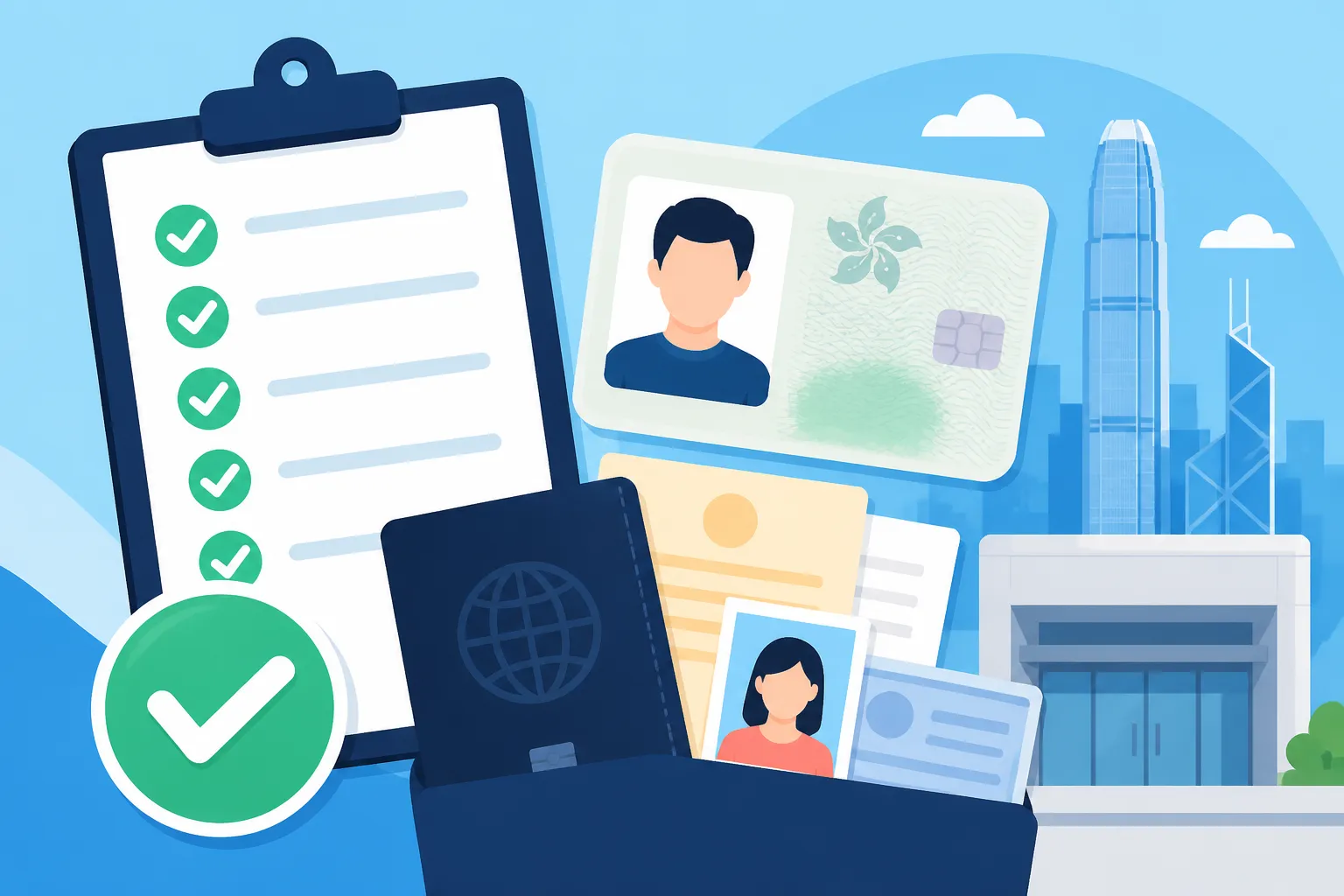
This comprehensive checklist should set you up for success. Take your time, gather everything meticulously, and you’ll be holding your precious HKID in no time!
Disclaimer
The information provided in this guide is intended for general informational purposes only and does not constitute legal or immigration advice. While we strive to keep the content up-to-date and accurate, policies and requirements of the Hong Kong Immigration Department can change without notice. Always refer to the official Immigration Department website or consult with a qualified immigration professional for the most current and personalised advice regarding your specific situation. We are not liable for any actions taken based on the information provided herein.