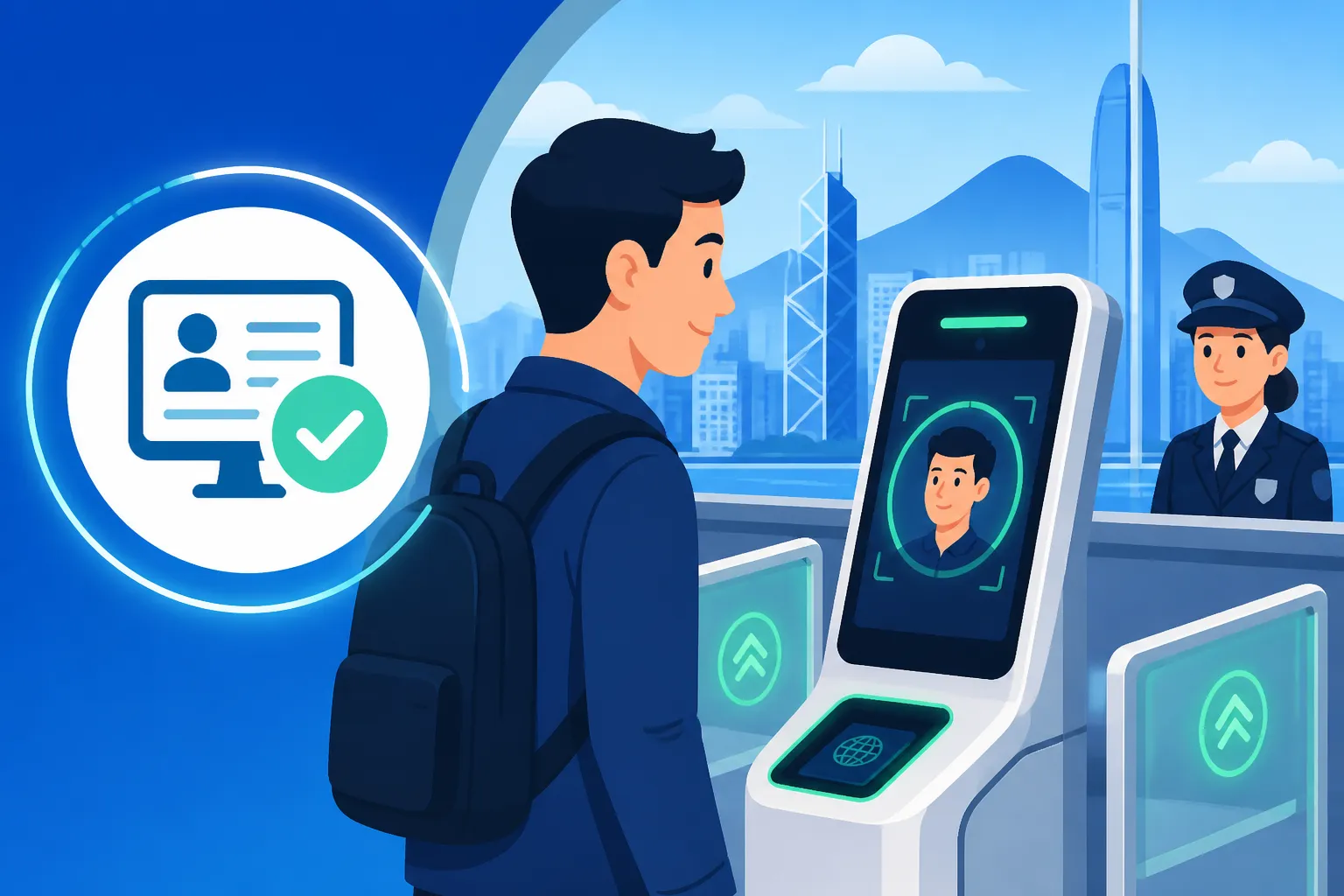
E-Channel Enrollment for Faster Immigration Clearance
Standing in a motionless queue at Hong Kong International Airport after a grueling thirteen-hour flight is a rite of passage no one actually wants. Watching residents breeze through automated gates while you shuffle forward one inch every ten minutes is enough to make any newcomer question their life choices. This guide solves that frustration by detailing exactly how to enroll in the e-Channel system to reclaim your time and sanity.
Understanding the Hong Kong e-Channel System
The e-Channel is not just a fancy gate; it is the heartbeat of Hong Kong’s efficiency-obsessed infrastructure. For those of us who have lived here long enough to remember the manual stamping of every arrival card, the transition to automated biometric gates felt like stepping into the future. It uses a combination of smart card technology and biometric verification to process travelers in roughly 12 seconds.
What is the e-Channel and why do you need it
At its core, the e-Channel is an automated passenger clearance system managed by the Immigration Department. If you are planning on making Hong Kong your home, or even if you are just a frequent visitor for business, this is the single most important administrative win you can secure early on. It eliminates the need to fill out those tiny arrival and departure slips, which always seem to go missing from your passport at the most inconvenient times.
Beyond the sheer speed, the e-Channel offers a level of autonomy that is deeply appreciated by the expat community. There is a certain psychological relief in knowing you don't have to explain your travel history or the purpose of your trip to an officer every time you return from a weekend in Thailand. It turns the border crossing into a routine action, much like tapping your Octopus card at an MTR station.
How the automated technology works
The system operates on two primary layers of security: your document and your body. When you approach the gate, you either insert your smart HKID card or scan a mobile QR code. The first gate opens, letting you into a small glass booth. Inside, you are prompted to place a specific finger—usually a thumb or index finger—onto a glowing scanner. The system compares this live scan against the encrypted biometric data stored in the Immigration Department's database.
Recent upgrades have introduced facial recognition technology, meaning many of the newer gates don't even require a fingerprint. Instead, you simply look into a camera. For those worried about hygiene or the scanner not reading their prints after a day of carrying heavy luggage, this "contactless" approach is a game-changer. It is fast, accurate, and significantly reduces the physical touchpoints at the border, which has become a priority for many travelers since the pandemic.
The evolution from physical cards to mobile apps
We have moved far beyond the days when a physical card was your only ticket to speed. The "Contactless e-Channel" is the newest iteration, allowing residents to use their smartphones instead of their physical HKID. By downloading the specialized app and linking it to your verified identity, you generate a one-time encrypted QR code.
This evolution is particularly helpful because it reduces the wear and tear on your physical documents. Many expats struggle at the gate because the chip on their HKID was scratched or the plastic was slightly warped. Moving the process to your phone provides a reliable backup. If you are also managing complex moves, perhaps bringing a four-legged family member through immigration, using Pet-Journey to coordinate their arrival, having your own entry process automated allows you to focus on the more stressful logistics of pet relocation.
Eligibility Criteria for Residents and Visitors
Not everyone can walk up to an e-Channel gate on day one. The eligibility rules are strict, but they are more inclusive than many people realize. Whether you are here on a Hong Kong Visas and Immigration: The Complete 2027 Guide or just visiting frequently, there is likely a path for you to bypass the manual counters.
Hong Kong Identity Card holders
If you have a valid Hong Kong Identity Card (HKID), the e-Channel is essentially yours to use by default, provided you are aged 11 or above. For those who have just arrived and are still navigating The 30-Day Rule for Registering a New HKID After Arrival, you will need to use the manual counters until your physical card is issued. Once you have that piece of smart plastic in your hand, you are generally pre-enrolled.
There is a slight distinction for those under the age of 18. While children aged 11 to 17 can use the e-Channel, they must be accompanied by a parent or guardian during the initial enrollment if it wasn't handled during their HKID application. For adult expats on employment or dependent visas, the moment you activate your smart ID, the gates should recognize you. It is one of the most satisfying "I live here now" moments you will experience.
Frequent visitors and frequent flyers
You do not need to be a resident to enjoy the e-Channel. Hong Kong offers a "Frequent Visitor e-Channel" for those who don't hold an HKID but visit the city often. To qualify, you typically need to have visited Hong Kong at least three times via the airport in the 12 months prior to enrollment. This is a massive boon for regional business travelers who might be based in Singapore or London but find themselves at HKIA once a month.
Additionally, members of certain airline frequent flyer programs can enroll regardless of their recent travel history. If you hold a high-tier status with Cathay Pacific’s Cathay club or other major alliances, you can often skip the "three visits" requirement. You simply take your membership card and passport to the enrollment office located just past the immigration hall. It is a five-minute process that saves hours over the course of a year.
Macau and Mainland China residents
There are specific bilateral agreements in place for residents of Macau and frequent travelers from Mainland China. Macau permanent residents can use their Macau ID cards to access the Hong Kong e-Channels after a one-time enrollment. Similarly, Mainland residents holding the "Exit-Entry Permit for Travelling to and from Hong Kong and Macao" (the EEP or "Two-way Permit") can also utilize automated clearance if they have the appropriate endorsements and have completed the biometric registration.
This cross-border integration is part of the broader Greater Bay Area initiative. For an expat, this might not seem relevant until you realize that these agreements often dictate how busy the e-Channel lanes are. On public holidays, the "Mainland Resident" lanes might be backed up, while the "Hong Kong Resident" lanes remain clear. Understanding which lane you belong in is the first rule of navigating the terminal like a pro.
Enrollment Procedures for Different Categories
Enrollment is the hurdle you must clear before you can enjoy the sprint. Depending on your status, the process happens in different locations, from the glass-walled offices at the airport to the crowded halls of the Immigration Tower in Wan Chai.
Enrolling as a new Hong Kong resident
For most expats, the journey begins when they are Registering Your HKID for Subsidized Public Healthcare Rates or simply getting their first ID. When you attend your appointment for Hong Kong Identity Cards (HKID): Registration and Smart IDs, the officer will capture your fingerprints. In the vast majority of cases, this data is automatically synced with the e-Channel system.
However, if you are moving from a visitor status to a work visa, there is a small gap. You might have your visa sticker, but until you have the physical HKID, you are still "manual." Once you receive your ID, it is wise to do a "test run" at the airport or a land border. If the gate doesn't open, don't panic. There is usually a small staff kiosk nearby where an officer can refresh your data in the system. It’s a common glitch for those who have just changed their visa status from a General Employment Policy (GEP): Standard Work Visas for Expats to something else.
Enrollment for frequent visitors at the airport
If you meet the frequent visitor criteria (3 visits in 12 months), the enrollment offices are your next stop. At Hong Kong International Airport, these are located in the Arrival Hall, right after you pass through the manual immigration counters but before you reach the baggage claim. Look for the signs that say "Enrollment for e-Channel."
The process is straightforward:
- Present your valid travel document (passport).
- Show proof of your frequent flyer status or the history of your three visits in your passport.
- Sign a consent form.
- Provide your fingerprints and have a photo taken.
- A small barcode sticker will be placed on the back of your passport.
This sticker is vital. While the system is electronic, that sticker tells the staff you are authorized to be in that lane if they happen to be doing a spot check. If you have recently had your passport translated for visa purposes by a service like RushTranslate to ensure all your stamps and details are clear, make sure you have the original document ready for the officer.
Enrolling for the Contactless e-Channel via the app
The future is the Contactless e-Channel. This requires the "iAM Smart" app or the "HK Immigration Department" app. To enroll, you must be a Hong Kong resident aged 11 or older with a smart HKID.
Open the app and navigate to the Contactless e-Channel section. You will be asked to verify your identity using your HKID and facial recognition within the app. Once verified, the app generates a dynamic QR code. When you arrive at the gate, you scan this code instead of inserting your card. This is particularly useful for those who might be worried about the 7-year clock for Right of Abode (Permanent Residency): The 7-Year Journey. Using the app ensures your entries and exits are perfectly logged in the digital system, making it easier to prove your "continuous residence" when the time comes to apply for your permanent ID.
| Category | Eligibility Requirement | Enrollment Location | Document Needed |
|---|---|---|---|
| HK Resident (Adult) | Valid Smart HKID | Auto-enrolled via HKID | Smart HKID |
| Frequent Visitor | 3 visits in 12 months | HKIA / Macau Ferry Terminal | Passport |
| Frequent Flyer | Airline Tier Status | HKIA Enrollment Office | Membership Card |
| Macau Resident | Permanent HKID holder | HKIA / Land Borders | Macau ID |
| APEC Card Holder | Valid ABTC with 'HKG' | Enrollment Offices | ABTC and Passport |
Strategic Tips for Using the e-Channel Effectively
Knowing how to enroll is one thing; knowing how to navigate the system during the Sunday night rush is another. Even with the best technology, human error and crowd dynamics can slow things down.
Best times and locations for enrollment
If you need to enroll as a frequent visitor, do not wait until you are in a rush to catch a ferry or a flight. The enrollment offices at the airport are generally open from 10:00 AM to 6:00 PM, though these hours can fluctuate. If you arrive on a flight at 2:00 AM, you won't be able to enroll then. Plan your enrollment for a mid-day arrival or a time when you have a long layover.
The enrollment office at the Immigration Tower in Wan Chai is another option, especially if you are already there for Booking an Appointment for HKID Registration at ImmD Offices. It is usually less frantic than the airport office, but you will need to take a number and wait. If you are a digital nomad or an expat on a Visitor Visas and Visa-Free Entry to Hong Kong who is just about to hit their third visit, the Wan Chai office is a great place to get this sorted in a controlled environment.
Troubleshooting common technical failures at the gate
The most common reason an e-Channel gate fails is "dirty" biometrics. If your hands are extremely dry, sweaty, or have traces of hand sanitizer, the scanner will struggle. I always keep a small pack of tissues or a handkerchief ready. A quick wipe of the finger and the scanner glass usually fixes the issue.
Another common fail point is the "look at the camera" stage. Hong Kong’s new gates are sensitive to height and positioning. If you are wearing a hat, a heavy mask, or tinted glasses, the facial recognition will likely reject you. Stand on the footprints marked on the floor, remove your headwear, and look directly at the screen. If the gate refuses to open after three attempts, a red light will flash, and an officer will come to assist you. Don't be embarrassed; it happens to the best of us, and they are trained to quickly verify your ID manually and send you on your way.
Managing multiple documents and passports
Many expats in Hong Kong hold dual citizenship or have multiple passports due to frequent renewals. The e-Channel system is tied to the specific document you used for enrollment. If you get a new passport, your e-Channel access does not automatically transfer. You must go back to the enrollment office to "update" your record with the new passport number.
This is a critical step. If you walk up to the gate with a brand new passport that hasn't been linked, the machine will treat you as a stranger. If you are traveling frequently, it’s worth carrying SafetyWing or similar travel insurance documentation just in case a technical glitch at the border causes a delay that leads to a missed connection—though in Hong Kong, the staff are usually fast enough that this is a rare occurrence.
The New Frontier: Contactless e-Channel and Mobile Tech
The shift toward a "Contactless" experience is more than just a convenience; it’s a total reimagining of the border. By removing the physical interaction between a card and a machine, the Immigration Department has significantly increased the lifespan of the hardware and the speed of the passenger flow.
Setting up the mobile app and QR codes
To use the contactless system, you need a reasonably modern smartphone with biometric capabilities (FaceID or Fingerprint). Once you have registered your HKID in the "iAM Smart" app, the integration with the Immigration Department's app is seamless. The QR code generated is "dynamic," meaning it changes every 30 seconds.
Do not try to take a screenshot of the QR code to use later; it won't work. You must open the app live at the gate. This can be tricky if the airport Wi-Fi is spotty or your mobile data is lagging. I always make sure the app is open and the code is generated while I am still in the queue, rather than waiting until I am standing directly in front of the scanner. This prevents that awkward moment of frantically waving your phone around while a line of impatient locals huffs behind you.
Security and data privacy concerns
One question that often comes up in expat circles is the security of biometric data. The Hong Kong Immigration Department uses high-level encryption for all stored data. The biometric templates stored on your HKID or in the central database are not actual photos of your fingerprints but mathematical representations.
Furthermore, the "Contactless" QR code does not contain your personal information in a readable format for third parties. It is an encrypted token that only the Immigration Department’s internal scanners can decrypt. For those of us navigating the e-Visa System: Applying, Downloading, and Airport Clearance, this digital-first approach feels consistent with the city’s direction. It is a secure, efficient way to manage a high volume of people without compromising the integrity of the border.
Transitioning Between Visa Statuses and e-Channel Access
One of the most confusing times for an expat is when their legal status in the city changes. Whether you are moving from a student visa to an IANG Visa: The Ultimate Path for Non-Local Graduates or finally reaching that 7-year milestone, your e-Channel access may need a manual "nudge."
Moving from visitor to employment visa status
When you first arrive as a visitor, you might have enrolled in the Frequent Visitor e-Channel. Once your employment visa is approved and you receive your HKID, your status changes in the eyes of the government. Technically, your resident status should override your visitor status, but the system sometimes keeps the old passport-based enrollment active.
I recommend visiting the enrollment office once you have your HKID to ensure your resident status is the "primary" one linked to your biometrics. This is especially important for ensuring your time is correctly counted toward your permanent residency. Every entry through the e-Channel is a digital breadcrumb that proves you are living here. If you are unsure how many days you've been out of the city, you can even Request Your Medical Records from the Hospital Authority or check your immigration records to stay on top of your "continuous residence" requirements.
Impact of Right of Abode on automated clearance
Once you achieve Right of Abode (Permanent Residency): The 7-Year Journey, you will be issued a new "Permanent" HKID. This card has a different code (usually a 'U' or 'A') that signifies you no longer have stay conditions. When you get this card, you will need to use the manual counter or a staff-assisted gate for your very first entry/exit to "activate" the new card in the e-Channel system.
After that first activation, your access is permanent. Even if your passport expires or you change your nationality, your Right of Abode—and your right to use the resident e-Channels—remains. This is the ultimate goal for many of us. It represents the end of visa runs, the end of How Long Does GEP Visa Processing Actually Take in 2026? anxiety, and the beginning of truly calling Hong Kong home. The e-Channel becomes a symbol of that belonging, a private gate that always welcomes you back with a simple look into the camera.
Disclaimer
The information provided in this guide is for general informational purposes only and does not constitute legal or professional advice. Immigration policies and e-Channel eligibility criteria in Hong Kong are subject to change by the Immigration Department without prior notice. While we strive to keep this information up to date for 2026, always verify the latest requirements on the official GovHK or Immigration Department websites before making travel arrangements.