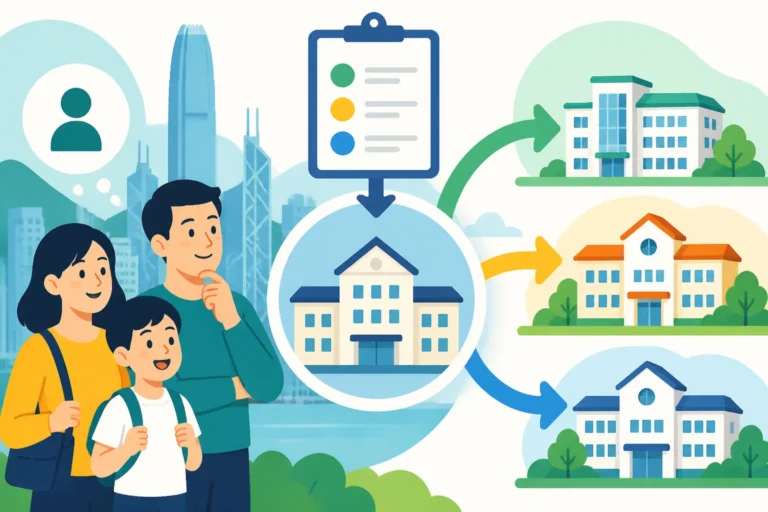
ESF Primary and Secondary Schools: Catchment Areas and Zones
Finding the right school in Hong Kong can feel like a high-stakes puzzle where the pieces keep changing. I remember the panic of checking my rental agreement against school maps when we first arrived, wondering if a single street block would decide my child's future. This guide demystifies ESF Primary and Secondary Schools: Catchment Areas and Zones so you can plan your home and your child's education with total confidence.
The Fundamental Logic of ESF Catchment Areas
The English Schools Foundation (ESF) is the largest provider of English-medium international education in Hong Kong. Unlike many purely private international schools that accept students from anywhere in the territory, ESF operates on a strict "Zone of Residence" policy. This means that your physical address—the place where you sleep at night and pay your utility bills—dictates which specific school your child is eligible to attend. This system was designed to ensure that children can attend a school relatively close to home, minimizing grueling commutes in Hong Kong’s notorious traffic.
Why Zoning Exists in Hong Kong Education
Zoning isn't just an administrative hurdle; it’s a logistical necessity. With thousands of students enrolled across the foundation, a localized system prevents the "over-clustering" of applications at schools in high-demand areas like Mid-Levels or Kowloon Tong. By enforcing catchment areas, ESF ensures that each of its 22 schools maintains a manageable student population and that resources are distributed effectively. For parents, this means that while you have the prestige of the foundation, your child’s daily life is rooted in their local community. I’ve found that this creates a tighter-knit group of "school run" friends, as most of your child's classmates will live within a few kilometers of your front door.
The Legal Definition of a Zone of Residence
In the eyes of ESF, your Zone of Residence is determined by the "permanent and principal place of residence" of the student. You cannot simply use a friend’s address or a corporate office to "zone-hop." The foundation is incredibly thorough during the application process, often requiring multiple forms of proof. If you are currently browsing International Schools in HK: Curriculums, Debentures, and Applications, you’ll notice that ESF is one of the few that remains so strictly tied to your rental contract or property deed. The zone is fixed at the time of application, and if you move out of that zone before your child starts school, you are legally required to notify the Admissions Office, which may result in a change of school allocation.
Differences Between ESF Zoning and Private Independent Schools
It is crucial to distinguish between the "traditional" ESF schools and their Private Independent Schools (PIS). Discovery College (Lantau) and Renaissance College (Ma On Shan) do not have catchment areas. They can accept students from any part of Hong Kong. This makes them a popular "backup" or primary choice for families who want the ESF curriculum but don't want to be tethered to a specific neighborhood. However, for the majority of the foundation's primary and secondary branches, the zone is king. If you’re looking at English Schools Foundation (ESF): The Complete Guide for Expat Parents, keep in mind that choosing a "traditional" ESF school effectively dictates your search for an apartment.
Deep Dive into Hong Kong Island Primary Zones
Hong Kong Island is home to some of the oldest and most established ESF schools. Because the island is topographically challenging, the zones are often split by ridgelines and major tunnels rather than just simple circles on a map.
Western and Central Districts: Kennedy and Peak Schools
Kennedy School, located in Pok Fu Lam, covers a massive swath of the western side of the island. If you live in Kennedy Town, Sheung Wan, or Central, this is likely your designated school. It’s known for its incredible facilities and its proximity to the University of Hong Kong. Conversely, the Peak School is much more exclusive in its geography. As the name suggests, it serves residents of The Peak and parts of the Mid-Levels. Living in these areas is expensive, and the school reflects that demographic, though it remains a warm, community-focused primary. Many parents have moved specifically to Pok Fu Lam just to secure a spot at Kennedy, as the commute to other island schools can be a nightmare during the morning rush.
The Happy Valley and Southern Corridor: Bradbury School
Bradbury School on Blue Pool Road is the hub for families living in Happy Valley, Causeway Bay, and even as far south as Deep Water Bay and Repulse Bay. Because Happy Valley is a "bowl" with limited exit points, the school run here can be tricky. However, Bradbury is often cited as one of the most diverse schools in the foundation. If you are moving to the Southside for the beaches and the space, you must double-check whether your specific complex falls into the Bradbury zone or if it skews toward the eastern schools. Many families who choose the Southside also look into American vs British Curriculum Schools in Hong Kong as a comparison point, but Bradbury remains the primary ESF option for that district.
Eastern District Hubs: Quarry Bay School
Quarry Bay School (QBS) actually isn't in Quarry Bay anymore—it’s in Braemar Hill. This school serves the densely populated residential hubs of North Point, Shau Kei Wan, and Chai Wan. It’s a fantastic school for those working in the burgeoning business districts of Taikoo Place. The zone is quite precise; if you live just one street too far west, you might find yourself redirected to Glenealy School in Mid-Levels. This is why "street-level" checking of the ESF zone map is vital before you sign a lease. If your child is also interested in local culture, you might consider Learning Cantonese vs Mandarin for Career Growth in HK as QBS has a very strong language program.
Kowloon and New Territories Catchment Mapping
The "Dark Side" (as islanders affectionately call Kowloon) and the New Territories (NT) have a different vibe. The zones here are geographically larger because the population is more spread out, but the competition for spots is just as fierce.
The Heart of Kowloon: Kowloon Junior School
Kowloon Junior School (KJS) is one of the largest primary schools in the foundation. Its catchment area is immense, covering Tsim Sha Tsui, Mong Kok, Kowloon Tong, and stretching up toward the Lion Rock tunnel. Kowloon Tong is the "education hub" of Hong Kong, and KJS sits at the center of it. The modern campus at Perth Street is a marvel of architecture. For parents living in the high-rises above West Kowloon station, KJS is the default. Given the competitive nature of this zone, many parents use Preparing for an ESF School Admissions Interview to give their children an edge, even at the primary level.
The Sai Kung and New Territories East Reach: Clearwater Bay School
Clearwater Bay School (CWBS) is the dream for expat families who want a bit of green space. Its zone covers the Sai Kung peninsula and Clearwater Bay. This is the school for kids who love the outdoors; the campus is surrounded by hills and sea views. If you live in a village house in Sai Kung, this is your home. However, the zone is strictly enforced. If you move into the city toward Tseung Kwan O, you might find yourself crossing into a different zone. Many families here supplement their children's language learning through Preply or iTalki, especially if they want to maintain their native language or master Mandarin in a more rural setting.
Northern and Western New Territories: Sha Tin Junior
Sha Tin Junior (SJS) serves the massive expanse of the New Territories, from Sha Tin itself all the way up to the border with Shenzhen. If you are living in Tai Po, Ma On Shan (though Renaissance College is there too), or Fanling, SJS is your primary school. It shares a campus with Sha Tin College (the secondary), which creates a very stable "all-through" feeling for students. Because this zone is so large, many students take the mandatory school bus, which is a well-oiled machine in the ESF system.
| School Name | Level | Major Neighborhoods in Catchment |
|---|---|---|
| Kennedy School | Primary | Pok Fu Lam, Kennedy Town, Sheung Wan, Central |
| Peak School | Primary | The Peak, Mid-Levels (upper) |
| Glenealy School | Primary | Mid-Levels (lower), parts of Central |
| Bradbury School | Primary | Happy Valley, Causeway Bay, Southside |
| Quarry Bay School | Primary | North Point, Quarry Bay, Shau Kei Wan |
| Kowloon Junior | Primary | TST, West Kowloon, Kowloon Tong, Hung Hom |
| Beacon Hill School | Primary | Kowloon Tong, Tai Wai, Sha Tin (parts) |
| Sha Tin Junior | Primary | Sha Tin, Tai Po, Northern NT |
| Clearwater Bay | Primary | Sai Kung, Clearwater Bay, Tseung Kwan O |
Secondary School Zoning and the Feeder System
One of the greatest benefits of the ESF system is the "feeder" mechanism. If your child is in an ESF primary school, they are generally guaranteed a place in an ESF secondary school. However, which secondary school they go to is also determined by their zone of residence.
The Primary to Secondary Bridge: How Allocation Works
Usually, there is a direct correlation between your primary school and your secondary school. For example, most students from Kennedy School naturally flow into West Island School. However, the secondary zones are broader. If you move between the end of Year 6 and the start of Year 7, your secondary allocation might change. It’s a common misconception that once you’re "in" the foundation, you can pick any secondary school. You are still bound by your address. If you're planning long-term, checking the ESF School Fees 2026: Tuition, Capital Levy, and Application Fees is essential, as secondary fees are significantly higher than primary.
Island School vs West Island vs South Island Catchments
The three big secondary schools on the island have very distinct personalities and zones.
- Island School: Traditionally serves the Central and Mid-Levels zones. It has a reputation for being the "liberal arts" hub of the foundation.
- West Island School: Located in Pok Fu Lam, it covers the western side. It’s known for strong athletic programs and a very international student body.
- South Island School: Located on Nam Fung Road, it serves the Southside and Happy Valley.
Moving between these zones can be the difference between a 10-minute commute and an hour on a bus. I’ve known families who loved West Island School so much they refused to move to a larger house in Stanley because it would have put them in the South Island zone.
King George V and Sha Tin College: The Mainland and NT Zones
King George V (KGV) is the "grand dame" of ESF schools. Its campus in Ho Man Tin is historic and beautiful. Its zone covers almost all of Kowloon. For many, KGV is the ultimate goal. Meanwhile, Sha Tin College (STC) serves the entire New Territories. STC consistently ranks as one of the highest-achieving schools globally for IB results. If you are considering Bilingual Schools in HK (Mandarin/English) for Expat Children, KGV and STC both offer robust Mandarin tracks, but the competition for the higher-level sets is intense.
Proving Your Residence and Managing Applications
Applying to ESF isn't just about the interview; it’s about the paperwork. The foundation is vigilant about "address fraud" because the demand for certain schools is so high.
Acceptable Documents for Proof of Address
To prove you live in a zone, you will need to provide a stamped tenancy agreement or a recent mortgage statement. Additionally, ESF typically asks for two different utility bills (water, electricity, or gas). Note that mobile phone bills are almost never accepted as proof of residence. If you are a new arrival and staying in a serviced apartment, you must ensure the apartment is willing to provide a formal letter of residence that ESF recognizes. Applications can be delayed by months if a parent cannot produce a stamped tenancy agreement in time. If you are looking at Local HK Schools for Expat Kids: Pros, Cons, and EDB Subsidies, you’ll find the address requirements are similarly strict.
What Happens if You Move Mid-Year
If you move to a new home that falls into a different ESF catchment area, you are required to submit an "Internal Transfer" request. This does not guarantee an immediate spot in the new school. If the new school is full, your child might have to remain at their current school (and endure the longer commute) until a spot opens up in the new zone. This is a huge "gotcha" for expat families who find a "better" apartment halfway through the school year. Always check the availability at the target school before you sign that new lease.
Navigating the Waitlist When Your Zone is Full
Sometimes, even if you live in the zone, the school is full. This is where the waitlist comes in. ESF has a priority system:
- Corporate Nominees (those with high-value debentures).
- Siblings of current students.
- Children of staff.
- All others.
If you are at the bottom of the list, you might be waiting for a long time. Some parents choose to purchase ESF Non-Refundable Capital Levy (NCL) and Nomination Rights to jump the queue. While expensive, it is often the only way to secure a spot in high-demand zones like Mid-Levels or Kowloon Tong. If your child is waiting for a spot, using platforms like iTalki or Preply to keep their academic and language skills sharp is a smart move.
Strategic Planning for Expat Families
Living in Hong Kong is about trade-offs. Space vs. Commute. City vs. Nature. But when you add school zones into the mix, the calculation becomes even more complex.
Choosing a Neighborhood Based on School Catchments
My best advice? Choose the school first, then the neighborhood. It is far easier to find an apartment you like within a specific zone than it is to find a school spot once you’ve already moved. If your heart is set on Does an ESF Kindergarten Debenture Guarantee a Primary School Place, start looking at apartments in the primary zone that links to that kindergarten. The "all-through" nature of ESF means that a decision you make when your child is four years old will likely stick until they are eighteen.
Language Support and Supplemental Tutoring
While ESF is an English-medium foundation, the "Mandarin as a Second Language" component is mandatory. Hong Kong is a competitive environment, and even within the ESF system, many students seek outside help. Whether it's using Preply for a weekly Mandarin conversation or finding a math tutor on iTalki, supplemental education is part of the culture here. This is especially true for families who might be looking at International School Debentures in HK: Capital Levies and Waitlists and want to ensure their child passes the admissions assessment with flying colors.
Financial Considerations: Fees and Levies
Don't forget that on top of the tuition fees, you will be paying a capital levy. In 2026, the costs have stabilized somewhat, but they are still a significant portion of a household budget. If your company isn't paying for your school fees, you need to account for the NCL (Non-Refundable Capital Levy) which is required for all new students. This fee doesn't change based on your zone, but the "value" of your property might. A small flat in the Peak School zone will cost significantly more than a large house in the Sha Tin Junior zone. You are essentially paying a "location premium" for both your rent and your school access.
ESF School Catchment Areas Disclaimer
The information provided in this guide regarding ESF catchment areas, zones, and admission policies is for general informational purposes only and is based on the 2026 academic year guidelines. ESF reserves the right to change catchment boundaries, admission priorities, and fee structures at any time. Parents should always verify the most current zoning maps and availability directly with the ESF Admissions Office before making any financial or residential commitments. This guide does not constitute legal or professional educational advice.