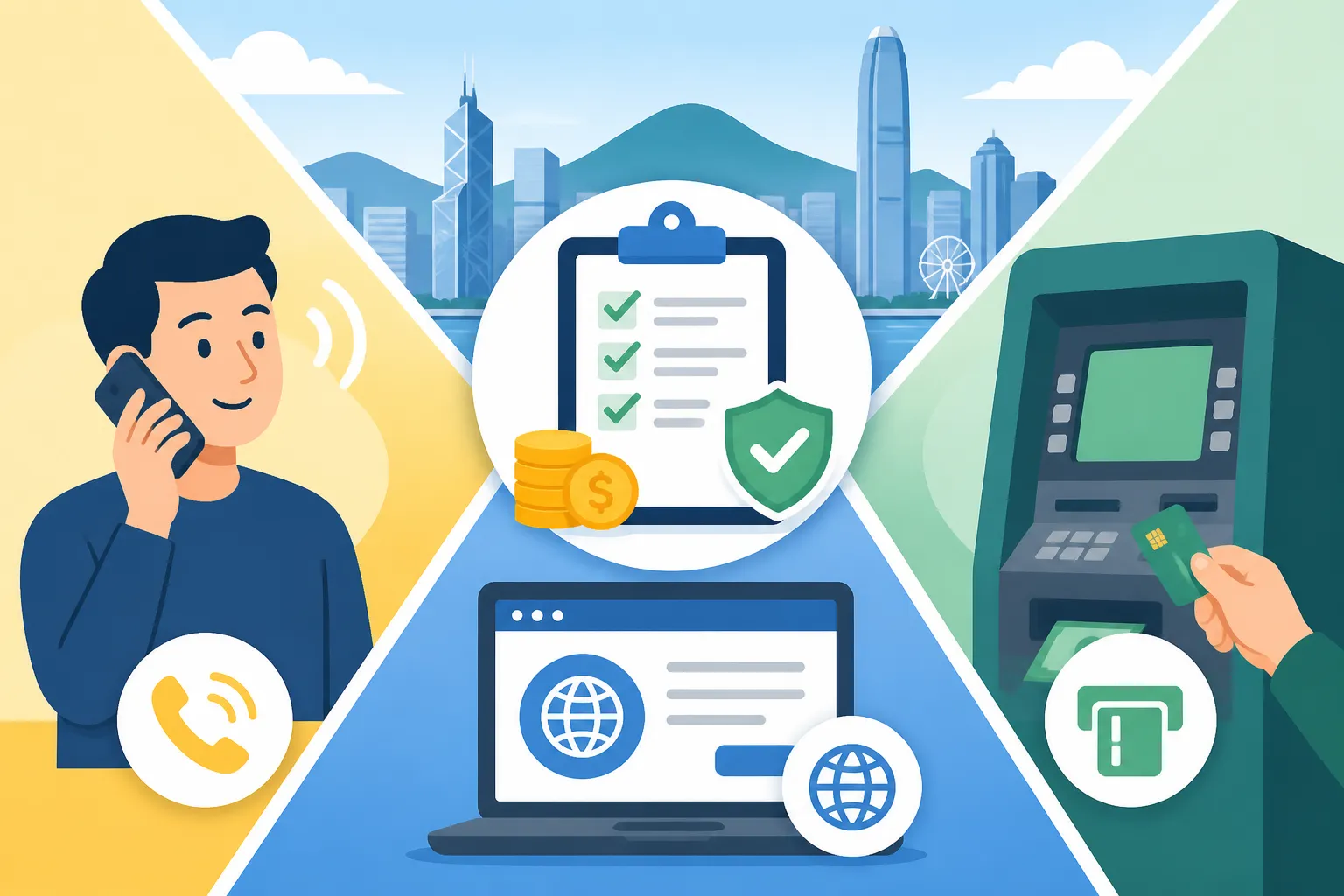
How to Pay Tax by Telephone, eTAX, or ATM in Hong Kong
Receiving that iconic green envelope from the Inland Revenue Department can trigger a unique brand of anxiety, especially when you realize the deadline is looming and you have no idea how to actually move the money. I remember staring at my first demand note in a tiny Mid-Levels flat, terrified that a single mistake would lead to a massive penalty. This guide simplifies the process, walking you through paying via telephone, eTAX, and ATM so you can stay compliant without the stress.
Understanding the Hong Kong Tax Payment Landscape
Before we dive into the "how," we need to talk about the "what." In Hong Kong, you aren't just paying for the year that passed; you are often paying for the year ahead. This is the part that catches almost every expat off guard. If you are new here, you might want to look at What is Provisional Tax and Why is My First Tax Bill So High? to understand why that number on your demand note looks so much larger than your actual earnings would suggest. The system is designed to collect tax in advance, which can be a massive hit to your cash flow if you haven't budgeted for it during your Financial Checklist for Your First 30 Days in Hong Kong.
The Inland Revenue Department (IRD) is surprisingly efficient, but they are not flexible. If you miss a deadline, they will slap a 5% penalty on the total amount due immediately. If you wait another six months, that climbs by another 10%. Some expats lose thousands of dollars simply because they were traveling and forgot to check their mail. That is why digital payment methods are your best friend. They provide a digital paper trail and, in some cases, allow you to pay from anywhere in the world.
To make things easier, ensure you have your "Demand Note" in front of you. This document contains your "Shroff Account Number," which is the most critical piece of information. Without it, the IRD won't know whose bill you are paying. If you are struggling with the overall filing process, professional services like Taxes for Expats can be a lifesaver, especially if you have complex income streams or are balancing tax obligations in your home country alongside your Hong Kong earnings.
Settling Your Bill via eTAX and Digital Platforms
The eTAX system is the IRD’s flagship digital portal, and honestly, it is the most robust way to handle your affairs. Once you are registered, you can view your tax position, file your returns, and, most importantly, pay your bill. If you haven't set up your account yet, you should follow the steps in Filing BIR60 via eTAX: Step-by-Step Guide for Expats to get your digital signature and login credentials sorted before the payment deadline hits.
The Faster Payment System FPS Advantage
Since 2024, the IRD has fully integrated the Faster Payment System (FPS) into the tax payment process. This is the absolute easiest way to pay. On your demand note, there is a small QR code labeled "FPS." All you have to do is open your Hong Kong banking app, select the "Scan to Pay" function, and point your camera at that code. The system will automatically populate the Shroff Account Number and the exact amount due.
The beauty of FPS is that it is instantaneous. You don't have to worry about the three-day clearing period that bank transfers sometimes require. However, if you are moving money from an international account to cover this bill, using a service like Wise can help you get the best exchange rates into your local HKD account before you execute the FPS payment. The fixed exchange rate of the HKD can sometimes lead to hidden costs if you use traditional bank transfers, but Wise keeps those costs transparent.
Online Banking and Electronic Bill Payment
If you prefer not to use a QR code, you can use the "Bill Payment" function within your online banking portal. Most major banks like HSBC, Standard Chartered, and even virtual banks like ZA Bank have a dedicated section for "Government/Utilities." You search for "Inland Revenue Department," select the appropriate tax type (usually Salaries Tax), and enter your Shroff Account Number.
One tip I learned the hard way: Always double-check the "Bill Type." For most of us, this is "01" for Salaries Tax. If you accidentally select the wrong type, your payment might sit in a suspense account at the IRD, leading to late penalties even though the money left your bank. If you are paying high amounts, keep in mind Salaries Tax Rates: 15% Standard vs Two-Tiered 16% for High Earners to ensure you have the funds ready.
Paying by Telephone Using PPS
If you’ve been in Hong Kong for more than a month, you’ve probably seen the PPS terminals at Circle K or 7-Eleven. PPS (Payleys Personal Service) is a legacy system that is still incredibly popular because it links almost every bank account in the city to almost every utility and government department. It is a telephone and online-based system that allows you to pay bills with a few taps.
Setting Up Your PPS Account
You cannot register for PPS online from scratch. You must physically go to a PPS terminal (usually located near the ATM or at the back of a convenience store), swipe your ATM card, and set up a password. Once you have that account, you are given a PPS account number. From there, you can call 18011 to register your tax bill or 18031 to pay it.
For the Inland Revenue Department, the merchant code is "10." You will need to enter your Shroff Account Number. The system will then ask you for the amount you wish to pay. The phone system is a bit "old school" with its automated voice prompts, but it is incredibly reliable. I still use PPS for my water and gas bills because it's a "set and forget" system.
Why Some Expats Prefer the Phone System
The telephone system is great if you are in a location with poor data or if you simply don't want to deal with the UI of a banking app. It is also a fantastic backup. If the eTAX website is down because everyone is trying to pay on the last day of January, the PPS phone line usually stays up. Just remember that PPS payments made after midnight on the deadline day will be considered late.
If you are a US citizen, you might be worrying about how these payments interact with your home country's tax credits. Services like Taxes for Expats can help you navigate the Foreign Earned Income Exclusion or the Foreign Tax Credit to ensure you aren't being double-taxed on the money you are sending to the IRD. It's always worth checking your Year of Assessment and Tax Deadlines: What to Mark on Your Calendar to ensure you have enough time to coordinate both filings.
Utilizing the ATM Network for Tax Payments
For those who prefer a physical transaction but don't want to stand in line at a post office, the ATM network is the way to go. Hong Kong’s ATMs are divided into two main networks: HSBC/Hang Seng and JETCO. Both allow you to pay your taxes, but the interface will look slightly different.
The ATM Payment Process
When you insert your card into a JETCO or HSBC ATM, look for the "Bill Payment" or "Government/Utilities" option. From there, select "Inland Revenue Department." You will be prompted to enter the Shroff Account Number found on your demand note. The machine will then ask for the payment amount. After you confirm, the machine will spit out a receipt.
Keep that receipt! It is your only physical proof of payment if the digital records ever get crossed. I usually staple mine directly to the green demand note and file it away. This is especially important if you plan on Claiming Tax Deductions: Domestic Rent, Elderly Care, and Donations later, as you may need to prove your payment history during an audit.
Limits and Limitations of ATM Payments
The biggest hurdle with ATM payments is the daily transfer limit. Most Hong Kong bank accounts have a default daily limit for bill payments (often around HKD 50,000). If your tax bill is HKD 150,000, you won't be able to pay it all in one go at an ATM. You would have to visit the machine three days in a row, which is a massive hassle.
If your bill is significantly high, eTAX or a direct bank transfer is much more efficient. Also, remember that you cannot use a credit card at an ATM to pay your taxes to earn air miles, which is a common strategy expats try to use. To use a credit card for tax payments, you generally have to go through your bank's specific "Tax Payment" promotion via their online portal, which often involves a fee or a specific "Cash on Card" arrangement.
| Method | Best For | Speed | Proof of Payment |
|---|---|---|---|
| FPS (QR Code) | Speed and simplicity | Instant | Digital confirmation & Bank statement |
| eTAX Portal | Managing multiple bills | 1-2 Days | Online transaction history |
| PPS (Phone) | Reliability and legacy users | Same Day | Transaction reference number |
| ATM | People who want a physical receipt | Instant | Paper receipt from machine |
| Internet Banking | High-value payments | 1-2 Days | Bank digital receipt |
Common Pitfalls and Expert Tips for Expats
One of the most frequent mistakes I see newcomers make is trying to pay their Hong Kong taxes directly from an overseas bank account via a standard SWIFT transfer. The IRD doesn't make this easy. They prefer local clearing. If you try to send a wire transfer from London or New York, the intermediary bank fees often result in the IRD receiving less than the full amount. This can lead to a "short payment" notice and a penalty on the remaining balance.
To avoid this, always move your money into a local Hong Kong account first. If you are worried about the cost of moving money, Wise is an excellent tool because it uses the mid-market rate. You can send your home currency to Wise, convert it to HKD, and then send it to your local HSBC or Standard Chartered account for free or a very low fee. Once the money is in your local account, use the FPS method mentioned above.
Another thing to keep in mind is the timing of your deductions. If you are Claiming the HKD 100,000 Tax Deduction for Domestic Rent, make sure those claims were processed before your final demand note was issued. If they weren't, you might find yourself paying more upfront and having to wait for a refund later. Similarly, if you are a homeowner, ensure you are How Employer Housing Allowances Reduce Your Salaries Tax savvy so your "assessable income" is as low as legally possible.
Lastly, if you are planning on leaving the city soon, don't just pay and walk away. You will need a Tax Clearance Letter (IR56G): What You Need Before Leaving HK. The IRD has the power to stop you at the airport if they believe you have outstanding tax liabilities. If you are overwhelmed, checking What to Do If You Miss the BIR60 Tax Return Deadline can help you understand the remedial steps to take before the situation escalates.
For US citizens specifically, the interaction between HK tax and US tax is a minefield. While the HK system is simple, the US system is not. Using a dedicated expat tax service like Taxes for Expats ensures that you are taking advantage of all foreign tax credits, preventing you from paying a cent more than you owe to either government.
Disclaimer
The information provided in this guide is for informational purposes only and does not constitute legal, financial, or professional tax advice. Tax laws and payment procedures in Hong Kong are subject to change by the Inland Revenue Department. While we strive to provide the most up-to-date information, you should always consult with a qualified tax professional or contact the IRD directly regarding your specific tax situation and obligations.