Financial Checklist for Your First 30 Days in Hong Kong
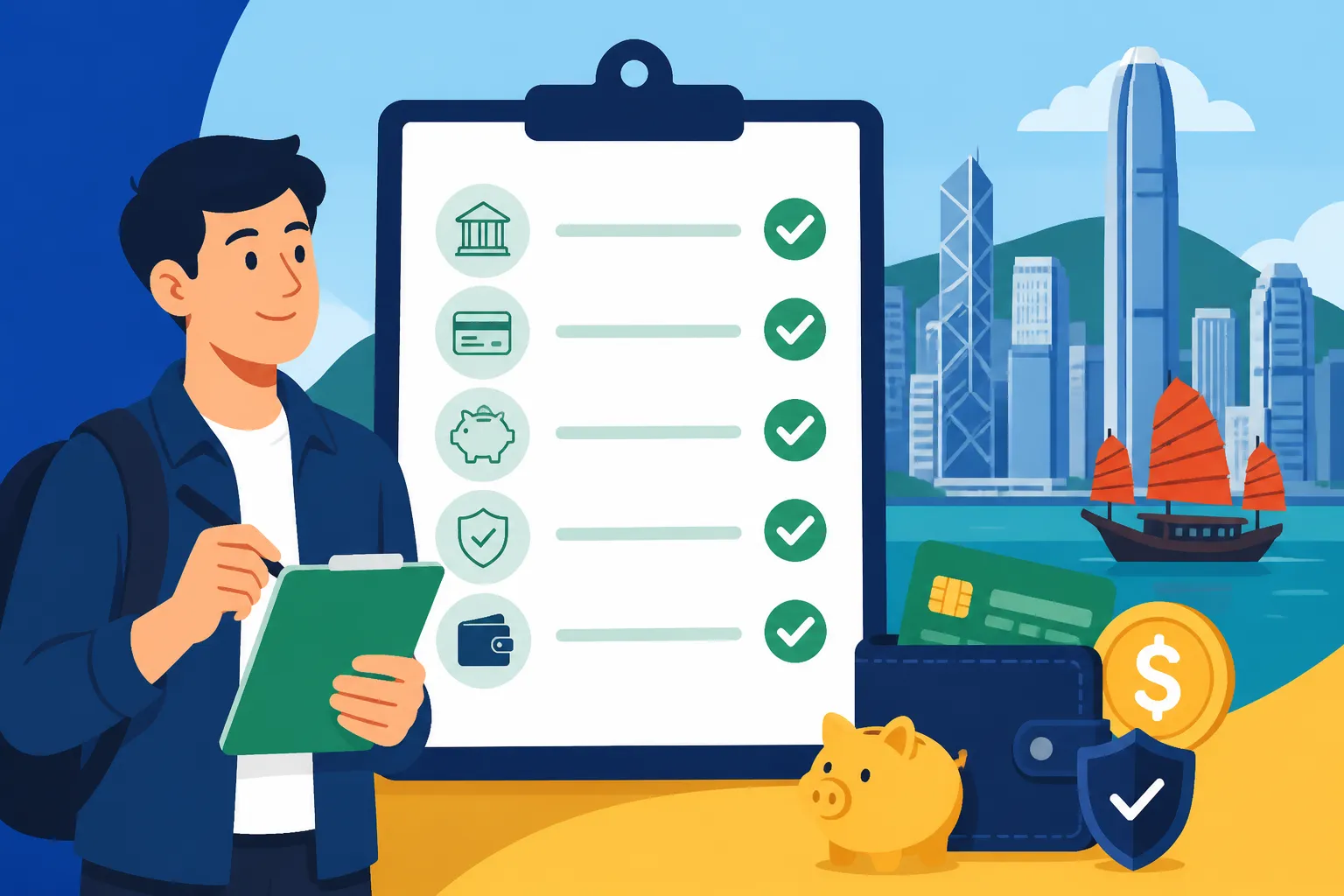
Moving to Hong Kong is an exhilarating adventure, but let's be honest, the initial financial scramble can feel like navigating a typhoon in a sampan. From setting up your basic banking needs to figuring out how to actually pay for your morning cha chaan teng breakfast, there's a lot to wrap your head around while you're still unpacking your suitcase. This guide is your no-nonsense financial checklist for your first 30 days in Hong Kong, designed to help you streamline the crucial steps and feel financially grounded from day one.
Getting Your Finances Set Up: The Basics
One of the very first things you'll need to sort out, almost before you've found your favorite local noodle shop, is establishing your financial footprint here. Your overseas bank might work for a bit, but for salaries, daily expenses, and especially rent, you'll need a local account.
Opening a Local Bank Account
Opening a bank account in Hong Kong as a newcomer can sometimes feel like trying to solve a Rubik's Cube blindfolded. Many expats arrive with tales of frustration, especially regarding proof of address or minimum balance requirements. Traditional banks, while robust, often have stricter rules for new residents without a long history in the city. You might walk into a branch of HSBC, Standard Chartered, or Bank of China, armed with what you think is everything, only to be told you need one more obscure document. Don't worry, this is a common rite of passage!
For many, the initial hurdle is proving your residential address in Hong Kong, especially if you're in temporary accommodation or haven't received utility bills yet. A common workaround is using a formal letter from your employer stating your local address, or a tenancy agreement. Be prepared; patience is key. The good news is that once it's set up, these banks offer comprehensive services. They're reliable for everything from receiving your salary to managing investments. If you're struggling with the traditional routes, you might find some solace in exploring virtual banks, which have popped up over the last few years.
Virtual banks like ZA Bank, Mox, or Livi Bank have been a game-changer for many expats, often offering a smoother, entirely online application process. They usually require less stringent documentation for opening an account, and their apps are incredibly user-friendly for daily transactions. The trade-off might be fewer physical branches (or none at all) and perhaps less personalized service, but for everyday banking, they are incredibly efficient. Whichever route you choose, make sure you have your Hong Kong ID (HKID), your valid visa, an employment letter, and crucially, a local phone number ready. Without a local SIM, many banking apps and verification processes just won't fly. For a more detailed look into your options, check out our guide on Opening a Traditional Bank Account: HSBC, Standard Chartered, and BOC or if you're leaning towards the digital, our piece on Virtual Banks in HK: Comparing ZA Bank, Mox, Livi, and Ant Bank will be invaluable.
Essential Payment Methods: Octopus and Digital Wallets
Once your bank account is humming along, your next step is mastering Hong Kong's unparalleled payment ecosystem. Forget fumbling for change; Hong Kong is a city that practically runs on contactless payments. Your first and most indispensable acquisition will be an Octopus Card. This isn't just a transport card; it's your key to daily life. You'll use it for MTR, buses, trams, ferries, convenience stores (7-Eleven, Circle K), supermarkets (Wellcome, ParknShop), fast food, and even some vending machines.
Getting an Octopus Card is simple: pick one up at any MTR station customer service counter or convenience store. You can choose a standard anonymous card or a personalized one. Topping it up is equally easy, with cash at MTR stations, convenience stores, or via the Octopus App linked to your bank account or credit card. It’s so ubiquitous, you’ll wonder how you ever lived without it. Our article The Octopus Card: Hong Kong's Essential Transport & Payment Tool has all the details you need to get started.
Beyond the Octopus, Hong Kong has embraced digital wallets with gusto. PayMe (from HSBC), AlipayHK, and WeChat Pay are all incredibly popular. PayMe allows instant, free transfers between users – perfect for splitting dinner bills or paying friends back. AlipayHK and WeChat Pay are widely accepted in retail stores and restaurants, often displaying QR codes for quick payments. Linking these apps to your new Hong Kong bank account is straightforward and makes daily transactions seamless. Don't forget the Faster Payment System (FPS), which allows instant transfers between different banks in Hong Kong using just a phone number or email. It’s a godsend for paying rent, utilities, or larger sums to individuals without waiting days for transfers to clear. You'll find a deep dive into these options in our guide on Digital Payments in HK: Octopus, AlipayHK, PayMe, and WeChat Pay.
Understanding Your Income and Initial Expenses
Getting your first paycheck and seeing Hong Kong dollars land in your new account is a milestone. But it's also time to understand what's actually coming in and what's going out.
Your First Paycheck and Salaries Tax Basics
When you receive your first pay slip, you'll likely see a few deductions. The main one you'll notice is your Mandatory Provident Fund (MPF) contribution, which we'll touch on later. As an expat, it’s vital to understand your employment contract thoroughly. Check if your salary is quoted as gross or net, and what benefits (housing allowance, medical insurance) are included. Sometimes these allowances can significantly impact your take-home pay and even your tax liability.
Speaking of tax, Hong Kong boasts a very attractive tax system. Unlike many countries, Hong Kong operates on a territorial basis of taxation, meaning generally, you only pay tax on income that arises in or is derived from Hong Kong. This is fantastic news for many expats, especially if you have overseas income streams. While your first few paychecks might not immediately involve tax payments (as salaries tax is typically assessed annually, with provisional tax paid in advance), it's crucial to be aware of the system. The Inland Revenue Department (IRD) will eventually send you a tax return form (BIR60) to declare your income. Keeping meticulous records of your employment contract, pay slips, and any income statements is paramount. Even if you're not immediately paying tax, understanding your obligations is key to avoiding future headaches. If you're a US citizen or have other complex tax scenarios, specialized services like Taxes for Expats can be incredibly helpful in navigating the intricacies of dual taxation and ensuring compliance both in Hong Kong and your home country. For a comprehensive overview, our Hong Kong Tax Guide for Expats: Salaries Tax and Filing (2026) is an essential read.
Budgeting for Initial Costs: Rent, Utilities, and Settling In
Hong Kong is notorious for its high cost of living, especially when it comes to housing. Your first 30 days will undoubtedly include significant upfront rental costs. Typically, you'll pay two months' rent as a security deposit, plus the first month's rent in advance. On top of that, if you used an estate agent (and most expats do), you'll pay an agency fee, usually half a month's rent. This can easily add up to 3.5 times your monthly rent before you even get the keys – a hefty sum to budget for.
Beyond rent, setting up utilities requires its own set of payments. You'll need to arrange for electricity with either HK Electric (for Hong Kong Island) or CLP Power (for Kowloon and New Territories), water with the Water Supplies Department, and gas (Towngas or cylinder gas). Each of these typically requires a deposit, which is refundable when you eventually leave. Then there's broadband internet, which usually involves installation fees and a monthly subscription. Our guide to Budgeting for Utilities: Electricity, Water, and Gas Costs will give you a clearer picture of what to expect.
Beyond these big-ticket items, remember to factor in immediate settling-in costs:
- Initial grocery runs (supermarkets like Wellcome or ParknShop can be pricey, but wet markets offer fresh, affordable options).
- Public transport top-ups for your Octopus Card.
- Household essentials – from basic cookware to cleaning supplies.
- A new SIM card and initial top-ups.
Creating a rough budget for these initial expenditures is crucial to avoid financial surprises. Here’s a quick snapshot of what some typical initial costs might look like:
| Item | Estimated Initial Cost (HKD) | Notes |
|---|---|---|
| Security Deposit (2 months) | Varies greatly (e.g., 30,000) | Based on HKD 15,000/month rent. |
| First Month's Rent | Varies greatly (e.g., 15,000) | |
| Estate Agency Fee | Varies greatly (e.g., 7,500) | Typically 0.5 month's rent. |
| Electricity Deposit | 500 – 2,000 | Varies by provider and apartment size. |
| Water Deposit | 400 – 800 | Flat rate for most residential. |
| Gas Deposit | 500 – 1,000 | If applicable. |
| Broadband Installation | 200 – 500 | May be waived with longer contracts. |
| Octopus Card (initial) | 150 – 200 | Includes deposit and initial stored value. |
| SIM Card | 50 – 200 | Prepaid with initial credit. |
| Initial Groceries | 500 – 1,500 | Depends on your cooking habits. |
| Total (Excluding Rent) | ~3,000 – 7,000+ | This is a conservative estimate for deposits, fees, and immediate needs. |
For a more granular breakdown of daily living expenses, our article Cost of Living in Central vs New Territories: A Practical Comparison can offer valuable insights.
Getting Connected and Protecting Your Funds
Beyond the immediate financial setup, getting properly connected and thinking about how to manage money across borders is equally important in your first month.
Getting a Local SIM Card and Internet
We briefly touched on this, but let's really emphasize it: a local SIM card isn't just for calling home; it's practically a financial necessity in Hong Kong. Without a local number, you'll struggle to register for banking apps, set up digital wallets, or even receive critical two-factor authentication codes. Most services here are tied to a local mobile number.
You have several options. Prepaid SIM cards are readily available at convenience stores, phone shops, and even at Hong Kong International Airport. They're great for immediate use and offer flexibility. However, for a longer stay, a contract plan often provides better value, especially for data. Major providers like CSL, SmarTone, and 3 Hong Kong offer various packages, while budget carriers (often MVNOs operating on the same networks, like SmarTone's budget brand, or Sun Mobile) can offer more affordable options. Consider your data usage habits and whether you'll be making many international calls. Our article on Mobile Data Plans in HK: Budget Carriers vs CSL/SmarTone can help you choose the best fit.
Once your phone is sorted, think about home internet. Reliable broadband is essential, whether for work, entertainment, or simply staying connected. Providers like PCCW and HKBN dominate the market. Check which providers service your building, as options can vary. Installation usually takes a few days to a week, so don't delay arranging it.
Setting Up International Transfers and Emergency Funds
Many expats regularly send money home for family, mortgages, or investments, or conversely, receive funds from overseas. In your first 30 days, it’s worth exploring the most efficient ways to do this. Traditional bank wire transfers can be expensive due to hefty fees and unfavorable exchange rates. This is where fintech solutions really shine.
Services like Wise (formerly TransferWise) have revolutionized international money transfers. They offer significantly lower fees and use the real mid-market exchange rate, meaning you get more for your money. Setting up an account is usually quick and straightforward, and you can link it directly to your new Hong Kong bank account. This is particularly useful for those initial transfers where you might be moving a lump sum to get settled or receiving your first few overseas payments. Wise, as a contextual brand, is a go-to for many expats globally because of its transparent fee structure and speedy transfers. It’s definitely worth investigating if you plan on frequent international transactions. Our deep dive into Wise vs Bank SWIFT Transfers: Cheapest Ways to Send Money explains why these services often outperform traditional banks. You’ll also want to read our full guide on Sending Money Home: International Remittances and Forex Rates.
Finally, while you're getting financially settled, it’s always prudent to think about an emergency fund. This isn't just for medical emergencies (though those are crucial too) but for unexpected job changes, urgent travel, or unforeseen expenses. Keep a portion of your funds in an easily accessible, but separate, savings account. Knowing you have a financial cushion can bring immense peace of mind in a new, bustling city.
Planning for the Future: MPF and Initial Insurance Thoughts
While your first month is about immediate needs, it's also a good time to get a basic understanding of Hong Kong's longer-term financial structures.
Understanding Mandatory Provident Fund (MPF)
The Mandatory Provident Fund (MPF) is Hong Kong's compulsory retirement savings scheme. If you're employed in Hong Kong, both you and your employer will typically contribute 5% of your relevant income each month, up to a maximum of HKD 1,500 each, totalling HKD 3,000 per month. This money is invested in funds managed by MPF trustees.
For expats, there are a few nuances. If you are covered by an overseas retirement scheme (and can provide proof), you might be exempt from MPF contributions. This is a significant point to discuss with your employer and possibly a financial advisor, as it can impact your take-home pay and long-term retirement planning. If you are not exempt, your employer will sign you up with an MPF provider. It's a good idea to understand the different fund choices available, even if you just start with the default investment strategy. While it might seem like a distant concern, understanding how your MPF works and ensuring your contributions are correctly managed is important for your financial future in Hong Kong. For a comprehensive guide to this essential retirement plan, refer to our article on Mandatory Provident Fund (MPF): Contribution Rules and Options.
Initial Thoughts on Insurance
Your employer will likely provide some form of medical insurance. This is a fantastic benefit, but it's crucial to understand its coverage limits. Does it cover just hospital stays, or also outpatient consultations, dental, and optical? Does it have a high deductible or co-payment? Sometimes, employer-provided insurance is basic, covering only catastrophic events, leaving you exposed to significant out-of-pocket costs for routine care.
Many expats choose to supplement their employer's plan with private health insurance. Options like the Voluntary Health Insurance Scheme (VHIS) offer certified plans with tax benefits, while international providers such as Cigna Global offer comprehensive global coverage that can be tailored to expat families. Considering a private plan within your first month can provide peace of mind, knowing you have robust coverage for any medical needs. Beyond medical, think about other insurance types further down the line: home contents insurance for your apartment, especially if you have valuable possessions, or personal liability insurance, which can protect you from claims if someone is injured on your property. While not as urgent as setting up your bank account, understanding your options and potential gaps in coverage is a smart move for your long-term financial security. Our guides on Private Health Insurance Plans Beyond VHIS for Expat Families and Voluntary Health Insurance Scheme (VHIS): Coverage and Tax Benefits are excellent starting points.
Disclaimer
Please remember that this guide provides general information and does not constitute financial or legal advice. Regulations and market conditions in Hong Kong can change rapidly. Always consult with a qualified financial advisor, tax professional, or legal expert for advice tailored to your specific circumstances. While we strive to provide accurate and up-to-date information, individual situations may vary significantly.