What is a “Cross-Cheque” and How to Deposit it in HK
Ah, the humble cheque. In many parts of the world, they’ve become a quaint relic, but here in Hong Kong, they’re still very much a part of daily financial life. If you've recently received a payment, perhaps from an employer, a landlord, or even a friend, you might have found yourself staring at a piece of paper with two mysterious parallel lines across the front, wondering, "What on earth is a 'cross-cheque' and how do I even get this money into my account?" Trust me, you're not alone. Many expats, myself included, have had that exact moment of bewilderment. This guide will walk you through exactly what a cross-cheque is in Hong Kong and, more importantly, how to successfully deposit it into your bank account.
Demystifying the “Cross-Cheque” in Hong Kong
When you first arrive in Hong Kong, the financial landscape can feel a bit like a time warp in some aspects, while being hyper-modern in others. Cheques are a prime example of this duality. While digital payments are rampant, the crossed cheque maintains a strong presence. It’s not just a fancy design; those two lines carry significant legal weight.
What Exactly is a Cross-Cheque?
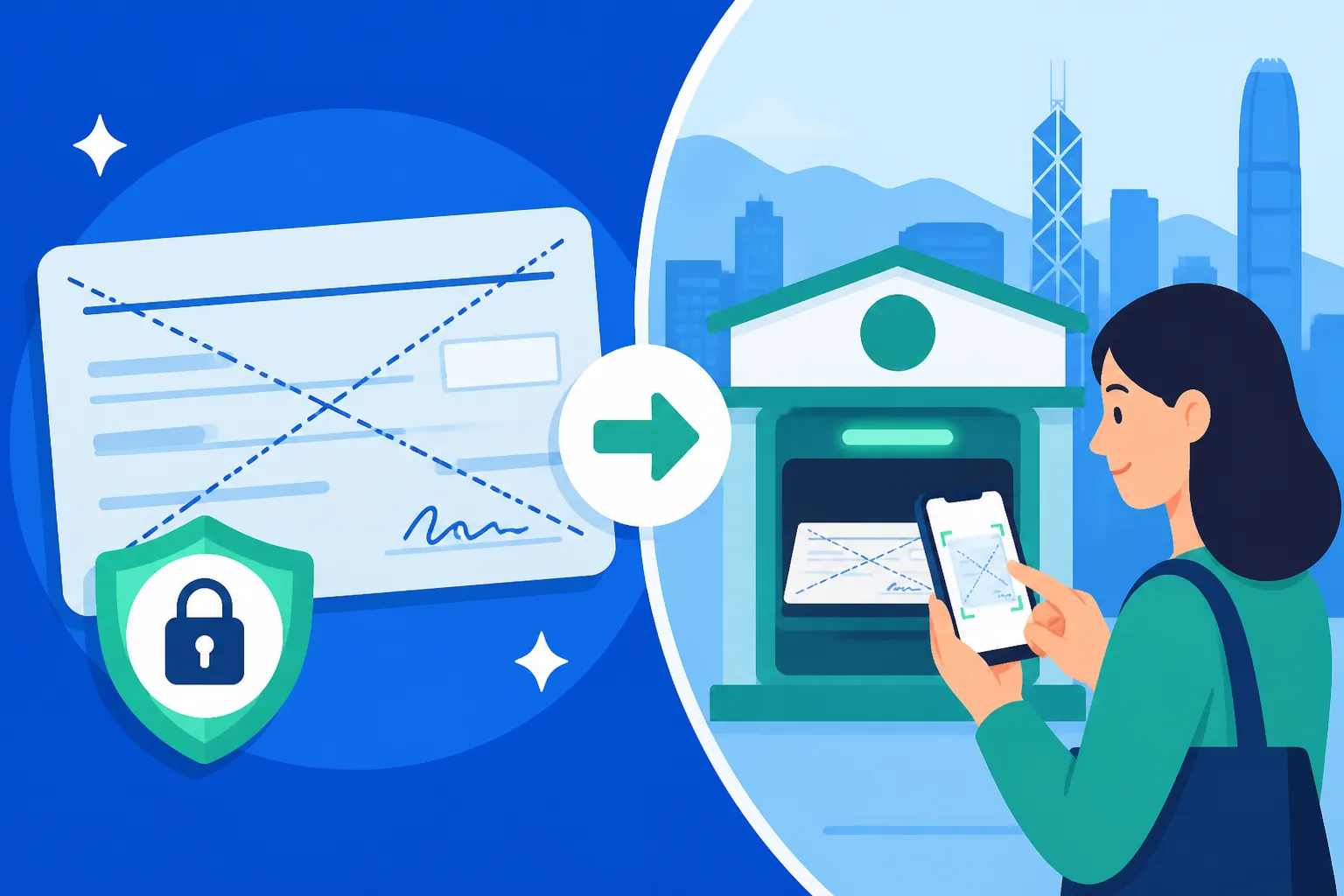
A cross-cheque is essentially a regular cheque that has two parallel transverse lines drawn across its face, usually on the left-hand side or across the entire cheque. Sometimes, words like “A/C Payee Only” (Account Payee Only) or “Not Negotiable” are also written between these lines. The core purpose of these markings is to ensure that the payment cannot be encashed over the counter. Instead, the funds must be deposited directly into a bank account. This provides a crucial layer of security, as it leaves an audit trail, making it much harder for a stolen or lost cheque to be fraudulently cashed by someone other than the intended recipient.
Imagine you've just received your housing allowance from your company, and it's a crossed cheque. If it were a regular, uncrossed cheque, someone could theoretically pick it up if you dropped it, walk into any bank, and try to cash it without proving they are you. With a cross-cheque, that's simply not possible. The bank will insist that the funds go into a specific account, usually the one belonging to the payee named on the cheque. This extra step protects both the issuer and the recipient from potential fraud, offering peace of mind in a bustling city like Hong Kong where things can go missing in a flash.
Why Banks Use Cross-Cheques Here
The prevalence of cross-cheques in Hong Kong stems from a long-standing banking tradition focused on security and accountability. For businesses and individuals making significant payments, issuing a cross-cheque is a standard practice to mitigate risks. It’s about establishing clear financial traceability. The “A/C Payee Only” instruction, often accompanying the crossing, further reinforces that the funds should only be credited to the account of the person or entity named as the payee, preventing further transfer of the cheque by endorsement to a third party. This system, while seemingly old-fashioned to some, works effectively to protect transactions within the Hong Kong banking system.
For instance, when your employer pays your salary by cheque, it's almost always a cross-cheque. This protects them from liability if the cheque is intercepted, as the money can only go into your verified bank account. It’s also common for government payments, like tax refunds, to be issued this way. If you've recently filed your taxes, you might receive a refund cheque that is crossed. It’s just how things are done here, and once you get the hang of it, it becomes second nature.
The Practicalities of Depositing a Cross-Cheque in HK
Okay, so you've got this crossed cheque in your hand. Now what? The process itself is straightforward once you know the steps, but a little preparation can save you a lot of hassle.
Step-by-Step Deposit Process
Depositing a cross-cheque in Hong Kong is quite simple. Here’s how you typically do it:
- Endorse the Cheque (if necessary): For cheques made out to you personally, you usually don't need to do anything to the back. However, if the cheque is made out to a company name that you are depositing into your personal account, or if it's made out to "cash" and you want it in your account, you might need to sign the back. It’s generally best practice to ensure your name, account number, and signature are on the back if there's any ambiguity. If it’s strictly "A/C Payee Only" and made out to you, leave the back blank.
- Fill Out a Deposit Slip: This is crucial. Every bank will have deposit slips readily available at their branches or next to the ATM machines designed for cheque deposits. You’ll need to fill in:
- Your bank account number.
- Your name.
- The date.
- The amount of the cheque.
- The number of cheques you are depositing.
- The cheque number (optional but good practice).
Make sure all details are clear and legible.
- Choose Your Deposit Method:
- ATM (Automated Teller Machine): Most bank ATMs in Hong Kong have a dedicated slot for cheque deposits. You insert the deposit slip and the cheque(s) into the machine together. The ATM will often provide a receipt confirming your deposit. This is usually the quickest and most convenient method, especially outside banking hours.
- Teller: If you prefer human interaction or have a complex query, you can deposit your cheque at the teller counter during banking hours. They will process it for you and provide a stamped receipt. This can be helpful if you’re unsure about endorsing the cheque or filling out the slip correctly.
- Drop Box: Some banks also have secure drop boxes, typically within their branch lobbies, for cheque deposits. These are usually cleared once or twice a day.
Remember to keep your deposit slip receipt! It's your proof of deposit, just in case there are any issues later. For those new to banking in Hong Kong, getting a traditional bank account set up is a key first step, whether it's with HSBC, Standard Chartered, or BOC. You can learn more about Opening a Traditional Bank Account: HSBC, Standard Chartered, and BOC to get started.
Common Pitfalls and How to Avoid Them
Even straightforward processes can have their quirks. Here are some common pitfalls expats encounter when depositing cross-cheques and how to steer clear:
- Incorrect or Missing Endorsement: As mentioned, for "A/C Payee Only" cheques made out to you, avoid signing the back unless specifically requested by the bank. If the cheque is made out to a company you run, but you try to deposit it into your personal account without proper company endorsement and relevant documents, it will bounce. Always match the payee name on the cheque to the account name.
- Missing or Illegible Details on Deposit Slip: A hastily scribbled account number or an omitted amount can cause delays. Double-check everything before inserting it into the ATM or handing it to the teller.
- Bank Holidays and Processing Times: Be mindful of public holidays. Cheques deposited on a holiday or late on a business day might only begin processing on the next working day, extending the time until funds are available. Hong Kong has many public holidays, so it's worth checking the calendar.
- Stale Cheques: Cheques usually have a validity period, typically six months from the date of issue in Hong Kong. Depositing a cheque older than this period will result in it being rejected.
- Post-Dated Cheques: Occasionally, you might receive a cheque with a future date. You cannot deposit this cheque until that specific date arrives. Banks will reject it if presented early.
Avoiding these small errors can save you a return trip to the bank or a call to the issuer.
Processing Times and Funds Availability
Once you’ve successfully deposited your cross-cheque, the funds won’t appear instantly in your account. The cheque needs to clear.
Typically, in Hong Kong, cheques clear on the next business day (T+1). This means if you deposit a cheque on Monday, the funds should be available for use on Tuesday. However, if you deposit it late in the afternoon, it might be treated as a deposit for the next day, pushing the availability of funds to Wednesday. Weekends and public holidays will naturally extend this timeline. For example, a cheque deposited on Friday will likely clear on Monday. Some banks might offer same-day clearing for certain large corporate cheques, but this isn’t the norm for personal deposits.
It's always a good idea to factor in this clearing time, especially if you're waiting for funds to pay a bill or make a transfer. If you're managing your finances closely, perhaps tracking your Everyday Budgeting in HK: Cost of Living Benchmarks (2026), understanding these timelines is vital.
Alternatives to Cheques for Everyday Payments
While cross-cheques are part of the Hong Kong financial ecosystem, the city is also at the forefront of digital payment innovation. For expats, knowing these alternatives can often make life a lot smoother and faster than dealing with paper cheques.
Digital Payment Methods
Hong Kong has embraced digital payments with gusto. For many transactions, you’ll find these methods far more convenient and immediate than cheques.
- Faster Payment System (FPS): This is a game-changer. FPS allows instant payments and transfers between different banks and payment service providers in Hong Kong, 24/7, for free. You can initiate transfers using a mobile number, email address, or even your HKID number. It's incredibly common for peer-to-peer payments, paying utility bills, or even small business transactions. If you need to pay your rent or send money to a friend, FPS is usually the go-to. Setting up FPS Auto-Debit for Your Rent and Credit Card Bills can also automate many payments, ensuring you never miss a deadline.
- PayMe: Developed by HSBC, PayMe is a popular peer-to-peer mobile payment app in Hong Kong. It allows users to send and receive money instantly from their phone. It’s widely used among friends for splitting bills or small payments.
- AlipayHK and WeChat Pay: These mobile payment apps, originating from Mainland China, are also very popular in Hong Kong, especially with local businesses and for cross-border transactions. They often offer various promotions and discounts, and many stores accept them. If you’re regularly using AlipayHK and PayMe for purchases, you’ll find them seamless.
- Octopus Card: While primarily known for public transport, the Octopus Card is also accepted for small payments at convenience stores, supermarkets, and many other retail outlets. It’s incredibly convenient for daily micro-transactions. Learning how to use The Octopus Card: Hong Kong's Essential Transport & Payment Tool is often one of the first things new expats do.
Bank Transfers and Other Options
Beyond instant digital payments, traditional bank transfers and specialized services are also widely used.
- Local Bank Transfers: You can always initiate a direct bank transfer through your online banking portal or at a branch. While not always instant like FPS (unless it's an FPS transfer), it's a reliable way to move money between accounts.
- International Remittance Services: If you need to send money back to your home country or receive funds from overseas, services like Wise (formerly TransferWise) offer competitive exchange rates and lower fees compared to traditional bank SWIFT transfers. They can be incredibly helpful for managing your international finances, whether you're sending money home or receiving a payment from abroad. For expats juggling finances across borders, platforms like Wise often become indispensable tools. Another useful resource for expats, especially those dealing with complex tax situations, might be to consult services like Taxes for Expats to ensure all financial obligations are met, both locally and in their home country. Understanding your Double Taxation Relief: US Citizens Filing Taxes in Hong Kong is critical here.
To help you visualise the differences, here's a quick comparison of various payment methods in Hong Kong:
| Feature | Cross-Cheque | FPS/PayMe | Wise (International Transfers) | Bank Transfer (Local, non-FPS) | Octopus Card |
|---|---|---|---|---|---|
| Speed | T+1 (Next Business Day) | Instant (24/7) | Typically 0-2 business days | Same day / Next day | Instant |
| Security | High (Account Payee Only, Audit) | High (Encrypted, Bank-level) | High (Regulated, Secure platform) | High (Bank-level security) | High (Low risk for small amounts) |
| Convenience | Requires physical trip/ATM | High (Mobile app) | High (Online/App) | Medium (Online/App/Branch) | Very High (Tap & Go) |
| Fees | Usually none for deposit | None | Low, transparent fees | Varies (may have interbank fees) | None for payment, small deposit fee for card |
| Traceability | Excellent (Audit trail) | Excellent (Digital records) | Excellent (Digital records) | Excellent (Digital records) | Good (Transaction history) |
| Use Case | Rent, salary, large payments | P2P, small retail, bill payments | Sending/receiving international funds | Larger payments, non-FPS companies | Public transport, daily small buys |
As you can see, while cross-cheques serve a specific, secure purpose, for the sheer speed and convenience of everyday transactions, Hong Kong’s digital payment ecosystem is hard to beat. Familiarise yourself with them, and you’ll find managing your money in this vibrant city becomes much more efficient. Don't forget that managing your finances also includes understanding your Hong Kong Tax Guide for Expats: Salaries Tax and Filing (2026), which is another essential area to navigate as an expat.
Disclaimer
The information provided in this guide is for general informational purposes only and does not constitute financial or legal advice. While we strive to keep the information up-to-date and accurate, banking regulations, payment systems, and policies can change. Always consult with your specific bank or a qualified financial advisor for advice tailored to your individual situation.