International School Waitlists: How Long Do Expats Really Wait?
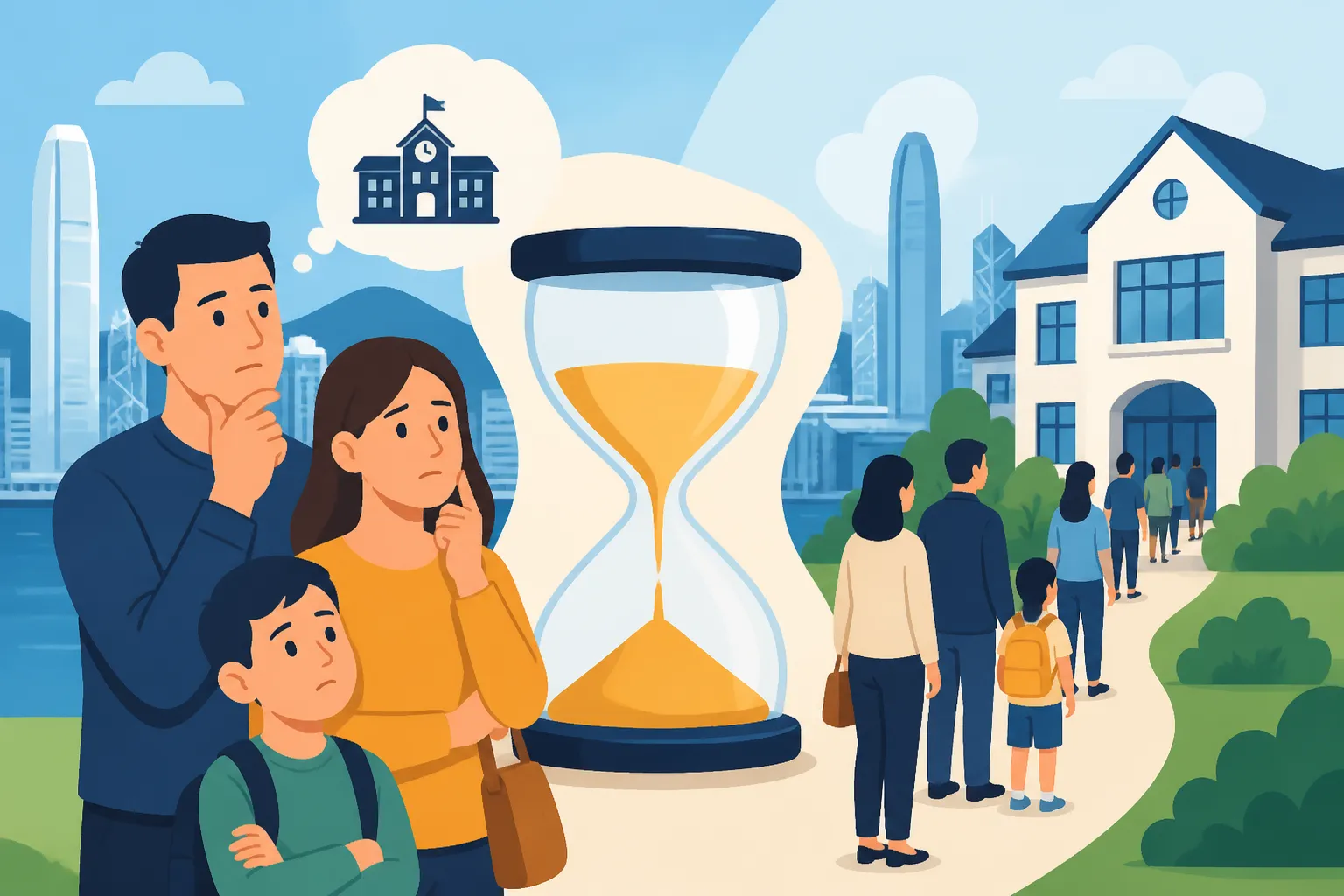
Landing your dream job in the Fragrant Harbour is often easier than finding a school desk for your child. I remember the cold sweat I broke into when a registrar at a top-tier Southside school told me the waitlist for Reception was three years long—and my daughter was already three. This guide breaks down the "black box" of Hong Kong admissions to show you exactly how long you’ll wait and how to jump the queue.
The Brutal Reality of Hong Kong International School Waitlists
If you are moving here expecting a simple first-come, first-served enrollment process, I need to gently burst that bubble right now. In Hong Kong, a "waitlist" isn't a chronological line; it’s a shifting pool of candidates where your position can move backward just as easily as it moves forward. The length of time you will wait depends less on when you applied and more on who you are and what you are willing to pay.
For the most "prestigious" institutions, such as the Hong Kong International School (HKIS) or the German Swiss International School (GSIS), waitlists for popular entry points like Reception, Year 1, or Year 7 can be indefinitely long. I have known families who stayed on a waitlist for four years, only to eventually give up and move to Singapore. However, the landscape is changing. With the recent shifts in expat demographics, some schools that were once "impenetrable" now have surprising pockets of availability.
The key is to understand that schools categorize applicants into priority tiers. If you are in Tier 4 (no sibling, no corporate debenture, no alumni connection), you might never reach the top of the list. This is why International Schools in HK: Curriculums, Debentures, and Applications research is the most important homework you will do before you even pack your first shipping crate.
Understanding the Priority System and Priority Tiers
To navigate the waitlist, you have to understand how the schools sort their stacks of applications. Every school has a slightly different hierarchy, but they generally follow a predictable pattern. Siblings of current students are almost always at the very top. If you have one child in, the second child is usually a "done deal," though they still have to pass a basic assessment.
After siblings come the debenture holders. This is the part of Hong Kong life that usually makes newcomers' jaws drop. A debenture is essentially a "place-holder" loan or a non-refundable levy paid to the school to secure priority. Some corporate debentures at top schools trade for millions of Hong Kong dollars on the secondary market. If your company provides one, your wait time could drop from three years to three months. If you are paying out of pocket, you’ll need to look at International School Debentures in HK: Capital Levies and Waitlists to see which ones are actually worth the investment.
Beyond debentures, schools look at alumni status and then "diversity" markers. Some schools, particularly those tied to specific nationalities like the French International School or the Japanese School, reserve spots for passport holders of those countries. If you don't fit into these high-priority categories, your strategy needs to be much more aggressive.
Average Wait Times by School Category
While every child’s situation is unique, we can look at the "market average" for wait times based on the type of school. The English Schools Foundation (ESF), for example, is the largest provider of English-medium international education in the city. Because they have a massive network, their waitlists are often more manageable than standalone private schools, provided you live in the right area. You should check ESF Primary and Secondary Schools: Catchment Areas and Zones to see where your residential address places you, as this dictates your "home" school and your place in their queue.
| School Category | Typical Wait Time (No Priority) | Typical Wait Time (With Debenture) | Entry Difficulty |
|---|---|---|---|
| Top-Tier Private (HKIS, Kellett, GSIS) | 2 – 4 Years | 6 – 12 Months | Extreme |
| ESF Schools | 1 – 2 Years | 3 – 6 Months (Nomination Right) | High |
| Newer International Schools (Malvern, Shrewsbury) | 0 – 1 Year | Immediate | Moderate |
| Bilingual / Local-Private Hybrid | 6 – 18 Months | 3 – 6 Months | High |
The "Newer" schools listed in the table were often built to alleviate the very waitlists we’re discussing. Schools like Stamford American or Malvern College Hong Kong have brought much-needed capacity to the market. For many expats, these are the "sanity-saving" options that allow them to get their kids into a high-quality classroom immediately while waiting for a spot at a legacy school.
Strategic Moves to Bypass the Queue
If you are staring at a "Position 150" notification, don't despair. There are ways to move the needle. The first is the Nomination Right. For example, the ESF Non-Refundable Capital Levy (NCL) and Nomination Rights scheme allows parents to pay a significant fee (currently HK$500,000 for a single nomination right) to jump to the front of the queue. While it’s a lot of money, it is often cheaper than a year of private tutoring or the lost income from a spouse having to homeschool.
Another strategy is to target bilingual schools. Many expats overlook these because they fear the Mandarin workload, but they are often excellent institutions with slightly more flexible waitlists. To prepare your child for the entrance interview at a bilingual school, I highly recommend using platforms like Preply or iTalki to find a tutor for a few months before you arrive. Getting your child comfortable with basic Mandarin greetings can be the "X-factor" that gets them through a competitive assessment.
Furthermore, don't underestimate the power of the "Mid-Year Shuffle." Hong Kong is a transient city. Expats lose jobs, get relocated, or decide to head home suddenly in December or April. Parents should call the admissions office the week after Christmas and the week after Easter. Spots often open up unexpectedly, and the school would rather fill a seat immediately with a "ready-to-go" applicant than work through a dormant waitlist of people who might have already left the city.
Preparing Your Child for the Assessment
Even if you reach the top of the waitlist, your child still has to "earn" the spot through an assessment. For younger children, this is usually a "playgroup" style observation. For older kids, it involves rigorous testing in English and Math. The pressure can be immense, and a "fail" at this stage means back to the bottom of the list—or off it entirely.
If your child is coming from a non-British or non-American curriculum, they might find the testing style unfamiliar. This is another area where iTalki or Preply can be a lifesaver. You can find tutors who specifically specialize in "International School Entrance Exam Prep" for Hong Kong. Having your child practice their verbal reasoning or creative writing with a tutor who understands the HK standard can significantly boost their confidence.
It's also worth checking Interview Tips for HK Kindergartens: Preparing Your Toddler even if your child is slightly older, as the cultural expectations for "politeness" and "focus" in Hong Kong interviews are quite specific and can differ from what you’re used to in London or New York.
Alternative Paths When the Top Tier is Full
What happens if the wait is truly too long? Many expats are now exploring Local HK Schools for Expat Kids: Pros, Cons, and EDB Subsidies. While the "local" system is known for being high-pressure, there are many "Direct Subsidy Scheme" (DSS) schools that offer a more balanced approach and a great way for your child to become truly fluent in the local culture. The waitlists for these are often shorter for foreign families because the schools are keen to maintain a diverse student body.
If you choose a more local or bilingual route, you will need to support your child’s language development. Using Preply to find a Cantonese or Mandarin tutor can help them bridge the gap between their international home life and their local school environment.
Additionally, look into Are There Any Affordable International Schools in Hong Kong? as several newer "budget-friendly" international schools have opened in the New Territories. These schools might require a longer commute, but they often have much shorter waitlists and a more welcoming atmosphere for families who haven't been on a list since the third trimester of pregnancy.
Managing Your Expectations and the Admissions Office
My final piece of advice is to be a "politely persistent" parent. Admissions officers in Hong Kong are overwhelmed. They receive thousands of emails a month. Checking in once every two months to reiterate your "strong interest" and to update them on your child's latest school report or extracurricular achievement can keep your file on the top of the metaphorical pile.
Don't be the "angry expat" demanding a spot; be the "committed family" who is excited about the school’s specific mission. Mentioning how you’ve been using iTalki to help your child prepare for the school’s specific language requirements shows that you are proactive and serious about their curriculum.
Ultimately, most expats do find a spot. It might not be at Applying to Hong Kong International School (HKIS): Timeline and Tips on Day 1, but by Year 2, most families have successfully navigated the system and found a community where their children thrive.
Disclaimer
The information provided in this guide is for general informational purposes only and reflects the Hong Kong education landscape as of 2026. School fees, waitlist policies, and debenture costs are subject to frequent change by individual institutions and the Education Bureau (EDB). We are not an educational consultancy and do not guarantee school placement. Parents should contact school admissions offices directly for the most current data.