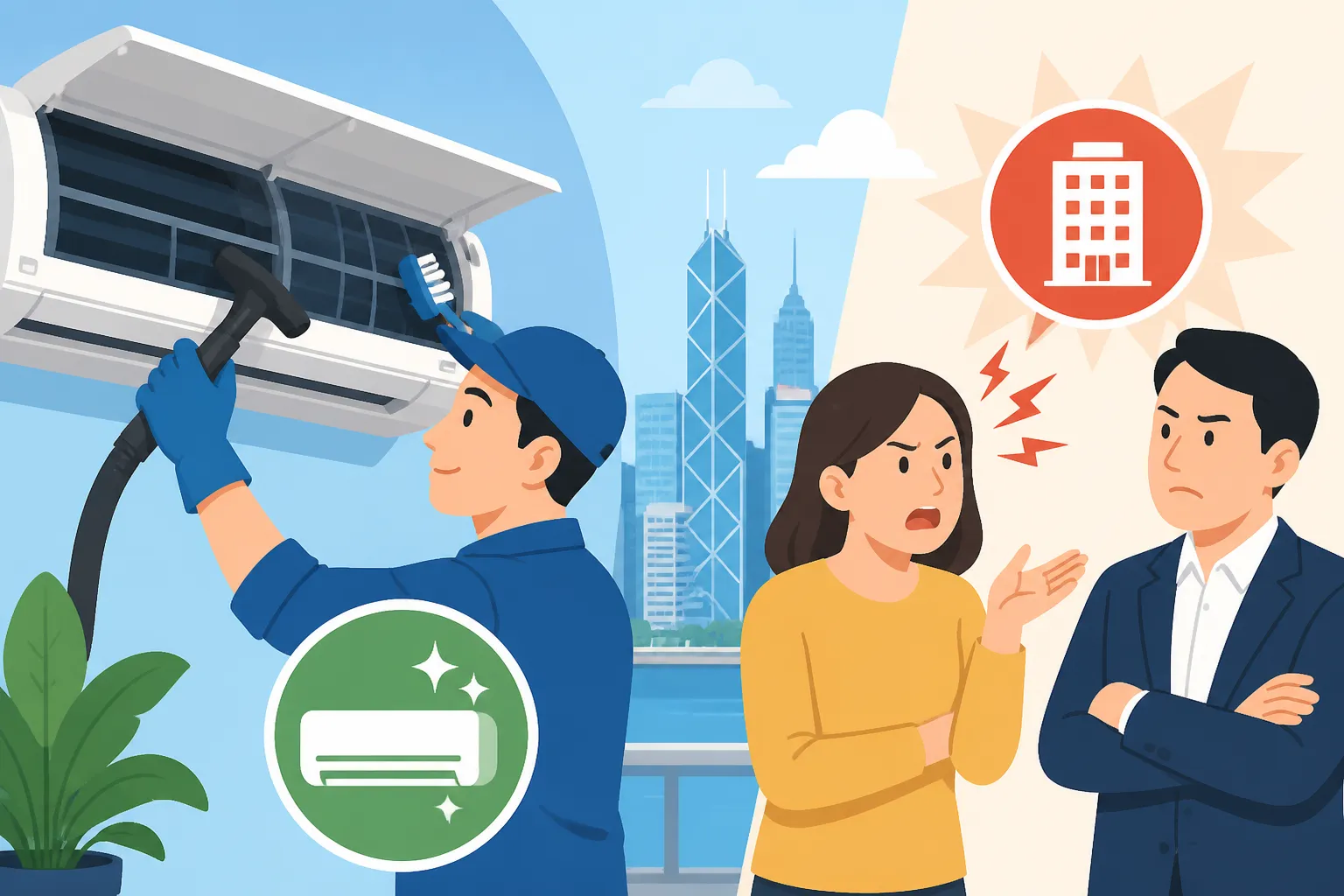
Air Conditioner Maintenance: Cleaning Schedules and Landlord Disputes
Living in Hong Kong means entering into a lifelong, high-stakes relationship with your air conditioning unit. Between the suffocating humidity of July and the relentless "black rain" days, your AC is often the only thing standing between a comfortable home and a mold-infested sauna. This guide solves the recurring headache of AC upkeep by detailing the ideal cleaning schedules, outlining how to navigate the inevitable maintenance disputes with landlords, and providing the local knowledge needed to keep your unit running without draining your bank account.
The Reality of Air Conditioning in a Subtropical Metropolis
When you first land in Hong Kong, you might be overwhelmed by the sheer density of the city, but you will quickly notice that every building is armored with hundreds of metal boxes dripping onto the pavement. Those boxes are your lifeline. Unlike in many Western countries where AC is a luxury or a seasonal convenience, here it is a fundamental utility. Because of the extreme humidity levels—which frequently hover above 90% during the spring and summer—your AC unit does more than just cool the air; it acts as a primary dehumidifier. Without it, your walls will literally begin to weep, and mold will colonize your leather shoes within forty-eight hours.
Most expats will encounter two types of units: the older, noisier "window units" commonly found in older walk-ups in areas like Kennedy Town or Wan Chai, and the sleeker "split-type" units found in modern high-rises. If you are staying in managed or flexible housing solutions like those offered by Blueground or Habyt, much of the initial maintenance and quality checks are handled before you move in. However, if you are renting from an individual landlord in the private market, the state of the AC is often the first major point of contention. You might walk into a beautiful flat only to realize the units haven't been professionally cleaned since the SARS era.
Understanding your unit is the first step toward avoiding a disaster. Window units are cheaper to replace but less efficient and much louder. Split types are quieter and more powerful but require a more complex cleaning process because the compressor is located outside on a ledge that is often difficult to access. If you used a relocation service like Sirelo to bring your life to Hong Kong, the last thing you want is for your imported furniture to be ruined by a leaking split-type unit that was neglected by the previous tenant.
The Essential AC Cleaning Schedule for Expats
Maintaining an air conditioner in Hong Kong is not a "once a year" task. If you treat it that way, you will almost certainly face a breakdown during the hottest week of the year. To keep the air quality high and the electricity bills manageable, you need a tiered approach to maintenance. Many foreigners make the mistake of assuming the landlord handles everything, but daily or monthly upkeep usually falls under the tenant's responsibility to maintain the property in a "tenantable" condition.
Monthly DIY Filter Cleaning
Every 3 to 4 weeks, you must open the front panel of your unit and slide out the mesh filters. In Hong Kong’s dusty urban environment, these filters become clogged with a thick grey felt of skin cells, street dust, and mold spores remarkably quickly. Clogged filters force the motor to work twice as hard, which spikes your energy consumption. To clean them, simply rinse them under lukewarm water in your shower, let them air dry completely (never put them back wet, or you’ll trigger mold growth), and slide them back in. This simple habit can extend the life of your unit by years and is a crucial part of Dealing with Humidity and Mold in Your Apartment.
Bi-Annual Professional Servicing
Twice a year—once in March before the "big heat" starts and once in October after the peak season ends—you should call in a technician for a basic check-up. This isn't just about the filters; it's about checking the coolant levels and ensuring the drainage pipe isn't blocked by "jelly," a thick bacterial slime that grows in the condensation trays of Hong Kong ACs. A blocked drain is the number one cause of indoor leaks. If you live in a high-density area, it's also worth checking the Everyday Etiquette and Safety in Hong Kong: A Survival Guide to ensure your unit isn't dripping onto pedestrians below, as this can lead to heavy fines from the Food and Environmental Hygiene Department (FEHD).
The Full Chemical Wash
Every 12 to 24 months, depending on how heavily you use the unit, you need a "chemical wash." This involves a technician dismantling the unit and using a pressurized alkaline or acidic solution to deep-clean the cooling coils. This is the only way to remove the deep-seated mold that hides behind the fan blades. If you notice a "musty" or "sour" smell when you turn on the AC, you are already breathing in mold spores, and a chemical wash is non-negotiable. For those in co-living spaces like Habyt, these deep cleans are often scheduled as part of the building management's routine, but in private rentals, you may need to How to Negotiate Rent with a Hong Kong Landlord to include these costs in your contract.
Navigating Landlord Disputes and Maintenance Responsibilities
The most common source of friction between expats and Hong Kong landlords is the question of who pays when the AC stops blowing cold air. The standard Hong Kong tenancy agreement is notoriously vague, usually stating that the landlord is responsible for "structural" repairs and the tenant for "internal" repairs. Landlords often argue that AC maintenance is the tenant’s job, while tenants argue that an old, failing machine is the landlord’s capital asset.
The Fair Wear and Tear Argument
In most cases, if a unit fails due to "fair wear and tear"—meaning it simply reached the end of its mechanical life—the landlord is legally obligated to repair or replace it. However, the landlord will often counter-claim that the failure was due to the tenant's lack of cleaning. This is why keeping a record of your monthly filter cleanings is vital. If you can prove you’ve maintained the unit, the landlord has a much harder time blaming you for a compressor failure. Understanding Who Pays for Repairs: Landlord or Tenant Obligations? is essential before you sign any lease.
Handling the "Dripping Unit" Fine
In Hong Kong, if your AC unit drips onto the street or a neighbor’s ledge, the FEHD can issue a "Nuisance Notice." If you fail to fix the leak within the specified period, you can be fined up to HK$10,000, with an additional daily fine of HK$200. Most landlords will try to pass this fine to the tenant. To protect yourself, ensure your lease has a clear clause stating that the landlord is responsible for the external drainage pipes and the structural integrity of the AC unit. If you find yourself in a stalemate, you might need to look into Recovering Your Security Deposit: Wear and Tear vs Damage if the landlord tries to deduct repair costs from your bond at the end of the term.
Using Managed Housing to Avoid the Drama
If the idea of arguing with a local landlord over a broken compressor sounds exhausting, many expats opt for professionally managed apartments. Companies like Blueground provide fully furnished homes where maintenance is handled via an app. Similarly, Habyt offers a seamless experience where utility issues are resolved by a dedicated team. This eliminates the "landlord lottery" where you might end up with someone who refuses to replace a twenty-year-old unit that sounds like a jet engine. This is particularly helpful for newcomers who are still figuring out Setting Up HK Electric or CLP Power: Deposits and Tariffs and don't want the added stress of finding their own reliable contractors.
Professional Services vs. DIY: When to Call the Experts
While cleaning a filter is a five-minute DIY job, almost everything else involving a Hong Kong AC should be left to the professionals. The units are often perched on precarious ledges thirty floors above the ground. Attempting to lean out and clear a drain pipe yourself is not only dangerous but could also violate your insurance policy. Furthermore, the chemicals used in deep cleans are caustic and require proper neutralization to prevent damaging the aluminum fins of the evaporator.
When hiring a technician, avoid the "unlicensed handyman" types often found on random flyers. Look for companies that provide a formal receipt and a warranty on their work (usually 3 months for a chemical wash). If the technician finds a leak in the refrigerant line, they will need to "top up the gas." Be aware that if your unit requires frequent gas top-ups, there is a physical hole in the pipe that needs welding; simply adding gas is a temporary and environmentally unfriendly fix. If you are living in areas like Mid-Levels or Discovery Bay, prices for these services might be slightly higher due to travel time, so it's wise to check Cost of Living in Central vs New Territories: A Practical Comparison to budget accordingly.
| Service Type | Frequency | Estimated Cost (HKD) | Responsibility |
|---|---|---|---|
| Filter Cleaning | Monthly | $0 (DIY) | Tenant |
| Basic Check-up | Bi-Annually | $400 – $600 per unit | Tenant / Landlord (Negotiable) |
| Chemical Wash | Every 1-2 Years | $800 – $1,200 per unit | Landlord (Standard) |
| Compressor Repair | As Needed | $2,500+ | Landlord (Structural) |
| Drain Pipe Unclogging | As Needed | $500 – $800 | Tenant (Maintenance) |
Staying Cool and Mold-Free: Pro Tips for Expats
Beyond the mechanical maintenance, how you use your AC in Hong Kong dictates how long it will last. A common mistake is turning the AC off entirely when you go to work. In the peak of summer, the humidity inside a sealed apartment will rise so quickly that the AC will have to work at 100% capacity for hours just to bring the temperature back down when you return. Instead, use the "Dry" mode (indicated by a water drop icon). This mode focuses on removing moisture without freezing the room, and it is significantly cheaper to run than the standard "Cool" mode.
Another tip is to supplement your AC with a high-quality dehumidifier. By keeping the ambient humidity below 60%, you prevent the AC from having to do all the heavy lifting. This also protects your belongings, especially if you have moved items from cooler climates using Sirelo. If you are still in your first month in the city, make sure to cross-reference your Essential Health Checklist for Your First 30 Days in Hong Kong to ensure your indoor air quality isn't contributing to the "Hong Kong cough" caused by dirty vents.
Finally, always keep a copy of your Understanding the HK Tenancy Agreement: Fixed vs Flexible Terms handy. If a dispute escalates, having the specific wording regarding "electrical appliances" can save you thousands of dollars. Whether you are in a sleek Blueground flat or a cozy village house, the air conditioner is the heart of your home. Treat it with respect, clean those filters, and don't let a stubborn landlord leave you sweating in the humidity.
Disclaimer
The information provided in this guide is for general informational purposes only and does not constitute legal or professional advice. While we strive to provide up-to-date and accurate information regarding Hong Kong property customs and maintenance standards, tenancy laws and individual contracts vary. Always consult with a qualified legal professional or the Hong Kong Labour/Landlord-Tenant departments regarding specific disputes. Maintenance costs and brand policies mentioned are subject to change based on market conditions and individual service agreements.