Medical Certificates (TD256) Required for Older Drivers
Renewing a driving license in Hong Kong is usually a straightforward administrative task, but for our more seasoned community members, it can suddenly become a source of significant anxiety. Once you hit a certain age, the Transport Department introduces the TD256 medical certificate requirement, turning a simple renewal into a multi-step medical and bureaucratic process. This guide navigates the complexities of the TD256 form, helping you maintain your independence on the road while meeting the city's strict safety standards.
Understanding the Hong Kong License Renewal Cycle for Seniors
The first time many expats realize that the rules have changed is when they receive a renewal notice that looks slightly different from the one they got ten years prior. In Hong Kong, the Transport Department is uncompromising when it comes to the safety of its high-density roads. While a younger driver might enjoy a ten-year license validity, the window narrows significantly as we age. This isn't just a matter of signing a few papers; it involves a mandatory health check that ensures your reflexes, vision, and general health are up to the task of navigating the narrow streets of Mid-Levels or the fast-paced highways of the New Territories.
Age Thresholds and Validity Periods
In Hong Kong, the magic number for private car and motorcycle license holders is 70. Once you reach the age of 70, you are no longer eligible for the standard ten-year license. Instead, you must choose between a one-year or a three-year renewal. Regardless of which one you pick, you must provide a TD256 Medical Certificate every single time you renew. This can be a bit of a shock if you have just spent the last decade driving without a single interaction with the Transport Department. It is essential to check your license expiry date at least four months in advance, as the medical appointment and subsequent processing can take longer than expected.
For those who hold commercial licenses—such as for heavy goods vehicles or public buses—the rules are even stricter. Many commercial drivers must start the medical certification process much earlier, often at age 60. Even if you only use your "Full Driving License" for a private car but happen to have commercial categories endorsed on the back from a previous Converting an Overseas Driving License to a HK License (TD637) process, you might find yourself triggered for a medical check earlier than your peers. It is a peculiar quirk of the system that catches many by surprise.
The Specific Role of the TD256 Form
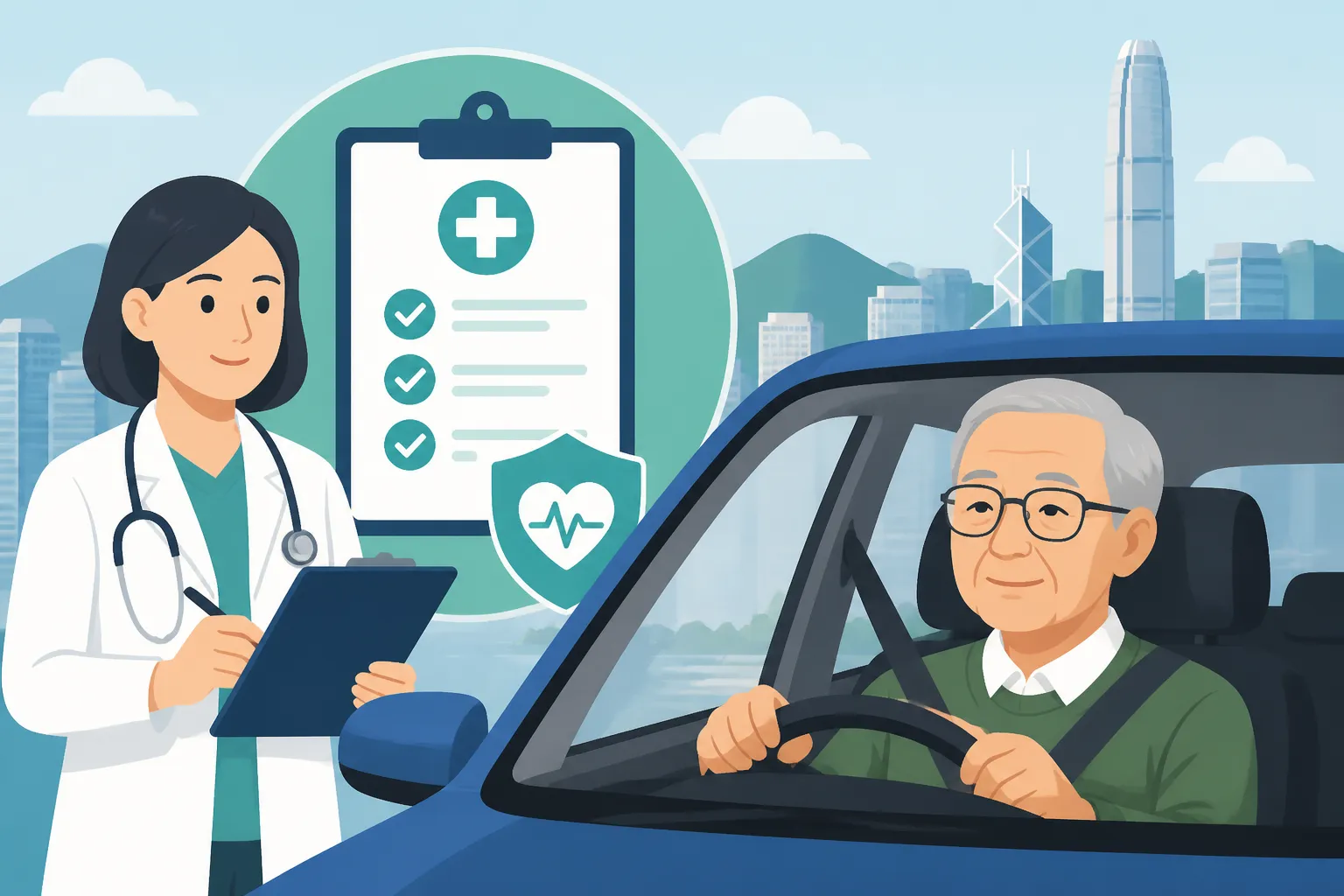
The TD256, officially titled the "Medical Certificate for a Person Aged 70 or Above," is a legal document that must be completed by a registered medical practitioner. It is not something you can fill out yourself. The form acts as a professional endorsement of your physical and mental fitness to operate a motor vehicle. The Transport Department uses this as a shield against liability and as a proactive measure to reduce accidents involving senior drivers. For an expat, this form is a gatekeeper; without a "satisfactory" result on this document, your renewal application will be rejected outright.
The form itself is divided into sections covering vision, hearing, and general physical condition. It also asks the doctor to flag any history of stroke, epilepsy, or dementia. It is worth noting that the doctor isn't just checking if you are "healthy" in a general sense; they are checking if you are "fit to drive." You might be perfectly capable of a long hike in Sai Kung but have a specific vision impairment that the TD deems a risk for night driving. Understanding this distinction is key to managing your expectations when you walk into the clinic.
How to Obtain and Complete the TD256 Medical Certificate
Finding a doctor to sign off on your TD256 is the most critical part of the journey. While you might be tempted to go to the nearest walk-in clinic, it is often better to visit a physician who knows your medical history. If you are new to the city and perhaps currently staying in a managed residence provided by Blueground while you look for a permanent home, you might not have a regular family doctor yet. In this case, you will need to find a registered medical practitioner who is comfortable performing the specific tests required by the Transport Department.
Finding the Right Doctor for Your Checkup
Most General Practitioners (GPs) in Hong Kong are well-versed in the TD256 process. However, if you prefer a doctor who speaks fluent English and understands the specific concerns of the expat community, you might look toward Finding English-Speaking General Practitioners (GPs) in Central. Clinics in areas like Central, Tsim Sha Tsui, and Discovery Bay deal with these forms daily. When booking your appointment, be very specific: tell the receptionist you need a physical examination for a "Transport Department Form TD256." This ensures they allot enough time for the vision and hearing tests.
Some expats choose to incorporate this requirement into their Annual Health Screening Packages (Body Checks): Where to Go. This is a smart move, as the comprehensive tests involved in a full body check will usually cover everything the TD256 requires. If you are already at one of the Private Hospitals in Hong Kong: Admission, Costs, and Insurance for a checkup, simply bring the form with you. Most doctors at Matilda or Hong Kong Sanatorium will be happy to complete it as part of your consultation, though they may charge a small additional administrative fee for the signature and stamp.
What Happens During the Medical Examination?
The examination is relatively standard but thorough. The doctor will perform a vision test, often using a Snellen chart, to ensure your eyesight meets the minimum requirements (with or without corrective lenses). They will also check your hearing, often through a simple whisper test or by observing your ability to hear a ticking watch. These might seem rudimentary, but they are the primary metrics the TD cares about. If you fail the vision test, you won't necessarily lose your license, but you will be required to get a new prescription for glasses before the doctor can sign the form.
Beyond the basics, the doctor will check your blood pressure and ask about any medications you are taking. Certain medications for heart conditions or diabetes can be a red flag if they cause drowsiness or sudden lightheadedness. The doctor's role is to ensure that you won't have a medical emergency behind the wheel. They will also assess your motor skills and coordination. If you have moved to Hong Kong recently and are still settling in—perhaps using Sirelo to coordinate the arrival of your household goods—the stress of relocation can sometimes spike your blood pressure. It is often wise to wait until you are settled before heading in for your TD256 exam to ensure a "normal" reading.
Common Medical Issues That Affect Approval
The most common hurdle for senior drivers in Hong Kong is declining vision, particularly the development of cataracts or glaucoma. The Transport Department is very strict about field of vision. If your doctor detects significant narrowing of your peripheral vision, they may refer you to an ophthalmologist for a more detailed report before they feel comfortable signing the TD256. This can add weeks to your renewal process, which is why we always recommend starting early.
Another area of concern is cognitive health. As part of our Mental Health in Hong Kong: Counseling and Expat Support Services, we often discuss how the stress of aging in a foreign country can affect mental clarity. If a doctor notices signs of early-stage cognitive decline or significant memory loss, they are ethically and legally bound to note this on the certificate. In such cases, the Transport Department may grant a license that is only valid for one year, or they may require a practical driving assessment at the Kwun Tong driving center to prove you can still handle the vehicle safely in traffic.
Navigating the Transport Department Submission Process
Once you have that precious signed and stamped TD256 in your hand, you are only halfway there. The next step involves the actual submission to the Transport Department. Hong Kong’s bureaucracy is efficient, but it is also rigid. If your form is missing a stamp, or if the doctor used the wrong color ink (yes, this has happened), it could be sent back. You need to approach the submission with the same attention to detail you used when following the Essential Health Checklist for Your First 30 Days in Hong Kong.
Required Documents Beyond the TD256
The TD256 is the centerpiece, but it doesn't stand alone. To renew your license, you must also submit the TD1 form (Application for Renewal of Full Driving License). Along with these two forms, you will need your original Hong Kong Identity Card (or a copy if applying by mail), your current driving license, and a recent proof of address dated within the last three months. If you are living in a co-living space like Habyt, make sure the proof of address is a formal utility bill or a bank statement, as the TD can be picky about accepting residential contracts from flexible housing providers.
For those who are not permanent residents, you must ensure your visa is still valid. The Transport Department generally doesn't check visa status as strictly as a bank might, but if your HKID is a "temporary" one, it pays to have your passport handy just in case. Also, remember that if you have moved recently, you must update your address with the department first. This is a common point of failure: people try to renew a license using a new address that hasn't been officially registered in the TD system yet.
Online vs. In-Person Submission at Licensing Offices
You have three main ways to submit your application: in person, by drop-box, or by post. While younger drivers can often renew online via the Gov.HK portal, those requiring a TD256 often find that the online system directs them to a physical submission because of the medical certificate scan requirements. If you prefer the human touch, you can head to one of the four licensing offices in Admiralty, Cheung Sha Wan, Kwun Tong, or Shatin. We highly recommend Booking Appointments for License Renewal via Gov.HK to avoid the legendary two-hour queues.
If you don't want to wait in line, the drop-boxes located at the licensing offices are a great middle-ground. You place all your documents and a cheque for the fee in an envelope and drop it in. This is usually processed within 10 working days. If you are currently busy managing a move or using Sirelo to ship items back to your home country, the postal option is the most convenient, though you should always use registered mail. Losing your original driving license and a signed medical certificate in the mail is a headache no one needs.
Costs and Processing Times in 2026
As of 2026, the fees for license renewal for those aged 70 or above remain relatively modest compared to other Car Ownership Costs in HK: Parking, Insurance, and Registration. A one-year renewal is approximately HKD 52, while a three-year renewal is HKD 150. These fees are significantly lower than the standard ten-year fee, acknowledging the fact that seniors have to undergo the medical check more frequently. Payment can be made via cheque, or if you are at the counter, via Octopus card or FPS.
| License Type | Age Group | Validity | TD256 Required? | Approximate Fee (2026) |
|---|---|---|---|---|
| Private Car / Cycle | Under 60 | 10 Years | No | HKD 900 |
| Private Car / Cycle | 60 – 69 | Until age 70 | No | Pro-rata |
| Private Car / Cycle | 70 or Above | 1 or 3 Years | Yes | HKD 52 / HKD 150 |
| Commercial | Varies | 1 or 3 Years | Often at 60+ | HKD 52 / HKD 150 |
Processing times are generally stable. If you go in person with an appointment, you will usually walk out with your new license the same day. If you use the drop-box or mail, expect a 10 to 14-day turnaround. During this time, you should keep a photocopy of your application and your old license, though technically you shouldn't drive if your license has already expired and the new one hasn't arrived.
Practical Tips for Older Drivers in Hong Kong
Beyond the paperwork, being an older driver in Hong Kong requires a certain level of situational awareness. The city’s roads are notoriously unforgiving. From the steep, winding roads of the Peak to the aggressive minibus drivers in Kowloon, it takes a high level of concentration to stay safe. As you go through the TD256 process, it is a good time to reflect on your driving habits and whether any adjustments are needed to stay safe on the road.
Managing Driving Safety and Insurance
One thing the TD256 doesn't cover is your insurance. Even if the Transport Department says you are fit to drive, your insurance company might have different ideas. Once you pass 70, many local insurers will increase premiums or add higher deductibles. Some may even require their own separate medical report. It is worth shopping around or speaking to an expat-focused broker to ensure you are getting fair coverage. Ensure you are also up to date with modern road rules, such as Registering for HKeToll: Navigating HK's Cashless Tunnels, so you don't get hit with unnecessary fines that can add to the stress of driving.
Safety is also about the vehicle itself. Many seniors in Hong Kong opt for smaller, more manageable cars with high-tech safety features like 360-degree cameras and emergency braking. If you are currently staying in a Blueground apartment in a busy area like Causeway Bay, you might find that a smaller car makes parking and navigating tight turns much easier. Always keep a copy of your Everyday Etiquette and Safety in Hong Kong: A Survival Guide in mind—patience is a virtue on Hong Kong roads, especially when dealing with the high-pressure environment of the city's tunnels.
Alternatives to Driving: When to Consider Other Options
There may come a time when the TD256 process becomes too burdensome, or you simply decide that driving in Hong Kong is no longer worth the hassle. The beauty of this city is that it has perhaps the best Public Transport in HK: MTR, Trams, Buses, and Ferries in the world. Many expats find that by moving to a more central location, perhaps a co-living space managed by Habyt or a serviced apartment, they can eliminate the need for a car entirely. Between the MTR, the ubiquitous red and green minibuses, and the affordable taxis, you can get anywhere in the city without ever having to worry about a medical certificate or a parking space.
If you do decide to hang up the keys, the transition can be surprisingly liberating. You no longer have to worry about the soaring costs of petrol or the annual struggle with the Transport Department. You can still maintain your license for identification purposes or for driving when you travel abroad, but for daily life in the "Fragrant Harbour," letting someone else do the driving is often the ultimate luxury of retirement.
Disclaimer
The information provided in this guide is for general informational purposes only and does not constitute legal or medical advice. Regulations regarding driving licenses and medical requirements in Hong Kong are subject to change by the Transport Department. Always consult with a registered medical practitioner for health-related concerns and refer to the official Transport Department website for the most current forms, fees, and submission procedures. Use of any third-party services mentioned is at the user's own discretion.