Dependent Visas in HK: Bringing Spouses and Children
Moving to a new city is hard enough, but doing it without your family is a burden no one should carry. Whether you are navigating the paperwork for a spouse or trying to secure your children's future in the Fragrant Harbour, the administrative hurdles can feel like an impenetrable wall. This guide solves the confusion by breaking down every step of the Hong Kong dependent visa process.
Understanding the Basics of the HK Dependent Visa
The Hong Kong dependent visa is the primary mechanism through which the government allows family members of legal residents to live, work, and study in the city. Unlike many other jurisdictions where a spouse might be restricted from seeking employment, Hong Kong is remarkably liberal in its approach to dependents. Once the visa is granted, the holder generally has the right to take up employment without needing a separate work permit from the Immigration Department. This makes the city an attractive destination for dual-career couples who are looking to relocate together without one partner sacrificing their professional trajectory.
However, the ease of the policy does not mean the application itself is a walk in the park. The Immigration Department (ImmD) is famously meticulous. They operate on a policy of "proof, not promises." You cannot simply state that you are married or that a child is yours; you must provide a mountain of documented evidence that meets their specific standards. For many expats, this is the first time they encounter the sheer volume of bureaucracy that Hong Kong can generate. It is not uncommon for applications to be delayed for weeks because a single document was not translated correctly or a signature was missing from a supporting form.
The dependent visa is inherently linked to the sponsor’s status. If the sponsor is here on a General Employment Policy (GEP): Standard Work Visas for Expats, the family’s legal right to stay is tied directly to that specific employment contract. If the sponsor loses their job or leaves the city, the dependents’ visas typically become invalid. Understanding this tethering is crucial for long-term planning, especially if you are considering buying property or committing to long-term school contracts. You aren't just managing one person's legal status; you are managing a collective family unit that lives and dies by the sponsor's visa validity.
Who Qualifies as a Sponsor
In the eyes of the Hong Kong Immigration Department, not everyone can bring their family over. To act as a sponsor, you must be a resident of Hong Kong who falls into specific categories. Most commonly, this includes those who have been admitted for employment (under the GEP or the Top Talent Pass Scheme (TTPS): The Fast-Track Work Visa), for investment as entrepreneurs, or for training. Additionally, those who have graduated from local universities and hold an IANG Visa: The Ultimate Path for Non-Local Graduates are also eligible to sponsor their immediate family members.
The sponsor must be able to demonstrate that they are the primary breadwinner or, at the very least, have the financial capacity to support the dependents at a standard well above the poverty line. ImmD looks at your base salary, your housing allowance, and any other guaranteed bonuses. If you are a freelancer or business owner, this becomes slightly more complex, as you will need to show audited accounts or significant personal savings. The goal of the department is to ensure that dependents do not become a "burden on the public purse." This means they want to see that you can afford private healthcare and that you aren't going to rely on government subsidies.
There is also a significant distinction between sponsors who are Permanent Residents (PR) and those who are on temporary work visas. Sponsors with Right of Abode (Permanent Residency): The 7-Year Journey have a wider scope for sponsorship. For instance, a Permanent Resident can often sponsor their elderly parents (aged 60 or above), whereas a temporary work visa holder generally cannot. This is a common point of frustration for mid-career expats who want to bring their retiring parents to Hong Kong to help with childcare or simply to keep the family together. Understanding your specific sponsor category is the first step in managing expectations for your family’s move.
Defining Eligible Dependents
Hong Kong’s definition of a "dependent" is strictly limited to immediate family. This includes your legal spouse and your unmarried, dependent children under the age of 18. It is important to note the word "legal." Hong Kong does not recognize common-law marriages or "de facto" relationships for the purpose of a dependent visa. If you have been living with a partner for ten years but do not have a marriage certificate issued by a government authority, they will not qualify for a dependent visa. In such cases, the partner might have to apply for their own work visa or consider the Unmarried Partner Visas (Prolonged Visitor Status) in HK, which offers residence but usually forbids employment.
For children, the age limit of 18 is a hard cutoff. If your child is 17 and 11 months when you apply, you are in a race against time. Once a child turns 18, they are no longer considered a dependent unless there are exceptional circumstances, such as a severe disability that prevents them from living independently. For most families with adult children, those children must secure their own student visas or work visas if they wish to remain in the city. This can create a "split family" dynamic that many expats find heart-wrenching as their children transition from international school to university.
A landmark shift in Hong Kong policy occurred recently regarding same-sex relationships. Following several high-profile court cases, the Immigration Department now recognizes same-sex civil unions and marriages entered into legally in other jurisdictions for the purpose of dependent visa applications. This was a massive win for the expat community and has made Hong Kong one of the more inclusive hubs in Asia for LGBTQ+ families. However, the documentation requirements remain just as stringent as they are for heterosexual couples, requiring a valid certificate from a recognized government body.
Relationship Evidence: Beyond the Marriage Certificate
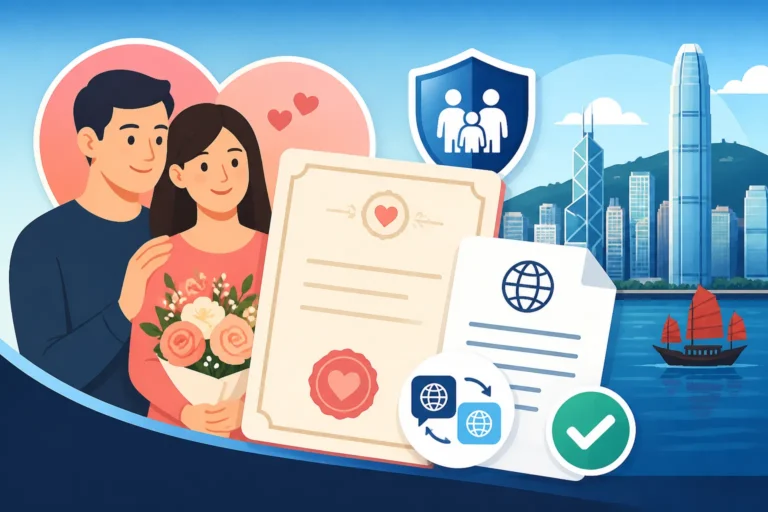
When you submit an application, the ImmD officer isn't just looking for a marriage certificate; they are looking for proof of a "genuine" relationship. While a certificate is the baseline, it is often not enough, especially if the marriage is relatively recent. I have seen couples who have been married for six months asked to provide photos of their wedding, joint bank account statements, and even evidence of shared travel. It sounds intrusive—and it is—but the department is hyper-vigilant about "marriages of convenience" designed solely to circumvent immigration laws.
For children, the requirements are generally simpler but no less rigid. A birth certificate clearly naming both parents is the gold standard. If the child is adopted, the legal adoption papers must be provided, and they must be recognized by the Hong Kong government. In cases of divorce where one parent is bringing a child to Hong Kong, the ImmD will require a "no objection" letter from the other parent or a court order showing that the relocating parent has sole custody or the legal right to move the child internationally. This is where many applications hit a snag, as international custody laws can be incredibly complex.
If your documents are not in English or Chinese, you cannot simply translate them yourself. They must be handled by professional services. We often recommend using RushTranslate to ensure that the formatting and legal wording meet the expectations of the Hong Kong authorities. A poorly translated birth certificate can lead to a flat rejection or a "Request for Further Information" (RFI), which can add weeks to your processing time. It is always better to spend a little more on professional translation than to risk the emotional toll of a delayed visa.
Common Pitfalls in Documentation
One of the most frequent mistakes I see is the failure to properly apostille or legalize documents from certain countries. Depending on where your marriage or birth certificates were issued, Hong Kong may require them to be authenticated by the issuing country’s foreign ministry or the Chinese embassy in that country. This is particularly common for documents from non-Hague Convention countries. If you show up at the Immigration Tower with a standard photocopy of a marriage certificate from a small town in a foreign country, expect to be sent away.
Another issue is the "expiry" of documents. While a marriage certificate doesn't expire, some officers may ask for a "fresh" certified copy if your original is decades old and difficult to read. For children, ensuring that their passports have at least six months of validity (though ideally much more) is essential. If a child’s passport expires shortly after arrival, it can complicate the initial visa sticker process. Always check the names on all documents; if there is a typo in a middle name on the birth certificate that doesn't match the passport, you will need to provide an affidavit explaining the discrepancy.
Finally, do not underestimate the power of a well-written cover letter. While not strictly mandatory, a letter from the sponsor explaining the family situation, the reason for the move, and a summary of the attached documents can go a long way in helping an officer navigate your file. It shows that you are organized and serious. For families with complex histories—such as step-children or legal guardianships—this cover letter is the only place where you can provide the necessary context that a form cannot capture. You can find more details on this in our guide on Proving Relationship for Dependent Visas: Marriage Certificates and Translations.
| Document Type | Standard Requirement | Recommended Action |
|---|---|---|
| Marriage Certificate | Original + Copy | Must be from a government body; no religious-only certs. |
| Birth Certificate | Original + Copy | Must show both parents' names clearly. |
| Non-English Docs | Certified Translation | Use a service like RushTranslate for accuracy. |
| Passports | 6+ Months Validity | Ensure the bio-data page is clear and high-resolution. |
| Proof of Funds | 3-6 Months Statements | Highlight your salary deposits and available savings. |
| Proof of Housing | Signed Lease | Ensure the flat size is appropriate for the family count. |
The Sponsor’s Financial and Residential Obligations
In Hong Kong, the sponsor is legally responsible for the well-being of their dependents. This isn't just a moral obligation; it is a condition of the visa. The Immigration Department requires proof that the sponsor can provide "accommodation which is reasonable in accordance with the number of persons in the family." If you are a family of four trying to live in a 200-square-foot studio in Sham Shui Po, your dependent visa application for your spouse and kids might be scrutinized. The officers want to see that there is enough space for everyone to live with dignity.
Financially, there is no "hard" salary floor published by the government, but the rule of thumb is that your income should cover rent, school fees, utilities, and living expenses with a comfortable margin. If you are sponsoring a spouse and two children and your salary is HK$25,000 while your rent is HK$18,000, you are going to have a very difficult time convincing the ImmD that you can support them. Most successful applications for mid-level expats show a household income that allows for a lifestyle where the family won't need to access public assistance.
The department will ask for bank statements, employment contracts, and tax returns (if you have already been in HK for a year). They are looking for stability. If your bank account fluctuates wildly or shows a balance of near zero at the end of every month, it signals risk. Families are advised to keep a "buffer" of at least three to six months of living expenses in a liquid savings account before applying. This demonstrates that even if the sponsor's employment is interrupted, the family is not immediately destitute.
Proving Adequate Housing
When you apply for the visa, you usually need to provide a copy of your signed tenancy agreement. If you are still in a serviced apartment or a hotel during your first month, you can explain this in your cover letter, but the ImmD will likely issue a shorter initial visa and ask for the permanent lease later. They are looking for a "stamped" tenancy agreement, which proves that the government has recorded the lease and the appropriate stamp duty has been paid. For more on this, see our guide on Calculating Stamp Duty for Tenancy Agreements in HK.
The "adequacy" of housing is subjective but generally follows common sense. If you have children of different genders, for example, the department might look more favorably on a two-bedroom apartment than a one-bedroom. If you are living in a village house in the New Territories, you generally get more space for your money, which can be a plus for the application. The key is to show that the family is settled. If you are staying with a friend or "couch-surfing," you will almost certainly face a rejection because you cannot provide a stable residential address for the dependents.
The Commitment to Support
On the application form (ID 997), the sponsor must sign an undertaking. This undertaking states that you will be responsible for the cost of the dependents’ maintenance and, if necessary, the cost of their repatriation to their home country. This is a serious legal commitment. If a couple divorces, the sponsor is often still technically responsible for the dependent until the visa expires or is cancelled. It is one of the many reasons why the Dependent Visas in HK: Bringing Spouses and Children guide emphasizes the need for clear communication between partners before the move.
Furthermore, you should consider the healthcare aspect. While dependents of HKID holders can access public hospitals at subsidized rates, the wait times are notoriously long. Most expat families opt for private insurance. Including proof of a family health insurance policy, such as those offered by SafetyWing, can be a subtle but effective way to show the Immigration Department that you have prepared for all contingencies. It demonstrates that you have the "financial substance" to manage a family in one of the world's most expensive cities.
Navigating the Online Application and e-Visa System
Gone are the days when you had to stand in line at the Immigration Tower for six hours just to hand over a folder. Since late 2021, Hong Kong has fully embraced the e-Visa system. You can now submit your entire application online through the GovHK website. This has made the process much more efficient, but it has also made it easier to make mistakes. When you upload documents, they must be in specific formats (usually PDF or JPEG) and under certain size limits. If your scan is blurry or the file is corrupted, the system might accept it, but a human officer will eventually flag it, causing a delay.
The e-Visa itself is a PDF document with a QR code. Once your application is approved, you pay the fee online and download the visa. You no longer get a physical sticker to put in your passport. Instead, you carry a printed copy of this PDF or keep it on your phone. When you enter Hong Kong, the immigration officer will scan the QR code and issue a landing slip. This landing slip, combined with the e-Visa, is your legal proof of stay until you get your HKID card.
It is worth noting that the processing time for a dependent visa is typically six to eight weeks. During this time, the "status check" tool on the ImmD website will be your best friend and your worst enemy. It often stays on "In Progress" until the very day it is approved. Do not panic if you don't hear anything for a month. However, if the department sends you a letter or an email requesting more documents, you must respond immediately. Every day you wait to send that missing bank statement is a day added to your family's wait.
Step-by-Step Submission Guide
- Gather the Dossier: Collect all passports, marriage/birth certificates, the sponsor's HKID, the employment contract, and the stamped lease agreement. Ensure all non-English documents are translated via a service like RushTranslate.
- Scan Everything: Create high-resolution, color scans of every page. Don't just scan the bio-data page of the passport; scan every page that has a stamp or a previous visa. This shows the family's travel history and legal compliance in other countries.
- Complete Form ID 997: This is the main application form for the dependent. Ensure the sponsor and the applicant (if over 16) sign in all the required places. For children under 16, the parent signs on their behalf.
- Upload to GovHK: Follow the prompts on the e-submission portal. Make sure you select the correct category (e.g., dependent of a person admitted under the GEP).
- Monitor Your Email: The ImmD will communicate primarily via email or physical mail to your HK address. Check your spam folder regularly.
- Pay and Download: Once you receive the "Notification of Result," follow the link to pay the HK$230 fee (as of 2024) and download the e-Visa.
What to Do After Approval
Once the e-Visa is in hand, the dependent can enter Hong Kong. If they are already in Hong Kong on a visitor visa, they may need to do a "loop" (leaving and re-entering) to activate the dependent status, though increasingly the ImmD allows for an in-country "change of status" if the application was submitted while they were here legally. Always check the specific instructions on your approval letter, as procedures can change.
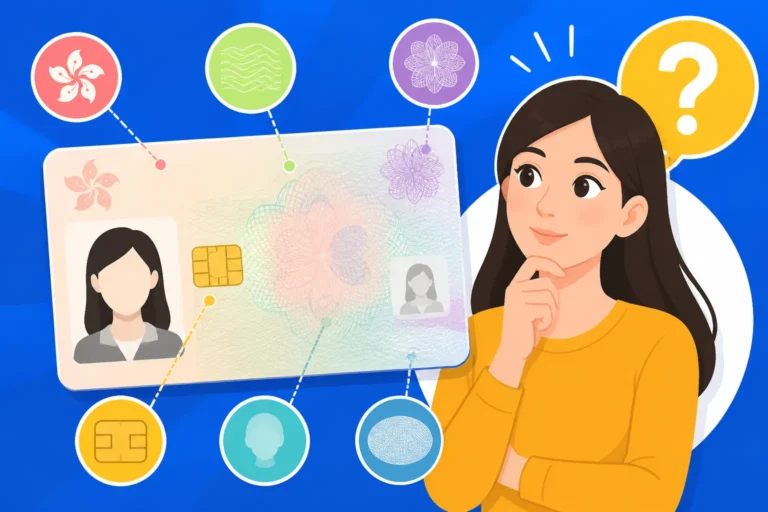
The next critical step is registering for a Hong Kong Identity Cards (HKID): Registration and Smart IDs. Anyone over the age of 11 who is staying for more than 180 days is legally required to register for an ID card within 30 days of arrival or activation of their visa. The HKID is the key to life in Hong Kong. It allows you to use the e-Channels at the airport, borrow books from the library, and access public healthcare. For children between 11 and 18, they will receive a juvenile ID card, which must be replaced with an adult one once they turn 18.
Life in Hong Kong: Work, Study, and Rights
One of the greatest benefits of the Hong Kong dependent visa is the freedom it provides. Unlike the sponsor, who is usually "tied" to a specific employer, the dependent spouse has an "open" work authorization. You can work for a local bank, start a small e-commerce business, or work as a freelancer for a company back home. You do not need to ask the Immigration Department for permission to change jobs. This flexibility is a huge advantage for families where both partners want to maintain their careers.
For children, the dependent visa grants them the right to study in Hong Kong. They can attend International Schools in HK: Curriculums, Debentures, and Applications, or they can even apply for places in local government schools. However, be warned: the school system in Hong Kong is incredibly competitive. Getting a visa is often the easy part; getting a seat in a top-tier international school can take months or even years of being on a waitlist. Most expat families start the school application process at the same time they start the visa process.
Dependents also have the right to live in Hong Kong as long as their visa is valid. They are protected by the same labor laws and consumer rights as any other resident. They can open their own bank accounts, get their own The Octopus Card: Hong Kong's Essential Transport & Payment Tool, and eventually, if they stay for seven years, they can apply for Permanent Residency in their own right, even if the sponsor hasn't applied for it yet (though usually, the family applies together).
Employment for Spouses
If you are a spouse on a dependent visa, the world is your oyster in Hong Kong. The only professions that are generally off-limits are those that require specific local licenses (like law or medicine), where you would need to pass local conversion exams. For most corporate, creative, or tech roles, your dependent visa is all the "work permit" you need. When you apply for a job, simply show your HKID and your e-Visa to the HR department. They are usually very familiar with this status and will be happy they don't have to sponsor you.
However, if you decide to start your own business, you should still register a company. While your visa allows you to work, the Inland Revenue Department still wants you to pay taxes. You can set up a sole proprietorship or a limited company quite easily. For more information on this, check out Starting a Business in HK: Company Incorporation and Freelancing. It’s a great way to stay professionally active while managing the logistics of a family relocation.
Education and Schooling
The choice between international and local schools is a major decision for any family. International schools offer familiar curriculums (like IB, British, or American) but come with high price tags and sometimes "debentures"—large sums of money you must pay or loan to the school to secure a spot. Local schools are much more affordable and offer a deep immersion into Cantonese and Mandarin, but the academic pressure can be intense.
Many families find a middle ground with the English Schools Foundation (ESF): The Complete Guide for Expat Parents, which offers a Western-style education at a slightly more subsidized rate than the elite private internationals. Regardless of your choice, your child's dependent visa is the legal document that allows them to enroll. Without it, schools cannot legally accept them. Ensure you have several certified copies of the visa for school admissions offices.
Navigating Life Transitions: Births, Divorces, and Aging Out
Life doesn't stop once the visa is granted, and sometimes circumstances change in ways that affect your family’s legal status. A common scenario for expats is having a baby in Hong Kong. If both parents are on work/dependent visas, the baby is not automatically a Hong Kong Permanent Resident. You must register the birth at a local registry and then apply for a dependent visa for the newborn. This should be done as soon as you have the baby's passport from your home country’s consulate.
Divorce is another difficult transition. If a couple divorces, the dependent spouse generally loses their eligibility to hold a dependent visa through that sponsor. This can be a terrifying prospect, especially if you have built a life and a career here. In such cases, the spouse must either find an employer to sponsor a General Employment Policy (GEP): Standard Work Visas for Expats for them or, if they have already been here for seven years, apply for Permanent Residency. The Immigration Department usually gives a grace period to sort out your affairs, but you cannot stay indefinitely on a "broken" dependent visa.
Finally, there is the issue of children "aging out." As mentioned earlier, once a child turns 18, they can no longer be a dependent. If they are still in school, they can transition to a student visa. If they have graduated and want to work, they must find a sponsor. This is why many families keep a close eye on the calendar as their children approach adulthood. The seven-year mark for Permanent Residency is the goal for most, as it grants the child the Right of Abode and permanent legal status regardless of their age or their parents' employment.
Registering a New Arrival
When a child is born in Hong Kong, the process is quite efficient. You have 42 days to register the birth for free. After that, there is a fee. Once you have the birth certificate, you must apply for the baby's passport at your national consulate. Only after the passport is issued can you apply for the baby's dependent visa. It sounds like a lot of steps for a newborn, but it is essential for ensuring they can travel and access healthcare.
We recommend having a checklist ready before the due date. You will need the hospital’s birth notification, the parents’ marriage certificate (again!), and the parents’ passports and HKID cards. For more practical advice on the early days of parenthood in the city, see Registering Your Newborn's Birth at the HK Births Registry. It covers everything from the birth registries to the first visa application.
Handling a Change in Sponsor Status
Sometimes, the sponsor changes jobs or switches visa types (for example, moving from a GEP to a TTPS visa). When this happens, the dependents don't necessarily need to re-apply from scratch, but the Immigration Department must be notified. Usually, the dependents’ visas will be "extended" to match the sponsor’s new visa expiry date. It is a procedural step, but forgetting it can lead to the dependents accidentally overstaying, which is a criminal offense in Hong Kong.
Always keep a folder with everyone's visa expiry dates prominently displayed on your fridge or in a digital calendar. In Hong Kong, "I forgot" is not a valid legal defense for an expired visa. If you find yourself in a situation where a visa has expired, contact an immigration consultant or lawyer immediately. Do not just show up at the airport, as you may be detained or barred from re-entry.
Relocating the Whole Family: Logistics and Well-being
Beyond the visas, relocating a family to Hong Kong involves a massive logistical effort. From shipping your household goods to moving the family dog, every piece of the puzzle requires careful planning. For pets, Hong Kong has strict quarantine and import rules. Depending on which country you are coming from, your dog or cat might face months of quarantine or be allowed in with just a few days of paperwork. I highly recommend using a specialist like Pet-Journey to navigate the AFCD requirements. They can handle everything from flight bookings to the import permit, saving you a massive headache.
Health is another major consideration. While Hong Kong is very safe and has world-class medical facilities, the humidity and pollution can take a toll on newcomers. Eczema flare-ups and "Hong Kong cough" are real things. Ensuring your family has a comprehensive health insurance plan from day one is vital. We often suggest SafetyWing for families who are in transition or who want a flexible, expat-focused policy that covers them both in Hong Kong and when traveling back home.
Finally, don't ignore the emotional side of the move. Hong Kong is a high-octane city that can be overwhelming for children and spouses who may have left behind a large support network. Encourage your spouse to join expat groups or chambers of commerce. For kids, finding a sports club or a hobby group early on can make the transition much smoother. Hong Kong is a wonderful place to raise a family if you can get past the initial culture shock and the paperwork.
Practical Tips for the First 30 Days
- Get the HKIDs: Book your appointment at the Immigration Department the moment you land. Slots fill up weeks in advance.
- Set up the Home: Get your utilities connected. You’ll need your stamped lease and HKID. See Setting Up Utilities: Electricity, Water, Gas, and Broadband in HK for a step-by-step.
- School Visits: Even if you’ve been accepted, visit the school with your children to help them visualize their new life.
- Explore Your Neighborhood: Find the nearest wet market, the best coffee shop, and the quickest route to the MTR. Feeling "local" is the best cure for homesickness.
- Health Check: Register with a local GP. It’s better to have a doctor you know before someone gets sick.
Summary of Relocation Resources
The road to a successful family life in Hong Kong is paved with documents, but the reward is worth the effort. By understanding the nuances of the Dependent Visas in HK: Bringing Spouses and Children, you are giving your family the best possible start. Remember to keep your documentation organized, stay ahead of your renewal dates, and don't be afraid to ask for professional help when the bureaucracy gets too heavy. Hong Kong is a city that rewards those who are prepared.
Disclaimer
This guide is intended for informational purposes only and does not constitute legal or professional immigration advice. Immigration policies in Hong Kong are subject to frequent change by the HKSAR Government. While every effort has been made to ensure the accuracy of this information for 2026, readers should always consult the official website of the Hong Kong Immigration Department or seek advice from a qualified immigration consultant before making any legal or financial commitments. This site is not affiliated with the Hong Kong Immigration Department.