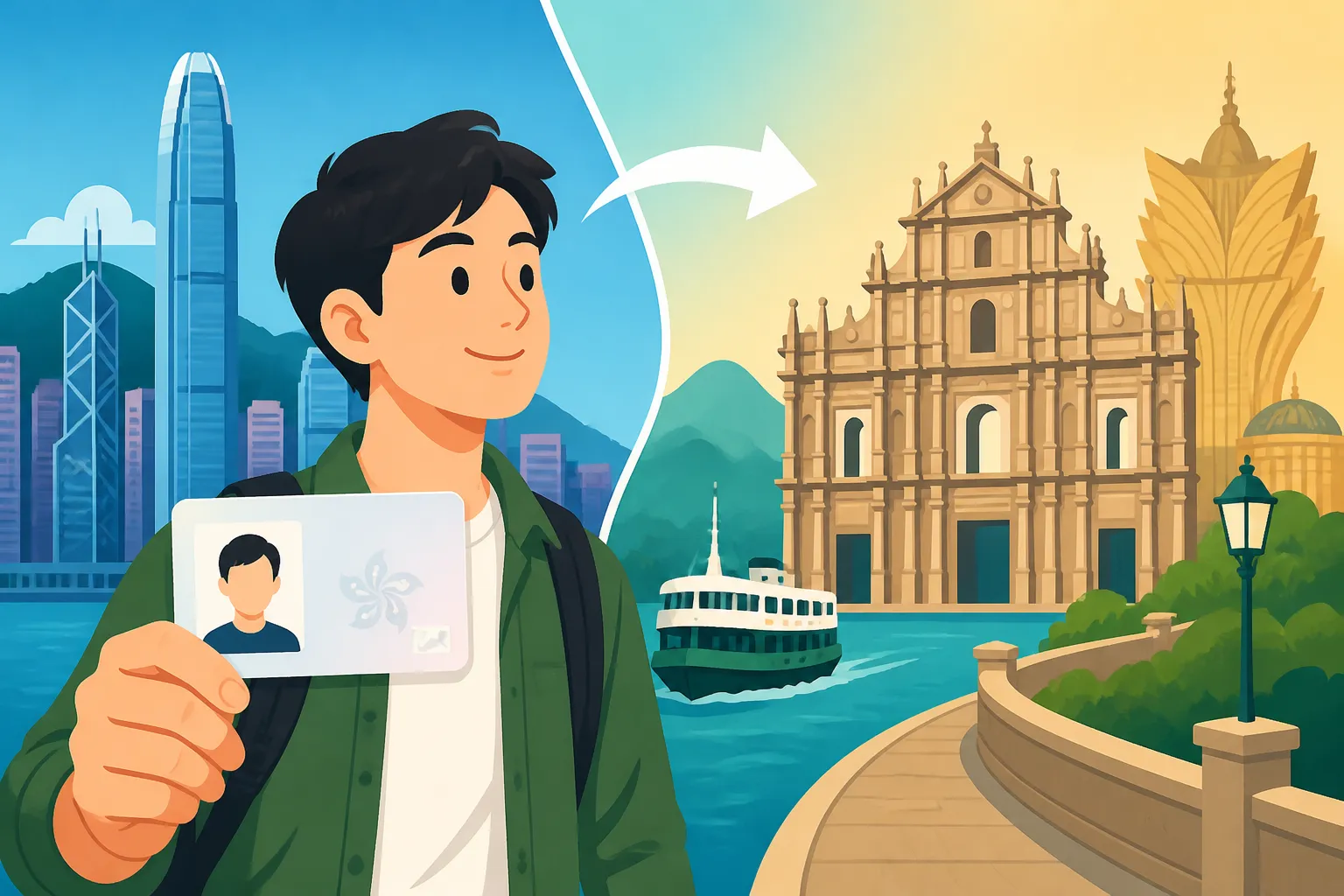
Traveling to Macau with a Hong Kong Identity Card
It's a common question that pops up in expat groups here in Hong Kong: "Can I just hop over to Macau with my HKID?" The thought of a quick ferry or bus ride to the Vegas of the East is certainly tempting, but the reality of border crossings, even between seemingly close neighbors, is often more complex than we'd like to believe. While your Hong Kong Identity Card (HKID) is absolutely vital for living here, it’s not always the sole ticket for international travel, even to Macau. This guide will meticulously break down exactly what you need to know and what documents you'll truly require when planning your trip across the Pearl River Delta.
The Basics: HKID as a Travel Document to Macau?
Let's clear up a persistent misconception right from the start. Your Hong Kong Identity Card (HKID) is not a standalone travel document for entering Macau. Think of it this way: your driver's license lets you drive, but it doesn't get you into another country. Similarly, your HKID is your key to life in Hong Kong – it's how you prove your identity, access public services, and often use convenient e-channels for speedy re-entry into Hong Kong. However, when you step outside Hong Kong's borders, even to Macau, you are fundamentally still a national of your home country, and your passport remains your primary international travel document.
What your HKID does do, particularly for non-permanent residents, is serve as proof of your legal right to return to Hong Kong. Without it, or rather, without your valid passport containing your Hong Kong visa, you might face complications getting back into your adopted home. It’s a subtle but crucial distinction that many, especially those new to expat life, often overlook until they’re standing at an immigration counter.
Permanent vs Non-Permanent HKID Holders
The rules around using your HKID for border crossings, especially concerning Macau, do vary slightly depending on your residency status in Hong Kong. This is where a lot of the confusion stems from, and it's essential to understand which category you fall into.
Permanent Residents (Right of Abode)
If you're a Hong Kong Permanent Resident, meaning you hold a Permanent Identity Card and have achieved Right of Abode, your situation is generally simpler. You might even be one of the lucky ones who can use the automated e-channels at both Hong Kong and Macau immigration checkpoints, provided your passport is enrolled for such services in Macau and you meet their criteria.
For Hong Kong Permanent Residents, your passport is still your primary international travel document. When you go to Macau, immigration officials there will assess your entry based on your nationality as reflected in your passport. For many nationalities, especially those from Western countries, visa-free entry to Macau for short stays (usually up to 30 or 90 days) is granted. In these cases, your HKID acts as supplementary proof of your permanent residence in Hong Kong, which might streamline the process for returning to Hong Kong, particularly through e-channels. It essentially confirms your status as a "local" for re-entry purposes into HK.
However, if for some reason you cannot use the e-channels, or if your nationality requires specific scrutiny, you'll present your passport at the manual counter. The HKID is always a good idea to have on you as proof of your Hong Kong residency. Keep in mind the journey to Right of Abode Permanent Residency: The 7-Year Journey is a significant one, and this status offers many benefits, including smoother border crossings.
Non-Permanent Residents (Work, Dependent, Student Visas)
This is where it gets a bit more involved, and often where expats run into issues. If you are a non-permanent resident, holding a work visa (like under the Working in Hong Kong: Visas, Job Market, and Hiring Culture (2027)), a dependent visa, or a student visa, you absolutely must travel with your valid passport. Your passport should contain your valid Hong Kong visa or entry permit stamp.
Your HKID, while mandatory for your life in Hong Kong (and you're required to register for it within 30 days of arrival as per Hong Kong Identity Cards HKID: Registration and Smart IDs), does not grant you special entry privileges into Macau. For non-permanent residents, your travel to Macau is governed entirely by your passport's nationality and Macau's specific visa policies for that nationality.
When you depart Hong Kong, you’ll present your HKID at the Hong Kong immigration counter (likely using the e-channels if you've enrolled for E-Channel Enrollment for Faster Immigration Clearance), which facilitates your exit from HK. But upon arrival in Macau, you must present your passport. Macau immigration will then process your entry based on your passport, checking if your nationality is eligible for visa-free entry or if you hold a valid Macau visa.
The most critical part for non-permanent residents is your return to Hong Kong. You need to show your passport with your valid Hong Kong visa and your HKID to re-enter. If your Hong Kong visa has expired while you were in Macau, or if there are any issues, you could face significant problems returning, despite holding your HKID. Always double-check your visa validity before any international trip, no matter how short.
Visa Requirements for Macau based on Nationality
Macau, like any other sovereign territory, has its own immigration policies. While Hong Kong and Macau enjoy a special relationship, they maintain independent immigration systems. This means that even if your nationality grants you visa-free access to Hong Kong, it doesn't automatically mean the same for Macau.
Most nationalities from North America, Europe, Australia, and many parts of Asia are granted visa-free entry to Macau for periods ranging from 30 to 90 days for tourism. For example, citizens of the United States, Canada, the UK, and Australia typically enjoy 30-day visa-free stays. Citizens from countries like Portugal, France, and Germany often get 90 days. However, certain nationalities, particularly from some parts of Africa, the Middle East, and South Asia, may require a pre-arranged visa to enter Macau. This also applies to mainland Chinese citizens, who need a special travel permit issued by mainland authorities to visit Macau.
It is your responsibility to verify the latest visa requirements for Macau based on your specific nationality before you travel. The official website of the Public Security Police Force of Macau (Macau Immigration Department) is the most reliable source for this information. Do not rely on anecdotal evidence from friends; rules can change.
The Actual Travel Process: Crossing the Border
Now that we’ve hammered home the importance of your passport and understanding Macau’s visa rules, let’s talk about the practicalities of crossing the border. You have a couple of popular options for getting to Macau from Hong Kong, and each has a slightly different immigration flow.
By Ferry: What to Expect at the Terminal
The ferry remains a classic and popular choice for many, offering a direct route from Hong Kong Island or Tuen Mun to Macau. The journey usually takes about an hour, depending on the operator and sea conditions.
Hong Kong Departure
Your Macau adventure typically begins at the Hong Kong Macau Ferry Terminal in Sheung Wan or the Tuen Mun Ferry Terminal. First, you'll need to check in for your ferry. Have your booking confirmation or tickets ready.
Next up is Hong Kong Immigration. If you are an eligible Hong Kong Permanent Resident or a non-permanent resident enrolled in the e-Channel service, you can use the automated gates for a quick exit. Just remember to scan your HKID and then your fingerprint. For those not eligible or preferring manual processing, head to the manned counters. Here, you'll present your passport (with your valid HK visa if you're a non-permanent resident) and your HKID. They’ll stamp your passport or record your departure electronically.
Once cleared, you’ll proceed to the boarding gate, usually with duty-free shops to distract you along the way. Be mindful of the boarding time; they close the gates well before departure.
Macau Arrival
Upon disembarking the ferry in Macau, you'll proceed to Macau Immigration. This is where your passport takes center stage. You'll join the queue for visitors, which can sometimes be quite long, especially during weekends or public holidays.
Present your valid passport to the Macau immigration officer. If your nationality allows visa-free entry, they will typically grant you a specific number of days, often by stamping your passport or providing a small landing slip that you must keep safe until your departure. This slip is crucial, so don't lose it! If you required a pre-arranged visa for Macau, that visa should be affixed in your passport, and the officer will process your entry accordingly.
For eligible travelers (e.g., certain passport holders from specific countries, or those who have registered their passports with Macau’s e-channel system), there might be automated gates available. However, these are generally geared towards frequent visitors or specific passport types, so don't assume you can use them unless you've confirmed your eligibility.
Return Journey
The return journey simply reverses the process. You'll go through Macau Immigration, presenting your passport (and the landing slip if you received one) to exit Macau. Then, once you arrive back in Hong Kong, you’ll again present your HKID and passport to Hong Kong Immigration. For smooth re-entry, particularly for non-permanent residents, having your valid Hong Kong visa in your passport and your HKID is non-negotiable. Missing documents or an expired visa can lead to delays or even denial of re-entry.
Via the Hong Kong-Zhuhai-Macau Bridge (HZMB)
The magnificent Hong Kong-Zhuhai-Macau Bridge (HZMB) offers another, increasingly popular, way to reach Macau. While it's a longer journey by land, it can be scenic and offers flexibility.
HZMB Shuttle Bus
The most common way for expats to cross the HZMB is via the "Gold Bus" shuttle service. You'd typically take public transport (like buses or MTR, then a connector bus) to the Hong Kong Boundary Crossing Facilities (HKBCF) near Chek Lap Kok.
At the HKBCF, you first go through Hong Kong Immigration, much like at the ferry terminal. Use your e-Channel if eligible, or the manual counters with your HKID and passport. Once cleared, you'll then purchase a ticket for the HZMB shuttle bus.
The bus will take you across the stunning bridge to the Macau Port. Upon arrival, you'll disembark and head into the Macau Boundary Crossing Facilities to go through Macau Immigration. Again, your passport is your primary document here. Present it, obtain your entry stamp or landing slip, and you're officially in Macau!
Private Car/Cross-Boundary Vehicle
While technically possible, traveling by private car across the HZMB is significantly more complex for most expats. It requires special cross-boundary vehicle permits from both Hong Kong and mainland Chinese (Zhuhai) authorities, which are typically only granted to specific license plate holders or for commercial purposes. This isn't a viable option for a casual day trip for the vast majority of foreign residents in Hong Kong.
Regardless of your chosen mode of transport, the fundamental rule remains: your passport is for Macau entry, and your HKID combined with your valid HK visa is for seamless re-entry into Hong Kong.
Practical Tips and Common Pitfalls for Expats
Navigating border crossings, even short ones to Macau, can feel daunting when you're an expat. We've all been there, second-guessing if we have the right documents. Here are some seasoned tips to make your trip as smooth as possible, and to help you avoid those frustrating hiccups.
Essential Documents Checklist
Preparation is key. Before you even leave your apartment, make sure you have all the necessary documents in a secure, easily accessible place. Double-check them. Triple-check them!
| Document Type | HK Permanent Resident (Passport Holders) | HK Non-Permanent Resident (Passport Holders) | Notes |
|---|---|---|---|
| Valid Passport | Required | Required | Must be valid for at least 6 months beyond intended stay. For some nationalities, 3 months might suffice for Macau, but 6 is always safest. |
| Hong Kong Identity Card (HKID) | Highly Recommended (for e-channel) | Required (for re-entry to HK) | Facilitates HK immigration clearance; for non-PR, links to your HK visa. Always carry it. |
| Macau Visa | Check by nationality | Check by nationality | Many nationalities are visa-free for short stays. Verify this before you travel. |
| Valid HK Visa/Entry Permit | N/A | Required (in passport) | This is absolutely crucial for re-entering Hong Kong. Ensure it's not expired. |
| Return/Onward Ticket | Recommended | Recommended | Immigration may ask for proof of your intent to leave Macau. |
| Macau Landing Slip | If issued at immigration | If issued at immigration | If you receive a small paper slip on entry, keep it safe. It's needed for departure. |
| Travel Insurance | Recommended | Recommended | Unexpected things happen. Consider a good plan like from SafetyWing. |
Make sure you also have digital copies of all these documents on your phone or in the cloud. It’s not a substitute for the originals, but it can be a lifesaver if anything goes missing. For any documents in a foreign language that might need clarification (though unlikely for standard passports/visas), a service like RushTranslate can provide certified translations.
Re-entry into Hong Kong and Visa Validity
This cannot be stressed enough for non-permanent residents: your HKID is a domestic identity card. It does not replace your passport or your Hong Kong visa for international travel. Your right to return to Hong Kong after visiting Macau hinges on two main things:
- Your valid passport: It needs to be the same passport that contains your Hong Kong visa.
- Your valid Hong Kong visa/entry permit: This must be current and not expired.
If your Hong Kong visa is set to expire soon, or if you’ve had any changes to your employment or dependent status that might affect your visa, resolve those before you leave for Macau. Getting stuck outside Hong Kong because your visa expired while you were away is a bureaucratic nightmare you want to avoid. While short trips to Macau generally won't impact your accumulated time towards permanent residency, consistent or very long absences could. If you're planning on Relocating Away from HK: Canceling Visas and Notifying ImmD, be sure all affairs are in order before departure.
English is widely spoken at Hong Kong and Macau immigration counters, but if you have a complex query, patience is a virtue. Remain polite and clearly explain your situation. Most immigration officers are there to help, but they also have strict rules to follow.
Beyond Immigration: Planning Your Macau Trip
Alright, so you've got your documents sorted, you know the drill at immigration, and you're ready for some Macau action. While the focus here is on the HKID and travel documents, a quick word on logistics will round out your preparedness.
Planning Logistics and Emergency Contacts
When you're finally planning the details of your trip, remember a few key things:
- Transportation: For ferries, major operators like Cotai Water Jet and TurboJet offer frequent services. It's wise to book tickets in advance, especially on weekends or public holidays. If using the HZMB shuttle bus, tickets can be bought on arrival at the port. For getting to the ferry terminals or HZMB in Hong Kong, Hong Kong's Public Transport in HK: MTR, Trams, Buses, and Ferries is incredibly efficient.
- Currency: Macau Pataca (MOP) is the official currency, but Hong Kong Dollars (HKD) are widely accepted at a 1:1 ratio, though you’ll often get MOP back in change. ATM machines are plentiful, and you can always send money back home using services like Wise if you manage to hit the jackpot (or just need more cash). Knowing your Everyday Budgeting in HK: Cost of Living Benchmarks (2026) will help you estimate costs.
- Connectivity: Your Hong Kong mobile plan might offer roaming in Macau, but it can be pricey. Consider a local Macau SIM card or an eSIM for your phone if you plan to use a lot of data.
- Emergencies: In Macau, the emergency number for police, fire, and ambulance is 999, just like in Hong Kong. For non-life-threatening medical concerns, Macau has public and private medical facilities. If you were thinking about travel to Southeast Asia or needing any specific shots, getting up to date with a Travel Clinics in Hong Kong: Vaccinations for Southeast Asia visit can't hurt.
- Pets: While you’re traveling, if you’re an expat with pets, you might wonder about taking your furry friend along. Unfortunately, taking pets to Macau usually involves significant paperwork, veterinary checks, and quarantine periods. It's generally not a casual day trip for animals. If you're moving with pets or need specialized advice on pet travel, services like Pet-Journey can be incredibly helpful.
Enjoy your trip to Macau! It’s a fascinating blend of Portuguese heritage and modern entertainment, offering a unique contrast to the hustle and bustle of Hong Kong. Just remember your passport, HKID, and a sense of adventure.
Disclaimer
The information provided in this guide is for general informational purposes only and does not constitute legal or immigration advice. Visa and immigration policies for Hong Kong and Macau are subject to change without notice. Readers are strongly advised to verify the latest requirements with the official Hong Kong Immigration Department and the Public Security Police Force of Macau before making any travel plans. No liability will be accepted for any loss or inconvenience arising from reliance on this information.