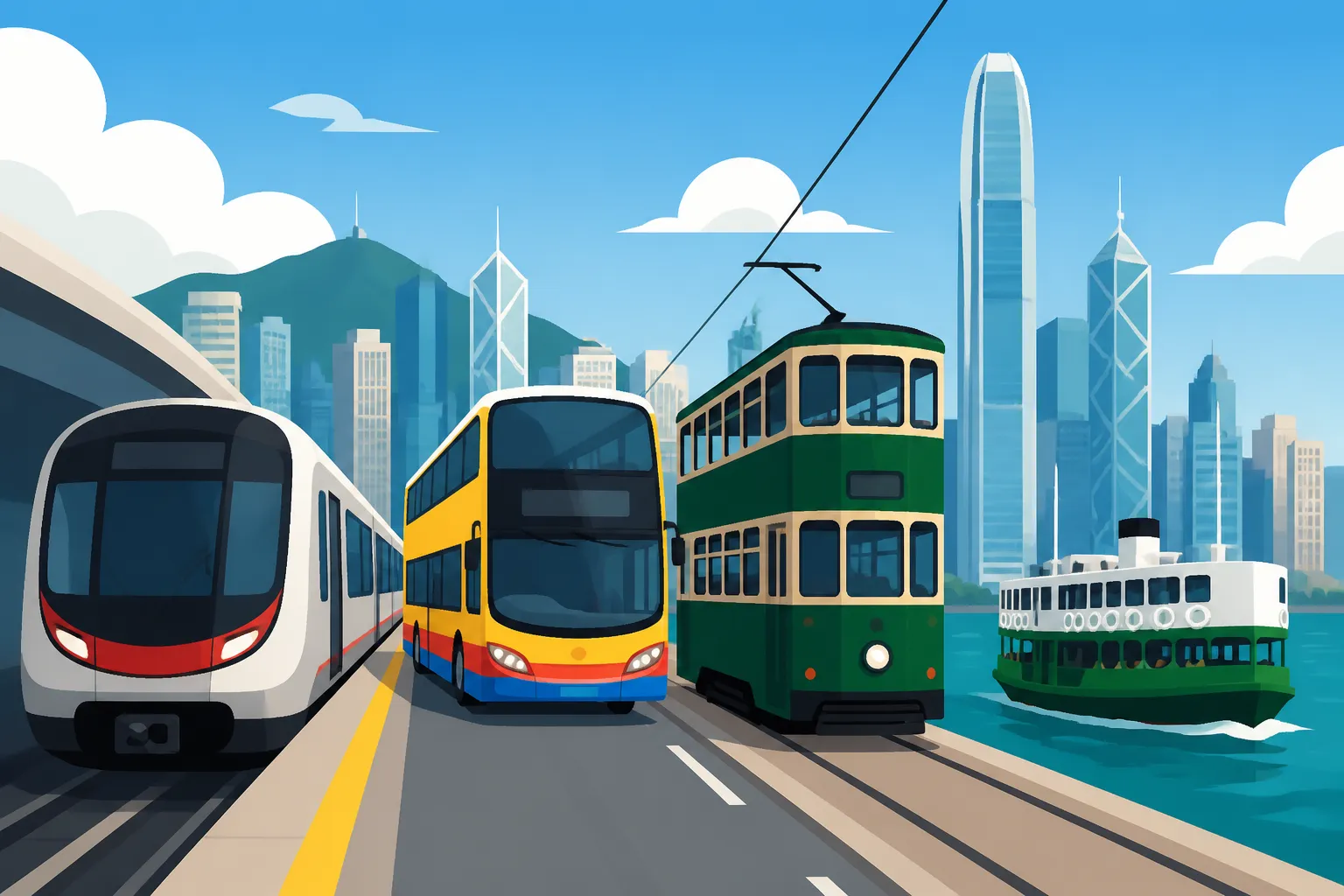
Public Transport in HK: MTR, Trams, Buses, and Ferries
Moving to Hong Kong is thrilling, but that first foray into its incredibly dense and dynamic public transport system can feel like stepping onto a runaway train, especially if you're used to sprawling cities with just a few metro lines. The sheer volume of people, the lightning speed of everything, and the sometimes-confusing signage can leave you feeling a bit bewildered. But trust me, once you get the hang of it, Hong Kong's public transport is one of the best in the world – efficient, affordable, and incredibly far-reaching. This guide is going to break down everything you need to know about navigating the MTR, trams, buses, and ferries, so you can ditch the stress and explore this amazing city like a seasoned local.
The Octopus Card: Your Essential Travel Companion
Let's be real, trying to buy individual tickets for every journey in Hong Kong would be an absolute nightmare. That's where the Octopus Card comes in. It's not just a payment method; it's practically a rite of passage for anyone living or even just visiting Hong Kong. Think of it as your magic key to seamless travel and everyday transactions. You'll hear locals talk about it constantly, and for good reason – it's indispensable.
Getting and Topping Up Your Octopus
Obtaining an Octopus Card is blessedly simple, a stark contrast to some other administrative hurdles you might encounter when you first arrive. You can pick one up at any MTR customer service counter, Light Rail customer service centres, or even at designated ferry piers. You'll typically pay a refundable deposit, usually HK$50, plus an initial stored value. For example, a "Sold Octopus" has no deposit and no refund of the card cost, whereas a "Rental Octopus" has a refundable deposit and can be returned for the remaining value plus the deposit. Most expats usually opt for the "Rental Octopus" initially as it offers more flexibility.
Once you have it, topping up is a breeze. The easiest way is at any MTR station using the add-value machines, which accept cash. You'll find these dotted around the concourses. For smaller amounts or when you're on the go, most convenience stores like 7-Eleven and Circle K, and even supermarkets like Wellcome and ParknShop, can top up your card at the counter. Just hand over your card and cash, and they'll do the rest. This widespread availability is a huge plus, meaning you're rarely stuck without a way to add value. For those who are a bit more tech-savvy, you can also link your Octopus to a mobile payment platform like the Octopus App on your smartphone, allowing for instant top-ups directly from your bank account or credit card. It’s an absolute lifesaver when you're rushing to catch a ferry and suddenly realize your balance is low. This seamless experience is why the Octopus Card is truly Hong Kong's essential transport & payment tool.
Types of Octopus Cards for Expats
While the standard "Rental Octopus" works perfectly for most, it's worth knowing there are a few options, especially if you're settling in for the long haul. The standard Adult Octopus is the most common. Children (ages 3-11) and Elders (65 and above) get special concessionary cards that offer reduced fares on most public transport. If you plan to be in Hong Kong for a while, perhaps even as a student at one of the universities, you might consider a "Personalised Octopus" which has your name and photo printed on it. These offer extra security if lost and can sometimes be linked to specific schemes or memberships. However, the application process for a Personalised Octopus is a bit more involved, requiring forms and a trip to an MTR customer service centre, so it's not something you'd typically do on your first week. For visitors or new arrivals, the "Sold Octopus" is another option; you buy the card outright, there's no deposit, and it often comes with a tourist-friendly design. However, the initial card cost is not refundable. Ultimately, for ease of use and flexibility, the standard Rental Octopus usually hits the sweet spot for most expats. You can return it for a refund of the remaining value and deposit when you're leaving Hong Kong, as detailed in how to refund your Octopus Card deposit at the airport.
Beyond Transport: Everyday Uses
What makes the Octopus truly ingenious is its versatility far beyond just getting you from A to B. It’s a micro-payment system that has been integrated into almost every facet of daily life in Hong Kong. Need to grab a quick coffee at Pacific Coffee or Starbucks? Tap your Octopus. Buying groceries at the supermarket? Tap. Picking up a late-night snack at 7-Eleven? Tap. Even many vending machines, payphones, and car parks accept it. This widespread acceptance means you can often leave your wallet at home if you're just popping out for a few errands, making daily life incredibly convenient. It even works at places like McDonald's, KFC, and countless other retail outlets. You'll soon find yourself instinctively reaching for your card for almost any small purchase. For new arrivals trying to get their bearings, this simple payment method cuts down on the hassle of always carrying exact change and dealing with small transactions. It's truly a testament to Hong Kong's efficiency that such a system exists and works so seamlessly.
Navigating the MTR (Mass Transit Railway) System
The MTR is the backbone of Hong Kong's public transport, a sprawling, hyper-efficient underground and overground railway network that connects most major districts. If you’re living in Hong Kong, you will quickly become intimately familiar with the MTR. It’s clean, air-conditioned, and remarkably punctual, making it the preferred mode of transport for millions daily.
Understanding the MTR Network and Lines
The MTR map can look a bit daunting at first glance with its rainbow of lines crisscrossing the territories. But don't let it intimidate you. It's actually incredibly logical once you spend a few minutes with it. The network primarily consists of several main lines, each color-coded for easy identification:
- Island Line (Dark Blue): Runs along the northern side of Hong Kong Island, connecting popular expat areas like Kennedy Town and Central to Causeway Bay and beyond.
- Tsuen Wan Line (Red): Connects Central on Hong Kong Island to Tsuen Wan in the New Territories, passing through key Kowloon districts like Tsim Sha Tsui, Mong Kok, and Yau Ma Tei.
- Kwun Tong Line (Green): Serves eastern Kowloon and connects to the Tsuen Wan Line, branching off towards areas like Kwun Tong and Tiu Keng Leng.
- Tseung Kwan O Line (Purple): An extension of the Kwun Tong Line, serving the Tseung Kwan O new town.
- Tung Chung Line (Orange): Connects Central to Tung Chung on Lantau Island, providing a crucial link to the Airport Express and access to areas like Discovery Bay via bus connections.
- Airport Express (Dark Green): A dedicated, fast service connecting the airport to Central, Kowloon, and Tsing Yi. This is often the first MTR line many expats experience upon arrival.
- East Rail Line (Light Blue): Runs from Hung Hom in Kowloon up through the New Territories to the border crossings with mainland China. This line features MTR First Class carriages on the East Rail Line for an upgraded experience.
- West Rail Line (Purple-Grey): Serves western New Territories, connecting to Hung Hom.
- Tuen Ma Line (Brown): The longest line, connecting Tuen Mun to Wu Kai Sha, effectively linking the west and east New Territories and parts of Kowloon.
- South Island Line (Light Green): A relatively new line serving the southern parts of Hong Kong Island, connecting Admiralty to Ocean Park and South Horizons.
Stations are clearly marked with English names, and platform displays show upcoming train destinations and estimated arrival times. The MTR network guide: maps, fares, and interchange stations offers a detailed look at all this. Voice announcements on trains are in Cantonese, Mandarin, and English, so you'll always know which stop is next.
Peak Hour Survival Strategies and Etiquette
Ah, peak hours on the MTR – a true Hong Kong experience! If you're coming from a city with less dense public transport, prepare yourself. Mornings (roughly 8 AM to 9:30 AM) and evenings (5:30 PM to 7:30 PM) see the trains packed to capacity, especially on core lines like the Island, Tsuen Wan, and East Rail lines. You'll quickly learn the art of "fitting in" – sometimes a gentle nudge or a slight shuffle is all it takes.
Here are a few survival tips:
- Be Prepared: Have your Octopus ready. Don’t fumble for it at the turnstiles.
- Stand Clear of the Doors: This is paramount. The MTR staff will loudly remind you, and the doors close fast.
- Prioritize Exit: If you need to get off at the next stop, try to position yourself near the doors well in advance. Don’t expect people to magically clear a path for you at the last second.
- Backpack Etiquette: If you’re wearing a backpack, take it off and hold it in front of you or between your legs. It takes up less space and prevents you from accidentally bumping others.
- Mind the Gap: A classic MTR announcement, and good advice. Watch your step when boarding and alighting.
- Be Patient: Everyone is trying to get somewhere. A little patience goes a long way.
- Consider Off-Peak: If your schedule allows, try to travel outside the busiest periods. It makes for a much more relaxed journey. For instance, traveling at 10 AM instead of 8 AM can make a world of difference. You might want to review the MTR peak hour crowds: which stations to avoid at 8 AM for more specific advice.
Most people are efficient and considerate, understanding that everyone is in the same boat. It's a system built on mutual understanding and efficiency, and you'll adapt faster than you think.
MTR Fares, Stations, and Accessibility
MTR fares are generally very reasonable, especially compared to the convenience and speed. They are calculated based on the distance traveled. You can check fares using the MTR Mobile app or the fare calculators available at stations and on the MTR website. Payment is almost exclusively via Octopus Card, although single journey tickets can be purchased from machines for cash.
Each station is well-equipped with clear signage, often in English, Cantonese, and Traditional Chinese. Most stations have multiple exits, so pay attention to the exit numbers (A, B, C, etc.) and their corresponding street names or landmarks to avoid surfacing blocks away from your intended destination. This can be particularly frustrating in dense areas like Mong Kok or Causeway Bay where multiple exits lead to entirely different parts of the same district.
Accessibility is a strong point for the MTR. Almost all stations have elevators and escalators, making them accessible for those with mobility issues, strollers, or luggage. Priority seats are clearly marked on trains for those who need them. The MTR also offers various passes, like the Tourist Day Pass, which might be useful for short-term visitors or if you have family coming to stay. However, for residents, the Octopus Card remains the most cost-effective and flexible option.
Riding the Iconic Hong Kong Trams ("Ding Ding")
Step back in time while still getting around efficiently on Hong Kong's famous double-decker trams, affectionately known as "Ding Ding" due to the bell they ring. These charming, vintage vehicles trundle along Hong Kong Island, offering a unique and incredibly affordable way to see the city. They’re slow, yes, but that’s part of their appeal—it’s a chance to slow down and observe Hong Kong life unfold outside your window.
Routes and Destinations on Hong Kong Island
The tram system operates exclusively along the northern corridor of Hong Kong Island, running predominantly between Kennedy Town in the west and Shau Kei Wan in the east. There are six main routes, which effectively overlap to cover this entire stretch. You'll find trams heading in various directions, indicated by their destination signs. For instance, a tram might say "Shau Kei Wan" or "Happy Valley" (a unique branch line that deviates from the main east-west route).
The routes are primarily:
- Kennedy Town <> Shau Kei Wan
- Kennedy Town <> Happy Valley
- Shek Tong Tsui <> Causeway Bay
- Shek Tong Tsui <> North Point
- Western Market <> Shau Kei Wan
- Happy Valley <> Shau Kei Wan
Don't worry too much about memorizing every single route. Just remember if you want to go east, get on an eastbound tram, and vice-versa. You can always hop off at any stop and wait for another one if you realize you're going in the wrong direction. The tram stops are frequent, usually every 100-200 meters, making it incredibly convenient for short hops between districts like Central, Wan Chai, and Causeway Bay. Riding the "Ding Ding": Hong Kong Island's historic trams is an experience in itself, offering a different perspective of the city's bustling streets.
Fares, Payment, and Onboard Experience
The beauty of the tram is its simplicity and affordability. The fare is a flat rate, regardless of how far you travel. As of early 2026, it's a mere HK$3.00 for adults, HK$1.50 for children, and HK$1.30 for seniors. This makes it one of the cheapest forms of public transport in the city!
Payment is easy: you pay when you exit the tram. Just tap your Octopus Card on the reader located near the driver’s cab, or drop the exact change into the fare box. Be warned, they don't give change, so make sure you have small coins if paying by cash.
The onboard experience is wonderfully old-school. You typically board from the back and exit from the front. If you manage to snag a seat on the upper deck at the very front, you're in for a treat – it’s like a slow-motion, panoramic tour of Hong Kong Island. The open windows offer fantastic views and a welcome breeze on cooler days. During peak hours, the trams can get quite crowded, especially on the lower deck, but the turnover of passengers is quick due to the frequent stops. It’s a bit rickety, it rattles, and it dings, but it’s undeniably Hong Kong.
A Nod to History: Why Trams Endure
In a city constantly striving for speed and modernity, the endurance of the "Ding Ding" is a charming anomaly. The Hong Kong Tramways system has been operating for over a century, since 1904, making it one of the oldest and largest double-deck tram systems in the world. It’s more than just transport; it’s a living piece of Hong Kong's heritage. For many expats, it becomes a beloved mode of transport for short journeys or simply when they want to enjoy a leisurely ride and soak in the urban landscape.
While the MTR gets you there fastest, the tram offers a different pace of life, a chance to appreciate the vibrant street scenes, the diverse architecture, and the everyday rhythm of Hong Kong. It’s especially popular with tourists for sightseeing, but locals also use it daily for their commutes, particularly those who prefer the surface-level views and don’t mind the slower pace. Living in areas like Kennedy Town or Causeway Bay, you'll quickly find yourself relying on the tram for short trips, making it an integral part of your daily routine.
Buses: Citybus, KMB, and Minibuses
Beyond the MTR and trams, Hong Kong boasts an extensive bus network that reaches virtually every corner of the territories. Buses are essential for connecting areas not served by the MTR, particularly in the New Territories, and for providing direct routes across districts on Hong Kong Island and Kowloon. You’ll be dealing with two main types: the large, scheduled franchised buses, and the smaller, more agile minibuses.
Major Bus Companies and Their Networks
Hong Kong’s franchised bus services are primarily operated by two major companies:
- Citybus and NWFB (New World First Bus): These two companies merged their operations but still maintain separate branding on many routes. They predominantly serve Hong Kong Island and cross-harbour routes to Kowloon and the New Territories. You’ll see their iconic red (Citybus) and yellow/blue (NWFB) double-deckers everywhere on the island.
- KMB (Kowloon Motor Bus): KMB is the dominant operator in Kowloon and the New Territories. Their buses are typically red and gold. They have an immense network, reaching residential areas, industrial estates, and remote villages.
Both KMB and Citybus/NWFB offer a comfortable ride on modern, air-conditioned double-deckers. Fares vary depending on the distance of the journey, and you pay upon boarding. Again, the Octopus Card is your best friend here. Just tap your card on the reader next to the driver. If paying cash, you must have the exact change, as no change is given. Always check the fare before boarding, either on the bus stop signage or via a transport app, especially for long-distance routes.
Airport buses, known as Cityflyer, are also operated by Citybus and provide comfortable, luggage-friendly routes from Hong Kong International Airport to various districts. They are a much cheaper alternative to the Airport Express. Details can be found in the Cityflyer airport buses: cheap alternatives to the Airport Express guide.
Understanding Green Light Minibuses and Red Light Minibuses
Now, this is where things get a little more "local" and potentially intimidating for new expats: the minibuses. These 16-seater vans are incredibly efficient for navigating narrow streets and specific routes, but they operate differently based on their color.
- Green Light Minibuses (GMBs): These are the more regulated of the two. They operate on fixed routes, with fixed fares, and usually adhere to a schedule. Their stops are generally marked, though sometimes subtly. You can pay with your Octopus Card by tapping when you board. Green minibuses are often crucial for reaching residential areas high up on the hills of Hong Kong Island or into more remote parts of the New Territories. You'll typically find their route numbers and destinations clearly displayed.
- Red Light Minibuses: These are the wild west of Hong Kong transport. They have no fixed schedule, no fixed stops, and operate on "suggested" routes, though they can deviate if enough passengers request it. Fares are dynamic and sometimes negotiated, though typically displayed inside. You pay when you get off, and cash is usually preferred, with change given – a rarity in Hong Kong public transport! The real trick is knowing where they stop and how to tell the driver where you want to get off. You literally have to shout out your stop in Cantonese. Yes, you heard that right – you yell "Yau Lok!" (meaning "stop here" or the name of a specific landmark). This can be incredibly daunting for non-Cantonese speakers and is generally something even seasoned expats approach with caution. It's an adventure, certainly, but perhaps one to save for when you're feeling brave and have a local friend to guide you. For detailed advice, check out the minibuses in HK: Red vs Green and how to yell your stop guide.
Finding Routes, Fares, and Making Your Stop
For franchised buses, finding routes and fares is relatively straightforward. Each bus stop has detailed information panels listing the routes, destinations, and fares. However, these can be extensive and mostly in Chinese, though English is usually present for major stops.
Your best bet for planning bus journeys is to use one of the many excellent public transport apps (more on those later). They will show you real-time bus locations, estimated arrival times, and the exact fare. When on the bus, pay attention to the electronic display (if available) which shows the next stop in English, or listen out for the announcements. If neither is available, keep an eye on the street names and landmarks.
To request a stop on a franchised bus, press one of the "stop" buttons located on the handrails or near the seats. These are usually clearly visible and will light up to indicate your request has been registered. For green minibuses, there are also "stop" buttons, but sometimes you might still need to give a verbal cue if it’s an unofficial stop. For red minibuses, it’s always a verbal shout-out.
Knowing where you want to go and roughly what the stops look like will save you a lot of stress. Don't be afraid to ask the driver (politely, in English if possible) if a specific landmark is near an upcoming stop, though their English proficiency can vary.
Ferries: Gateway to Islands and Across the Harbour
Hong Kong is an archipelago, and its ferries are not just tourist attractions but vital arteries connecting its many islands and providing picturesque cross-harbour commutes. From the iconic Star Ferry to the larger vessels serving the outlying islands, these boats offer a breath of fresh air and often stunning views.
Star Ferry: A Harbour Crossing Icon
No visit or residency in Hong Kong is complete without riding the Star Ferry. It’s a genuine icon, connecting Hong Kong Island (Central and Wan Chai piers) with Kowloon (Tsim Sha Tsui pier). For a mere few Hong Kong dollars, you get an unparalleled view of Victoria Harbour's magnificent skyline. It’s far more than just transport; it’s an experience, especially at night when the city lights sparkle.
The journey takes around 7-10 minutes and runs frequently throughout the day, roughly every 6-12 minutes depending on the time. Payment is simple: tap your Octopus Card at the turnstile before boarding. There’s no need to book in advance. There are often two decks; the upper deck costs slightly more but offers better views, while the lower deck is cheaper and gives you a closer feel to the water. The Star Ferry guide: fares, routes, and using Octopus is a must-read for first-timers. Even after years here, I still find myself taking the Star Ferry just for the sheer joy of it.
Outlying Island Ferries: Exploring Beyond the City
Beyond the urban sprawl, Hong Kong's outlying islands offer a tranquil escape, and the only way to reach many of them is by ferry. These larger ferries depart primarily from Central Ferry Piers (numbered 2 through 6). Each pier serves specific islands:
- Pier 2: Park Island (Ma Wan)
- Pier 3: Discovery Bay (Lantau Island) – a popular expat enclave.
- Pier 4: Lamma Island (Yung Shue Wan & Sok Kwu Wan)
- Pier 5: Cheung Chau
- Pier 6: Mui Wo (Lantau Island) and Peng Chau
The fares for outlying island ferries are generally higher than the Star Ferry and vary depending on the destination and whether you choose a "Ordinary" (standard) or "Fast" ferry service, and also if it's a weekday or weekend/public holiday. Fast ferries are quicker but cost more. Payment is usually with Octopus Card at the turnstiles, or you can purchase tickets from the pier's ticket counters.
These ferries are crucial for those living on the islands or for weekend getaways. For example, a leisurely day trip to Cheung Chau for seafood and cycling, or a hike on Lamma Island, all start with a ferry ride. The schedules for these ferries are less frequent than the Star Ferry, especially on weekdays, so it's essential to check the timetable in advance, particularly for the last ferry back to Central. You can find detailed schedules at the piers or on the respective ferry company websites (e.g., Hong Kong & Kowloon Ferry, New World First Ferry).
Payment, Schedules, and Ferry Etiquette
For all ferries, payment is typically made via Octopus Card at the turnstiles. For outlying island routes, if you need a specific type of ticket (e.g., fast ferry, or a return ticket), it's sometimes better to go to the ticket counter.
Schedules are prominently displayed at the ferry piers and are also available online. Always double-check the last ferry times, especially if you're planning a late night out on one of the islands, as missing it means being stranded!
Ferry etiquette is pretty straightforward:
- Queue patiently: Lines can get long, especially on weekends and public holidays.
- Mind your belongings: Keep bags close, especially on crowded ferries.
- Be considerate: Don’t hog seats, and keep noise levels down.
- Outdoor seating: Many ferries offer outdoor seating areas, which are highly sought after for the views, especially on a nice day. Try to grab one if you can!
- Food and drink: Many ferries have small kiosks selling snacks and drinks, particularly on longer routes.
Ferries provide a charming and essential part of Hong Kong's public transport tapestry, offering both practical travel and incredible scenic journeys.
Taxis: Convenience with a Twist
Hong Kong's taxis are generally safe, plentiful, and relatively affordable, especially when compared to major Western cities. They can be a lifesaver when you're tired, carrying heavy shopping, or need to get to a specific address that public transport doesn't serve directly. However, there are a few quirks that new expats often find confusing.
Types of Taxis (Red, Green, Blue) and Their Service Areas
One of the first things you’ll notice about Hong Kong taxis is their color coding, which indicates their operating zones:
- Red Urban Taxis: These are the most common and operate across most of Hong Kong Island, Kowloon, and major roads in the New Territories. They can go almost anywhere in Hong Kong except for the most remote areas of Lantau Island. These are the taxis you’ll hail most frequently in the city center.
- Green New Territories Taxis: These only serve specific parts of the New Territories (e.g., Sha Tin, Tai Po, Yuen Long). They cannot pick up or drop off passengers in urban areas (Hong Kong Island or Kowloon). If you're living in certain parts of the New Territories, you'll become familiar with these.
- Blue Lantau Taxis: These are exclusive to Lantau Island, including the airport. They can operate on all roads on Lantau Island but cannot go to Hong Kong Island, Kowloon, or the New Territories mainland.
It's crucial to understand these distinctions to avoid being rejected by a taxi driver or getting into the wrong colored taxi. A red taxi might take you to the New Territories, but a green taxi cannot take you from the New Territories to Central.
Fares, Surcharges, and Communication Challenges
Taxi fares start with a flag fall and then increase based on distance. There are several surcharges to be aware of:
- Tunnel Tolls: You pay the return tunnel toll if the taxi takes you through a cross-harbour tunnel (e.g., Western Harbour Tunnel, Cross-Harbour Tunnel). The driver will usually ask which tunnel you prefer, or default to the most direct one.
- Luggage Surcharge: A small fee per piece of luggage placed in the boot (trunk).
- Pets: A small charge for carrying pets.
- Booking Fee: If you call to book a taxi (though this is becoming less common with apps), there might be a small booking fee.
Most taxis only accept cash. This is a common point of frustration for expats, especially after getting used to the cashless convenience of the Octopus Card for other transport. Always carry small denominations of HKD for taxis. Some newer taxis might accept Octopus or mobile payments, but it's not guaranteed, so cash is king. Do taxis in Hong Kong accept credit cards or only cash? provides more details.
Communication can sometimes be a hurdle if you don't speak Cantonese. While many drivers understand basic English, having your destination written down in Chinese (or showing it on a map app) is always a good idea. Many expat families will get their domestic helper or a local friend to write down common addresses for them to show taxi drivers. Google Maps or Citymapper can show your destination in Chinese characters, which is a lifesaver.
Taxi Apps and Alternatives
While hailing a taxi on the street is commonplace, especially in urban areas, taxi-hailing apps have become increasingly popular. Apps like HKTaxi, or even ride-sharing services like Uber, offer convenience. Uber operates in a legal grey area in Hong Kong, but it is widely used. Using Uber vs HK Taxis: Legal gray areas and convenience can help you decide. These apps allow you to input your destination in English, see an estimated fare, and pay electronically, solving some of the common taxi challenges.
For those requiring transport during adverse weather, such as a Typhoon Signal No. 8 or Black Rainstorm, catching a taxi can be particularly challenging. Drivers often cease operations or demand significant surcharges. Always check the weather warnings and public transport status before venturing out during such times. You might find more tips in navigating medical emergencies during T8 typhoons or black rainstorms, as transport is a key consideration.
Planning Your Journey: Essential Apps and Tips
Navigating Hong Kong's multifaceted public transport system efficiently can feel like an art form. Luckily, technology has made it significantly easier.
Top Mobile Apps for Public Transport
To truly master Hong Kong's transport, a few apps are absolutely essential for your smartphone:
- MTR Mobile: The official MTR app provides real-time train information, journey planners, exit details for stations, and even estimated journey times. It's fantastic for checking for delays (rare, but they happen) or planning complex routes.
- Citymapper: This is arguably the gold standard for public transport apps in Hong Kong. It integrates MTR, bus, tram, and ferry routes, offering multiple journey options with real-time data, estimated costs, and even healthy walking options. It's incredibly user-friendly and provides excellent turn-by-turn navigation.
- Google Maps: A perennial favorite for a reason. Its public transport feature is solid, offering routes for all modes and good walking directions. It's also great for locating specific addresses in Chinese to show taxi drivers.
- KMB & Citybus Apps: The official apps for the franchised bus companies provide real-time bus arrival information, which is invaluable for knowing if you need to sprint for your bus or if you have time for a quick coffee.
- Octopus App: For managing your Octopus card, checking your balance, and topping up directly from your phone. Adding the digital Octopus card to your Apple Wallet is incredibly convenient.
Using these apps will drastically reduce any stress associated with getting around and help you feel like a local in no time.
Understanding Announcements and Signage
Hong Kong prides itself on being an international city, and its public transport reflects this with multilingual provisions. On the MTR, announcements are made in Cantonese, Mandarin, and English for stations, interchanges, and general safety messages. Electronic displays also show this information.
On franchised buses, many newer models have electronic displays showing the next stop in English and Chinese, along with audible announcements. Trams have fewer electronic aids, but prominent signs indicate their direction. Ferries typically announce destinations and safety information in multiple languages.
However, smaller operations like red minibuses will rely heavily on Cantonese. For signs, expect a mix of traditional Chinese and English. Major road signs and street names are almost always bilingual. Don’t be afraid to ask for help if you're truly lost; many locals, especially younger generations, speak some English and are generally willing to assist.
General Tips for Navigating HK Transport as an Expat
- Invest in an Octopus Card immediately: Seriously, it will simplify your life immensely.
- Download the essential apps: Citymapper and MTR Mobile are non-negotiable.
- Be prepared for crowds: Especially during peak hours. Embrace the efficiency, and try not to take up too much space.
- Carry small change for taxis: Or use a taxi-hailing app that allows digital payment.
- Observe local etiquette: Stand on the right on escalators, let people off before you board, and avoid eating or drinking on the MTR.
- Don't be afraid of the MTR: It's a fantastic system. Once you understand the MTR network guide: maps, fares, and interchange stations, you'll feel much more confident.
- Try different modes: Experience the tram, the Star Ferry, and even a green minibus (maybe with a local friend first!). Each offers a unique perspective of the city.
- Consider a co-living space for the first month: Brands like Sirelo, Blueground, or Habyt often offer serviced apartments in prime locations with easy access to transport, which can be invaluable while you're getting your bearings.
- Plan for weather: During typhoons or black rainstorms, transport can be severely disrupted. Check the HK Observatory app and official transport announcements.
Hong Kong’s public transport is a marvel of urban planning and efficiency. It might take a little getting used to, but once you crack the code, you’ll appreciate its convenience and affordability, allowing you to explore every nook and cranny of this incredible city.
Public Transport Comparison Table
To give you a quick overview, here's a comparison of Hong Kong's main public transport options:
| Mode of Transport | Primary Service Area | Payment Method | Pros | Cons |
|---|---|---|---|---|
| MTR | All Territories | Octopus | Fast, efficient, air-conditioned, punctual, extensive network | Crowded during peak hours, can be deep underground in some stations |
| Trams | Hong Kong Island | Octopus/Cash (exact change) | Very cheap, scenic, historic, easy to hop on/off | Slow, limited to HK Island, no air conditioning on upper deck |
Disclaimer
This article is for general informational purposes only and does not constitute professional advice. Laws, prices and regulations vary by location and change over time. Consult a qualified professional for guidance on your specific situation.