What to Do if You Lose Your Passport and HKID Simultaneously
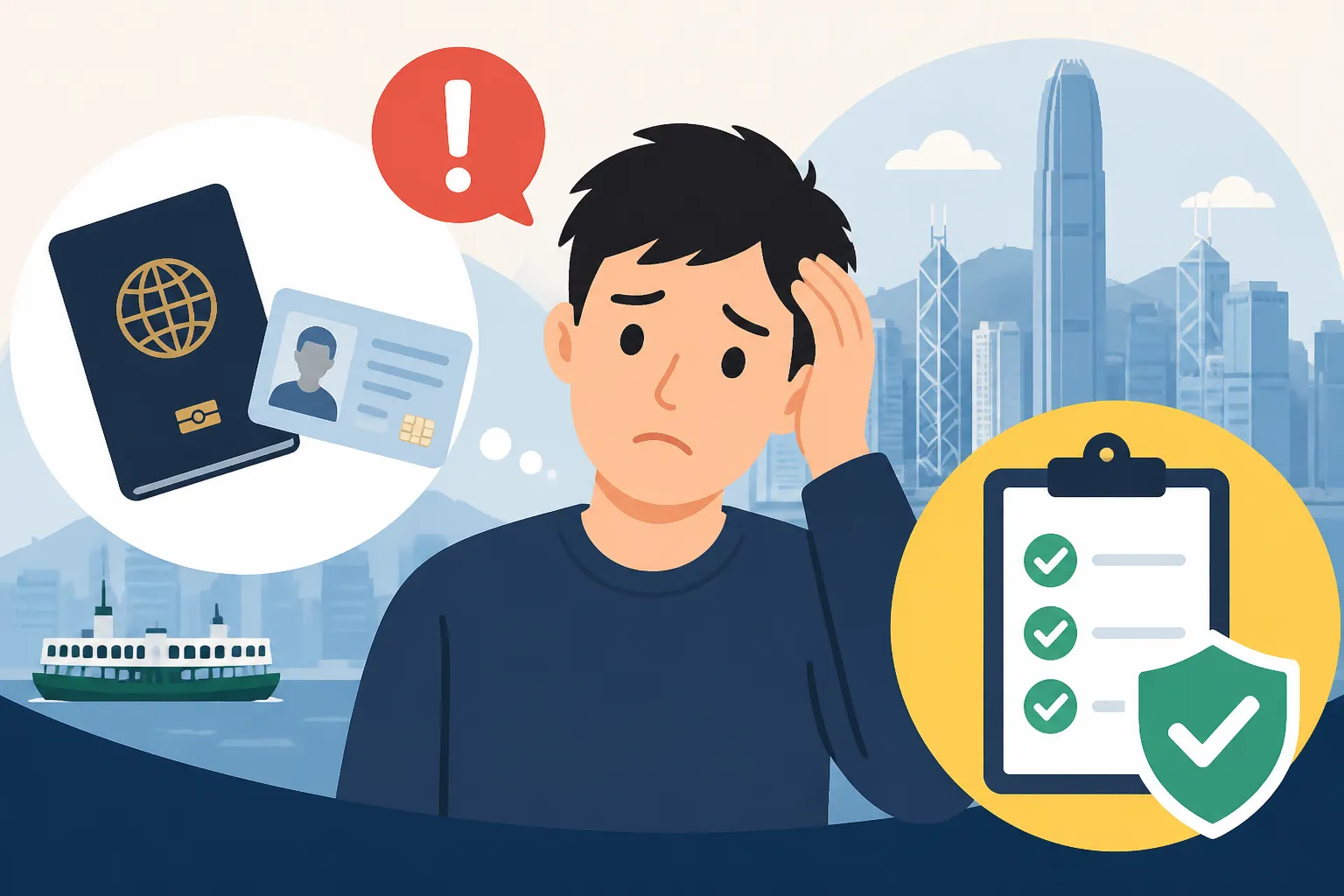
The sinking feeling is unlike any other – that moment you realize your passport and your Hong Kong Identity Card (HKID), the two most crucial pieces of identification for any expat here, have vanished. It’s not just a minor inconvenience; it feels like your entire existence in Hong Kong has been temporarily erased, leaving you stranded in a bureaucratic nightmare. Don't panic, though; you're not alone, and this guide is here to walk you through every agonizing step of recovering your identity and peace of mind in Hong Kong.
The Immediate Aftermath: Shock, Panic, and Essential First Steps
Let's be honest, the first wave is pure dread. Your mind races: Where could they be? What if they're stolen? How am I going to do anything without them? Take a deep breath. While it feels like the end of the world, it's a hurdle many expats unfortunately face, and there's a clear, albeit somewhat tedious, path forward.
Retracing Your Steps and Initial Search
Before you declare them officially gone forever, take a moment to genuinely retrace your steps. Think about the last time you saw them. Was it at the ATM? A restaurant? On the MTR? Did you put them in a "safe place" that's now too safe? This isn't about blaming yourself, it's about exhausting every possibility before embarking on the official replacement journey. Hong Kong is generally a very honest city, and lost items are often turned into the police or service counters. Check with any establishments you recently visited, especially if you think you might have left your wallet or bag behind. Sometimes, a quick phone call to a café or a check with the MTR lost and found can save you a world of trouble.
However, if a thorough search yields nothing, or if your gut tells you they were definitely stolen, you need to accept the unfortunate reality and move on to the next critical step. Lingering in denial will only delay the important processes that follow. Time is of the essence, not just for practical reasons, but also for security. You need to ensure no one else can use your documents for nefarious purposes.
Reporting to the Police: Your First Official Hurdle
This is perhaps the most crucial first step in the official recovery process. You must report the loss or theft to the Hong Kong Police Force. This isn't just a suggestion; it’s a non-negotiable requirement for both your passport and HKID replacement applications. A police report serves as official documentation that your items are missing, protecting you from potential liabilities if someone else tries to use them.
You can visit any police station in Hong Kong to make a report. If you're in an area with a high expat population like Central or Wan Chai, the larger district police stations there are generally well-equipped to handle reports from non-Cantonese speakers. Be prepared to provide details about when and where you believe the documents went missing. They will take down your personal information, the circumstances of the loss, and the details of the missing documents. Once the report is filed, you will be issued a "Loss Report" (報失證明書). Keep this document safe, as you'll need it for both your embassy/consulate and the Immigration Department. This piece of paper, though unassuming, is your golden ticket through the upcoming bureaucratic maze. Remember, in times of distress, especially when your identity documents are compromised, be extremely wary of unsolicited calls or messages claiming to be from official bodies, as Scams Targeting Expats: Fake Immigration Calls and WhatsApp Frauds are unfortunately common.
Replacing Your Passport: Liaising with Your Consulate
With your police report in hand, your immediate priority shifts to your passport. Without a valid travel document, you’re essentially stuck in Hong Kong, unable to travel even to your home country. This can feel incredibly isolating, but your country's diplomatic mission in Hong Kong is there to help.
Contacting Your Embassy or Consulate
The very next step is to contact your country's embassy or consulate in Hong Kong. This needs to be done with urgency. Most consulates have specific procedures for lost or stolen passports, often requiring you to book an appointment. You'll want to check their official website for their exact location, opening hours, and what documents you need to bring.
Generally, you'll need to present your police report, any copies of your lost passport or HKID you might have, your birth certificate, and possibly other forms of identification or proof of citizenship (e.g., driver's license from your home country, old ID cards). Having digital copies of your passport's main page, visa, and HKID saved in the cloud can be a lifesaver here. They will also require passport-sized photos, which can often be taken at photo booths found in MTR stations or larger shopping malls. Be prepared to fill out several forms and pay a fee for the replacement document. The process varies significantly by country, but expect it to take anywhere from a few days to several weeks, depending on whether you opt for an emergency travel document or a full replacement passport. If you had travel insurance, like that offered by SafetyWing, it might cover the costs of emergency travel documents, so do check your policy details.
The Emergency Travel Document vs. Full Passport
When you apply to your consulate, you'll typically have two main options: an emergency travel document or a full replacement passport. Understanding the difference is crucial for your immediate plans.
An emergency travel document (sometimes called a temporary passport or emergency passport) is exactly what it sounds like. It's usually a single-use document issued quickly, often within 24-48 hours, specifically designed to allow you to return directly to your home country. It might not be valid for onward travel to other destinations or for an extended stay in Hong Kong. If your primary goal is to get out of Hong Kong as soon as possible, perhaps because you have a pressing family matter or need to sort out affairs back home, this is your fastest route. However, be aware that once you arrive in your home country, you’ll then need to apply for a standard passport.
A full replacement passport, on the other hand, is a new, standard passport. This is the ideal long-term solution if you intend to continue living and working in Hong Kong and travel internationally. The downside is that obtaining a full replacement takes significantly longer, potentially several weeks, as it often needs to be printed and issued by your home country’s passport authority. During this waiting period, you will still not have a valid travel document to leave Hong Kong. Discuss your travel plans and urgency with your consulate to decide which option is best for your situation. Remember, once you have your new passport, you might need to update your visa records with the Hong Kong Immigration Department, especially if your visa was stamped into your old passport. For future reference, understanding Travel Documents Required for e-Visa Entry at HKIA is good knowledge to have, and if you're ever in a position where you're just renewing an expiring passport, our guide on Renewing Your Passport While Holding a HK Employment Visa can be helpful.
Replacing Your HKID: The Immigration Department Process
Once you have a new passport or an official travel document from your consulate, you can finally tackle the HKID replacement. This is managed by the Hong Kong Immigration Department (ImmD), and while it can be a bit of a wait, the process is well-defined.
Booking an Appointment and Required Documents
The first step for replacing your HKID is to book an appointment with the Immigration Department. They have several Registration of Persons Offices across Hong Kong, but the main one for expats is often the one in Wan Chai. You can (and should) book an appointment online via the GovHK website. Trying to walk in without an appointment is generally not advisable, as waiting times can be excruciatingly long, sometimes stretching for hours, only to be turned away. This is one of those times where planning ahead, even in a crisis, saves you a lot of grief. For a detailed walkthrough, our guide on Booking an Appointment for HKID Registration at ImmD Offices is invaluable.
For your appointment, you’ll need to bring several key documents:
- Your Police Report: The original loss report is crucial.
- Your New Passport or Emergency Travel Document: This proves your identity and nationality.
- Proof of your Previous HKID: If you have a copy (front and back) of your lost HKID, bring it. This helps ImmD verify your previous record quickly.
- Proof of Address in Hong Kong: A utility bill (electricity, water, gas), bank statement, or tenancy agreement with your name and current address is usually sufficient.
- Your Previous Visa/Entry Permit: If your visa was issued on a separate piece of paper or if you have a copy from your lost passport.
Gathering these items can be daunting, especially if you lost everything. If you don't have copies of your old HKID or visa, don't worry, ImmD has records, but it might just take them a little longer to process. For a comprehensive list to mentally prepare, check out What to Bring to Your HKID Appointment Checklist. In some rare cases, if your identity needs further verification and you only have foreign-language documents, professional services like RushTranslate can provide certified translations that the ImmD will accept.
The Application and Collection Process
At your scheduled appointment, you will fill out an application form (Form R.O. 1001, Application for Replacement of Hong Kong Identity Card). The staff will then guide you through the process, which includes taking your fingerprints, a digital photograph (so no need to bring your own passport photos unless specifically requested), and verifying all your submitted documents. This part of the process is usually efficient once you're called up, but the waiting area can be busy.
Once your application is submitted and approved, you will be issued a temporary ID document, usually a receipt called Form ROP140 or ROP140A. This receipt serves as interim proof that you have applied for a new HKID and holds the same legal validity as your HKID for daily transactions within Hong Kong (e.g., picking up registered mail, proving identity for some services). However, it is not a travel document. You will then be given a collection date, usually 10-15 working days later, to pick up your new Smart HKID. When you return for collection, remember to bring this receipt and your new passport/travel document. The good news is that the new Smart HKID is quite robust, incorporating advanced security features. For more detailed insights on the process, our guide on Lost or Stolen HKID: How to Report and Replace It might be helpful.
Fees and Penalties for Replacement
Yes, there's a fee involved for replacing a lost HKID. As of current regulations, the fee for replacing a lost, destroyed, or damaged HKID is HK$370. This fee is payable at the time of application.
It's important to report the loss or theft of your HKID as soon as reasonably practicable. Hong Kong law requires you to report the loss of your HKID to the police and apply for a replacement within 14 days of discovering the loss. While the ImmD generally understands that expats might take a few extra days to sort out their passport first, failing to report and apply for a replacement promptly can, in theory, lead to a fine. In practice, if you have a police report and evidence of contacting your consulate immediately, the ImmD is usually understanding. The key is to demonstrate that you acted responsibly and without undue delay.
| Step | Action Needed | Required Documents | Estimated Timeframe | Fee (HKD) |
|---|---|---|---|---|
| 1. Initial Search & Check | Retrace steps, check lost & found, contact places visited. | N/A | Immediate (0-1 day) | 0 |
| 2. Police Report | Visit any HK Police Station. | Details of loss, personal info. | 1-2 hours | 0 |
| 3. Passport Replacement | Contact your Consulate/Embassy in HK. | Police Report, old passport/HKID copies, birth cert, photos. | 2 days (emergency) – several weeks (full) | Varies by country |
| 4. HKID Replacement Appointment | Book online via GovHK for ImmD (Wan Chai recommended). | N/A | Booking might take days/weeks | 0 |
| 5. HKID Application | Attend ImmD appointment. | Police Report, NEW Passport, old HKID copies, proof of address. | 1-2 hours at ImmD | 370 |
| 6. HKID Collection | Return to ImmD on specified date. | ROP140/ROP140A receipt, NEW Passport. | 30 mins | 0 |
Beyond the Documents: Other Crucial Considerations
While getting your new passport and HKID are your primary goals, losing them simultaneously often has a ripple effect on other aspects of your expat life in Hong Kong. It's vital to address these secondary impacts to fully recover.
Notifying Your Employer and Bank
Your employer needs to be informed, especially if your work visa details were linked to your lost passport or HKID. They might need copies of your police report and new documents for their records, particularly if your visa endorsement was in your old passport. More importantly, if the loss results in any delays or if you cannot travel for work, your employer needs to be aware.
Your bank is another crucial contact. If your bank cards (credit/debit) were lost along with your documents, you need to report them stolen or lost immediately to prevent fraudulent use. Even if only your ID documents were lost, your bank will need to update their records once you receive your new HKID. Some banks might freeze certain transactions or require in-person verification for significant activities if you lack proper ID. They may also need to re-verify your identity with your new HKID details. Be proactive here to avoid any unexpected financial disruptions.
Updating Other Institutions and Services
Beyond your employer and bank, think about any other services or institutions where your passport or HKID served as primary identification. This can include your insurance providers (health, home, travel), your mobile phone provider, any clubs or associations you belong to, or even your landlord or property agent. While not as urgent as passport and HKID replacement, updating these records ensures continuity of service and compliance. For instance, if you had linked your E-Channel Enrollment for Faster Immigration Clearance to your old passport, you will need to re-enroll with your new one.
Consider your lease agreement for your apartment. While your tenancy agreement doesn't typically need immediate updating if your ID is lost, your landlord or agent might hold copies of your old HKID for verification purposes. It’s good practice to provide them with updated details once you have your new HKID, especially if you use it for proving your identity for things like property management services or even parcel collection. If you have pets and they are registered, this is generally linked to your HKID; however, the impact on pet documents is usually minimal unless you were in the middle of a pet import/export process, which typically requires specific paperwork separate from your personal ID.
Travel Implications and Future Precautions
Until you have a valid passport and, if applicable, a new visa endorsement in it, you cannot legally leave Hong Kong. If you have immediate travel plans, they will likely need to be cancelled or postponed. This is where the emergency travel document comes into play if you absolutely must depart quickly. Once you have your new documents, consider the implications for frequent cross-border travel, such as to mainland China. You’ll need to apply for a new visa if you had one in your old passport, as detailed in our guide Tourist Visas for Mainland China: How HK Expats Can Apply.
To prevent this nightmare from happening again, cultivate robust habits for safeguarding your documents. Make photocopies of your passport, visa page, and HKID, and keep them in a separate, secure location – perhaps with a trusted friend or family member, or in a locked safe at home. Even better, scan digital copies and store them securely in a cloud service or on an encrypted USB drive. Never carry both your passport and HKID together unless absolutely necessary. When you go out, a copy of your HKID is often sufficient for many daily tasks, or consider using the digital HKID feature if available and accepted. While there are legitimate reasons for long absences from Hong Kong, such as extended holidays or family emergencies, ensure that any unavoidable delays caused by this loss do not inadvertently impact your eligibility for How Absences from HK Affect Your 7-Year Permanent Residency Clock if you are on that journey.
Disclaimer
The information provided in this guide is intended for general informational purposes only and does not constitute legal or official advice. While we strive to keep the information up-to-date and accurate, official procedures, fees, and requirements set by the Hong Kong Immigration Department and foreign consulates can change without prior notice. Always consult the official websites of the relevant government bodies (e.g., Hong Kong Immigration Department, your country's embassy or consulate) or seek professional legal advice for the most current and specific guidance pertaining to your individual situation. We are not responsible for any actions taken or not taken based on the information presented herein.