Registering Your HKID for Subsidized Public Healthcare Rates
Walking into a private clinic in Central only to be slapped with a four-figure bill for a simple flu consultation is a rite of passage every expat in Hong Kong wants to avoid. I remember my first month here, staring at a prescription invoice that cost more than my weekly grocery haul, wondering how locals managed. The secret, which I eventually learned through trial and error, is fully unlocking the public system by properly linking your Hong Kong Identity Card (HKID) to the Hospital Authority database. This guide walks you through every nuanced step to ensure you never pay "tourist rates" for healthcare again.
Understanding the Power of the Eligible Person Status
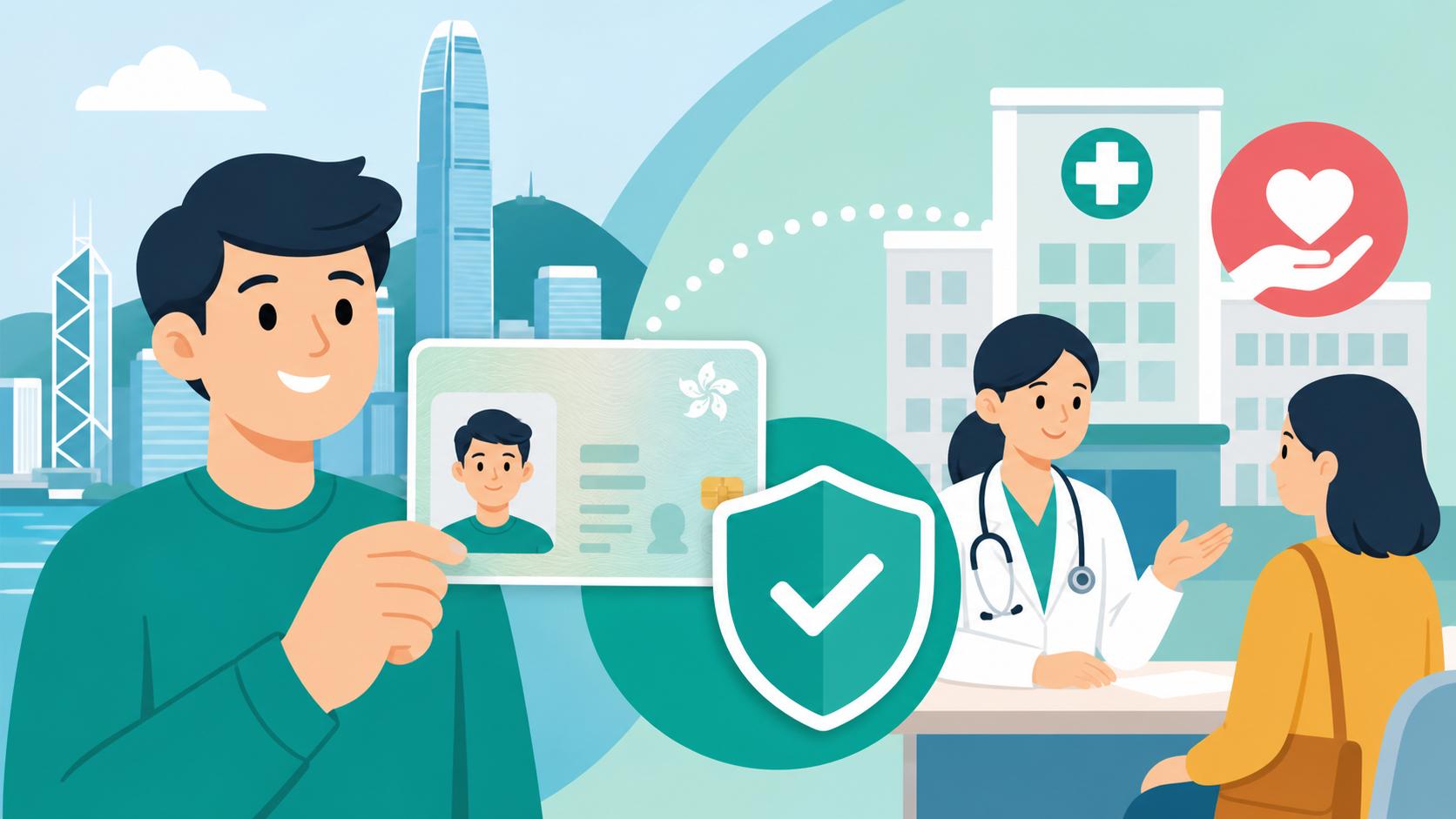
The most critical distinction in the Hong Kong healthcare landscape isn't between public and private, but between who is an "Eligible Person" (EP) and who is a "Non-Eligible Person" (NEP). Your HKID is not just a piece of plastic for immigration; it is your golden ticket to some of the most heavily subsidized, high-quality medical care in the world. Without it, you are essentially a medical tourist, and the price difference is staggering.
Defining the Eligible Person Category
To benefit from subsidized rates, the Hospital Authority needs to verify that you hold a valid HKID. Under current regulations, an Eligible Person generally includes holders of a Hong Kong Identity Card issued under the Registration of Persons Ordinance. This includes those on employment visas, dependent visas, and even student visas. If you are here on a tourist landing slip, you are an NEP.
Many new arrivals assume that just having the visa in their passport is enough. It isn’t. Even though she had a valid work contract and visa, the lack of the physical card (or the temporary "receipt" of application) meant she was initially billed at the NEP rate. The lesson here is to prioritize your HKID appointment the moment you land. Once you have that card, the system recognizes you as a resident contributing to the economy, and the gates to the Hospital Authority (HA) Guide: Accessing Public Healthcare for Expats open wide.
The Financial Impact of Registration
The subsidy provided by the Hong Kong government is one of the most generous globally. For an Eligible Person, a visit to a General Outpatient Clinic (GOPC) costs a nominal fee, usually around HK$50, which includes the consultation and the medication. For an NEP, that same visit can cost several hundred dollars. The gap widens significantly when you look at emergency services. An A&E visit for an EP is HK$180, while an NEP will be charged over HK$1,200.
In a scenario where you might require hospitalization, the stakes are even higher. An EP might pay HK$120 per day for a general ward stay, while an NEP could face daily charges exceeding HK$5,000, excluding surgeries and specialized tests. This is why Registering Your HKID for Subsidized Public Healthcare Rates is the single most important administrative task for your physical and financial health. While the public system is excellent for emergencies, many expats still choose to carry a secondary policy from Cigna Global to cover private room preferences or to skip the long wait times associated with non-urgent public surgeries.
Validating Your Status at the Point of Care
Every time you visit a public hospital or clinic, the very first thing you will be asked for is your HKID. The clerk will swipe your card to "check in." This process does more than just identify you; it pings the government database to confirm your visa is still valid. If your visa has expired or you are between jobs and your sponsorship hasn't been updated, the system might flag you as an NEP.
Newcomers should keep their "Notification of Conditions of Stay" (that little slip of paper the Immigration Department gives you) tucked into their passport or a digital scan on their phone. Sometimes, if the electronic system has a lag, showing that physical proof of your residency status can save you a massive headache at the billing counter. Being proactive about Registering Your HKID for Subsidized Public Healthcare Rates ensures that your status is mirrored correctly in the Hospital Authority's "Clinical Management System," which is shared across all public facilities in the territory.
Navigating the Registration Workflow at Public Facilities
Once you have your HKID in hand, the actual process of getting into the Hospital Authority's system is relatively straightforward, but it requires a physical "first contact." You cannot simply call a hotline to register; you must present yourself at a public clinic or hospital to have your patient profile created.
Your First Visit and Patient Number Creation
The first time you seek care at a public facility—whether it’s a GOPC in Sheung Wan or an A&E ward in Kowloon—the registration clerk will create a unique "Patient Number" for you. This number is forever linked to your HKID. During this initial setup, they will record your contact details, emergency contact, and language preference.
I remember my first time doing this at the Violet Peel General Outpatient Clinic. The queue was long, and the atmosphere was a bit clinical, but the efficiency was remarkable. They didn't just look at my card; they asked for my address proof. In Hong Kong, a utility bill or a bank statement is usually sufficient. This ensures that you are assigned to the correct "cluster" of hospitals based on your residence. If you are looking for a more personalized touch for routine issues, you might start by Finding English-Speaking General Practitioners (GPs) in Central before diving into the high-volume public system for more serious concerns.
Digital Integration with the HA Go App
The paper-based days are largely over. Once you have registered your HKID at a hospital, your next step should be downloading and verifying the "HA Go" app. This app is a lifesaver for expats. It allows you to book appointments, pay bills, and even see your lab results. However, there is a catch: you must verify your identity in person at a hospital kiosk or registration counter to fully activate the app's features.
The verification process involves showing your HKID to a staff member or using a self-service kiosk that scans your card and uses facial recognition. Once verified, the app becomes your command center for Using the HA Go App for Booking Public Outpatient Clinics. I’ve found this particularly useful for managing chronic prescriptions. Instead of waiting in line at the pharmacy, I can often check the status of my medication refill through the app and receive a notification when it's ready for collection.
Document Requirements for Dependents and Children
If you are registering on behalf of a child who does not yet have a smart HKID (usually those under 11), you will need to provide their birth certificate and their dependent visa entry permit. For expats, this often means showing the passport with the relevant stickers or the e-visa printout. The Hospital Authority is very strict about documentation.
When I brought my daughter in for her first check-up, I forgot her birth certificate and only had her passport. They were able to process her as a one-off, but they insisted I bring the original certificate next time to finalize her status as an EP. It is also wise to ensure that your helper’s HKID is properly registered in the system, as employers are legally responsible for their medical costs. Many families use a basic plan from SafetyWing to cover their travel or temporary gaps, but for long-term residency, the HKID-linked public system remains the bedrock of care.
Infrastructure and Access Points in the Public System
Hong Kong’s public health system is organized into seven hospital clusters based on geography. Understanding how these clusters work will help you navigate where to go once your HKID is registered. You aren't strictly forbidden from going to a hospital outside your cluster, but for specialized follow-ups, the system will always try to funnel you back to your home district.
General Outpatient Clinics vs Specialist Clinics
The public system has two main tiers for non-emergency care. The GOPCs are for minor ailments like coughs, colds, or basic health screenings. Once your HKID is registered, you can book these via the HA Go app or a telephone booking system. The specialist outpatient clinics (SOPCs), on the other hand, require a referral. You cannot simply walk into a public hospital and ask to see a cardiologist.
A common "pro-tip" I share with fellow expats is that a referral from a private GP is perfectly valid for the public system. If you see a private doctor in Central and they believe you need a specialist, ask them for a formal referral letter. You can then take that letter to a public hospital, scan it into the HA Go app, and get on the waiting list. This is a great way to bridge the two systems. If you find the public wait times for specialists too daunting, you might explore Navigating the Private Specialist Network: Direct Access vs Referrals to see if your insurance can expedite the process.
The Realities of A&E Triage
The Accident and Emergency (A&E) departments are the frontline of the public system. Once you present your HKID and pay the HK$180 fee, you are triaged. Triage is not "first come, first served." It is based on medical urgency. There are five categories, ranging from "Critical" to "Non-urgent."
If you show up with a minor sprain, expect to wait. I’ve sat in the waiting room at Queen Mary for six hours on a busy Tuesday night because I was a "Category 4." It can be frustrating, but the care you receive once you are inside is top-tier. For those who cannot afford to wait half a day, having a plan from Cigna Global allows you to bypass these queues by heading to a private hospital's emergency room instead. For more on how to navigate the wait, read about Accident and Emergency (A&E) Triage Categories in Public Hospitals.
Maternity and Specialized Centers
For many expat families, the public system's maternity care is the primary reason for registration. The costs are nearly negligible compared to the HK$100,000+ packages at private hospitals like Matilda or the Sanatorium. Once your HKID is linked, you can register at your local Maternal and Child Health Centre (MCHC).
The care at these centers is standardized and very thorough, focusing heavily on the health of the mother and baby. However, it is "no-frills." You won't get a private room or gourmet meals. Most public wards are communal. If you are considering this route, it is essential to understand the differences in the Maternity and Childbirth in HK: Public Wards vs Private Packages before you make your final decision. The quality of the doctors is the same—often the same consultants work in both sectors—but the "experience" differs wildly.
Costs, Billing, and the Subsidy Breakdown
To truly appreciate the value of your HKID, you have to see the numbers side-by-side. The Hong Kong government spends billions every year to keep these rates low for residents.
| Service Type | Eligible Person (EP) Rate | Non-Eligible Person (NEP) Rate |
|---|---|---|
| A&E Consultation | HK$180 per visit | HK$1,230 per visit |
| General Outpatient (GOPC) | HK$50 per visit | HK$445 per visit |
| Specialist Outpatient (Initial) | HK$135 | HK$1,190 |
| Maintenance/Follow-up | HK$80 | HK$1,190 |
| Acute General Ward (Stay) | HK$120 per day + HK$75 admission | HK$5,100 per day |
| Intensive Care Unit (ICU) | HK$120 per day | HK$24,400 per day |
| Dressing or Injection | HK$19 | HK$100 |
Payment Methods and Financial Efficiency
The Hospital Authority has made paying for services incredibly easy to match the fast-paced lifestyle of the city. While every clinic has a shroff (billing counter) that accepts cash and credit cards, the most common way to pay is via Octopus card. This is the ultimate "Hong Kong" way to handle things—just a quick tap after your consultation, and you're out the door.
For larger bills, such as those incurred after an inpatient stay, you can use the HA Go app or the Faster Payment System (FPS). I’ve found that How to Pay Your Hospital Authority Bill Online via FPS is the most efficient method for managing bills for elderly parents or dependents. You simply scan the QR code on the invoice, and the transaction is instant. It saves you from having to queue at the hospital bank or mailing in a cheque.
Medication and Pharmacy Fees
When you are an EP, your medication is also subsidized. Usually, you pay a flat fee per item (around HK$15 in 2026) for a standard duration of 16 weeks. If you are an NEP, you pay the full market price plus a handling charge. This can be a massive difference for chronic conditions like hypertension or diabetes.
I remember helping a colleague who was here on a short-term consultancy and hadn't gotten his HKID yet. His asthma inhalers cost him nearly ten times what I paid for the exact same brand because I was in the system and he wasn't. For those who prefer to buy over-the-counter or need specialized Western brands, it’s worth knowing the Pharmacies and Medication in HK: Prescriptions and OTC Rules to avoid overpaying at boutique outlets.
Exemptions and Financial Assistance
If you find yourself in a position of genuine financial hardship, the public system does have a "Medical Fee Waiver" scheme. This is generally reserved for those on Comprehensive Social Security Assistance (CSSA), but others can apply based on a means test. As an expat, it is unlikely you will qualify for this, but it’s a testament to the system's goal of universal coverage.
Most expats find that their biggest "subsidy" is actually their employer's insurance or a private plan from SafetyWing or Cigna Global. These plans often cover the small out-of-pocket costs at public hospitals (like the HK$120 daily ward fee) and provide the option for private care when the public wait times are too long. It is a dual-track approach that offers the best of both worlds.
When the Public System Isn't Enough: Integrating Private Options
While I am a huge advocate for the public system, I would be remiss if I didn't mention its limitations. The "HKID subsidy" is fantastic for life-saving care and routine checks, but it can be a nightmare for elective procedures or "quality of life" issues.
The Waiting Room Reality
The biggest hurdle in the public system is the wait time. For a non-urgent specialist appointment—say, a dermatologist for a persistent but non-cancerous rash—the wait can be 18 to 24 months. If you need a knee replacement or cataract surgery, you could be looking at years. This is the trade-off for the low cost.
This is why most veteran expats view Registering Your HKID for Subsidized Public Healthcare Rates as their "emergency backup plan." They use the public system for A&E and major traumas (where it is arguably the best in Asia) but maintain private insurance for everything else. Understanding Private Health Insurance Plans Beyond VHIS for Expat Families is crucial for ensuring you have a "fast track" when the public system's bureaucracy becomes a bottleneck.
Corporate vs. Individual Insurance
Many of you will have "Group Medical" through your employers. In my experience, these plans vary wildly. Some have "direct billing" with private hospitals, meaning you don't pay a cent. Others require you to pay upfront and claim back. Almost all of them will encourage you to use the public system for major surgeries because it saves the insurance company money.
If your corporate plan is thin, you might consider the Voluntary Health Insurance Scheme (VHIS). This is a government-regulated scheme that offers tax incentives. If you are filing your taxes, knowing How to Claim the HKD 8,000 VHIS Tax Deduction on Your BIR60 can actually put money back in your pocket while you're staying protected. It’s one of the few instances where the government actually helps you pay for private care.
Portability and International Coverage
One thing the HKID-subsidized system does not do is cover you outside of Hong Kong. If you travel to Thailand or head back home for the summer, your HA patient number means nothing. This is where international providers like Cigna Global come into play. They provide the global portability that a localized public system cannot.
I’ve had friends who relied solely on the public system and then had a medical emergency during a weekend trip to Tokyo. The resulting medical bill was eye-watering because they had no travel or international health insurance. Always complement your local residency benefits with a plan that covers you across borders, especially given how much we all travel in this region.
Specialized Care and Long-term Health Management
Once you are settled and your HKID is registered, you can start looking at long-term health maintenance. The public system offers various "screening" programs that are highly effective.
Managing Chronic Conditions
If you have a condition like diabetes or high blood pressure, the public system's "Risk Assessment and Management Programme" (RAMP) is excellent. They provide multi-disciplinary care, including nurses, dietitians, and optometrists, to prevent complications. To access this, you simply need your GOPC doctor to enroll you.
Managing these issues through the public system is extremely cost-effective. You can find more details on Managing Chronic Conditions: Diabetes and Hypertension in HK to see how the system tracks your progress over the years. The continuity of care is surprisingly good, provided you are willing to navigate the occasional administrative hurdle.
Family and Pediatric Care
For those with children, the "Student Health Service" and "School Dental Care Service" are available once the child is registered as an EP. These provide annual check-ups and basic dental work for a very small annual fee (often around HK$30). It’s a great way to ensure your kids are hitting their developmental milestones without breaking the bank.
I’ve found the pediatricians in the public system to be extremely thorough, though often overworked. If your child has a complex issue, you might find Finding Expat-Friendly Pediatricians and Family Doctors a useful resource for finding a consultant who has more time to discuss your concerns in detail. Many families use the public system for vaccinations and the private system for acute illnesses.
Mental Health and Support Services
Mental health is an area where the public system is under significant pressure. While there are psychiatric outpatient clinics, the wait times for non-urgent cases can be quite long. Once your HKID is registered, you do have access to these services at subsidized rates, but many expats find that the cultural and language barriers can be a challenge.
For those seeking counseling or therapy in English, it is often more effective to look at private options or support groups. You can read more about Mental Health in Hong Kong: Counseling and Expat Support Services to find a provider that aligns with your needs. This is an area where having a robust private insurance policy can make a significant difference in the speed and quality of care you receive.
Medical Disclaimer
The information provided in this guide is for general informational purposes only and does not constitute professional medical or legal advice. While we strive to keep the information up-to-date and correct, health policies and Hospital Authority fees in Hong Kong are subject to change. Always consult with the Hong Kong Hospital Authority or a qualified medical professional for specific advice regarding your healthcare needs and eligibility.