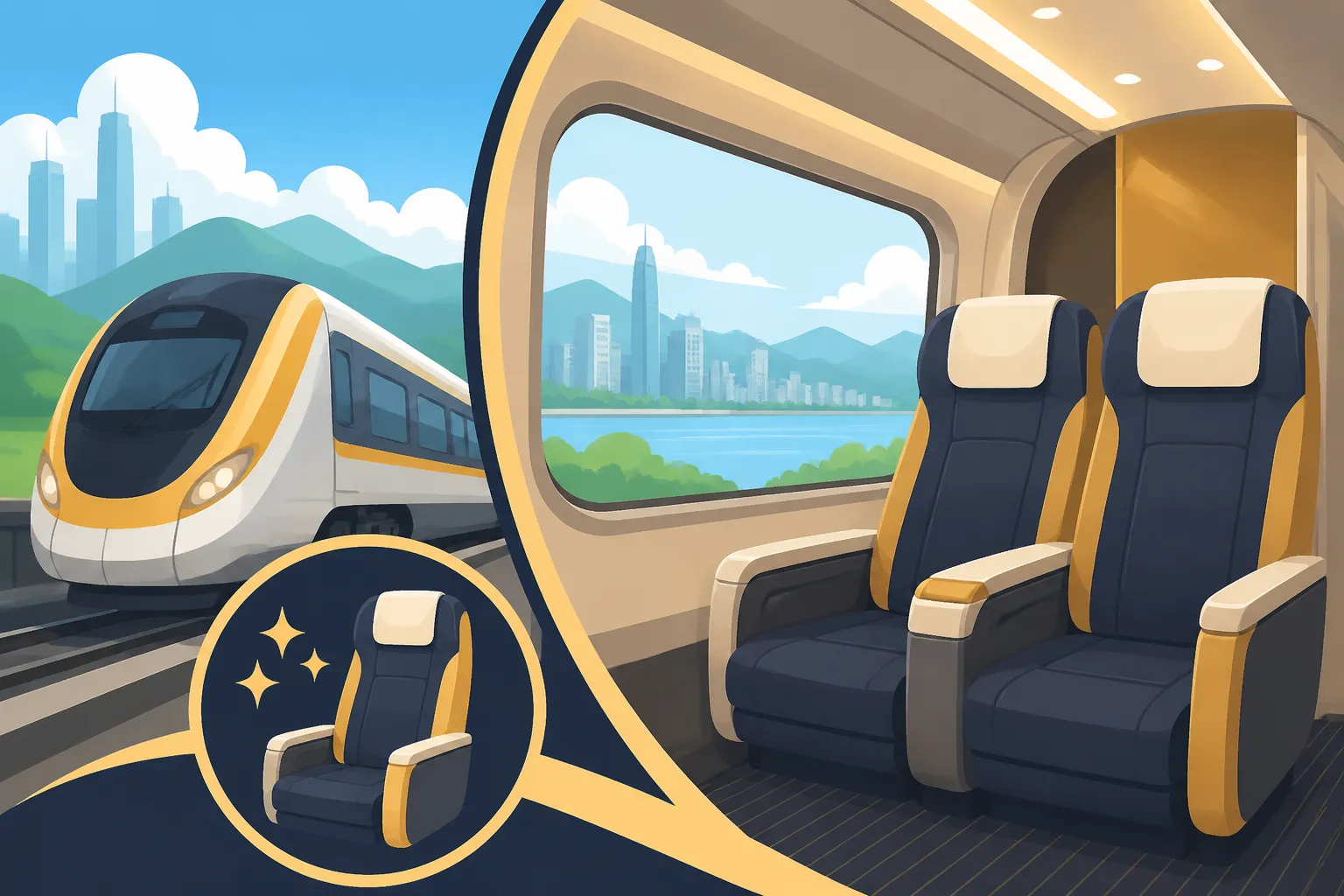
MTR First Class Carriages on the East Rail Line
If you have ever found yourself squeezed into a corner on a Monday morning, shoulder-to-shoulder with hundreds of commuters while traveling from the New Territories toward Admiralty, you know the physical and mental toll a Hong Kong commute can take. This guide breaks down everything you need to know about utilizing the MTR First Class carriages on the East Rail Line to reclaim your personal space and sanity.
Navigating the Mechanics of First Class Travel
The East Rail Line is unique within the Hong Kong MTR network because it is the only line that offers a tiered seating system. While every other line—from the Island Line to the Tung Chung Line—operates on a single-class basis, the East Rail Line maintains a legacy of "First Class" travel that dates back to its days as a heavy rail link to the mainland border. For many expats moving into areas like Sha Tin, Tai Po, or Fanling, understanding this system is the difference between a grueling hour of standing and a peaceful, seated journey.
Identifying the First Class Carriage and Validation
The first thing you will notice on the platform is that the First Class carriage is always located in the middle of the train—specifically, it is the fourth carriage if you are counting from either end of a nine-car train. The platform floor is clearly marked with bright yellow "First Class" indicators, and the overhead signs will point you toward the specific boarding area. Unlike a train in Europe or North America, there is no physical barrier on the platform; anyone can walk into the First Class area, but you must validate your fare before stepping onto the train.
Validation happens at the standalone yellow card readers located on the platform or right inside the gangway of the carriage. You must tap your card against the reader until it beeps and shows a green light. This "validates" your intent to pay the premium. If you are using a physical card or a mobile version, ensure your balance is sufficient, as the system won't tell you if you've failed to validate until an inspector asks for your card. Many newcomers make the mistake of thinking The Octopus Card: Hong Kong's Essential Transport & Payment Tool only needs to be tapped at the entry and exit gates of the station. For First Class, that middle tap is non-negotiable.
Fare Structure and the Premium Cost
The cost of a First Class journey is exactly double the standard fare for the same trip. For example, if a standard trip from Tai Po Market to Exhibition Centre costs you HK$15, the First Class premium will be an additional HK$15, bringing the total to HK$30. While this might seem steep for a daily commute, many residents find it a small price to pay for the guaranteed comfort. It is important to note that the First Class premium is a flat "double fare" rule, regardless of whether you find a seat or end up standing in the slightly less crowded aisle of the premium carriage.
You should also be aware of the "First Class Premium" rule if you are transferring from another line. If you enter at Central and change at Admiralty for the East Rail Line, you only pay the premium for the portion of the trip taken on the East Rail Line. However, you must still find a validation processor before you board that specific train. When calculating your monthly expenses, consider how this fits into your Cost of Living in Central vs New Territories: A Practical Comparison to see if living further out with a premium commute is more viable than paying high rent in the city center.
Inspections and Penalties for Non-Compliance
MTR ticket inspectors are surprisingly frequent on the East Rail Line. They often travel in pairs, carrying handheld readers to check the validation status of every passenger in the carriage. If you are caught in the First Class carriage without having tapped the yellow processor, you will be hit with a "surcharge" of HK$1,000. There is very little room for negotiation here; claiming you didn't know or that you "forgot" to tap usually results in a firm request for your HKID and a fine.
The inspectors are particularly active during MTR Peak Hour Crowds: Which Stations to Avoid at 8 AM, as this is when the temptation to hop into the less-crowded carriage is highest. If you have children with you, remember that they also require a validated First Class fare if they are over the age of three. It is a common sight to see a frantic parent realized they only tapped their own card while the inspector approaches. To avoid this, always make the "First Class tap" part of your muscle memory as soon as you step toward the yellow markings.
Why First Class is a Game Changer for Expat Living
For those who have recently arrived in Hong Kong and are still adjusting to the pace of the city, the MTR can feel overwhelming. The East Rail Line, in particular, serves as a primary artery for people commuting from the northern districts and even those crossing the border from Shenzhen. This leads to a level of density that can be exhausting. Choosing First Class isn't just about luxury; it’s about creating a buffer zone that allows you to start your workday with a clear head rather than a spike in cortisol.
Seating Quality and Personal Space
The interior of the First Class carriage is significantly different from the standard cars. Instead of the stainless steel, bench-style seating that runs along the sides of the train, First Class features padded, individual seats arranged in pairs. The upholstery is usually a dark fabric or high-quality synthetic material, providing a level of cushioning that makes a 40-minute journey feel much shorter. More importantly, the seating arrangement allows for actual legroom and a place to put your bag that isn't on your lap or between your feet.
In a city where Everyday Etiquette and Safety in Hong Kong: A Survival Guide often revolves around navigating tight spaces, the First Class carriage offers a rare moment of privacy. You won't find people leaning against you or the constant shuffling of standing passengers trying to reach the doors. While it is not a "silent car" in the formal sense, the atmosphere is generally much quieter, making it an ideal place to catch up on emails or read a book before arriving at the office.
Strategic Neighborhood Choices and Commuting
Many expats are now looking toward the New Territories for more spacious housing. When you are looking at a Where to Live in HK: Neighborhood Guide for Expat Families, the proximity to an East Rail Line station becomes a massive selling point. Living in a place like Providence Bay or Science Park usually involves a shuttle bus to University Station. Knowing that you can hop onto a First Class carriage at University Station and be in the heart of the financial district in less than 30 minutes makes these "remote" areas much more attractive.
Companies like Blueground or Habyt often offer flexible living solutions in these well-connected areas, allowing you to test out the commute before committing to a long-term lease. If you find that the First Class lifestyle suits you, you can then look for a more permanent home in Tai Po or Sha Tin. The peace of mind provided by a reliable, comfortable commute allows you to enjoy the greener, quieter side of Hong Kong without feeling disconnected from the city's pulse.
Reliability During Extreme Weather
Hong Kong's weather can be unpredictable, ranging from blistering heat to torrential rain. The First Class carriages are notoriously well-air-conditioned—sometimes to the point where you might want a light sweater even in mid-July. More importantly, during the rainy season, the East Rail Line (which runs mostly above ground until it reaches the tunnel to Kowloon) can get quite humid. The lower passenger density in First Class means the climate control system works much more efficiently than in the packed standard carriages.
When you are first setting up your life in the city, using Sirelo to handle your international move or Blueground for a managed apartment, you want your daily routine to be as frictionless as possible. The MTR is the backbone of that routine. While you are learning the ropes, having a "safe haven" on the tracks can help you transition into the local culture without the immediate burnout that often comes from navigating the world's busiest transit systems.
Practical Logistics and Comparison Table
To help you decide if the First Class upgrade is right for your daily route, it is helpful to look at the hard numbers and the procedural differences. Below is a breakdown of what to expect when comparing the two tiers of travel on the East Rail Line.
| Feature | Standard Class | First Class |
|---|---|---|
| Seating Type | Stainless steel longitudinal benches | Padded individual seats in pairs |
| Average Fare (Long Distance) | HK$15 – HK$22 | HK$30 – HK$44 |
| Validation Method | Entry gate tap only | Entry gate + Platform/Carriage processor tap |
| Crowd Density | Very High (Standing common) | Low to Medium (Seating likely) |
| Penalty for Misuse | N/A | HK$1,000 Surcharge |
| Accessibility | All carriages except middle | Mid-train carriage (No. 4) |
| Air Conditioning | Standard | High-performance / More consistent |
Managing Your Octopus and Payments
Because the First Class fare is essentially a "double-tap" system, you need to be careful with how you manage your balance. If you use the Auto-Add Value Service (AAVS) on your Octopus, you won't have to worry about running out of funds mid-validation. However, if you are a tourist or a temporary resident using a How to Refund Your Octopus Card Deposit at the Airport later, you should keep an eye on your remaining credit. The First Class processor will allow you to tap even if your balance is low, but it might put your card into a negative balance, which must be cleared before your next trip.
If you are using the mobile Octopus on an iPhone or Apple Watch, the process is the same. Simply hold your device near the yellow processor. You do not need to "open" the app or wake the screen if you have Express Transit mode enabled. This makes the "validation dance" much smoother when you are rushing to catch a train that is already pulling into the station.
Comparing MTR to Other Transport Modes
While First Class is the premium way to use the rails, it’s worth considering how it stacks up against Public Transport in HK: MTR, Trams, Buses, and Ferries. For example, many residents in the New Territories prefer the "Resident's Coaches" (the 88R or similar luxury buses). These buses are often more expensive than a standard MTR fare but offer a guaranteed seat and a direct route to Central. However, buses are subject to the whims of the Lion Rock Tunnel traffic, whereas the MTR is almost always on time, regardless of road conditions.
If you have used Sirelo to ship a car over, you will quickly find that parking in Central can cost more than your actual commute. This makes the First Class MTR a "middle ground" solution—it offers the reliability of rail with a level of comfort that approaches a private vehicle, all without the stress of navigating the city's winding flyovers.
Making the Move and Settling In
Relocating to a new district, especially one served by the East Rail Line, requires some logistical planning. If you are moving from a central apartment to a larger house in the New Territories, you will need to coordinate with Moving Companies in HK: Man with a Van vs Full Relocation to ensure your belongings navigate the tunnels and bridges safely. Once you are settled, your first week will be a learning curve of timing your walk to the station and finding the exact spot on the platform where the First Class carriage stops.
The Role of Managed Housing
For those who are not ready to commit to a two-year lease in Tai Po or Fanling, using providers like Habyt or Blueground can be an excellent way to experience the New Territories lifestyle. These managed apartments are often located near major transit hubs, meaning you are only ever a five-minute walk from a First Class validation point. This flexibility is vital for expats who need to balance their professional life in the CBD with a desire for a higher quality of life.
Living in a Habyt property, for instance, often means your utilities and internet are already set up, leaving you free to focus on mastering your commute. You can spend your First Class journey researching the best local hiking trails or weekend markets in the northern districts, rather than worrying about why your gas bill hasn't arrived.
Long-Term Benefits of Premium Commuting
Ultimately, the decision to use First Class on the East Rail Line is an investment in your own endurance. Hong Kong is a high-energy city, and it is easy to feel "on" all the time. By choosing the First Class carriage, you are carving out an hour of your day where nobody is bumping into you, and you can actually sit down. Over the course of a year, those hours add up to a significant amount of "me time" that standard commuters simply don't get.
Whether you are here for a two-year contract or the full seven-year journey to permanent residency, small choices like this define your experience. Don't be afraid to pay the extra few dollars; your back, your stress levels, and your overall outlook on Hong Kong life will thank you for it.
Disclaimer
The information provided in this guide is based on current MTR regulations and fare structures as of 2026. While we strive for accuracy, the MTR Corporation may update their policies, penalties, or fare tiers at any time. Always check the official MTR website or platform signage for the most up-to-date information regarding First Class travel and compliance requirements.