Getting Rid of Large Furniture: Bulky Waste Collection
You are likely standing in the middle of a half-packed apartment, staring at an oversized L-shaped sofa or a heavy mahogany wardrobe that seemed like a great idea three years ago, realizing it won't fit in the elevator and your building manager has already told you it cannot go in the communal trash room. This guide solves the logistical nightmare of bulky waste disposal in Hong Kong, from government rules to private hauling hacks.
Understanding the Rules: Why You Can Not Just Leave It by the Bin
In many Western cities, you might be used to a "bulky item day" where you leave an old mattress on the curb and the city magically whisks it away. In Hong Kong, doing this is a fast track to a HKD 3,000 fixed penalty notice and a very stern lecture from your building’s security uncle. The density of our city means that even a single armchair blocking a fire corridor or a narrow pavement in Sheung Wan is considered a major public health and safety hazard.
The Food and Environmental Hygiene Department (FEHD) is the primary body responsible for public cleanliness, but their mandate is limited. While they operate hundreds of refuse collection points (RCPs), they are not a "concierge" service. If you are living in a managed high-rise, your first point of contact should always be the management office. However, many residents find that their building’s cleaning contractor will only handle household bags, not "bulky items" like wardrobes, bed frames, or appliances. This is where the frustration begins for many expats who are Step-by-Step Guide to Renting an Apartment in Hong Kong and realize their lease exit requires a "broom-clean" flat, including the removal of all furniture.
If you have chosen a more modern, flexible living arrangement through a company like Habyt or Blueground, you might be lucky enough to avoid the furniture-buying-and-tossing cycle entirely, as these units are often fully furnished and managed. But for the rest of us living in traditional rentals, the burden of disposal falls squarely on our shoulders. You must understand the distinction between "household waste" and "bulky waste." The latter requires a specific plan, a bit of muscle, and often a small budget for transportation or disposal fees.
The Role of the Refuse Collection Point (RCP)
There are over 150 permanent RCPs scattered across the territory, and thousands of smaller temporary bins. However, not every RCP is equipped to handle furniture. The larger, permanent stations often have a designated "bulky waste" corner where residents can legally drop off items. The catch? You have to get the item there yourself. If you’re in a mid-levels walk-up, dragging a mattress three blocks to the nearest RCP is physically impossible for most.
Furthermore, the FEHD has been tightening regulations regarding commercial waste. If they suspect you are a professional mover trying to dump a whole truckload of furniture, they will refuse entry. As an individual resident, you are generally allowed to drop off a few items, but you must ensure you are at a "public" RCP and not a private bin center meant only for a specific housing estate.
Management Office Restrictions and Fire Safety
Building management in Hong Kong is notoriously strict due to the Fire Services Department (FSD) regulations. If you leave a desk in the hallway even for an hour while you wait for a friend to help you move it, you will likely get a knock on the door. Most Management Offices (MO) will provide a list of "preferred" junk removal companies, but these are often overpriced.
Before you start dismantling that IKEA bed, check your building’s "Fit-out and Removal" guidelines. Some buildings require you to book the service elevator in advance and may even require a "debris removal fee" if you are doing a full move. If you are Renting in Hong Kong: Apartments, Leases, and Tenant Rights, you know that any damage to the common areas (elevators, hallways) during the disposal of furniture will be deducted from your security deposit with zero hesitation.
Your Three Main Disposal Options: FEHD, Private Haulers, and Sustainable Alternatives
When it comes to getting rid of that heavy stuff, you generally have three paths: the "DIY and RCP" method, the "Professional Junk Removal" method, and the "Donation" method. Each has its pros and cons depending on your budget and how much time you have before your flight or lease-end.
The Public Refuse Collection Point (RCP) Method
This is the cheapest way to dispose of furniture, but it requires the most effort. You will need to find the nearest large-scale RCP using the FEHD website or app. Once identified, you need to transport the item there. Since most of us don't own trucks, this usually involves hiring a "Man with a Van" via apps like Lalamove or GogoX.
When you book the van, you must be very clear that you are transporting "junk" to an RCP. Some drivers refuse to do this because it involves them potentially helping you carry heavy items into a trash station, which is not their favorite task. Expect to pay the standard van fare plus a "heavy item" surcharge and potentially a "loading/unloading" fee. If you're managing a complex relocation, a professional moving coordinator like Sirelo can sometimes help streamline these logistics, especially if you're shipping some items and trashing others.
| Method | Estimated Cost (HKD) | Level of Effort | Best For |
|---|---|---|---|
| FEHD RCP (DIY) | 150 – 400 (Van hire) | Very High | Single items, budget-conscious expats |
| Private Junk Removal | 800 – 3,000+ | Low | Full flat clearances, heavy appliances |
| Charity Donation | Free – 500 (Truck fee) | Medium | High-quality furniture, eco-conscious |
| Carousell "Free" | 0 | Medium | Functional items, avoiding heavy lifting |
Hiring Private Bulky Waste Haulers
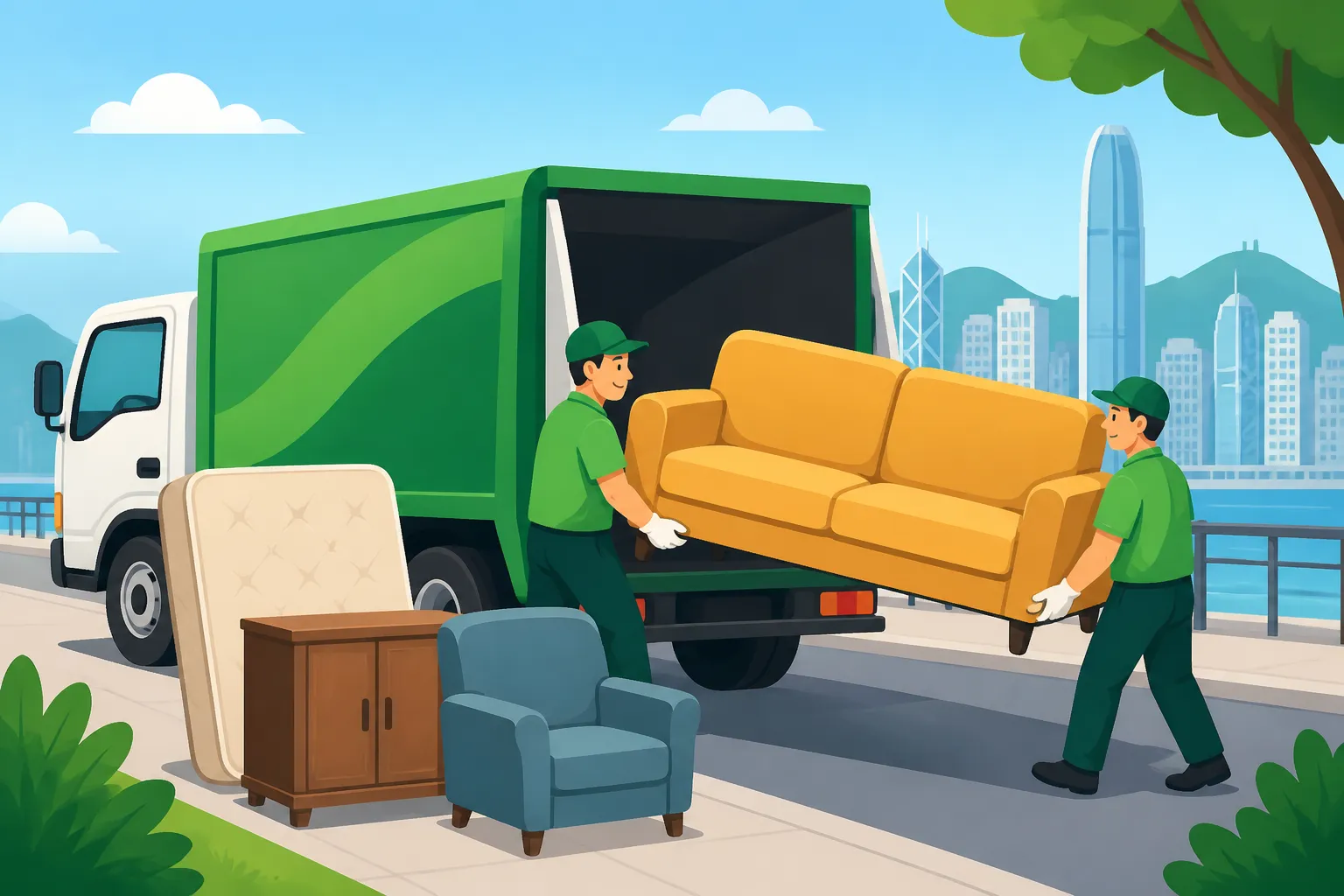
For those who have a "disaster zone" of a flat or simply cannot be bothered to carry a fridge down three flights of stairs, private junk removal companies are a godsend. These companies (often found on AsiaXpat or via Facebook groups) will come to your home, dismantle the furniture, and take it away to a legal landfill.
Unlike a standard mover, these guys aren't worried about scratching the furniture—their goal is speed. This is often the most expensive option, but it provides peace of mind. Be sure to ask for a "legal disposal" guarantee. Some unscrupulous "cowboy" haulers will take your money and then fly-tip your furniture on a quiet road in the New Territories. If the furniture is traced back to you (which happens more than you'd think via old mail or receipts left in drawers), you are legally liable for the fine. This is a common pitfall when Recovering Your Security Deposit: Wear and Tear vs Damage because landlords may hold you responsible for any illegal dumping fines that arrive after you have left.
Sustainable Alternatives: Selling and Donating
Hong Kong has a massive waste problem, and our landfills are reaching capacity. If your furniture is still in decent shape, trashing it should be your last resort. The second-hand market in Hong Kong is incredibly active. Platforms like Carousell are the go-to for Buying Second-Hand Furniture on Carousell and AsiaXpat, and they are just as useful for selling.
If you list an item for "Free" or for a nominal HKD 50 on Carousell, you will be inundated with messages. The "Carousell Hack" is to specify that the buyer must handle all "uninstallation and transport." This effectively gets someone to come into your home and remove the heavy item for you, for free. Just be prepared for "no-shows"—a common frustration in the local second-hand market.
Logistics for Specific Living Situations
The "where" of your living situation changes the "how" of your disposal. Moving furniture out of a high-rise in Olympic is a completely different beast than moving it out of a village house in Sai Kung.
Walk-ups and Narrow Streets
If you live in a classic Hong Kong "tong lau" (walk-up) in areas like Sai Ying Pun or Wan Chai, you face two hurdles: stairs and "no-parking" zones. Most junk removal companies will charge a "stair fee" per floor, per item. This can quickly add up to HKD 100-200 per flight. If you have a heavy washing machine on the 5th floor, the labor cost might exceed the value of the machine.
Additionally, many of these streets are so narrow that only a small van can enter. If you are Waste Management in HK: Recycling and Municipal Solid Waste Rules, you should also be aware of the "Green@Community" recycling stations. While they don't take large furniture, they do take small appliances (e-waste) which often get lumped into bulky waste. Getting these to a recycling point can save you space and effort during the main furniture haul.
The Village House Challenge
Living in the New Territories has its perks, but Understanding the Village House System in the New Territories reveals a unique waste challenge. Village houses often have "communal" trash areas that are not regularly serviced for bulky items. If you dump a sofa at the village entrance, you might find yourself in a heated dispute with the Village Head (Indigenous inhabitant) or the local committee.
In these areas, it is almost always better to hire a local "Man with a Van" who specifically services that village. They know the back roads and the specific RCPs that allow for larger drop-offs. If you are moving to a managed co-living space like Habyt to escape the village house commute, make sure you've cleared your village plot completely; otherwise, the "removal fee" the village committee charges can be astronomical.
Dealing with Appliances (WEEE·PARK)
In 2018, Hong Kong introduced the "Producer Responsibility Scheme on Waste Electrical and Electronic Equipment" (WEEE). This means when you buy a new fridge, washing machine, or air conditioner, the seller is legally required to provide a free removal service for your old one.
If you aren't buying a new one and just need to get rid of an old appliance, you can call the government-backed hotline (2676 8888) to arrange a free collection by WEEE·PARK. The only downside is the wait time—it can take up to two weeks for a slot. If you are in a rush, you’ll have to pay a private hauler. Don't forget that Everyday Etiquette and Safety in Hong Kong: A Survival Guide includes being a "good neighbor" by not leaving a leaking, rusty fridge in the building’s common trash area for a week while waiting for your WEEE·PARK appointment.
Final Checklist for Moving Day
Before the movers or junk haulers arrive, do a final sweep. Hong Kong apartments are tiny, and it is easy to forget things tucked away in "loft" storage or behind the AC unit.
- Measure Everything: Don't just assume the sofa fits out the door. Measure the frame, the hallway turns, and the elevator height. If it doesn't fit, you need to dismantle it before the haulers arrive to save on labor costs.
- Check for Hidden Items: Empty every drawer. Many expats accidentally throw away passports or jewelry hidden in "safe spots" inside furniture they are trashing.
- Secure the Elevator: If you’re in a high-rise, talk to the "Ba-ba" (security guard) the day before. A small tip or a cold drink goes a long way in ensuring they don't give your junk haulers a hard time about parking in the loading bay.
- Confirm the RCP Hours: Most RCPs are open from 7 AM to 11 PM, but some smaller ones close earlier. Don't get stuck with a van full of junk and nowhere to put it.
If you are feeling overwhelmed by the sheer volume of "stuff" we accumulate in this city, consider the minimalist approach next time. Options like Blueground allow you to move in with just a suitcase, avoiding this entire cycle of buying and trashing furniture every few years. It's a growing trend for a reason—the "furniture headache" is one of the most cited stresses of expat life in the 852.
Disclaimer
This guide is provided for informational purposes only and does not constitute legal or professional advice. Waste disposal regulations and fees in Hong Kong are subject to change by the FEHD and other government bodies. Always verify current laws and building-specific rules before disposing of bulky waste. The author and publisher are not responsible for any fines, damages, or disputes arising from the use of this information.