Towngas vs Cylinder Gas in Hong Kong Apartments
One of the first practical headaches many of us face when settling into a new Hong Kong apartment is figuring out the gas situation. It’s not always as straightforward as it seems back home, and the choice between Towngas, the city’s piped gas supply, and the more traditional cylinder gas can feel a bit like choosing between two different worlds. This guide is here to walk you through both options, laying out the practicalities, costs, and quirks so you can make an informed decision and get your kitchen cooking without any unnecessary stress.
Understanding Your Gas Options in Hong Kong
When you first move into a new place in Hong Kong, especially if you're fresh off the plane, you might find yourself staring at a stove and wondering, "Where does the gas come from?" Unlike some countries where there's a single dominant system, Hong Kong actually offers two main types of cooking gas for residential use: the city-wide piped network, commonly known as Towngas, and individual Liquid Petroleum Gas (LPG) cylinders, which you'll often hear referred to simply as "cylinder gas." Knowing the difference is key to a smooth setup.
What is Towngas? The Piped Solution
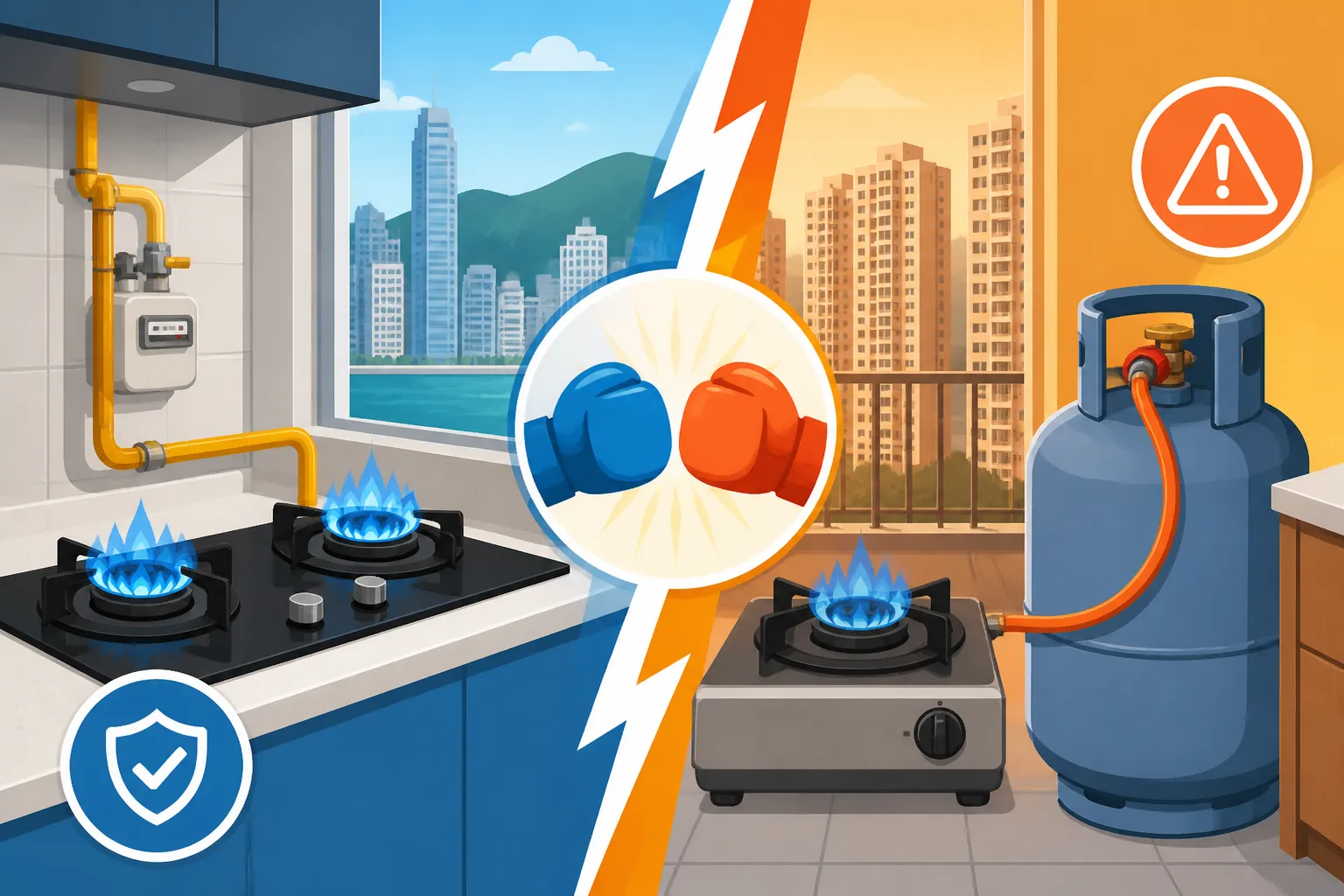
Towngas, operated by The Hong Kong and China Gas Company Limited, is essentially Hong Kong’s equivalent of natural gas, but it's actually a manufactured town gas. This means it’s delivered directly to your apartment via an underground pipeline network, much like electricity or water. If your building is connected to the Towngas grid, you'll have a meter, and the gas flows directly to your appliances. It's incredibly convenient once set up, as you never have to worry about running out of fuel mid-stir-fry. Most modern residential buildings, especially those in urban areas like Central, Mid-Levels, or even larger estates in the New Territories, will have Towngas connections.
Think about it this way: with Towngas, your gas supply is just there. You turn on the hob, and it works. This system supports a range of gas appliances, not just stoves. Many Hong Kong homes also use Towngas for their water heaters, and in some older apartments, you might even find gas clothes dryers. The consistency of supply is a huge comfort, especially when you're navigating so many other new things in your expat life. The company also offers a wide array of gas appliances, from cooktops to water heaters, often with installation services included, making it a relatively seamless process if you need to upgrade or replace anything.
What is Cylinder Gas (LPG)? The Tank Alternative
On the flip side, we have cylinder gas, which is essentially bottled Liquid Petroleum Gas (LPG). This is the traditional option, and it's particularly common in older buildings, village houses, and properties in more remote areas where the Towngas pipeline doesn't reach. With cylinder gas, you have a physical gas cylinder (or sometimes two, for backup) stored either inside your kitchen or, more commonly, on a small balcony or in a designated outdoor cabinet. When a cylinder runs empty, you call a supplier, and they deliver a new one, swapping out the old tank.
This system is very straightforward in concept: you buy a tank of gas, and when it's gone, you buy another. LPG is primarily used for cooking ranges and water heaters in homes that aren't connected to Towngas. The cylinders come in various sizes, but for residential use, you’ll typically see the medium to large ones. While it might sound a bit old-fashioned to some expats used to piped gas, it’s a perfectly functional and very common system throughout Hong Kong. Many local families have relied on it for generations, and there are well-established networks of suppliers. The main difference, of course, is the manual nature of ordering and replacing the tanks, which can be a minor logistical challenge to get used to, especially if you're not fluent in Cantonese for ordering.
Pros and Cons of Towngas
Deciding between Towngas and cylinder gas often comes down to balancing convenience, cost, and availability. As an expat, understanding these trade-offs is crucial. Let's delve into the specifics of Towngas, the piped solution that many people aspire to have due to its modern appeal.
Advantages of Piped Towngas
The biggest draw of Towngas is its sheer convenience. Imagine never having to worry about your gas supply running out mid-dinner party or in the middle of a shower. That's the Towngas promise. It offers a continuous, uninterrupted supply directly to your home. This means no heavy lifting of gas cylinders, no frantic calls to suppliers, and no waiting for delivery trucks to navigate Hong Kong's notoriously narrow streets. For many, this peace of mind alone is worth a lot.
Furthermore, Towngas is generally considered to be a cleaner-burning fuel compared to LPG, which can be an environmental consideration for some. The pricing structure is also often seen as more predictable. While there are monthly standing charges, the unit cost for gas consumed tends to be stable, and you receive a regular bill, much like your electricity or water bill. This makes budgeting a bit easier, as you're not dealing with fluctuating per-cylinder costs or deposits. The ease of billing, often done via direct debit or online payment, integrates smoothly with other utility payments, which can be a relief when you're managing all your new accounts. This smooth integration with other utilities, such as your electricity bill from Setting Up HK Electric or CLP Power: Deposits and Tariffs or your internet from Home Broadband Installation: PCCW, HKBN, and Coverage Checks, makes managing your household budget less of a headache.
Finally, Towngas offers a comprehensive service, including installation, maintenance, and emergency support. They have a dedicated hotline, and their technicians are usually professional and efficient. This level of integrated service can be incredibly reassuring, especially for new arrivals who might not yet be comfortable navigating local service providers. For instance, if you're renting through a platform like Blueground or Habyt, they'll often have apartments pre-fitted with Towngas, taking that setup worry off your plate entirely.
Disadvantages of Piped Towngas
While Towngas is fantastic, it's not without its drawbacks, and the biggest one is availability. Not all buildings in Hong Kong are connected to the Towngas network. Older buildings, village houses, and some properties in the New Territories might simply not have the infrastructure. This means if you fall in love with an apartment in a charming older neighbourhood, you might find yourself limited to cylinder gas, regardless of your preference. When searching for a place to live, it's always a good idea to confirm the gas supply with your agent or landlord. Many expat-friendly rental platforms, like Sirelo, will explicitly mention the gas type in their listings.
Another potential hurdle is the initial installation cost, especially if you're moving into a newly built apartment or one that needs a new connection. While many rental properties will have existing Towngas connections, if you're purchasing a property or undertaking a major renovation, connecting to the Towngas grid can involve significant upfront expenses for piping and meter installation. Even with an existing connection, you might have to pay a deposit and a connection fee, although these are usually refundable or nominal.
Lastly, there are monthly standing charges. Even if you use very little gas, you'll still incur a base fee each month for the privilege of being connected to the network. For a single person who rarely cooks, this might feel like an unnecessary expense, though for families or those who cook regularly, the convenience usually outweighs this fixed cost. Like any gas system, there's also the potential for leaks, though Towngas adheres to strict safety standards and performs regular maintenance checks to mitigate such risks.
Pros and Cons of Cylinder Gas (LPG)
For many expat tenants in Hong Kong, cylinder gas is a reality, especially if you live in certain areas or older buildings. It’s a different system, with its own set of advantages and disadvantages that are important to weigh.
Advantages of Cylinder Gas
The primary advantage of cylinder gas, also known as LPG, is its widespread availability. If an apartment doesn't have Towngas, it almost certainly uses cylinder gas. This means greater flexibility in your housing choices, as you're not restricted to buildings connected to the piped network. If you find a fantastic apartment in a village house in Sai Kung or a charming walk-up in Sheung Wan that doesn't have Towngas, cylinder gas ensures you still have a viable cooking and water heating solution.
Economically, cylinder gas often appeals to those who are mindful of recurring fees. Unlike Towngas, there are typically no monthly standing charges with cylinder gas. You only pay for the gas you actually consume, meaning when you order a new cylinder. For individuals or couples who cook infrequently, this can sometimes lead to lower overall costs compared to paying a fixed Towngas connection fee every month. The initial setup cost can also be lower, usually just involving a deposit for the cylinder itself and the cost of the first fill.
Furthermore, cylinder gas offers a certain level of portability for specific applications, though this is less common for fixed kitchen setups. In some rare cases, for outdoor BBQs or temporary setups, the ability to move the gas source can be useful. The independence from a centralized grid also means that any local network outages wouldn't affect your gas supply, provided you have a full cylinder on hand.
Disadvantages of Cylinder Gas
The biggest downside of cylinder gas is the logistics. You will run out of gas. It's usually at the worst possible moment: mid-way through cooking dinner, or while you're in the shower and the hot water suddenly goes cold. This means you need to monitor your gas levels, remember to order a new cylinder, and then be home for the delivery. The cylinders are heavy, typically weighing between 13kg and 20kg for a standard household size. While the delivery staff handle the swapping, you still need to be aware of the storage requirements and the general hassle involved.
Speaking of storage, safety is a more prominent concern with cylinder gas. Each cylinder is a pressurized container of flammable gas, and while modern cylinders are very safe when handled correctly, improper storage or maintenance can pose risks. Hong Kong regulations require cylinders to be stored in well-ventilated areas, often in designated cages or on balconies, away from direct sunlight or heat sources. Many buildings also have strict rules about the maximum number of cylinders you can keep. This can be a significant consideration for tenants, and landlords or building management will often enforce these rules rigorously. You might also want to look into Renters Insurance vs Fire Insurance in HK Apartments for added peace of mind, as some policies might have clauses regarding gas cylinder storage.
Finally, the cost of cylinder gas can fluctuate more than Towngas, as it's tied to global LPG prices. You'll pay per cylinder, and while you avoid standing charges, the price per refill can vary. Also, if you live in a hard-to-reach area, some suppliers might charge a small delivery fee on top of the gas cost. Getting accurate information and placing orders might require some basic Cantonese, though many suppliers have English-speaking staff or use messaging apps for orders.
Installation, Setup, and Ongoing Management
Once you've determined which gas type your apartment uses, the next step is getting it connected and understanding how to manage it day-to-day. This part can feel daunting, but breaking it down makes it much more manageable.
Getting Started with Towngas
If your new apartment comes with a Towngas connection, the process is relatively straightforward. First things first, you'll need to contact The Hong Kong and China Gas Company Limited to set up your account. This can usually be done online through their website, over the phone, or by visiting one of their customer service centres. You’ll need your Hong Kong Identity Card (HKID) or passport, your tenancy agreement or proof of address, and potentially a deposit. They will assign you an account number and arrange for a technician to come to your apartment to turn on the supply and check your appliances for safety. This safety check is mandatory and reassuring.
During the setup, they'll also explain the billing cycle and payment methods. Most people opt for autopay from a local bank account, which is a common practice for all utilities in Hong Kong. It's a bit like setting up your water bills with the Water Supplies Department (WSD). Make sure to clarify any standing charges and how they’re applied. If you’re moving into a place where the previous tenant had Towngas, sometimes you can just do a “change of tenancy” without a full new installation, which is a quicker process. However, a safety check is still usually required. Platforms like Blueground or Habyt that offer serviced apartments usually have Towngas pre-activated, meaning one less thing for you to worry about upon arrival.
Setting Up and Managing Cylinder Gas
For cylinder gas, the process is a bit more decentralized. You'll need to find a local LPG supplier. Often, your landlord, building management, or even neighbours can recommend a reliable one. In many neighbourhoods, you'll see small shops with stacks of gas cylinders outside – these are your local dealers. Once you’ve chosen a supplier, you’ll typically pay a deposit for the gas cylinder itself, which is refundable when you return the empty cylinder (provided it's in good condition). Then, you pay for the gas inside.
Ordering is usually done by phone or, increasingly, via WhatsApp. You call or message them, tell them your address, and they’ll schedule a delivery. Delivery times can vary, so it's good to establish a relationship with a supplier who is prompt and reliable. When the delivery person arrives, they will swap your empty cylinder for a full one and connect it to your stove or water heater. It's a good practice to visually inspect the connection and ensure there are no obvious leaks – though the delivery personnel are trained professionals.
Storage is paramount for safety. Ensure your landlord has provided a proper, well-ventilated space for the cylinder, ideally outdoors on a balcony or in a dedicated cabinet. Never store cylinders in enclosed, unventilated areas. Keeping an eye on your gas level is also a key part of management. Some people weigh their cylinders or use a simple "water test" (pouring warm water down the side and feeling for the cold line of liquid gas) to estimate how much gas is left. Having a spare cylinder on hand is a common practice to avoid those untimely run-outs.
Cost Comparison and Billing
Understanding the financial implications of each gas type is crucial for your Everyday Budgeting in HK: Cost of Living Benchmarks (2026). The costs aren't just about the price per unit; they involve deposits, standing charges, and delivery fees.
Breaking Down Towngas Costs
With Towngas, your costs are generally structured into a few components. Firstly, there’s a deposit, usually required when you first open an account. This is typically a few hundred Hong Kong dollars and is refundable when you close your account, provided all bills are settled. Secondly, you'll have a monthly standing charge. This is a fixed fee you pay regardless of how much gas you use, covering the cost of maintaining the network and your connection. This charge can range from around HK$15 to HK$30 per month, depending on the type of connection.
Thirdly, you pay for the gas consumed, measured in units. The unit price for Towngas is generally stable, and you'll find the current rates published on their website. For example, it might be around HK$24-25 per unit. Your monthly bill will show your consumption, calculated based on meter readings. Bills are issued monthly or bi-monthly, and can be paid via autopay, PPS, online banking, or at convenience stores.
Let's look at a hypothetical example. Say you use 5 units of Towngas in a month.
- Monthly Standing Charge: HK$20
- Gas Consumption (5 units @ HK$25/unit): HK$125
- Total Monthly Bill: HK$145 (excluding initial deposit)
Towngas also offers regular appliance maintenance services, which might come with an annual fee or be covered under certain service plans. It’s worth checking if your landlord has an existing service agreement or if you need to set one up yourself to ensure your gas appliances remain in good working order and pass safety checks. This preventive maintenance can save you from bigger repair costs down the line.
Understanding Cylinder Gas Expenses
For cylinder gas, the cost structure is simpler but less predictable. You'll typically pay a cylinder deposit when you first acquire a tank from a supplier. This can be anywhere from HK$100 to HK$300 per cylinder, and it's refundable when you return the cylinder to the supplier.
The main expense is the cost per cylinder refill. This price varies based on the size of the cylinder (e.g., 13kg vs. 20kg) and the market price of LPG. As of mid-2020s, a 13kg cylinder might cost you anywhere from HK$250 to HK$350, while a 20kg cylinder could be HK$350 to HK$500. These prices can fluctuate quite a bit, so it’s always good to ask for the current rate when you order. There are no monthly standing charges, so you literally only pay when you order a new cylinder.
Hypothetical Annual Cost Comparison Table (Illustrative, actual costs vary):
| Feature/Cost | Towngas (Piped) | Cylinder Gas (LPG) |
|---|---|---|
| Initial Setup | Deposit (refundable), Connection Fee (if new) | Cylinder Deposit (refundable) |
| Monthly Fixed Cost | Standing Charge (~HK$15-HK$30) | HK$0 (no standing charge) |
| Variable Cost | Unit price (~HK$24-HK$25/unit) | Cost per cylinder (~HK$250-HK$500 depending on size/market) |
| Running Out | Never | Yes, requires ordering and delivery |
| Delivery Fees | N/A (piped) | Possible, especially for harder-to-reach areas |
| Appliances | Wider range from Towngas, consistent pressure | Limited to compatible LPG appliances |
| Space Requirement | None (meter outside or concealed) | Storage space for cylinder(s) needed |
| Average User (moderate cooking, water heating) | HK$150 – HK$350/month (estimate) | HK$250 – HK$500 per cylinder (lasts 1-2 months, estimate) |
Note: These figures are illustrative estimates for 2026 and are subject to change. Always verify current prices with suppliers.
Delivery fees for cylinder gas are usually included in the cylinder price within standard service areas. However, if you live in a very remote village house or a property with difficult access, some suppliers might charge a small extra fee. It’s always best to clarify this when setting up your account with a new supplier.
Safety Considerations and Emergency Procedures
Safety is paramount when dealing with any type of gas. As an expat, it's easy to overlook these details amidst the chaos of moving, but familiarizing yourself with Hong Kong's gas safety practices and emergency protocols is non-negotiable.
Gas Safety Best Practices for Expats
Regardless of whether you use Towngas or cylinder gas, basic safety precautions apply. Always ensure that your gas appliances are installed and maintained by qualified technicians. For Towngas, their own technicians handle this. For cylinder gas, ensure your supplier’s delivery personnel make a secure connection. A good habit is to regularly visually inspect the gas hoses and connections for any signs of wear, cracks, or damage. If you notice anything amiss, call your gas provider immediately.
Ventilation is key. Always make sure your kitchen area is well-ventilated when using gas appliances. If you have an exhaust fan, use it. Proper airflow helps dissipate any trace amounts of gas and reduces the risk of carbon monoxide buildup, especially if an appliance isn't burning efficiently. This is particularly important in Hong Kong's often cramped apartment layouts, where kitchens can be small. Managing humidity and potential mold is also a constant battle in Hong Kong apartments, as covered in Dealing with Humidity and Mold in Your Apartment, and good ventilation is a common solution for both.
The most critical safety tip is knowing what to do if you smell gas. Gas has a distinctive odor (a rotten egg smell, added artificially for safety). If you detect a gas smell:
- Do not operate any electrical switches, light matches, or create any sparks. This includes turning lights on or off, using your phone, or unplugging appliances.
- Open all windows and doors to ventilate the area immediately.
- Turn off the main gas supply valve. For Towngas, this is usually a red handle near your meter or gas hob. For cylinder gas, it's the valve on top of the cylinder itself.
- Evacuate everyone from the premises.
- From a safe location outside, call your gas provider immediately. For Towngas, their 24-hour emergency hotline is usually listed on your bill or their website. For cylinder gas, call your supplier.
- Do not re-enter the apartment until it has been declared safe by a professional.
It might sound dramatic, but being prepared for this scenario is vital. Consider reviewing what to do in a broader emergency context, such as during typhoons or black rainstorms, as covered in Navigating Medical Emergencies During T8 Typhoons or Black Rainstorms (though this link primarily covers medical, emergency preparedness is related).
Emergency Contacts and Protocols
Knowing who to call is half the battle in an emergency. Keep these numbers handy, perhaps stuck on your fridge or saved in your phone.
For Towngas:
- Emergency Hotline: Hong Kong and China Gas Company Limited (Towngas) provides a 24-hour emergency service. Their primary emergency number is usually 2880 6988. This is the number you dial if you smell gas or suspect a leak.
- Customer Service Hotline: For non-emergency inquiries, billing, or appliance services, use their general customer service number.
For Cylinder Gas (LPG):
- Your Supplier's Emergency Number: Your specific LPG supplier should provide an emergency contact number. This is crucial as they are responsible for their cylinders and connections. Make sure you have this number from day one.
- General Fire/Emergency Services: In any serious emergency where you feel there's immediate danger, or if your gas supplier is unreachable, dial 999 for the Fire Services Department. They are equipped to handle gas leaks and fires.
Always ensure that any gas appliances you buy or have installed (especially for cylinder gas) have the appropriate Hong Kong safety certifications. Reputable suppliers will only sell certified products. If you are ever unsure about the safety of an appliance or connection, always err on the side of caution and seek professional advice. Even if you've recently moved in through a company like Blueground or Habyt, giving their concierge a call if you have any doubts about the apartment's gas setup is a wise move, as they often have maintenance teams that can assist or advise.
Disclaimer
This article is for general informational purposes only and does not constitute professional advice. Laws, prices and regulations vary by location and change over time. Consult a qualified professional for guidance on your specific situation.