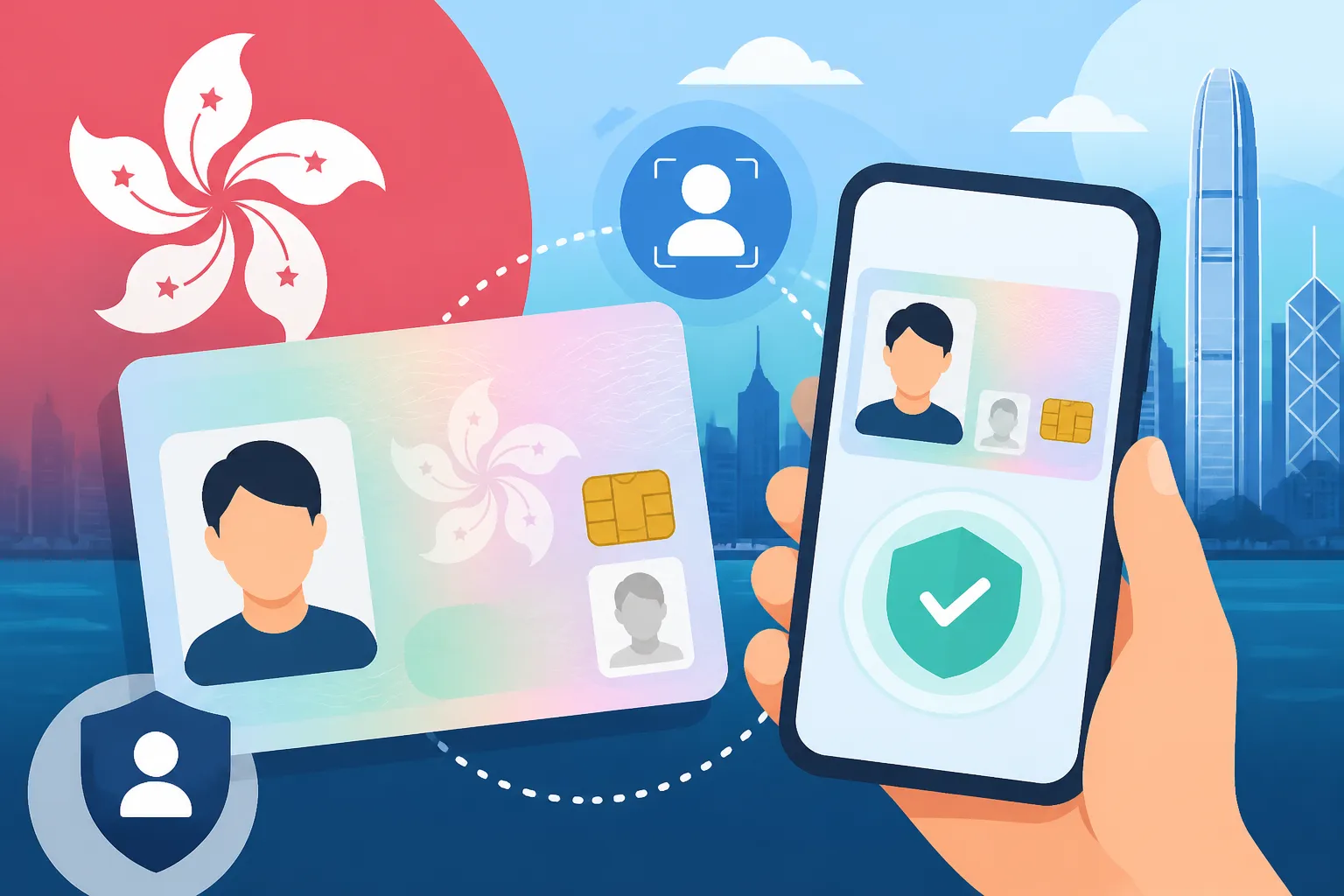
Hong Kong Identity Cards (HKID): Registration and Smart IDs
Arriving in Hong Kong is a whirlwind of skyscrapers, humidity, and an overwhelming amount of paperwork. But among all the documents you'll handle, the most critical piece of plastic you will own isn't a credit card—it's your HKID. Many expats struggle with the strict 30-day registration window and the daunting appointment system. This guide simplifies the entire Hong Kong Identity Cards (HKID): Registration and Smart IDs process, ensuring you stay legal, integrated, and ready for life in the 852.
Understanding the Importance of the HKID
When I first landed in Hong Kong, I thought my passport and a valid work visa were enough to get me through the first few months. I quickly realized that without an HKID, you are essentially a ghost in the system. The Hong Kong Identity Card is a mandatory document for all residents aged 11 or older who have been permitted to stay in the city for more than 180 days. It is not just a form of identification; it is the key that unlocks almost every essential service in the territory.
Legally, you are required to carry your HKID at all times once it has been issued. While the police rarely conduct random spot checks in expat-heavy areas like Central or Soho, they do have the authority to ask for your identification. Failing to produce it can lead to a trip to the local station or, at the very least, a significant amount of stress. Beyond the legal requirement, the card serves as your primary proof of residence when signing a lease, opening a bank account, or even joining a local gym.
From a practical perspective, the HKID is your gateway to the local economy. Want to set up a high-speed internet connection in your new Mid-Levels apartment? You’ll need your card. Planning to register for the public healthcare system to save on costs? Your HKID number is your patient file. It is the single most important tool for integrating into the city’s digital and physical infrastructure. If you are still waiting for your card to arrive, you might consider SafetyWing to cover any medical gaps before you can fully access the local subsidized health system.
The Registration Process: From Booking to Collection
The most stressful part of the HKID journey for most newcomers is actually securing the appointment. Since the post-pandemic reopening and the introduction of the new Smart ID replacement exercise, the Immigration Department (ImmD) has been incredibly busy. You are legally required to apply for your card within 30 days of arrival or the granting of your visa. This is where The 30-Day Rule for Registering a New HKID After Arrival becomes a point of anxiety for many, but don't panic—the ImmD is generally understanding as long as you have a confirmed appointment on the books.
To start, you must use the ImmD mobile app or their online booking portal. My veteran advice? Check the booking system at midnight. That is when new slots are typically released. If you try to book at 2:00 PM on a Tuesday, you will likely see a sea of "Fully Booked" messages across all five Registration of Persons Offices. You can choose from offices in Wan Chai, Kowloon, Kwun Tong, Tuen Mun, or Fo Tan. While the Wan Chai office in the Immigration Tower is the most central, the regional offices often have slightly better availability if you are willing to make the trek.
On the day of your appointment, arrive at least 15 minutes early. The process is remarkably efficient once you are inside. You will be given a token number, and then you’ll wait for your turn to have your fingerprints scanned and your photograph taken. A quick tip from someone who has been there: the photo on your HKID will last for years, so dress appropriately! There are no retakes unless the photo is technically flawed, so what you see in that first flash is what you’ll have in your wallet for the next decade. For a broader look at the paperwork required before this stage, check out our Hong Kong Visas and Immigration: The Complete 2027 Guide.
Required Documentation: What to Bring to Your Appointment
Walking into the Immigration Tower without the right documents is a recipe for a wasted morning. At a minimum, you need your original passport and the current visa that allows you to reside in Hong Kong. If you are here on a work visa, ensure you have a copy of your notification of stay or the e-visa printout. The officers are meticulous; they will check every date and stamp. If your documents are in a language other than English or Chinese, you will need certified translations. Using a service like RushTranslate can ensure your marriage or birth certificates are accepted without question by the ImmD officers.
For those moving with family, the requirements expand. You will need to provide proof of relationship for all dependents. This usually means original marriage certificates for spouses and birth certificates for children. If you have already navigated the Dependent Visas in HK: Bringing Spouses and Children process, you should have these documents handy. It is always better to bring "too much" documentation than too little. I always carry a folder with my employment contract, my lease, and even my Health Clearances and Medical Requirements for HK Employment Visas records, just in case a question arises about my status.
The ImmD has moved almost entirely to an e-visa system, but the HKID registration still requires physical presence for biometric data. After your documents are verified, the officer will provide you with a "Notice of Application for an Identity Card" (Form ROP140). This piece of paper is your temporary ID. Do not lose it! It serves as your legal identification until your actual card is ready for collection, which usually takes about seven to ten working days.
Decoding Your HKID: Symbols, Letters, and Data
When you finally pick up your card, you’ll notice a series of letters and symbols under your date of birth. To the uninitiated, these look like random code, but they carry significant meaning regarding your residency status and rights in the city. Understanding these codes is essential for knowing where you stand in the eyes of the law. For instance, the letter "A" is the one most expats aspire to, as it denotes "Right of Abode," meaning you have become a permanent resident.
The code "R" stands for "Right to Land," which is a slightly different status usually granted to people who had Right of Abode but lost it due to long absences from the city. Most new expats will have the letter "U," which simply means "Resident status is subject to conditions of stay." This is tied to your visa. If you see a "Z," it means you were born in Hong Kong, while an "X" or "Y" relates to your place of birth and your Chinese nationality status. These symbols determine whether you can use the automated E-Channel Enrollment for Faster Immigration Clearance or if you need to see an officer at the border.
The card itself is a "Smart ID," embedded with a chip that stores your biometric data and encrypted personal information. This chip is what allows you to use the card for more than just identification. It can be used as a library card, a portal for digital government services, and even a way to store your e-Cert for secure online transactions. If you ever find yourself in a position where your card is missing, you must act quickly and follow the steps in Lost or Stolen HKID: How to Report and Replace It to avoid identity theft and legal complications.
| Feature | Non-Permanent HKID | Permanent HKID (PIC) |
|---|---|---|
| Residency Requirement | Valid visa (Work, Study, Dependent) | 7 years of continuous residence |
| Right of Abode | No | Yes |
| Right to Vote | No | Yes |
| Public Healthcare | Subsidized (Eligible Person) | Subsidized (Eligible Person) |
| Landlord Preference | Standard | High (No visa risks) |
| e-Channel Access | Yes (With enrollment) | Yes (Automatic) |
| Symbol on Card | Usually "U" | Usually "AZ" or "A" |
Permanent vs. Non-Permanent Identity Cards
The distinction between a non-permanent and a permanent HKID is the central theme of the long-term expat experience. When you first arrive, you are a non-permanent resident. Your card is tied to your visa sponsorship. If you lose your job and cannot find another sponsor, your right to hold that card—and remain in Hong Kong—eventually expires. This status can feel precarious, which is why many expats focus on the Right of Abode (Permanent Residency): The 7-Year Journey as their ultimate goal.
After seven years of "continuous ordinary residence," you can apply for Permanent Residency. Once approved, you receive a new HKID with the "A" symbol. This is a game-changer. It means you no longer need a visa to work, you can vote in local elections (for certain seats), and you are eligible for government handouts or vouchers that are occasionally distributed to citizens. Most importantly, it means you can leave Hong Kong for up to 36 months without losing your right of abode. For more details on the final steps of this process, see Applying for the HK Permanent Identity Card (PIC).
The path to residency requires careful planning. You must ensure there are no significant gaps in your residency and that you maintain "ordinary residence" even if you travel for work. If you are moving your entire life here, including your furry friends via Pet-Journey, you are likely looking at the long haul. The permanent card also makes you exempt from the Buyer's Stamp Duty if you decide to purchase property, which can save you millions of Hong Kong dollars.
Replacing Lost, Stolen, or Damaged Cards
Losing your HKID is a rite of passage for many in Hong Kong, but it is one you want to avoid. If it happens, the first thing you must do is report the loss to the police. You can do this at any police station or via the online reporting portal. The police will give you a "loss memo," which is vital for your application for a replacement card. You are legally required to apply for a replacement at a Registration of Persons Office within 14 days of the loss or damage.
The replacement process is similar to the initial registration. You will need to Booking an Appointment for HKID Registration at ImmD Offices and bring your loss memo, your passport, and a replacement fee (currently around HK$370). During the period between losing your card and receiving the replacement, you must carry the temporary paper ID provided by the ImmD. If you are planning to travel during this window, be aware that the paper ID is not a valid travel document; you will need your passport and potentially other proof of your visa status to re-enter Hong Kong smoothly.
Damage to the card is also a reason for replacement. If the chip becomes unreadable or the card is physically cracked, you should get it replaced. While it felt like a minor inconvenience, the officer told me that a malfunctioning smart chip could cause issues at the border e-channels, potentially leading to delays. It is always better to have a pristine card.
Smart ID Features and Digital Integration
Hong Kong’s "New Smart ID" is a marvel of technical integration. Beyond just looking sleek with its pink and blue holographic details, it is designed to be the center of your digital life. One of the best perks of being an HKID holder is the ability to use the e-Channels at all border control points. Instead of waiting in long lines for visitors, you simply insert your card (or scan the QR code from the app) and scan your thumbprint. It makes a weekend trip to Macau or a flight out of HKIA significantly more pleasant.
Another major feature is the integration with the "iAM Smart" app. This is Hong Kong’s digital identity platform. By linking your HKID to the app, you can sign documents digitally, access your tax records, and even renew your vehicle license without ever stepping foot in a government office. It is part of the city’s push to become a world-class "Smart City." You can also use your card for Using Your HKID at Public Libraries and Leisure Facilities, allowing you to borrow books or book tennis courts through the Leisure and Cultural Services Department (LCSD) system.
The smart chip also plays a role in healthcare. When you visit a public hospital or clinic, you can insert your card into a self-service kiosk to register for your appointment. This automatically pulls up your electronic health record (eHRSS), ensuring that doctors have access to your medical history, allergies, and previous prescriptions. It is a highly efficient system, though many expats still choose to complement this with Registering Your HKID for Subsidized Public Healthcare Rates for more specialized needs.
Common Challenges and Troubleshooting for Expats
Even with a guide, the HKID process can throw some curveballs. Language barriers are rarely an issue at the ImmD, as most officers speak excellent English, but the sheer volume of people can make the offices feel overwhelming. If you find yourself struggling to find an appointment, don't forget to check the smaller offices. Places like the Fo Tan office are often quieter and can be a less stressful experience than the bustling Wan Chai tower.
Another common issue is updating your personal particulars. If you move apartments—which expats tend to do frequently—you are technically required to notify the Immigration Department of your change of address. This doesn't mean you need a new card, but you do need to update their records. This can now be done easily through the GovHK website. Similarly, if you change your name or marital status, you will need to go through a formal process to have your card updated to reflect your new legal identity.
Finally, managing the gap between your arrival and the issuance of your card is crucial. Since you cannot easily access the public health system at subsidized rates until you have your card (or at least your appointment slip), having a robust insurance policy like SafetyWing is a smart move. It provides that safety net while you are in the "administrative limbo" of your first 30 days. Remember, the HKID is a privilege and a responsibility; treat it with care, and it will make your life in Hong Kong infinitely easier.
Disclaimer
The information provided in this guide is for general informational purposes only and does not constitute legal or professional advice. While we strive to keep the information up to date and correct, immigration laws and procedures in Hong Kong can change rapidly. Always consult the official website of the Hong Kong Immigration Department or seek professional legal counsel for specific visa and identity card inquiries.