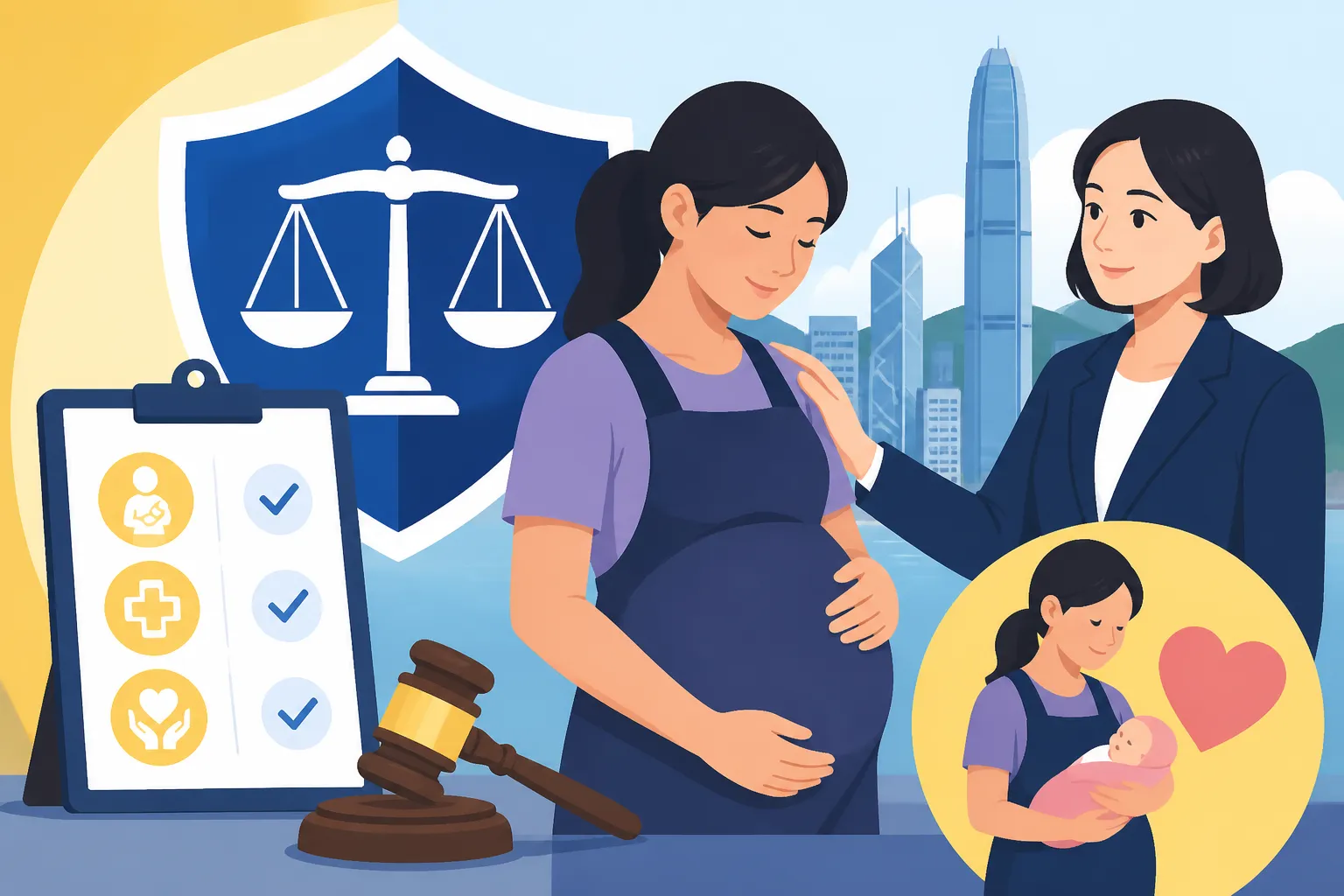
Legal Obligations if Your Domestic Helper Gets Pregnant
Finding out your domestic helper is pregnant can feel like an administrative and emotional whirlwind for any household in Hong Kong. I remember the sheer panic a close friend felt when her helper shared the news; she was terrified of accidentally breaking a law she didn't fully understand. This guide breaks down your legal duties, from medical leave to termination bans, ensuring you stay compliant and supportive.
The Legal Shield Protection Against Dismissal
The most critical thing you need to know immediately is that Hong Kong law provides a very strong "shield" for pregnant employees. Under the Employment Ordinance, it is strictly illegal to dismiss a pregnant domestic helper from the date she confirms her pregnancy by medical certificate until the date on which she is due to return to work after her maternity leave. Many well-meaning employers get into deep water because they thought they could simply terminate the contract with one month's notice as they normally would.
The Consequences of Illegal Dismissal
If you attempt to terminate the contract during this protected period, you aren't just looking at a civil dispute; it is a criminal offense. You could be prosecuted and fined up to HK$100,000. Furthermore, you would be required to pay the helper wages in lieu of notice, a further sum equivalent to one month's wages as compensation, and her maternity leave pay if she would have been entitled to it. Understanding Hiring a Foreign Domestic Helper in HK: Legal Rules and Costs is essential before you make any moves, as the financial penalties far outweigh the cost of simply following the regulations.
Exceptions to the Termination Ban
There is a very narrow window for "summary dismissal" if the helper has committed serious misconduct, but pregnancy is never a valid reason for such a move. Even if her performance has slipped due to morning sickness or fatigue, the Labour Department sets an incredibly high bar for what constitutes serious misconduct. In my experience, it is almost always better to focus on a collaborative path rather than a legal battle. If you find communication is becoming an issue during this stressful time, using a platform like Preply to find a language tutor can help you or your helper bridge the gap, ensuring that medical instructions and household expectations are clearly understood in English or Cantonese.
Maternity Leave Entitlements and Statutory Pay
In Hong Kong, a domestic helper is entitled to 14 weeks of continuous maternity leave. To qualify for this leave, she simply needs to give you notice of her pregnancy and provide a medical certificate. However, whether that leave is paid depends on how long she has been working for you. This is a common point of confusion for expats who are used to different systems back home.
Qualifying for Maternity Leave Pay
To be eligible for statutory maternity leave pay, your helper must have been employed under a continuous contract for not less than 40 weeks immediately before the commencement of her scheduled leave. If she has only been with you for six months, she is still entitled to the 14 weeks off to care for her health and the baby, but you are not legally required to pay her during that period. For those who do qualify, the pay is calculated at four-fifths (80%) of her average daily wages. Referencing the Minimum Allowable Wage (MAW) for Helpers: HK$5,100 Rules (2026) can help you calculate these figures accurately.
The Reimbursement of Maternity Leave Pay Scheme
A relatively recent and welcome change in Hong Kong is that the government now assists with the cost of the additional four weeks of maternity leave (the 11th to 14th weeks). As an employer, you pay the helper for the full 14 weeks first, and then you apply for reimbursement from the government for the final four weeks. This is capped at HK$80,000 per employee, which is well above the salary of most domestic helpers. You should keep meticulous records of payments to make this process smoother. It is also worth checking Statutory Annual Leave vs Company Leave Policies in Hong Kong to ensure you aren't overlapping different types of leave during her recovery.
| Obligation Category | Requirement | Details |
|---|---|---|
| Maternity Leave Length | 14 Weeks | Continuous period, usually starting 2-4 weeks before birth. |
| Eligibility for Pay | 40 Weeks Service | Must be employed for 40+ weeks to receive statutory pay. |
| Rate of Pay | 80% of Wages | Calculated based on the average daily wage. |
| Termination Ban | Absolute | Illegal to fire from pregnancy notice until return to work. |
| Medical Expenses | Employer Covers | Public system costs for prenatal and postnatal care. |
Medical Care and Employer Responsibilities
One of the most daunting aspects for an expat employer is the medical bill. In Hong Kong, the "Standard Employment Contract" (ID 407) explicitly states that the employer is responsible for the helper’s medical expenses. This remains true during pregnancy. While this doesn't mean you have to pay for a luxury private suite at a high-end hospital, you are responsible for the costs associated with the public healthcare system.
Public vs Private Systems for Helpers
Most helpers will utilize the Hospital Authority (HA) system, which is incredibly efficient but can be crowded. You will need to ensure your helper is registered with her HKID to access the subsidized rates. For a comprehensive look at how these costs break down, you might want to read about Maternity and Childbirth in HK: Public Wards vs Private Packages. Generally, the prenatal check-ups at Maternal and Child Health Centres and the delivery at a public hospital are very affordable for the employer, but you must keep all receipts. If you find the bureaucracy of the public system confusing, platforms like iTalki can connect you with local speakers who can help you navigate the Using the HA Go App for Booking Public Outpatient Clinics more effectively.
Insurance and Maternity Coverage
Standard domestic helper insurance policies in Hong Kong are notoriously thin when it comes to pregnancy. Many "basic" plans actually exclude maternity-related expenses entirely. I always tell new arrivals to check their Domestic Helper Insurance: Legal Requirements and Best Policies the moment they hire someone. If your current policy excludes pregnancy, you will be paying out-of-pocket for all hospital fees and check-ups. While the public fees aren't astronomical, an emergency C-section or neonatal care can add up, so being prepared is key.
The Newborn and the Live-in Requirement
This is where things get complicated. Hong Kong law requires domestic helpers to "live-in" with their employers. However, the law does not grant the helper's newborn baby the right to live in your home, nor does it grant the baby a visa to stay in Hong Kong indefinitely. This creates a difficult logistical puzzle for both the employer and the helper.
Where Does the Baby Stay
Legally, the baby does not have the right to reside in your home without your explicit permission. Furthermore, the baby will typically only be granted a visitor visa for a limited time. Most helpers choose to send the baby back to their home country to be cared for by relatives after the maternity leave ends. This is a heartbreaking reality for many, and as an empathetic employer, providing emotional support is just as important as following the Standard Employment Contract (ID 407) for Domestic Helpers Explained. If the helper wants to keep the baby with her in Hong Kong, she would need to apply for a dependent visa for the child, which is rarely granted to domestic helpers due to the Employer Household Income Requirements (HK$15,000) for Hiring a Helper and the lack of "permanent" status.
Practical Living Arrangements
If you do agree to let the baby stay temporarily, you need to consider the space. Most Hong Kong apartments are small, and the "live-in" requirement is strict. You cannot legally have your helper live in a separate flat while working for you. You should review the rules on Can a Domestic Helper Legally Live Outside the Employer's Home? to ensure you don't inadvertently violate immigration policies. During the time the baby is with the helper in your home, you are not legally responsible for the baby's medical costs or food, though most employers choose to help out. Ensuring the baby receives The Hong Kong Childhood Immunisation Programme: Required Vaccines is vital if they are staying in the territory for any length of time.
Communication and Long-Term Planning
The news of a pregnancy shouldn't be the end of a professional relationship. Many helpers continue to work for years with the same family after having a child. The key is open, honest communication from the very beginning. If there is a language barrier, using iTalki to brush up on your own Cantonese or encouraging your helper to use Preply to improve her English can make the discussions about Domestic Helper Food Allowance vs Providing Free Food or maternity schedules much easier.
Planning for the 14-Week Absence
You will need a plan for when your helper is on leave. Some families hire a "temporary" helper, though the visa process for this is complex and usually only allowed if there is a specific medical need in the employer's family. Most families rely on part-time help (which must be legal—be careful here!) or simply take on the housework themselves. This is a great time to audit your household needs and perhaps look into Hiring Your First Employee in HK: MPF and Insurance Checklist if you are considering adding a second helper to the household long-term to deal with the increased workload of a growing family.
Contract Renewals and Mutual Agreement
If the helper's contract is set to expire during her pregnancy or maternity leave, you are still generally expected to renew it if the only reason for non-renewal is the pregnancy. If both parties agree to end the relationship after the maternity leave is fully completed and she has returned to work, you can do so following the standard notice periods. Always document every conversation and agreement in writing to avoid future disputes at the Labour Department.
Summary of Key Employer Steps
- Confirm the Pregnancy: Ask for the formal medical certificate with the expected date of delivery.
- Review the Insurance: Check if your helper's policy covers any maternity costs; if not, budget for public hospital fees.
- Calculate the Leave: Mark the 14-week period on your calendar and determine if it will be paid based on the 40-week rule.
- Prepare for the Government Claim: Ensure you have the forms ready to claim back the 4 weeks of pay through the RMLP scheme.
- Discuss the Future: Talk about where the baby will live and whether she intends to continue working after her leave.
Navigating this path requires a balance of legal rigidity and human empathy. Hong Kong's laws are designed to protect the vulnerable, and while it might feel like a burden on your household, following the rules ensures a harmonious home and protects you from significant legal risks.
Disclaimer
This guide is for informational purposes only and does not constitute legal or professional advice. Hong Kong employment laws and immigration policies are subject to change. For specific legal concerns regarding the Employment Ordinance or domestic helper contracts, please consult the Hong Kong Labour Department or a qualified legal professional.