Maternity and Childbirth in HK: Public Wards vs Private Packages
Finding out you are pregnant in a city as fast-paced and vertically dense as Hong Kong is a whirlwind of joy mixed with immediate administrative panic. I remember staring at a positive test in my Mid-Levels flat, wondering if I should brave the public queues or shell out for a private suite. This guide navigates the complex choices between public wards and private maternity packages for expats.
Understanding the Dual Healthcare System for Expectant Mothers
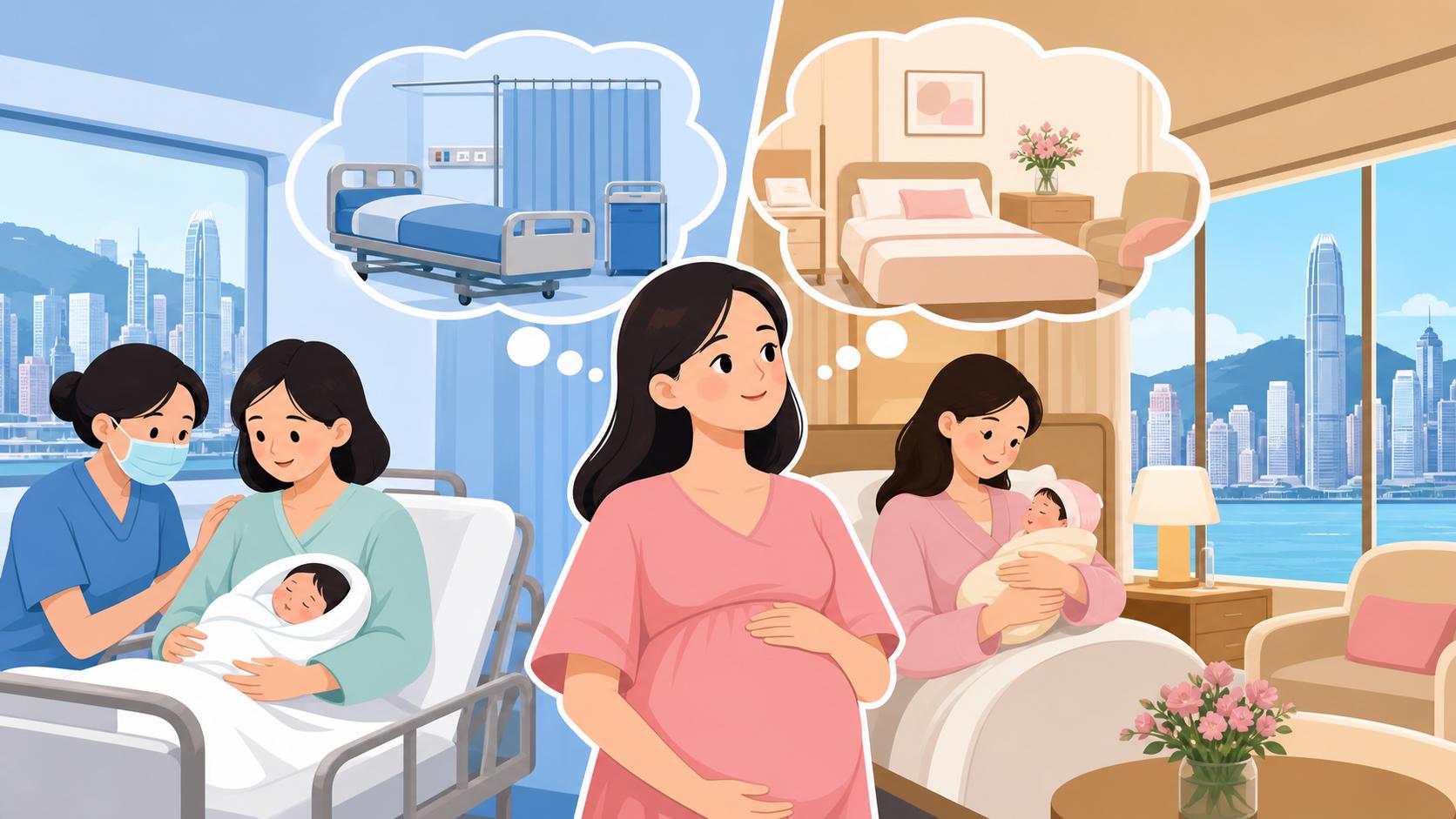
The first thing you need to realize is that Hong Kong operates a world-class dual system, but the experience between the two is night and day. On one side, you have the Hospital Authority (HA), which manages the public hospitals. These are the workhorses of the territory, handling the vast majority of births with clinical excellence but very little "hand-holding." If you have a Hong Kong Identity Card, the cost is so low it feels almost free, but you trade off comfort, privacy, and the ability to choose your doctor.
The private system is where the luxury "hotel-style" experience lives. Hospitals like Matilda International or Gleneagles offer gourmet menus, private rooms with harbor views, and a dedicated obstetrician who will be there from your first ultrasound to the final push. For many expats, the choice often comes down to their insurance coverage. High-end providers like Cigna Global are frequently used by families to offset the significant costs of these private packages, which can easily soar into the hundreds of thousands of dollars if complications arise.
Navigating these two paths requires a clear understanding of Healthcare in Hong Kong: Public vs Private Systems Explained (2027). While the public system is safer for high-risk emergencies due to its superior Neonatal Intensive Care Units (NICU), the private system offers the emotional support and birth plan flexibility that many foreign residents crave. Many expats thrive in both, but the "right" choice depends entirely on your medical needs and your wallet.
The Role of the Public Hospital Authority
In the public system, you are assigned to a hospital based on where you live—this is the "cluster" system. You don’t get to pick a hospital in Central if you live in Sha Tin. The care is shared between midwives and doctors on duty, meaning you will likely see a different face at every appointment. This can be jarring for those used to a more personal touch, but the medical standards are undeniably high.
Public hospitals are the primary centers for Emergency Medical Services in HK: Calling 999 and A&E Wards. If something goes wrong during a private delivery, you will often be transferred to a public hospital anyway, as they have the most advanced life-support equipment for newborns. This is a critical factor to keep in mind when weighing the "safety" of the private sector versus the "luxury" of a private ward.
The Private Hospital Premium
Choosing the private route means you are essentially hiring a team. You first find an obstetrician you trust, and then you book a bed at a hospital where that doctor has admitting rights. This path offers continuity of care that the public system simply cannot match. You’ll have your doctor’s WhatsApp number, and they will know your birth plan inside and out.
However, the private system is a business. Everything has a price tag, from the type of room you choose to the use of an epidural or the "emergency" fee if your doctor has to come in at 3 AM. This is where having a robust international plan from a provider like Cigna Global becomes a lifesaver, as they often cover the exorbitant deposits required just to secure a bed in your second trimester.
The Public Maternity Journey: Maternal and Child Health Centres
If you opt for the public route, your journey begins at a Maternal and Child Health Centre (MCHC). These clinics are scattered across the city and handle all the routine prenatal checkups. You’ll need to bring your HKID, a proof of address, and a referral letter from a doctor confirming your pregnancy. This is why Registering Your HKID for Subsidized Public Healthcare Rates is the absolute first step for any new expat arrival.
The MCHC experience is efficient but can feel like a conveyor belt. You will wait in large halls, move from station to station for urine tests, blood pressure checks, and fetal heart monitoring, and often spend less than five minutes with the actual midwife. However, for a healthy, low-risk pregnancy, it is perfectly adequate. They follow a strict schedule of Prenatal Care via the Maternal and Child Health Centres (MCHC) that ensures all standard screenings are completed.
Registration and Cluster Assignment
Your "cluster" is your destiny in the public system. If you live on Hong Kong Island, you’ll likely be referred to Queen Mary Hospital or Pamela Youde Nethersole Eastern Hospital. In Kowloon, it’s often Queen Elizabeth. Once you register at the MCHC, they will coordinate your major scans (like the 12-week Down syndrome screening and the 20-week morphology scan) at the main hospital.
Be prepared for the language barrier. While many doctors speak excellent English, the support staff and nurses might primarily use Cantonese. It’s helpful to have a translation app ready or, better yet, a local friend who can help you decode some of the paperwork. The public system is also strict about appointments; if you’re late, you might be sent to the back of a very long line.
Labor and the Public Ward Experience
The biggest "shocks" for expats in public hospitals usually happen during and after labor. Firstly, partners are generally allowed in the delivery room for the birth itself (assuming it’s a natural delivery and not a crowded emergency), but they are strictly barred from the postnatal wards. After your baby is born, you will be moved to a ward with 6 to 10 other women and their crying newborns.
Visiting hours are limited, and your husband or partner will have to leave, often just when you need them most for emotional support or a simple nap. The nurses will expect you to be "hands-on" with your baby immediately, teaching you how to bathe and breastfeed. It is a "tough love" environment that prepares you quickly for motherhood, but it can be incredibly lonely for those far from home.
The Private Hospital Experience: Comfort and Personalization
For those who prioritize privacy and a specific birth experience, the private sector is the gold standard. From the moment you walk into a place like the Matilda, you feel more like a guest than a patient. You can opt for a private room, a semi-private (two beds), or a ward (four beds), though even a private ward feels significantly more upscale than its public counterpart.
Most private hospitals offer comprehensive Maternity Packages at Private Hospitals: What to Budget in 2026 that cover a 3-night stay for natural births or a 5-night stay for C-sections. These packages include the room, basic nursing care, and meals. What they don't always include are the doctor's fees, the anesthesiologist's fees, and any "extras" like neonatal phototherapy for jaundice. If you are an expat on a temporary assignment or a digital nomad, ensuring you have a flexible plan like those from SafetyWing can help cover the unexpected gaps in local coverage.
Choosing Your Private Obstetrician
In the private world, your doctor is your lead coordinator. You will see them at their private clinic (often located in Central or Tsim Sha Tsui) for every single checkup. This relationship is the primary reason people choose private care. You can discuss your desire for a water birth, a specific music playlist, or your stance on pain management in great detail.
When searching for a doctor, look for those with admitting rights at the Top Private Hospitals on HK Island: Matilda, Adventist, and Sanatorium. These facilities are geared toward the expat community, with fluent English-speaking staff and an understanding of international cultural expectations around childbirth. Be aware that the most popular doctors book up months in advance, so as soon as you see that blue line on the stick, start making calls.
Maternity Packages and Hidden Costs
The "package price" is often just the baseline. When budgeting, you must account for the "Doctor’s Fee," which is separate from the hospital bill. A common rule of thumb in Hong Kong is that the doctor’s fee will roughly match the hospital's package price. If the hospital charges HK$30,000 for a room, your OBGYN might charge another HK$30,000 for the delivery.
Furthermore, complications are where things get expensive. A scheduled C-section is one price; an emergency C-section after 12 hours of failed labor is another entirely. If the baby needs to spend time in a private NICU, costs can escalate to HK$50,000 or more per day. This is why having comprehensive coverage from a name like Cigna Global is so critical for peace of mind—they are designed to handle these "catastrophic" billing scenarios that would otherwise wipe out a family's savings.
Comparative Overview: Public vs. Private Maternity in 2026
To help you visualize the trade-offs, I’ve put together a comparison table based on the current landscape in Hong Kong.
| Feature | Public Hospital (HA) | Private Hospital |
|---|---|---|
| Cost (HKID Holder) | HK$100 – HK$500 total | HK$60,000 – HK$200,000+ |
| Doctor | On-duty team (Rotating) | Personal OBGYN (Consistent) |
| Partner Access | Delivery only; No overnight stay | Stay in room (Private rooms only) |
| Privacy | Shared wards (6-10 people) | Private or Semi-private rooms |
| Pain Management | Limited (Gas/Air/Pethidine) | Epidural on demand |
| NICU Facilities | Superior / Tertiary Care | Good (but will transfer if critical) |
| Wait Times | Long (1-3 hours per clinic visit) | Short (Scheduled appointments) |
| Food | Basic canteen-style | Gourmet / A la carte menus |
Cost Breakdown: Budgeting for Your Newborn
Budgeting for a baby in Hong Kong is one of the most stressful parts of the experience. If you are an "Eligible Person" (holder of a valid HKID), the public system is almost entirely subsidized. You might pay a small daily ward fee of around HK$120 and a one-time registration fee. It is, without exaggeration, one of the best deals in the world for medical care.
However, many expats don't qualify as "Eligible Persons" if their visa hasn't been processed yet or if they are in the city on a visitor status. In those cases, the public system charges "Non-Eligible Person" rates, which can be quite high—often HK$90,000 or more for a delivery package. For those in this "limbo" period, exploring Private Health Insurance Plans Beyond VHIS for Expat Families is essential to avoid being caught with a massive bill.
Public Fees for Eligible Persons
The affordability of the public system allows families to redirect their savings toward other things, like a larger apartment or a domestic helper. Aside from the hospital stay, the Hospital Authority (HA) Guide: Accessing Public Healthcare for Expats notes that follow-up care at the MCHC, including The Hong Kong Childhood Immunisation Programme: Required Vaccines, is also free or heavily subsidized for HKID holders.
This makes the public system an attractive option for those who are comfortable with a "no-frills" experience. If you are a young couple just starting out and your insurance doesn't have a maternity rider (which usually has a 12-month waiting period anyway), the public system is a high-quality safety net that ensures you won't start parenthood in debt.
Private Costs and Insurance Strategies
In the private sector, costs are split into three buckets: the hospital package, the doctor's fees (OBGYN + Pediatrician + Anesthesiologist), and incidentals. For a standard private room natural delivery at a top-tier hospital, you should budget at least HK$120,000 to HK$150,000. If you require a C-section, add another 30% to 50%.
Because of these high costs, the "Maternity Rider" is the most coveted part of any expat insurance policy. Companies like Cigna Global offer plans that cover these costs, but you must have the policy in place long before you get pregnant. If you find yourself already pregnant without insurance, SafetyWing can provide some coverage for unexpected emergencies during travel, but they generally won't cover a routine private delivery package.
Logistics: From Registration to Birth
Once you’ve made your choice, the paperwork begins. In Hong Kong, everything moves on a timeline. If you want a private bed, you often need to pay your deposit by week 12 or 14. If you wait until your third trimester, you might find that the Matilda or Sanatorium is completely "full" for your due date month.
The public system is more flexible with timing but requires a strict set of documents. You’ll need your original HKID, your spouse's HKID, and a utility bill for address proof to ensure you are registered in the correct cluster. Keep all your "pink book" records from the MCHC in a dedicated folder; you’ll need to carry this with you to every appointment and especially when you go into labor.
The Booking Certificate
For both systems, the "Booking Certificate" for delivery is a vital document. You need this to prove to the government that you have a spot reserved, and it is sometimes requested during the birth registration process later. In the private system, your doctor’s secretary will handle this after you pay the deposit. In the public system, it’s issued after your first hospital appointment.
If you are a foreigner who is not a permanent resident, this certificate is also a safeguard. It ensures that the hospital has a record of your intent to give birth there, which can be helpful if you have any issues with your Employment Visas or stay extensions during the latter stages of your pregnancy.
What to Pack for the Hospital
What you pack depends entirely on where you are giving birth. Private hospitals are like hotels; they provide robes, slippers, basic toiletries, and even diapers and wipes for the baby. You really only need your "going home" outfit and your nursing bras.
Public hospitals provide almost nothing. You will need to bring your own maternity pads, mesh underwear, towels, and even a basin for washing. You also need to bring all the supplies for your baby, including diapers and cotton wool for cleaning. It is wise to pack light but bring a heavy-duty power bank, as some public ward beds don't have a convenient outlet for your phone—and you'll want to be video-calling your family!
Specialized Care and Support Services
Hong Kong is a great place to be if you have a high-risk pregnancy. The public system is world-renowned for its handling of multiples (twins/triplets) and gestational diabetes. If you are diagnosed with a complication, the MCHC will immediately escalate your care to the high-risk clinic at the main hospital.
For emotional and physical support, many expats look to English-Speaking Doulas and Independent Midwives in Hong Kong. These professionals can bridge the gap in the public system, providing the one-on-one labor support that the on-duty nurses cannot. While they cannot deliver the baby in a public hospital, they can stay with you during early labor at home and support you in the delivery room.
Mental Health and Postpartum Support
The "fourth trimester" is often the hardest, especially in a city where you might not have your parents nearby. Postpartum depression is a real concern, and the sudden shift from the high-adrenaline birth to the isolation of a tiny HK apartment can be jarring. If you find yourself struggling, there are excellent Mental Health in Hong Kong: Counseling and Expat Support Services available.
Groups like the AsiaXpat forums or local Facebook groups for "HK Mums" are lifelines. They can point you toward Expat Support Groups for Postpartum Depression in Hong Kong and help you find a "Cindie" (a term for the local confinement ladies) or a night nurse. Don't be afraid to ask for help; the expat community in HK is incredibly tight-knit when it comes to new parents.
Registering the Birth and Immigration
After the baby is born, you have 42 days to register the birth. This is done at the Births Registry, and it is a relatively straightforward process. You will receive a Hong Kong Birth Certificate, which is the key to getting your baby’s first passport and their own dependent visa.
Make sure you follow the steps for Registering Your Newborn's Birth at the HK Births Registry carefully. If you are an expat, you will also need to contact your consulate to report a birth abroad. This process can take time, so start gathering the necessary marriage certificates and apostilled documents early in your pregnancy to avoid a mad dash while sleep-deprived.
Making the Choice: Which Path is Right for You?
Ultimately, the decision between public and private comes down to your personal priorities. If you value clinical safety above all else and want to save money, the public system is excellent. You will receive top-tier medical care, even if the "customer service" is lacking. Many women find the shared ward experience to be a bonding moment with other new mothers.
If you have the insurance coverage or the budget, and you want a birth that feels empowered and personalized, the private system is worth every penny. Being able to have your partner stay overnight and having a doctor who knows your name makes a massive difference in your stress levels. Whichever path you choose, Hong Kong is an incredibly safe and efficient place to bring a new life into the world.
Disclaimer
The information provided in this guide is for general informational purposes only and does not constitute medical or legal advice. Healthcare policies, hospital fees, and insurance regulations in Hong Kong are subject to change. Always consult with a qualified medical professional and your insurance provider to confirm the details relevant to your specific situation.