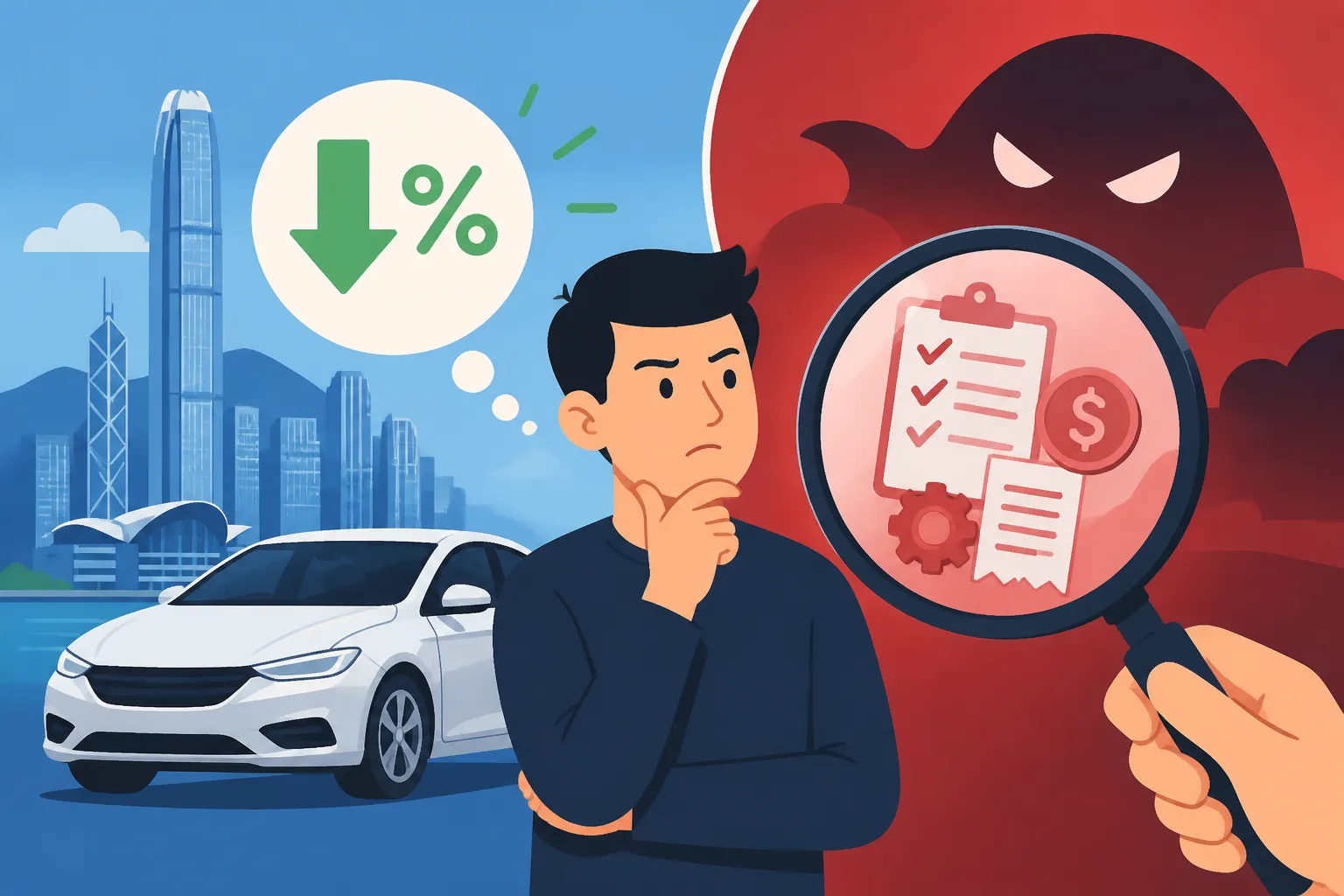
Financing a Car in HK: Why Interest Rates Can Be Misleading
Oh, the dream of cruising along Repulse Bay Road in your own car, windows down, sea breeze in your hair. Or perhaps the practicality of escaping the MTR crush for weekend hikes in Sai Kung. Many of us expats arrive in Hong Kong with that glimmer of desire for personal wheels, only to be hit with the stark reality of the city's unique financial landscape. This guide isn't here to crush your dreams, but rather to arm you with the unvarnished truth about financing a car in Hong Kong, especially why those alluring interest rates you see advertised can be incredibly misleading, and what other costs you absolutely need to factor in.
The Allure of Car Ownership in Hong Kong and its Hidden Financial Traps
Let's be honest, for many of us, owning a car in Hong Kong feels like a luxury, a statement, or simply a necessity for navigating life with kids or pets outside the main urban hubs. The public transport here is phenomenal, arguably the best in the world, but there's a certain freedom that comes with your own vehicle. However, that freedom comes at a significant cost, and it's far more than just the monthly loan repayment. It's crucial for any expat to understand that the advertised interest rate on a car loan is often just the tip of a very expensive iceberg.
Beyond the Sticker Price: What You're Really Paying For
When you first eye that gleaming new (or pre-loved) car, your mind naturally goes to the purchase price. But in Hong Kong, the journey from showroom to street involves a cascade of additional expenses, many of which are government-imposed and non-negotiable. First off, there's the First Registration Tax (FRT) for new vehicles, which is a progressive tax calculated on the dutiable value of the car. It can range from 35% for the first HK$150,000 all the way up to 100% for anything over HK$500,000. This isn't just a small fee; it's a massive upfront cost that significantly inflates the actual price you pay for a brand-new car. For used cars, while you avoid the FRT, you still have to contend with various transfer fees and potentially higher insurance premiums depending on the vehicle's age and condition.
Then there are the ongoing registration fees and annual license renewals, which depend on the engine size. A smaller engine might seem cheaper initially, but don't forget the fuel costs, which are among the highest globally. You're not just buying a car; you're buying into a complex ecosystem of taxes, fees, and charges that make the initial sticker price almost irrelevant without proper context. This is where many expats, used to different tax structures in their home countries, can get a rude awakening.
Why Advertised Interest Rates Can Be Deceptive
The interest rate is typically the headline number advertised by banks and financial institutions for car loans. It sounds straightforward, right? A lower interest rate means cheaper borrowing. While true in isolation, in Hong Kong, several factors conspire to make these advertised rates less transparent than they appear. Often, what's advertised is a "flat rate" or a "nominal rate" that doesn't fully reflect the true annual cost of borrowing. This is different from an "effective annual interest rate" (EIR) or "annual percentage rate" (APR) which is what you'd typically see for loans in many Western countries and which takes into account all charges associated with the loan, not just the interest itself.
For instance, a bank might advertise a car loan at a flat rate of 2.5%. Sounds fantastic, doesn't it? But this flat rate is often calculated on the original loan amount for the entire term, rather than on the reducing balance. As you pay off your principal, the interest charged still remains based on the initial, larger sum, which effectively means you're paying more interest over time compared to a loan calculated on a reducing balance. This is a common practice in personal loans and car financing here, so it's vital to ask for the effective annual interest rate or the true cost of the loan that includes all fees. If a lender is hesitant to provide this, consider it a red flag. Many expats have found themselves surprised by the actual total amount paid over the loan term, even with what seemed like a low advertised rate. This is one of those financial nuances that catches many newcomers off guard.
Decoding Car Loan Structures and Associated Fees
Navigating the world of car loans in Hong Kong requires more than just picking the lowest advertised interest rate. You need to understand the different types of loans available and, crucially, the myriad of hidden or often overlooked fees that can silently inflate your total cost. It's easy to get caught up in the excitement of a new purchase, but a diligent approach here will save you thousands of dollars.
Understanding Different Loan Types: Hire Purchase vs. Personal Loans
When financing a car in Hong Kong, you'll primarily encounter two main types of arrangements:
-
Hire Purchase (HP) Agreements: This is a very common method for car financing here. Under a hire purchase agreement, you don't actually own the car until you've made all the payments, including the final balloon payment if there is one. The finance company essentially owns the car, and you are "hiring" it with the option to purchase at the end of the term.
- Pros: Often requires a smaller down payment than a traditional personal loan for a car, and the process is usually integrated directly with the car dealership, making it convenient. The interest rate might seem attractive.
- Cons: Because you don't own the car, you have less flexibility. Selling the car before the end of the term can be complicated, as you'd need to settle with the finance company first. Early settlement often comes with penalties (more on this below). The effective interest rate can be higher than it appears, as mentioned before, due to calculation methods.
-
Unsecured Personal Loans: You can also opt for a general personal loan from a bank to purchase a car. In this scenario, you borrow a lump sum and then purchase the car outright, becoming the legal owner immediately.
- Pros: You own the car from day one, giving you more flexibility. You can typically choose your own insurance provider and aren't tied to the finance company's terms. Interest rates might, at times, be more competitive or transparent (i.e., more likely to be quoted as an EIR) compared to HP agreements, especially if you have a strong credit profile. Furthermore, some personal loans offer greater flexibility with repayment options or early settlement. If you're looking into general financial products, it's worth checking out "Banking in HK: Opening Accounts, Virtual Banks, and Credit Cards" to understand your options.
- Cons: You generally need a higher credit score to qualify, and the loan amount might be capped. The down payment required can also be substantial as the loan won't cover 100% of the car's value. Sometimes the interest rates on personal loans, especially for larger sums, can be higher if not specifically marketed as a "car loan" or if your credit history isn't pristine. For those concerned about their financial standing, understanding "Credit Scores in HK: TransUnion (TU) Reports Explained" can be incredibly helpful before applying for any loan.
The Sneaky Fees: Arrangement, Admin, and Early Settlement
Beyond the interest rate, be prepared for a range of fees that can significantly impact the total cost of your car loan in Hong Kong:
- Arrangement Fees / Processing Fees: Many lenders charge an upfront fee for processing your loan application. This can be a flat amount or a percentage of the loan principal. It's often deducted from the loan amount itself, meaning you receive slightly less than you borrowed, but you still pay interest on the full original amount. Always clarify if this fee exists and how it's applied.
- Administrative Fees: These might appear annually or at various stages of the loan term. They cover the general "cost of doing business" for the lender. While seemingly small, they add up over a 5-year loan term.
- Early Settlement Penalties: This is a big one. If you decide to pay off your loan earlier than planned – perhaps you get a bonus, or you're relocating from Hong Kong and want to sell the car – you might face significant penalties. Lenders often calculate these as a percentage of the remaining principal or as a fixed number of months' interest. The logic for them is that they lose out on future interest payments. It's absolutely crucial to understand the early settlement terms before signing any agreement. This information is usually buried deep in the fine print.
- Late Payment Fees: Missing a payment or being late will incur charges, which can be substantial. These are usually clearly stated but can easily be overlooked in the rush to sign.
A practical example: imagine a HK$300,000 car loan over 5 years. An advertised 2.5% flat interest rate might sound great. But if there's a 1% arrangement fee (HK$3,000), an annual HK$500 admin fee, and an early settlement penalty of "2 months interest on remaining principal," these hidden costs can easily push your true borrowing cost much higher than the headline rate suggests. Always ask for a full breakdown of all fees and charges over the entire loan term, and don't be afraid to compare options. Services like Wise can also be useful for international transfers if you're bringing funds from abroad to cover a down payment, ensuring you get competitive exchange rates without hidden bank fees.
The True Cost of Car Ownership: A Holistic View
Focusing solely on the car loan itself is a rookie mistake many expats make. The reality of car ownership in Hong Kong extends far beyond your monthly repayment. To truly understand why those interest rates can be misleading, you need to consider the comprehensive financial picture. It’s like buying a beautiful apartment but forgetting about the management fees, government rates, and unexpected repairs!
Insurance, Maintenance, and Parking: The Unavoidable Expenses
These are the big three ongoing costs that will relentlessly chip away at your wallet.
- Insurance: This isn't just a legal requirement; it's a financial necessity in Hong Kong's dense traffic. Premiums can be shockingly high, especially for new drivers, luxury vehicles, or those without a local driving history. Expect to pay anywhere from HK$8,000 to HK$30,000+ per year for comprehensive insurance, depending on your age, driving record, car model, and chosen insurer. Unlike some countries, third-party only insurance might be cheaper but offers minimal protection. For a more detailed look into safeguarding your assets, consider reading "Do I Need Personal Liability Insurance in Hong Kong?". Remember, an accident here can involve very high costs, so skimping on insurance is a false economy.
- Maintenance: Hong Kong's hot, humid climate and stop-start city driving can be tough on cars. Regular servicing is essential. Labour costs at garages can be steep, and genuine parts, especially for European models, don't come cheap. Factor in at least HK$5,000 to HK$15,000+ annually for routine maintenance, with unexpected repairs easily adding more. Even minor dents and scratches from tight parking spaces can cost a pretty penny to fix.
- Parking: Ah, parking in Hong Kong – the bane of every driver's existence and arguably the biggest ongoing expense after your loan. If you don't have dedicated parking with your apartment or workplace, you'll be paying hourly rates that can feel exorbitant. Monthly parking spaces in urban areas or popular residential districts can easily run from HK$3,000 to HK$8,000 or even more. If you factor in HK$5,000 a month for parking, that's HK$60,000 a year – a sum that makes your car loan interest look rather modest! This is an area where the cost of living in Hong Kong truly bites, and it's thoroughly discussed in articles like "Car Ownership Costs in HK: Parking, Insurance, and Registration". Always check if a potential apartment rental includes a parking space; it can be a massive saving.
Consider a hypothetical scenario: A HK$300,000 car financed at a seemingly low 2.5% flat rate might have monthly loan payments of around HK$5,000. But add HK$1,500/month for insurance (HK$18,000/year), HK$800/month for maintenance (HK$9,600/year), and a conservative HK$4,000/month for parking (HK$48,000/year). Suddenly, your total monthly outlay for the car jumps to over HK$11,000, dwarfing that initial loan payment and making the interest rate almost an afterthought in the grand scheme of expenses. This holistic view is crucial for effective budgeting, as explored in "Everyday Budgeting in HK: Cost of Living Benchmarks (2026)".
Depreciation: The Silent Killer of Your Investment
One of the most overlooked "costs" of car ownership, especially in Hong Kong, is depreciation. Unlike a property, which often appreciates here, a car is a rapidly depreciating asset. The moment you drive a new car off the lot, its value drops significantly. In Hong Kong, due to the high First Registration Tax and the generally high cost of cars, depreciation can be even more pronounced.
For example, a new car bought for HK$500,000 (including FRT) might only be worth HK$300,000 after 3-4 years, representing a HK$200,000 loss in value. This loss, while not a monthly bill, is a real financial cost that impacts your net worth and your ability to recoup your investment when you eventually sell the car. It’s the money you essentially "lose" on the vehicle. This is particularly relevant if you're considering a short-term stay in Hong Kong or if your employment contract is only for a few years. Planning your finances with a long-term view, perhaps with advice from resources like Taxes for Expats, is essential to understand the overall financial impact.
Depreciation means that while your loan balance reduces, the asset securing that loan is also rapidly losing value. If you had to sell your car in a hurry, you might find yourself in a negative equity situation, owing more on the loan than the car is actually worth. This is a common pitfall for those who only focus on the monthly payment and the interest rate.
Smart Strategies for Financing Your HK Car Dream
Alright, so the reality check might sting a bit, but it's better to be informed than surprised, right? The good news is that with a solid understanding of the true costs and some savvy planning, you can still make your Hong Kong car dream a reality, or at least approach it with open eyes. The key is to look beyond the flashy interest rate and dive deep into the numbers.
Comparing Lenders and Loan Structures
This is where your inner detective needs to come out. Don't just walk into the first dealership and accept their finance package. While convenient, it might not be the most cost-effective.
- Shop Around, Widely: Engage with multiple banks and financial institutions. Don't be shy about getting quotes for personal loans specifically for car purchases. Compare not just the advertised interest rates but, more importantly, the Effective Annual Interest Rate (EIR) or Annual Percentage Rate (APR). Insist on knowing this figure, as it gives you the most accurate comparison of the actual cost of borrowing. A bank offering personal loans might sometimes beat the dealership's hire purchase agreement. Explore options, from traditional banks like HSBC or Standard Chartered to newer virtual banks, though traditional banks might be more inclined for larger car loans initially.
- Scrutinize the Fine Print for Fees: Remember those sneaky arrangement fees, administrative charges, and early settlement penalties we talked about? Get these clearly outlined in writing. Create a spreadsheet to compare the total projected cost, including all fees, over the entire loan term for each offer. This helps you identify true value. Sometimes, a slightly higher interest rate with no hidden fees is better than a low advertised rate with many additional charges.
- Negotiate: Yes, even in Hong Kong, you can negotiate. This might be on the interest rate, the arrangement fee, or even the deposit amount. Lenders want your business, especially if you have a good credit history. Don't be afraid to use a competitive offer from one institution to leverage a better deal from another. For specifics on borrowing, articles like "Personal Loans and Tax Loans in HK: Interest Rates and Approval" offer more guidance.
- Consider Your Budget Holistically: Before you even talk to a lender, sit down and map out your entire monthly car budget: loan payment, insurance, parking, fuel, maintenance, tolls, and even a buffer for unexpected repairs. Only then can you determine how much car you can truly afford. This holistic financial planning is a cornerstone of smart expat living.
The Role of a Good Financial Advisor
For larger purchases like a car, especially if you're a relatively new expat in Hong Kong, or if your financial situation is complex (e.g., you're self-employed, have overseas income, or are planning to leave Hong Kong within a few years), consulting a financial advisor can be invaluable.
A good advisor can:
- Clarify Loan Structures: They can help you decipher the jargon, understand the difference between flat rates and EIRs, and highlight potential pitfalls in various loan agreements.
- Optimize Your Financial Strategy: They can advise whether a car loan makes sense in your broader financial picture, or if a personal loan might be more suitable. They can also help you understand how car ownership fits into your overall budgeting and savings goals.
- Navigate Tax Implications: While car loans themselves don't typically have direct tax implications (beyond the First Registration Tax), your overall financial health and other investments might. An advisor can help integrate this. For general tax advice relevant to expats, resources like Taxes for Expats offer specialized guidance.
- Prepare for Future Scenarios: If you plan to leave Hong Kong, an advisor can help you plan for the sale of your car, the settlement of any outstanding loans, and how to repatriate funds efficiently using services like Wise. They can also provide a realistic projection of potential depreciation loss over your anticipated ownership period.
Choosing a car in Hong Kong is exciting, but securing the financing and understanding the true costs requires diligence and a realistic outlook. Don't let a low advertised interest rate distract you from the myriad of other expenses that will ultimately determine how affordable your car truly is.
Disclaimer
The information provided in this guide is for general informational purposes only and does not constitute financial or legal advice. Car financing options, interest rates, fees, and government regulations in Hong Kong are subject to change. It is highly recommended to consult with a qualified financial advisor and the specific lending institutions to obtain personalized advice and the most up-to-date information before making any financial decisions related to car purchases or loans.