MTR Network Guide: Maps, Fares, and Interchange Stations
Stepping off the plane and into the bustling energy of Hong Kong, one of the first things that hits you (after the humidity, probably!) is the sheer complexity of getting around. It can feel utterly overwhelming at first, like trying to decipher a secret code written in Cantonese neon. But trust me, once you unlock the magic of the MTR, Hong Kong’s incredible subway system, you’ll realize it's not just a mode of transport; it’s the very pulse of the city, connecting every corner of this vibrant metropolis. This guide is here to walk you through the MTR network, from understanding the maps and calculating fares to mastering the art of interchange stations, making your daily commute and weekend adventures as smooth as possible.
The MTR: Your Lifeline in Hong Kong
Ah, the MTR. It’s more than just a subway; it’s an experience, a cultural phenomenon, and frankly, the reason most of us expats can actually get anywhere on time without dissolving into a sweaty, confused mess. I remember my early days, armed with a paper map and a look of utter bewilderment, trying to figure out if I was on the right line. Now, it’s second nature. And it will be for you too.
Why the MTR is a Game Changer for Expats
For us newcomers, the MTR is an absolute godsend. First and foremost, it's efficient beyond belief. Seriously, the trains arrive like clockwork, every few minutes during peak hours, and even off-peak, you rarely wait more than five. This punctuality is a stark contrast to some other global cities and truly underpins why Hong Kong runs so smoothly. It’s also incredibly clean, air-conditioned (a huge plus in summer!), and generally very safe. You won’t find graffiti-scarred carriages or dodgy platforms here; the MTR Corporation takes immense pride in maintaining a world-class system.
The biggest game-changer, however, is accessibility. Almost every major commercial hub, residential area, and tourist attraction is either directly on an MTR line or a short walk from a station. Whether you're heading to Central for work, exploring the vibrant markets of Mong Kok, or escaping to the beaches on the Southside (with a short bus connection, of course), the MTR is your most reliable friend. It eliminates the stress of navigating unfamiliar streets in a new city and the language barrier often encountered with taxis or local buses. Plus, all signage, announcements, and information are available in English, Cantonese, and Mandarin, making it incredibly user-friendly for non-Chinese speakers. When you're first arriving and settling into a serviced apartment from providers like Blueground or Habyt, knowing you're just steps from an MTR station immediately takes a huge load off your mind.
A Brief History and Evolution of the MTR
The MTR, or Mass Transit Railway, didn’t just pop up overnight. It's been a continuous work-in-progress, evolving from humble beginnings in the late 1970s. The first line, the Kwun Tong Line, opened in 1979, connecting Kwun Tong to Shek Kip Mei. Can you imagine Hong Kong without it now? From there, it grew steadily, adding the Tsuen Wan Line, Island Line, and eventually expanding across the harbour, out to the New Territories, and even connecting to mainland China. It absorbed the KCR (Kowloon-Canton Railway) system in 2007, creating the integrated network we know today.
This constant expansion means that the MTR is always adapting to Hong Kong's growing population and urban sprawl. New lines and extensions are regularly planned and built, bringing even more remote areas into easy reach. For instance, recent years have seen expansions like the Tuen Ma Line, significantly improving connectivity for residents in the New Territories West, who might otherwise face lengthy bus commutes. This ongoing development makes living further afield, in places like Tseung Kwan O or even Tung Chung, far more appealing, as you're still well-connected to the city's core.
Understanding the MTR's Core Principles
At its heart, the MTR operates on a few key principles that make it so successful. First, speed and efficiency. Trains are designed for rapid boarding and alighting, with doors closing promptly. Don’t dawdle! Second, safety. The MTR boasts an impressive safety record, thanks to rigorous maintenance schedules, platform screen doors at many stations, and a vigilant staff presence. Third, cleanliness. You'll almost never see litter on the tracks or in the carriages. Eating and drinking are strictly prohibited on trains and in paid areas, and fines are hefty – a rule that contributes significantly to the system's pristine condition.
Finally, connectivity. The MTR isn't just about trains; it's a multimodal transport hub. Many stations are integrated with shopping malls, bus termini, and even ferry piers, creating seamless transitions between different forms of transport. This integrated design means that your MTR journey is often just one part of a larger, well-oiled machine that gets you from door to door. You’ll quickly learn to appreciate how you can step off a train in Admiralty, walk directly through a climate-controlled underground passage, and emerge at your office or a shopping mall without ever seeing daylight (or humidity!) if you don't want to. It's a testament to urban planning done right, which is especially important in a city as dense as Hong Kong.
Deciphering the MTR Map: Lines and Logic
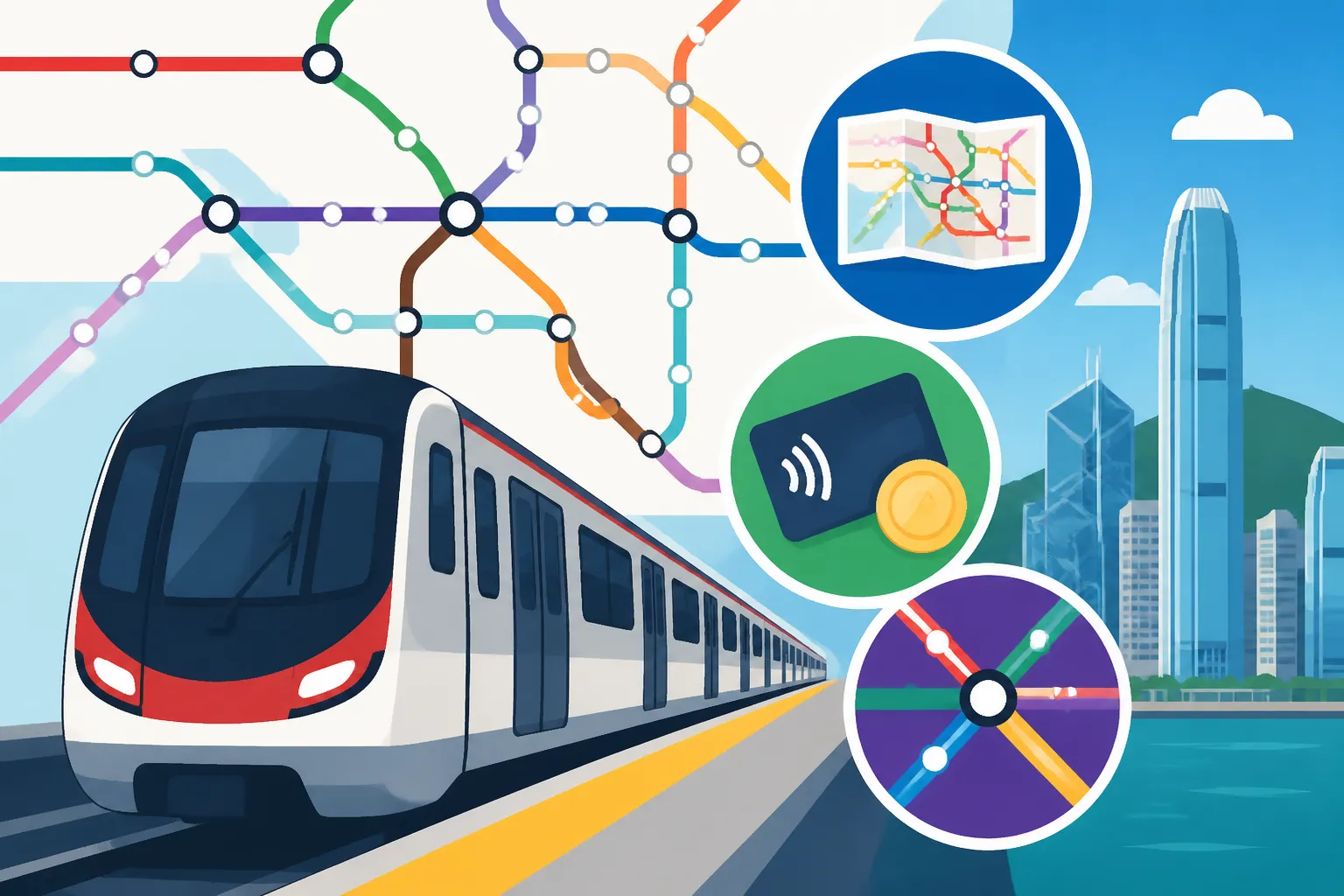
The MTR map can look a bit like a plate of rainbow spaghetti at first glance. All those colors and lines crisscrossing! But don't despair; once you understand the basic logic, it becomes incredibly intuitive. Think of it as your new best friend for navigating the concrete jungle.
Key Lines and Their Significance
Each MTR line has its own color and character, serving distinct parts of the city. Knowing these lines is half the battle won.
- Island Line (Dark Blue): This is the backbone of Hong Kong Island, running along the northern shore from Kennedy Town to Chai Wan. If you live or work in areas like Central, Admiralty, Wan Chai, Causeway Bay, or Taikoo Shing, this line will be your daily companion. It's often incredibly busy, especially during rush hour, but it connects you to virtually everything important on the island.
- Tsuen Wan Line (Red): This line cuts right through Kowloon, connecting Central on Hong Kong Island to Tsuen Wan in the New Territories. It’s famous for its vibrant stops like Tsim Sha Tsui, Jordan, Yau Ma Tei, and Mong Kok, which are teeming with shops, markets, and street food. This is the line for truly experiencing local Hong Kong energy.
- Kwun Tong Line (Light Green): Running from Whampoa to Tiu Keng Leng, this line serves the industrial and residential areas of East Kowloon and connects to the New Territories East. It's a crucial link for many residents living in areas like Ngau Tau Kok, Kwun Tong, and Diamond Hill.
- Tseung Kwan O Line (Purple): A relatively newer line, this connects North Point (on HK Island) to Po Lam and LOHAS Park in the Tseung Kwan O New Town. It’s popular with families and those seeking slightly larger apartments at more accessible prices, as the commute to Central is still surprisingly efficient.
- Tuen Ma Line (Brown): This is one of the longest lines, stretching from Tuen Mun in the New Territories West, through Kowloon, and all the way to Wu Kai Sha in Ma On Shan. It’s a vital artery for many New Territories residents and has dramatically improved connectivity in areas like To Kwa Wan and Kai Tak.
- East Rail Line (Light Blue): Formerly part of the KCR, this line runs from Admiralty on Hong Kong Island all the way up to Lo Wu and Lok Ma Chau on the border with mainland China. It serves major hubs like Mong Kok East, Sha Tin, Tai Po Market, and Fanling, and is often used by cross-border commuters.
- Tung Chung Line (Orange): Connecting Hong Kong Station (Central) to Tung Chung on Lantau Island, this line is your gateway to Disneyland, Ngong Ping 360, and the airport via a transfer to the Airport Express at Sunny Bay or Tsing Yi.
- Airport Express (Dark Green): A dedicated, premium service running from Hong Kong Station, Kowloon Station, and Tsing Yi Station directly to Hong Kong International Airport. It's fast, comfortable, and has luggage check-in facilities at the city stations.
- South Island Line (Teal): A short but impactful line connecting Admiralty to Ocean Park, Wong Chuk Hang, Lei Tung, and South Horizons. It opened up the Southern District of Hong Kong Island, making these previously bus-dependent areas much more accessible.
Reading the Map Like a Local
The MTR map is a masterclass in clear, concise information. Each line has its distinct color, and stations are clearly marked with numbers and names in English and Chinese. Pay attention to the exit numbers – these are absolutely crucial. Hong Kong MTR stations are often vast, with multiple exits leading to different streets, buildings, or even entire shopping malls. Knowing your exit number (e.g., "Exit A2 for IFC Mall") can save you precious minutes and a lot of head-scratching. Many MTR apps and Google Maps will tell you the best exit for your destination, so always check!
Interchange stations are indicated by circles or symbols where lines cross. These are the points where you can switch from one line to another. The MTR map also clearly displays surrounding landmarks, ferry piers, and other transport connections, giving you a full picture of the area. Don't forget to look for the "light rail" and "tram" connections too, especially if you're exploring the New Territories or Hong Kong Island's older districts.
Planning Your Journey: Apps and Online Tools
In this digital age, carrying a folded paper map is charming but largely unnecessary. The official MTR Mobile app is an indispensable tool. It provides real-time train schedules, estimated journey times, fare calculations, and even shows you which carriage is least crowded. I highly recommend downloading it as soon as you get your Hong Kong SIM card.
Beyond the official app, Google Maps is incredibly accurate for MTR navigation, often integrating real-time MTR data. Simply input your starting point and destination, select the public transport option, and it will give you step-by-step instructions, including which lines to take, where to interchange, and estimated travel times. For those who are still in the planning stages of their move, companies like Sirelo often share resources about public transport, emphasizing how easy it is to get around with these digital tools, even before you arrive. It’s reassuring to know you won’t be adrift in a sea of unfamiliar characters!
Fares and Ticketing: Making Sense of the Costs
Compared to many major cities around the world, Hong Kong's MTR fares are remarkably affordable. However, understanding the system can feel a bit complex at first, especially with the different ticket types and fare structures. Let’s demystify it.
The Mighty Octopus Card: Essential for Every Rider
If there’s one piece of advice I can give you about Hong Kong transport, it’s this: get an Octopus Card immediately. It’s not just for the MTR; it’s an indispensable, stored-value smart card used for nearly all public transport (buses, trams, ferries, minibuses) and accepted at countless retailers, convenience stores, supermarkets, and even vending machines across the city. Think of it as your all-in-one payment solution. You can pick one up at any MTR customer service counter or convenience store like 7-Eleven or Circle K. You’ll pay a small deposit (usually HKD 50), which is refundable, along with any remaining balance, if you decide to leave Hong Kong.
Using an Octopus Card offers several benefits:
- Convenience: No fumbling for change, just tap and go.
- Discounts: MTR journeys are often slightly cheaper when using an Octopus Card compared to single journey tickets.
- Speed: Faster entry and exit from stations, crucial during peak hours.
- Flexibility: Easily topped up at MTR stations, convenience stores, or via the Octopus App. For more detailed information on managing your card, check out our guide on Topping Up Your Octopus Card: Cash, App, and Credit Card Auto-Add.
Single Journey Tickets and Tourist Passes
While the Octopus Card is king, there are alternatives. Single Journey Tickets are available from vending machines at every MTR station. You select your destination, the machine calculates the fare, and you pay with cash or other digital payment options available (some machines accept QR codes). These are useful if you're a very infrequent MTR user or just visiting for a short trip and don't want the hassle of a deposit. However, they're generally slightly more expensive per ride.
For tourists, the MTR Corporation offers a Tourist Day Pass (HKD 65 for unlimited travel for 24 hours) or an Airport Express Travel Pass. The Airport Express Travel Pass is often a good deal if you're planning on using the Airport Express for a return trip, as it includes round-trip Airport Express tickets and three consecutive days of unlimited MTR travel (excluding the Airport Express, East Rail Line First Class, and journeys to Lo Wu/Lok Ma Chau). Consider your travel plans carefully to see if these passes offer better value than a standard Octopus Card.
Calculating Fares: Factors Affecting Your Journey Cost
MTR fares are distance-based, meaning the longer you travel, the more you pay. The fare calculation can also be influenced by the following:
- Origin and Destination: The starting and ending points of your journey.
- Route Taken: While the system usually calculates the most direct route, sometimes there are multiple routes, and the fare can vary slightly.
- Ticket Type: As mentioned, Octopus Card users generally pay a slightly lower fare than single journey ticket holders.
- Concessions: Children, students, and elderly residents are eligible for discounted fares with special Octopus cards.
To get an accurate fare estimate, the MTR Mobile app or the MTR website's "Journey Planner" is your best bet. Simply input your origin and destination, and it will provide the exact fare and estimated travel time.
Here’s a simplified table illustrating approximate Octopus Card fares for common routes, to give you a general idea (prices subject to change in 2026):
| Origin Station | Destination Station | Approximate Fare (HKD) | Estimated Time |
|---|---|---|---|
| Central | Tsim Sha Tsui | 10.5 | 7 mins |
| Central | Mong Kok | 14.5 | 12 mins |
| Admiralty | Causeway Bay | 4.5 | 3 mins |
| Mong Kok | Sha Tin | 10.0 | 15 mins |
| Tung Chung | Hong Kong Station | 24.0 | 30 mins |
| North Point | Tiu Keng Leng | 9.5 | 10 mins |
Remember, these are just approximate Octopus fares. Always check the official MTR resources for the most up-to-date pricing.
Navigating Interchange Stations: Seamless Transitions
Interchange stations are the heart of the MTR network, allowing you to seamlessly switch between different lines to reach your final destination. Mastering these hubs is key to becoming a confident MTR user.
Major Interchange Hubs
Hong Kong has several key interchange stations, each with its own quirks and levels of busyness. Knowing them helps immensely in planning your journey.
- Central Station: A behemoth beneath the city's financial district, Central allows you to switch between the Island Line and the Tsuen Wan Line. It’s also seamlessly connected underground to Hong Kong Station, where you can catch the Tung Chung Line or the Airport Express. This subterranean labyrinth is one of the busiest, and during peak hours, it can feel like a river of humanity.
- Admiralty Station: Another critical interchange, Admiralty connects the Island Line, Tsuen Wan Line, South Island Line, and East Rail Line. This station became even more central with the South Island Line and East Rail Line extensions, making it an incredibly vital hub for commuters from the Southern District and the New Territories North. It’s modern, well-designed, but can get seriously packed.
- Mong Kok Station: Here, the Tsuen Wan Line and Kwun Tong Line intersect, right in the heart of one of Kowloon's most bustling districts. It's often chaotic, vibrant, and a true reflection of Hong Kong’s energy. Be prepared for crowds, especially on weekends and evenings.
- Kowloon Tong Station: This interchange links the Kwun Tong Line and the East Rail Line. It's crucial for those commuting between Kowloon and the northern New Territories. The station is also directly connected to Festival Walk, a popular shopping mall, which means it can see significant foot traffic.
- Tai Koo Station: A common interchange for those living along the Island Line, linking it to the Tseung Kwan O Line for onward travel to North Point or Tseung Kwan O.
These hubs are meticulously designed with clear signage in multiple languages. Just follow the color-coded signs for your connecting line, and you’ll generally be fine.
Tips for Smooth Transfers
Changing lines can sometimes feel like a race against the clock, especially if you're trying to catch a specific train. Here are a few veteran expat tips:
- Pay Attention to Announcements: English announcements clearly state the next station and the interchange lines available. Listen out for these so you can position yourself near the correct exit or platform for your transfer.
- Follow the Footprints: Many popular interchange stations have floor markings or overhead signs directing you to the next platform. Look for the color of your destination line. For example, at Admiralty, if you're changing from the Island Line to the South Island Line, you'll see purple directional signs.
- Mind the Gaps and the Rush: Platforms can be crowded, especially during peak times. Be mindful of the gap between the train and the platform edge, and don't rush onto a closing door. There will always be another train in a minute or two. For more insights on avoiding the crush, check out our guide on MTR Peak Hour Crowds: Which Stations to Avoid at 8 AM.
- Long Walkers: Some interchanges, like Central to Hong Kong Station, involve a fairly long walk through underground tunnels. Factor this into your journey time. While convenient, it’s not always a quick dash.
- Be Aware of Your Surroundings: It's easy to get absorbed in your phone, but keeping an eye on the signs and the flow of people will make your transfers much smoother.
Avoiding Peak Hour Madness at Interchanges
Ah, peak hour. If you've ever experienced Tokyo or New York City subways during rush hour, you have a taste of what MTR peak hours can be like. The trains are packed, platforms are overflowing, and personal space becomes a distant memory.
- Travel Off-Peak if Possible: If your schedule allows, try to avoid traveling between 8:00 AM – 9:30 AM and 5:30 PM – 7:00 PM on weekdays. Even shifting your travel by 15-20 minutes can make a noticeable difference.
- Use Feeder Buses: Sometimes, taking a short bus or tram ride for the first or last leg of your journey can bypass a crowded interchange. For example, if you're heading to a specific building in Central from Wan Chai, a tram might be slower but infinitely more pleasant than a packed MTR.
- Consider "Reverse" Commutes: If you live in an area typically outside the main commuting flow and work in one that’s also "reverse," your experience will be far more serene. For instance, living in Tung Chung and working in Sunny Bay.
- Head to the End of the Platform: Often, the middle carriages (especially near escalators) are the most crowded. Walking a bit further down the platform can sometimes land you a slightly less packed carriage. It's a small difference, but every bit helps!
MTR Etiquette and Unwritten Rules
Like any major public transport system, the MTR has its own set of unspoken rules and etiquette that are essential for a harmonious journey. Following these will not only make your commute smoother but also earn you some appreciative nods from the locals.
Standing on the Right, Priority Seats, and Quiet Zones
This is a big one: always stand on the right side of the escalator. The left side is for those in a hurry, briskly walking up or down. Blocking the left side is a major faux pas and can cause bottlenecks. It's a simple rule, but one that ensures efficient flow.
You'll notice seats designated as "Priority Seats" marked with blue signage. These are strictly for the elderly, pregnant women, people with disabilities, and those accompanied by infants. Even if the train is packed, these seats should be left empty or offered to those who need them. It’s a core part of Hong Kong’s considerate culture, and you’ll rarely see these rules flouted.
While not officially designated "quiet zones," there's a general expectation of low noise levels on MTR trains. People tend to keep conversations hushed, and phone calls are usually short and discreet. Avoid loud music, video calls, or shouting across the carriage. Respecting this quiet space is a courtesy that everyone appreciates.
Eating, Drinking, and General Courtesy
As mentioned earlier, eating and drinking are strictly prohibited in the paid areas of MTR stations and on trains. This rule is rigorously enforced and contributes significantly to the system's impeccable cleanliness. Don't risk a fine (or the glare of your fellow passengers!) by trying to sneak a quick snack or sip of coffee.
When boarding, allow passengers to alight first. This seems like common sense, but in a rush, people sometimes forget. Wait patiently by the door until everyone has exited before you attempt to board. Once on the train, try to move into the middle of the carriage rather than lingering by the doors, especially if you're not getting off at the next stop. This helps maximize space and allows others to board and alight more easily. Be mindful of your bags; large backpacks should ideally be taken off and held in front of you, or placed on the luggage rack if available, to avoid inadvertently bumping into people.
Dealing with Crowds and Typhoons
Crowds are an unavoidable part of MTR life, especially during peak hours or major events. The key is patience and a bit of spatial awareness. Don't push or shove; the system is designed to move people efficiently, and aggressiveness won't get you there any faster. Keep your belongings secure and be aware of your surroundings, though serious crime is rare on the MTR.
Hong Kong is no stranger to typhoons and black rainstorms. During these severe weather events, the MTR often becomes even more crucial as other transport might be affected. However, there are specific protocols. When a Typhoon Signal No. 8 or higher is hoisted, or a Black Rainstorm Warning is issued, public transport services, including the MTR, may be reduced or even suspended for safety reasons. Always check official MTR announcements via their app or website during such times. Generally, services will gradually cease or run on a limited schedule until the signal is lowered. Plan your journeys accordingly and don’t rely on the MTR running at full capacity during these extreme conditions. Staying informed and making responsible choices is part of living in this city! For tips on dealing with typhoons in general, you might find our guide on Navigating Medical Emergencies During T8 Typhoons or Black Rainstorms helpful, as the principles of preparedness extend to transport.
Accessibility and Special Services
The MTR system prides itself on being accessible to a wide range of passengers, offering facilities and services designed to make travel easier for everyone, from those with mobility challenges to families with young children.
Facilities for Disabled Passengers and Families with Strollers
The MTR has made significant strides in ensuring its network is accessible. Almost all stations are equipped with lifts (elevators) and ramps to facilitate access for wheelchair users, passengers with heavy luggage, and families pushing strollers. These are usually clearly marked with universal accessibility symbols. In older stations, if a lift isn't immediately visible, look for signs directing you to one, or ask staff at the customer service center.
Accessible toilets are also available at many stations, and tactile guide paths are installed to assist visually impaired passengers. On the trains themselves, designated wheelchair spaces are often available, clearly marked within the carriages. The gap between the platform and the train is generally minimal, designed to allow easy boarding. If you require assistance, MTR staff are usually very helpful – don't hesitate to approach them.
For families, the MTR is a lifesaver. Taking a stroller on the MTR is generally easy, thanks to the lifts and wide gates. However, during peak hours, navigating crowded platforms and carriages with a large stroller can be challenging. Consider using a baby carrier during these times if possible.
Lost and Found, Customer Service, and Emergency Assistance
Lost something on the MTR? It happens to the best of us! The MTR operates a fairly efficient Lost and Found service. If you realize you've left something behind, report it to any MTR customer service center as soon as possible, or call their hotline. Provide as many details as you can (time, date, line, approximate carriage). While there's no guarantee, many items are recovered.
Customer service centers are located in every MTR station, usually near the ticket gates. Staff there can assist with ticket issues, provide directions, answer questions, and offer general help. They typically speak English.
In case of an emergency, such as a medical incident or any safety concern, look for the emergency call button located on the platform or within the train carriage. This connects you directly to the MTR control center, who can dispatch assistance. The MTR is well-prepared for various scenarios, so trust their protocols and staff.
MTR Connections to Other Transport Modes
One of the greatest strengths of the MTR network is its seamless integration with other public transport options. Your MTR journey is rarely a standalone trip; it's often the central leg of a multi-modal adventure.
- Buses and Minibuses: Many MTR stations have dedicated bus termini or minibus stops right outside their exits. You can often transfer directly from the MTR to a bus that takes you to areas not served by the subway, such as the remote parts of the New Territories, the Southside beaches, or various residential estates. Your Octopus Card makes these transfers effortless.
- Trams (Ding Ding): On Hong Kong Island, many MTR stations are a short walk from a tram stop. The iconic "Ding Ding" trams offer a charming, budget-friendly way to explore the island at a slower pace.
- Ferries: Major MTR stations like Central (connected to Hong Kong Station), Tsim Sha Tsui, and Mong Kok East are either adjacent to or a short walk from ferry piers. This allows for easy transfers to ferries heading to the Outlying Islands (like Cheung Chau, Lamma Island) or across Victoria Harbour.
- Airport Express: As mentioned, the Airport Express offers dedicated connections from Hong Kong, Kowloon, and Tsing Yi Stations directly to Hong Kong International Airport. This is by far the quickest and most convenient way to get to and from the airport.
- Light Rail: In the New Territories West (around Tuen Mun, Yuen Long, Tin Shui Wai), the Light Rail system complements the MTR, serving local communities and connecting to major MTR stations.
Understanding these connections is essential, especially when you're looking for temporary accommodation or settling into a new home. Websites like Sirelo, which offer international relocation services, often highlight the excellent connectivity of certain residential areas, indicating not just MTR access but also the availability of feeder buses or proximity to ferry piers. Similarly, co-living spaces or serviced apartments from brands like Blueground or Habyt often market themselves based on how well-connected they are to the MTR and other transport links, knowing how vital this is for expats' daily lives.
Disclaimer
The information provided in this guide is for general informational purposes only and is based on typical conditions and publicly available data as of 2026. While we strive to keep the information up-to-date and accurate, MTR fares, schedules, regulations, and services are subject to change by the MTR Corporation and relevant government bodies. Always refer to the official MTR Mobile app, MTR website, or official MTR customer service channels for the most current and authoritative information before making travel plans.