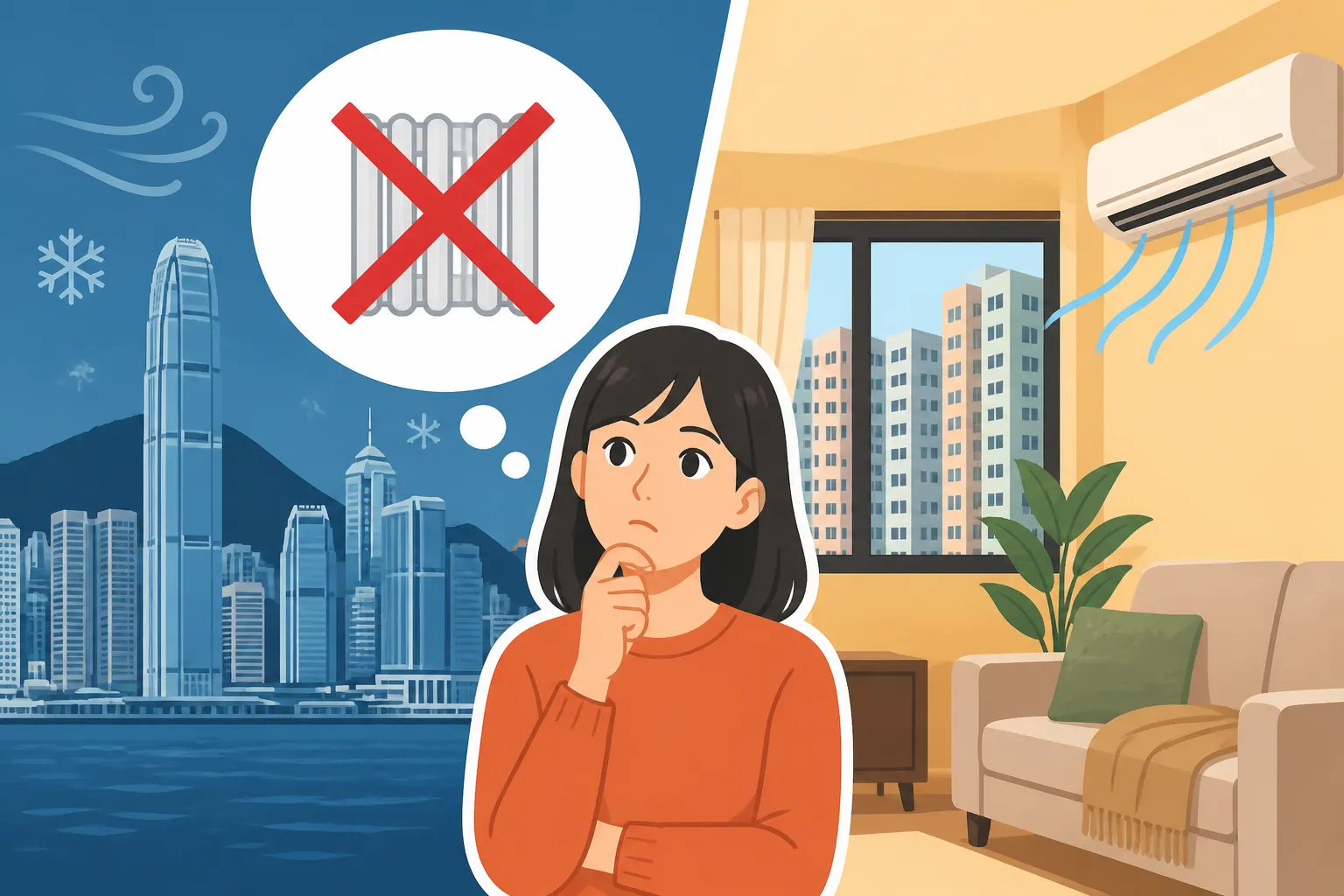
Why Hong Kong Apartments Don’t Have Central Heating
You move to a sub-tropical city expecting year-round warmth, only to find yourself shivering in a puffer jacket inside your own living room come January. Most newcomers are shocked to discover that despite the premium prices, the vast majority of Hong Kong apartments completely lack central heating. This guide explains the architectural, historical, and climatic reasons behind this oversight and provides actionable strategies to keep your home habitable during the humid, bone-chilling winter months.
The Tropical Deception Why Hong Kong Architecture Ignores Winter
When you first land in the city and begin Renting in Hong Kong: Apartments, Leases, and Tenant Rights, the last thing on your mind is a radiator. The humidity is thick, the sun is blazing, and the air conditioning units are humming at full blast. For ten months of the year, Hong Kong is an oven. Architects and developers have historically designed buildings with one goal in mind: heat dissipation. The city is a masterpiece of concrete and steel, materials that are excellent at staying cool but abysmal at retaining warmth once the temperature drops.
The cold season in Hong Kong is deceptively short, usually lasting from late December to early March. Because the mercury rarely falls below 10 degrees Celsius (50 degrees Fahrenheit), building regulations have never mandated the installation of central heating systems. To a developer, the cost of installing pipes, boilers, and radiators for a six-week cold snap simply doesn't make financial sense. Instead, the focus remains on ventilation and cooling, leaving residents to fend for themselves when the Siberian winds blow south.
Furthermore, the physical structure of a typical high-rise works against you. Most flats are built with single-pane glass and thin concrete walls that lack any form of cavity insulation. In the summer, you fight to keep the cool air in; in the winter, the concrete acts as a giant heat sink, sucking the warmth out of your apartment and radiating the external chill inward. This is especially true if you are Living in Sai Kung and Clearwater Bay: Space vs Commute, where the proximity to the coast and the lack of surrounding high-rises to block the wind can make indoor temperatures feel significantly lower than in the dense urban core of Central or TST.
Practical Strategies for Staying Warm Indoors
Since you cannot rely on the building’s infrastructure, you must become your own climate control engineer. Veteran expats usually spend their first winter in a state of denial, wearing three layers of Uniqlo Heattech until they finally break down and buy a portable heater. If you have used a global moving service like Sirelo to bring your belongings, you might have brought a space heater from home, but be mindful of voltage differences and the sheer amount of space these units consume in a tiny HK flat.
The most effective tool in your arsenal isn't actually a heater—it's a dehumidifier. Hong Kong’s winter is a "wet cold." High humidity levels make the air feel much colder than the thermometer suggests because moisture on your skin and in the air evaporates, pulling heat away from your body. By Buying Dehumidifiers and Air Purifiers for HK Weather, you can drop the indoor humidity from 85% to a crisp 50%, which instantly makes a 12-degree room feel like 16 degrees.
When it comes to actual heating, you have several options, each with its own impact on your monthly Budgeting for Utilities: Electricity, Water, Gas Costs. Most modern apartments come with "reverse cycle" air conditioners (split-type units that can blow hot air). If yours has this, use it, but be warned: they are notorious for drying out your throat and eyes. If you don't have a reverse cycle unit, you will need to purchase a standalone heater.
| Heater Type | Pros | Cons | Best For |
|---|---|---|---|
| Oil-Filled Radiator | Consistent, silent heat; safe for pets/kids. | Heavy, slow to warm up, high energy use. | Bedrooms and overnight use. |
| Ceramic Fan Heater | Instant heat, portable, affordable. | Noisy, heat dissipates quickly when turned off. | Small home offices or bathrooms. |
| Convection Heater | Quiet, slim profile, good for large spaces. | Can be expensive to run long-term. | Living rooms. |
| Infrared / Radiant | Very energy efficient, warms objects directly. | Only warms what it "sees"; not good for whole rooms. | Sitting directly in front of while working. |
Selecting a Winter Ready Apartment
If you are currently in the search phase or looking for Short-Term Serviced Apartments for Your First Month in HK, you can actually prioritize climate control in your selection process. Newer, "luxury" developments in areas like West Kowloon or Tseung Kwan O are much more likely to feature built-in reverse cycle HVAC systems. These are far superior to the window-mounted "box" units found in older walk-ups, which often have gaps around the frame that let in freezing drafts.
For those who want a turnkey solution without the hassle of buying appliances, companies like Blueground and Habyt offer professionally managed apartments that often include high-quality climate control features. When viewing a property with Habyt or similar co-living providers, always check if the air conditioning units have a "heat" mode on the remote. Living in a space managed by Blueground often means the interior finishes and furnishings are designed with more international standards in mind, which can include better-sealed windows and high-quality linens that help mitigate the lack of central heating.
Beyond the hardware, look at the orientation of the flat. A south-facing apartment is a goldmine in Hong Kong. It catches the low winter sun, which can naturally heat your living room by several degrees during the day. Conversely, a north-facing flat in a deep canyon between skyscrapers will be a refrigerator from December to March. Always ask the agent about the window glazing; while rare, some newer builds use double-glazed glass, which is a massive advantage for both noise reduction and thermal insulation.
Managing Your Winter Energy Consumption and Health
Staying warm in Hong Kong can be surprisingly expensive. When you are Setting Up Utilities: Electricity, Water, Gas, and Broadband in HK, you’ll realize that while electricity is generally affordable, running a 2,000-watt oil radiator for 10 hours a day will cause a significant spike in your bill. Hong Kong’s two power companies, HK Electric (serving the Island) and CLP (serving Kowloon and the New Territories), use a tiered tariff system. The more you use, the higher the rate per unit, so heavy heater usage can push you into the most expensive bracket.
Beyond the financial cost, there is a health cost to the "no central heating" lifestyle. The combination of cold walls and warm, humid indoor air is a recipe for condensation. If you don't manage this, you will quickly find yourself Dealing with Humidity and Mold in Your Apartment. Mold can grow behind wardrobes and under beds in as little as 48 hours during a cold, damp spell. This leads to respiratory issues and can damage your clothing and furniture. Always leave a small gap between your furniture and the external walls to allow for airflow, and keep your dehumidifier running even when you have the heater on.
Finally, remember to dress for the "indoor-outdoor" reality of the city. Because shops and the MTR often keep their cooling systems running even in winter, and your apartment is likely unheated, you will spend your day constantly adding and removing layers. Investing in high-quality wool rugs can also make a massive difference; many Hong Kong flats have tile or marble floors which stay ice-cold. Covering these with a thick rug will prevent the "cold feet" syndrome that makes the HK winter feel so much more miserable than it actually is. It’s all part of the unique experience of Everyday Budgeting in HK: Cost of Living Benchmarks (2026)—knowing when to splurge on a good heater and when to just buy a thicker duvet.
Disclaimer
The information provided in this guide is for informational purposes only and represents the personal experiences and observations of the author. While we strive to provide accurate and up-to-date advice regarding living conditions and building standards in Hong Kong, utility costs, building regulations, and individual apartment features can vary significantly. Readers are encouraged to verify specific property details with landlords or licensed estate agents before signing any tenancy agreements.