Why Car Parking Spaces Cost More Than Apartments in HK
You just moved to Hong Kong, perhaps with the help of international movers like Sirelo, and you are ready to embrace the high-octane lifestyle of this vertical city. You found a decent apartment, adjusted to the humidity, and decided it was time to buy a car. Then you saw the price of a single yellow-lined rectangle in a basement in Ho Man Tin or Repulse Bay. It is a specific, soul-crushing shock to realize that a piece of concrete for your car can cost more than a literal mansion in other parts of the world. This guide dives deep into the bizarre reality of Hong Kong’s parking market, explaining why these spaces are treated like gold bullion and how you can navigate the costs without losing your mind.
The Surreal Economics of the World Most Expensive Concrete
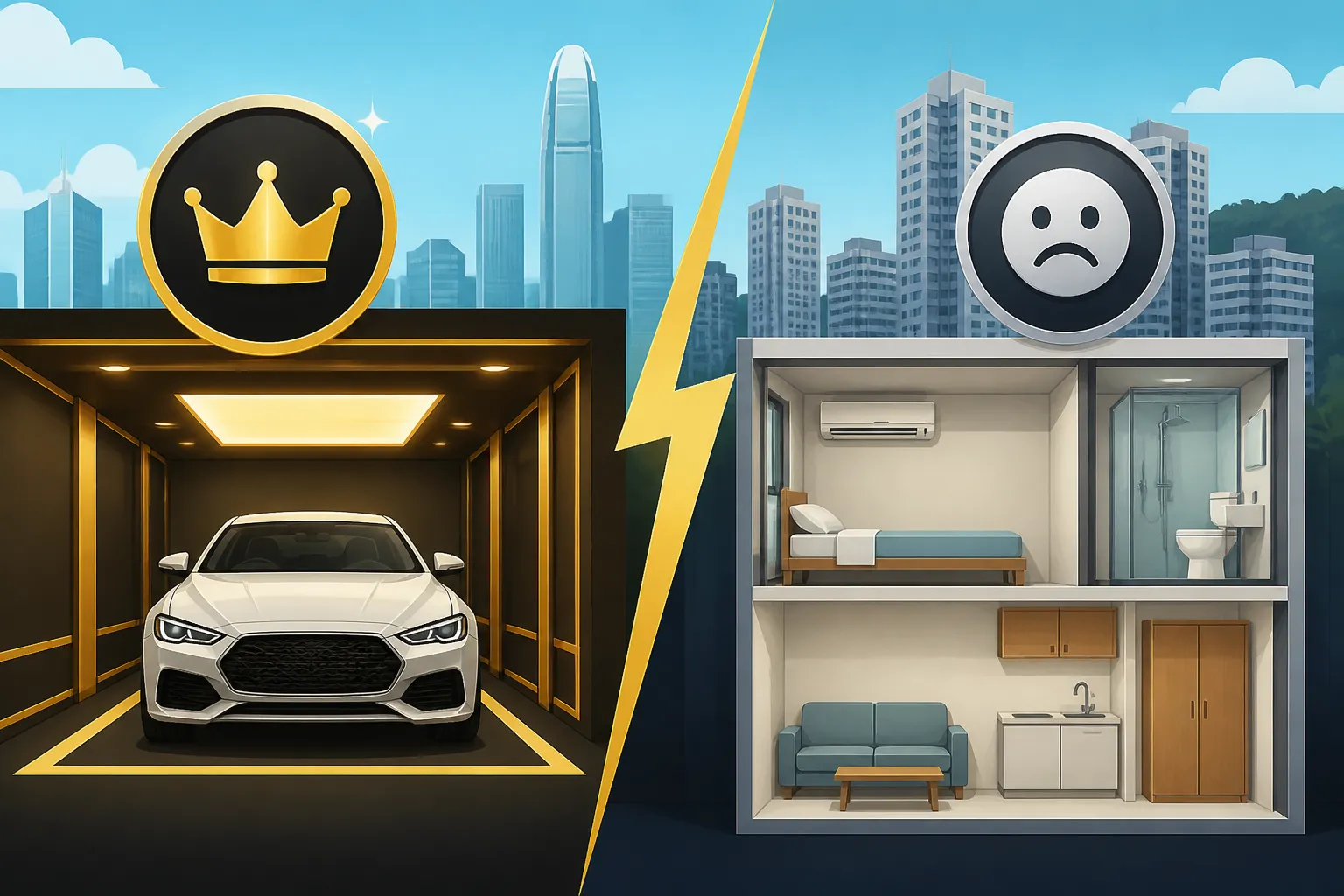
If you come from a place where parking is an afterthought or a free perk of your lease, the Hong Kong market will feel like a fever dream. We aren't just talking about high monthly rents; we are talking about capital values that defy logic. In 2021, a single parking spot at the Mount Nicholson luxury development on The Peak sold for a staggering HK$10.2 million. While that is an extreme example, it highlights a fundamental truth: in Hong Kong, space is the ultimate currency, and the space for a car is often more valuable per square foot than the space for a human.
For many expats, the initial plan is to buy a nice SUV to take the kids to school or head out to Sai Kung on weekends. However, when you look into Buying Property in HK: Stamp Duty Rules and Process (2027), you might find that the tax and capital requirements for a parking spot are just as complex as for a flat. The reason these prices stay so high is that parking spaces are detached from the cooling measures that often affect the residential market. They are seen as "pure" investments. They require zero maintenance, you don't have to worry about a tenant painting the walls neon green, and the liquidity is surprisingly high.
The psychological impact on a newcomer is significant. You might be living in a beautifully curated space from Blueground or Habyt, enjoying the seamless lifestyle of a serviced apartment, only to find that the building’s parking lot has a waitlist three years long or a purchase price that rivals your home country's mortgage. This disconnect happens because residential developers are often restricted by the government on how many parking spots they can build per unit, creating an artificial bottleneck that keeps prices in the stratosphere.
Why Demand for Parking Outstrips Supply Every Single Year
The fundamental driver of these astronomical prices is a classic case of supply and demand, but with a Hong Kong twist. The government’s transport policy has long been "pro-public transit," which is great for the MTR but punishing for car owners. By intentionally limiting the number of parking spaces in new developments, the Planning Department hopes to discourage private car ownership. Instead, it has simply turned parking into a luxury commodity.
As you look into Driving in Hong Kong: License Conversion, HKeToll, and Car Ownership, you will realize that while getting a license is relatively straightforward, finding a home for your vehicle is the real challenge. The number of private cars in Hong Kong has grown significantly over the last decade, far outpacing the creation of new parking slots. When a new luxury building goes up, the ratio of parking spots to apartments might be 1:3 or even 1:5. This means two-thirds of the residents are left fighting for the remaining spots, driving the price up through internal bidding wars.
The Government Tight Grip on Planning
The Hong Kong Planning Standards and Guidelines dictate the parking requirements for all new private housing. In an effort to keep the city walkable and reduce congestion, these guidelines have historically kept the "parking provision" low. For the average expat, this means that even if you can afford a high-end flat, a parking spot is never a guarantee. If you are Where to Live in HK: Neighborhood Guide for Expat Families, you must check the parking-to-unit ratio before signing any lease.
Furthermore, the government has reclaimed several temporary car parks for residential or commercial development. These "brownfield" sites used to provide a pressure valve for local neighborhoods, offering cheap, open-air monthly parking. As these disappear to make room for more skyscrapers, the existing underground spots become even more precious. It is a zero-sum game where the car owner almost always loses unless they have deep pockets.
The Luxury Factor and the Car as a Status Symbol
In many global cities, a car is a utility. In Hong Kong, it is a statement. Despite having one of the best public transport systems in the world, the demand for high-end European cars remains voracious. If you are Living in Mid-Levels and Central: Pros, Cons, and Commutes, you will see a parade of Teslas, Porsches, and Alphards daily. For many residents, the car is an extension of their social standing.
This cultural drive means that people are willing to pay a premium for convenience. A resident in a high-floor duplex doesn't want to walk ten minutes to a public car park; they want to take the lift directly to their vehicle. This "convenience premium" is what pushes a spot from "expensive" to "absurd." If you are renting through a provider like Habyt or Blueground, you might find that their locations are chosen for MTR proximity precisely because the parking situation in those areas is so dire.
Practical Tips for Expats Navigating the Parking Crisis
If you are determined to own a car here, you need a strategy that goes beyond just checking the classifieds. First, you need to decide if you are looking for a monthly rental or a purchase. Renting a spot can range from HK$3,000 in the New Territories to HK$10,000+ in prime areas like Central or the Southside. If you are moving your vehicle from overseas, companies like Sirelo can help with the logistics, but you must have your "landing pad" (the parking spot) secured before the car arrives at the terminal.
| District | Average Monthly Rent (HKD) | Average Purchase Price (HKD) | Supply Level |
|---|---|---|---|
| Central / Mid-Levels | $8,000 – $12,000 | $4.5M – $6M | Extremely Low |
| West Kowloon (Elements) | $6,000 – $9,000 | $3M – $4.5M | Moderate |
| Shatin / Tai Po | $3,500 – $5,000 | $1.5M – $2.5M | High |
| Repulse Bay / Stanley | $9,000 – $14,000 | $5M+ | Extremely Low |
| Tseung Kwan O | $4,000 – $6,000 | $2M – $3M | Moderate |
When you are Registering Your HKID for Subsidized Public Healthcare Rates, you are likely thinking about the long-term benefits of residency. Apply that same long-term thinking to your housing search. If a car is non-negotiable, prioritize buildings that include a "car park included" clause in the tenancy agreement. These are rare and usually come with a higher rent, but it saves you the headache of dealing with a separate landlord for your parking space.
Choosing Your Neighborhood Based on Parking Availability
Not all neighborhoods are created equal when it comes to the parking-to-flat ratio. Newer developments in the New Territories, like those in Lohas Park or Tai Po, tend to have slightly better provisions than the cramped streets of Sheung Wan or Sai Ying Pun. If you are looking for a family-friendly vibe and need space for a large 7-seater, looking further afield might be your only realistic option.
Be sure to investigate Private Hospitals on HK Island: Admission, Costs, and Insurance if you live in the Southside, as you'll want to know the parking situation for emergencies as well. Many expats find that living in "island-lite" areas like Discovery Bay actually solves the car problem by removing it entirely—since private cars are mostly banned there. But if you must have the wheels, always do a "night walk" of the neighborhood to see how many cars are illegally parked; it’s a great indicator of the local supply crunch.
Alternatives to Private Parking: Public Parks and Hourly Spots
If you cannot secure a permanent spot in your building, the Link REIT and the Wilson Parking groups are your new best friends. They manage many of the multi-story car parks attached to shopping malls and public housing estates. While the walk might be 5–10 minutes from your front door, the monthly rates are often significantly lower than private residential spots.
Keep in mind that Navigating Medical Emergencies During T8 Typhoons or Black Rainstorms also applies to your car. Open-air public lots are susceptible to flooding and falling debris during typhoon season. When the T8 signal goes up, you will see a mad dash for the upper levels of multi-story car parks. If you don't have a secure underground spot, you need a "Typhoon Plan" for your vehicle just as much as you do for your home.
Is Buying a Parking Space a Good Investment for Foreigners?
Given the prices, many expats wonder if they should stop renting and just buy a spot. From an investment perspective, parking spaces have historically been one of the most stable asset classes in the city. There is no "tenant protection" law for cars, meaning if a tenant doesn't pay, you can simply have the car towed and find a new one the next day. Moreover, you don't have to deal with leaky pipes or broken appliances.
However, you must be aware of the Property Stamp Duty Updates (2024-2026): "Spicy Measures" Scrapped. In recent years, the government has moved to make it easier for people to buy and sell property by removing some of the punitive duties. This applies to non-residential property as well. If you have the capital, buying a spot can effectively "hedge" your own monthly parking costs while giving you an asset that has historically appreciated at a rate similar to or higher than residential flats.
Before you jump in, check if you Can Foreigners Buy Commercial Property in Hong Kong?. The answer is generally yes, and parking spaces fall under this category. The process involves a lot of paperwork and a smaller pool of lenders compared to home mortgages. Banks typically offer lower loan-to-value (LTV) ratios for car parks—often around 40-50%—meaning you will need a significant amount of cash upfront. It isn't a "get rich quick" scheme, but in a city where land is the scarcest resource, owning a piece of it is rarely a bad move.
Ultimately, the reason a parking space costs more than a flat in your hometown is that it represents more than just a place to put a car. It represents a slice of Hong Kong's limited geography. Whether you are moving your life here with Sirelo or just looking for a temporary stay with Blueground, understanding this local quirk will help you manage your expectations and your budget. Hong Kong is a city of trade-offs; for the privilege of driving through its neon-soaked streets, the price of a parking spot is just the "entry fee" to a very exclusive club.
Disclaimer
The information provided in this guide is for general informational purposes only and does not constitute financial, legal, or real estate advice. Real estate prices and government regulations in Hong Kong are subject to frequent change. Always consult with a qualified professional before making any significant investment or signing a tenancy agreement.