Adding a Newborn Child to Your Dependent Visa After Birth
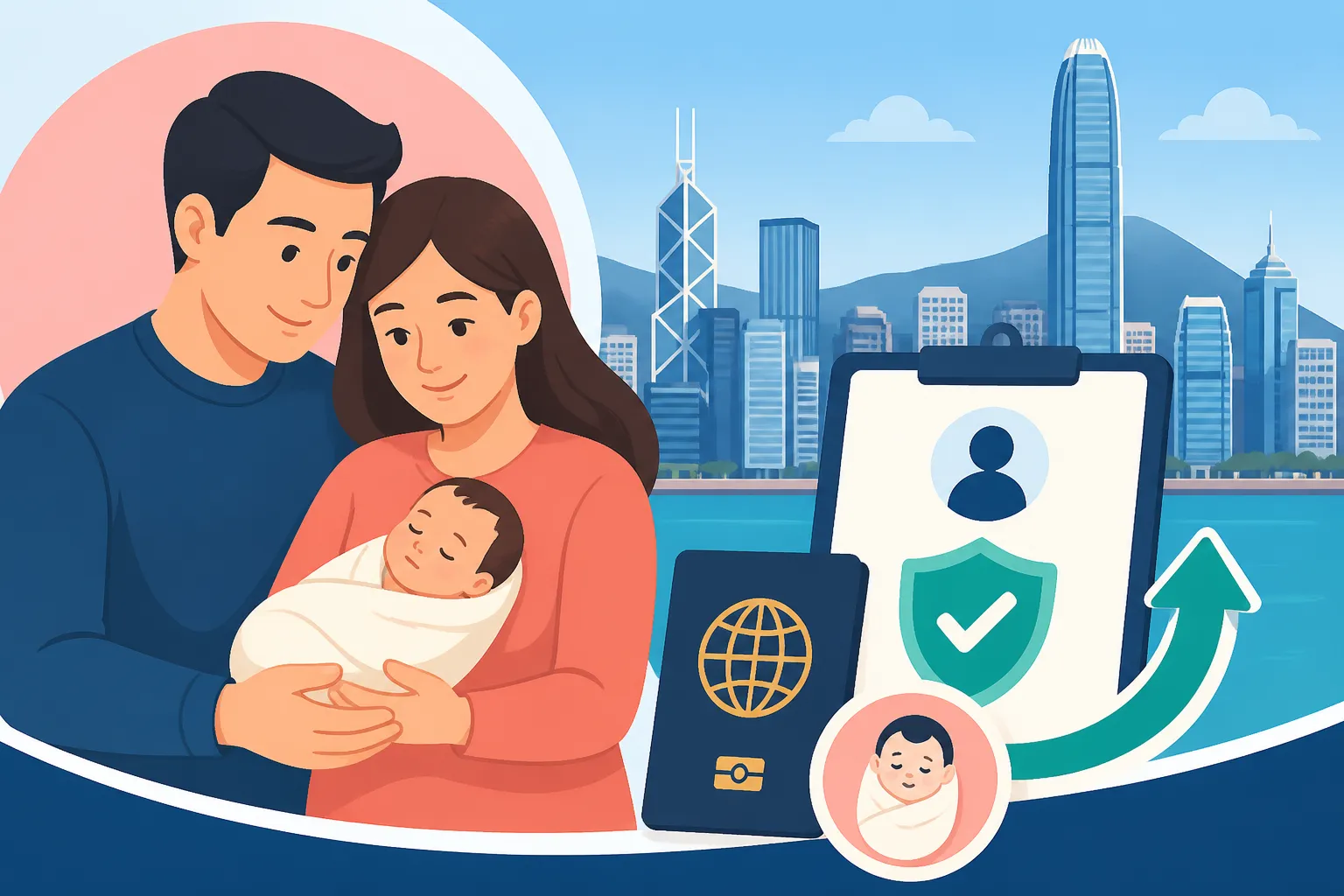
Congratulations! The arrival of a newborn in Hong Kong is a momentous occasion, a whirlwind of joy, sleepless nights, and an entirely new universe of love. But amidst the baby bliss, a practical reality soon sets in for expat parents: securing your little one’s legal status. Navigating the Hong Kong Immigration Department’s processes can feel daunting at the best of times, let alone with a new baby in tow. This comprehensive guide is here to alleviate some of that stress, walking you through the essential steps to add your precious newborn to your existing dependent visa, ensuring a smooth start to their life in our vibrant city.
Understanding the Dependent Visa for Newborns in Hong Kong
Having a baby in Hong Kong as an expat comes with its own unique set of administrative challenges. Many new parents assume that because their child is born here, they automatically receive some form of residency or citizenship. This isn't quite the case for children born to non-permanent residents. For your newborn to legally reside in Hong Kong and enjoy the benefits tied to your status, they need their own valid visa, typically a dependent visa linked to you or your spouse.
This process is a critical step in integrating your new family member into Hong Kong life, affecting everything from their healthcare access to their future schooling. Without a valid visa, your child could face complications for travel, access to certain public services, and their long-term residency prospects. So, while you're busy with diaper changes and feeding schedules, remember that securing their visa is an equally important milestone.
Eligibility Criteria for Newborn Dependents
For your newborn to be eligible for a dependent visa in Hong Kong, they must meet specific criteria, which largely revolve around the status of their sponsoring parent. Generally, the sponsoring parent must be a Hong Kong permanent resident or a non-permanent resident admitted into Hong Kong under specific visa schemes, such as the General Employment Policy (GEP), the Top Talent Pass Scheme (TTPS), or the Quality Migrant Admission Scheme (QMAS). The key is that the sponsor must have a valid long-term visa that allows for dependent sponsorship.
Your newborn needs to be a "legitimate child" of the sponsor, which typically means you were married to the other parent at the time of birth, or in cases where the parents are unmarried, paternity has been formally acknowledged or proven. The Immigration Department assesses each case, but generally, the process is straightforward when both parents are legally present in Hong Kong on valid work or investment visas. For same-sex couples, Hong Kong's legal framework has evolved to recognise same-sex spouses for dependent visa purposes, a welcome change for many expat families. You can learn more about the general requirements in our detailed guide on Dependent Visas in HK: Bringing Spouses and Children.
Why Early Application is Crucial
The clock starts ticking surprisingly fast after your baby arrives. In Hong Kong, you have a statutory obligation to register your child's birth within 42 days at a Births Registry office. While this initial step secures their birth certificate, it doesn't automatically grant them a visa. Immediately after obtaining the birth certificate, applying for the dependent visa should become a high priority.
Delaying the dependent visa application can lead to a host of headaches. For instance, if you need to travel internationally with your newborn, they will require a valid passport and, crucially, a valid Hong Kong visa stamp to re-enter the territory under your sponsorship. Without this, re-entry can be complicated, and in some unfortunate scenarios, your child might be treated as a visitor on arrival, leading to questions and potential difficulties with their long-term status. Furthermore, while newborns can access emergency medical care, having a proper visa ensures they are classified as an "eligible person" for public healthcare, potentially reducing future medical costs. For an overview of essential tasks, check out our Essential Health Checklist for Your First 30 Days in Hong Kong.
Step-by-Step Guide to Applying for Your Newborn's Dependent Visa
Navigating the bureaucracy with a newborn can feel like running a marathon on two hours of sleep, but breaking it down into manageable steps makes it much less overwhelming. The Hong Kong Immigration Department aims to make these processes as efficient as possible, and with the right preparation, you can get through it with minimal fuss.
Gathering Necessary Documents
This is often the most time-consuming part, but getting it right upfront will save you immense frustration later. The Immigration Department is very particular about documentation. Here’s a list of what you'll typically need:
- Your Newborn's Birth Certificate: The original, issued by the Hong Kong Births Registry.
- Your Newborn's Passport: A valid passport for your child. If you're applying for their passport through your home country's consulate in Hong Kong, start this process as soon as you have the birth certificate, as it can take time.
- Your (Sponsor's) Passport and HKID: Original and photocopies of your passport, showing your valid Hong Kong visa endorsement, and your Hong Kong Identity Card.
- Dependent Parent's Passport and HKID: Original and photocopies for the other parent (if applicable), also showing their valid Hong Kong visa endorsement and HKID.
- Proof of Relationship: Your original marriage certificate (if applicable) to prove legitimacy. If your marriage certificate is not in English or Chinese, you will need a certified translation. Services like RushTranslate can provide professional, certified translations that the Immigration Department will accept. For unmarried parents, documents proving paternity may be required. Read our guide on Proving Relationship for Dependent Visas: Marriage Certificates and Translations for more details.
- Proof of Financial Ability: Documents showing you can support your dependent without relying on public assistance. This includes bank statements (personal and/or employer's), salary slips, and employment contracts. The Immigration Department wants to ensure your family's financial stability.
- Proof of Accommodation: Tenancy agreement or property ownership documents showing suitable living arrangements in Hong Kong.
- Application Form (ID 997): This is the primary form for dependent visa applications. Fill it out completely and accurately.
- Photographs: Recent passport-sized photos of your newborn and the sponsor.
It’s always a good idea to check the official Immigration Department website for the most current list of required documents, as rules can sometimes be updated.
Here’s a handy checklist table for you:
| Document Type | Details | Notes |
|---|---|---|
| Newborn's Documents | Hong Kong Birth Certificate | Original and 1 photocopy |
| Valid Passport | Original and 1 photocopy of bio-data page | |
| Passport-sized Photo | 1 photo, recent, against white background | |
| Sponsor's Documents | Passport (including valid visa stamp) | Original and 1 photocopy of bio-data page & visa page |
| Hong Kong Identity Card (HKID) | Original and 1 photocopy | |
| Dependent Parent's Documents | Passport (including valid visa stamp) | Original and 1 photocopy of bio-data page & visa page (if applicable) |
| Hong Kong Identity Card (HKID) | Original and 1 photocopy (if applicable) | |
| Relationship Proof | Marriage Certificate | Original and 1 photocopy. If not English/Chinese, provide certified translation (e.g., via RushTranslate). |
| Proof of Paternity (for unmarried parents) | Relevant legal documents (if applicable) | |
| Financial Proof | Bank Statements (last 3-6 months) | Showing sufficient funds |
| Employment Contract & Salary Slips | For the sponsor | |
| Accommodation Proof | Tenancy Agreement / Property Deed | Showing residential address in HK |
| Application Form | Form ID 997 | Duly completed and signed |
Submitting the Application to the Immigration Department
Once you’ve meticulously gathered all your documents, the next step is submission. You have a couple of options, but for dependent visas, many people opt for an in-person application, especially with a newborn, to ensure everything is correct from the start.
You can submit the application either online or by post, but for peace of mind, making an appointment and going to the Immigration Department Headquarters in Wan Chai is often preferred. To do this, you'll need to use the Immigration Department's online booking system to schedule an appointment. Trying to walk in can lead to very long wait times, which is simply not feasible with a baby. Be sure to book an appointment for "Application for Extension of Stay / Visa / Entry Permit" and specify that it is for a dependent visa. When you go, remember to bring all original documents and their photocopies. The staff will check the originals and keep the copies.
Typically, the processing time for a dependent visa application is around 4-6 weeks, but it can vary. The Immigration Department will issue an acknowledgement letter once they receive your application. If they need further information or clarification, they will contact you. You can usually track your application status online via the Immigration Department website using the reference number provided in the acknowledgement. Once approved, you'll receive a notification letter, and then you'll need to return to the Immigration Department to collect the visa label for your newborn's passport. This label is their actual visa endorsement.
Key Considerations and Potential Hurdles for Expat Parents
Even with the best preparation, there can always be a few surprises along the way when dealing with immigration matters. Knowing what to look out for can help you tackle any issues head-on.
Common Issues and How to Resolve Them
One of the most frequent issues expat parents face is simply the sheer volume and specificity of the required documents. Don't underestimate the need for certified translations if your original documents (like marriage certificates from your home country) are not in English or Chinese. As mentioned, professional services like RushTranslate are reliable for this purpose, ensuring your translations are accepted without question. Another common hurdle is demonstrating sufficient financial means. If your employment contract is new or your bank statements fluctuate, the Immigration Department might request additional proof of assets or a letter from your employer guaranteeing support. Always provide as much evidence as possible to paint a clear picture of your stability.
Another less common, but significant, issue can arise if the sponsoring parent's own visa status is precarious or nearing expiration. The dependent visa is entirely contingent on the sponsor's ability to remain in Hong Kong. If there are any doubts about your own visa renewal, it might impact your child's application. Always ensure your primary visa is in good standing. In some cases, if there are complex family situations or unusual circumstances, it might be beneficial to consult with an immigration lawyer, which can be an alternative to a Hiring an Immigration Lawyer vs DIY Visa Applications approach for simple cases.
Maintaining Status and Future Renewals
Once your newborn has their dependent visa, it's tied directly to the sponsoring parent's visa. This means that when it’s time for you, as the sponsor, to renew your own visa, you’ll also need to apply for an extension of stay for your child’s dependent visa. The dates usually align, making renewals a combined process. The Immigration Department will typically send you a reminder before your visa expires.
The journey to permanent residency for children born in Hong Kong to non-permanent residents is generally the same as for their parents. They will usually need to reside in Hong Kong continuously for seven years under a valid visa, such as the dependent visa, to be eligible for the Right of Abode. This is a significant milestone and requires diligent record-keeping of your child's presence in Hong Kong. Understanding Calculating the "7 Years Continuous Residence" for Permanent Residency is key for long-term planning.
It’s crucial to remember that a dependent visa allows your child to reside and study in Hong Kong. If they reach working age, they would typically then apply for their own work visa or continue under the dependent visa if they are still studying full-time and meet other criteria. For parents who are often traveling for work, ensuring your child’s travel documents and visa are always up-to-date is paramount. While your child is still awaiting their visa approval, avoid international travel if possible. Once approved, if you have travel insurance, ensure your child is also covered, especially if you foresee regional travel soon. Companies like SafetyWing offer robust travel and health insurance options for expats and their families, which can provide peace of mind during any international trips.
And finally, once your child’s dependent visa is approved and affixed to their passport, don't forget the final step: registering them for a Hong Kong Identity Card if they are over the age of 11. While not immediately relevant for a newborn, it's a good piece of information to file away for the future. You can learn more about this in our guide on Booking an Appointment for HKID Registration at ImmD Offices and The 30-Day Rule for Registering a New HKID After Arrival.
The arrival of a baby is a beautiful, chaotic time. By methodically addressing the visa requirements, you're laying a solid foundation for your child's life in Hong Kong, freeing you up to cherish those precious early moments.
Disclaimer
The information provided in this guide is for general informational purposes only and does not constitute legal or immigration advice. While we strive to keep the information up-to-date and accurate, immigration policies in Hong Kong can change without prior notice. It is highly recommended to consult the official website of the Hong Kong Immigration Department or seek professional advice from an immigration consultant or lawyer for specific guidance related to your individual circumstances.