Banned Dog Breeds in HK: Pit Bulls, Tosas, and Documentation
Moving to Hong Kong with a dog involves much more than just booking a flight and finding a pet-friendly apartment. For owners of certain breeds, the city’s strict "fighting dog" legislation can mean the difference between a smooth relocation and a heartbreaking refusal at the border. This guide clarifies the banned breeds list, the specific documentation required by the AFCD, and how to navigate the city's complex dangerous dog regulations.
The Prohibited Four: Breeds You Simply Cannot Bring
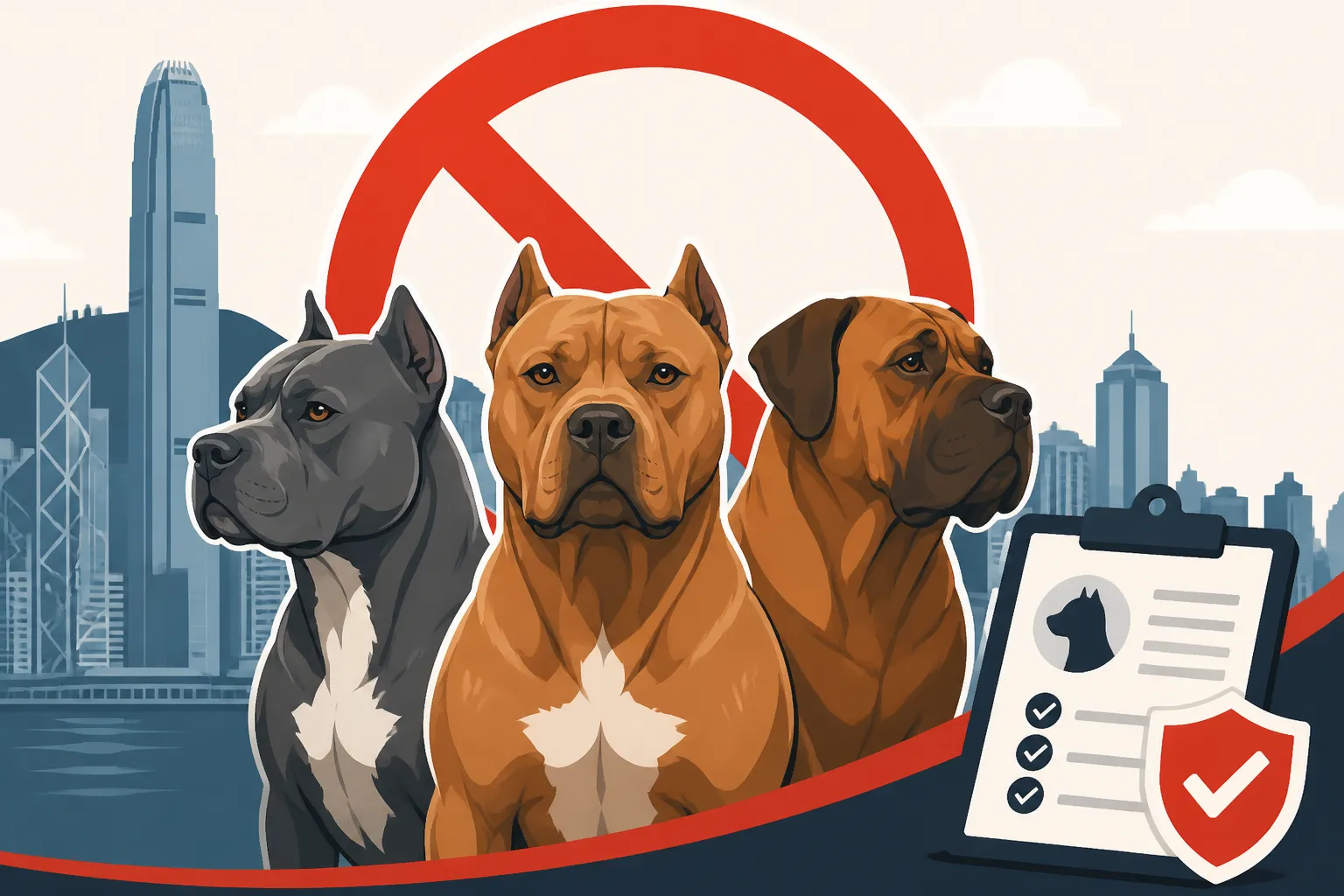
Hong Kong’s Agriculture, Fisheries and Conservation Department (AFCD) maintains a zero-tolerance policy for what they classify as "fighting dogs." If your dog falls into this category, they are strictly prohibited from being imported into the territory, and they cannot be bred or sold within the city. This isn't just a suggestion; it is a legal mandate under the Dangerous Dogs Regulation.
The four breeds currently under a total ban are the Pit Bull Terrier (which includes the American Staffordshire Terrier), the Japanese Tosa, the Fila Brasileiro, and the Dogo Argentino. It is important to realize that the AFCD also includes "crosses" of these breeds in their ban. If your dog is a mix that even remotely resembles a Pit Bull, you may find yourself in a difficult position. The officials at the cargo terminal are trained to look for specific physical characteristics—blocky heads, muscular builds, and specific jaw structures.
If you are currently in the planning stages of your move, you need to be incredibly diligent. Many expats rely on professional relocation services like Sirelo to handle the logistics of moving their household goods, but pet relocation requires a specialized focus on breed identification. There are reports of owners being forced to rehome their pets at the last minute because a vet record listed a dog as a "Staffordshire mix," triggering an immediate red flag with Hong Kong Customs.
When preparing your paperwork, every single document must be consistent. If one vaccination record says "Labrador Mix" and another says "Pit Bull Mix," the AFCD will default to the restricted classification. You must provide clear, high-quality photographs from multiple angles and a letter from a certified veterinarian confirming the breed. In some ambiguous cases, a DNA test might be your only saving grace, though even then, the AFCD reserves the final right of refusal. This is one of the many reasons why Bringing Pets to HK: AFCD Quarantine Groups and Import Permits is a topic you should research months before your departure date.
The Dangerous Dogs Category: Permitted But Restricted
Not every large or powerful dog is banned. Hong Kong distinguishes between "fighting dogs" (prohibited) and "known dangerous dogs" (permitted with heavy restrictions). A dog is classified as "known dangerous" if it has a history of unprovoked attacks or if it belongs to a category of "large dogs" that have not passed specific behavioral assessments.
For those who own permitted but powerful breeds—think Rottweilers, Dobermans, or Mastiffs—the rules change the moment you step into a public space. According to the law, these dogs must be securely leashed and muzzled at all times in public. This includes the common areas of your housing estate, elevators, and even the sidewalks of Central or Tsim Sha Tsui. The only exception is if the dog is being exercised in a designated "pet park" or if it has passed the AFCD’s "Large Dog" exam, which allows for some leash flexibility, though muzzling rules may still apply depending on the specific "dangerous" designation.
The logistics of living with a restricted breed can be exhausting. You will need to be hyper-aware of Microchipping and Dog Licensing Rules for HK Pets because a "dangerous" dog found without proper identification or a valid license is subject to immediate seizure. Furthermore, these dogs must be neutered. The AFCD requires a veterinary certificate proving the dog has been sterilized as part of the "known dangerous dog" registration process.
Navigating the housing market with a large or restricted breed is another hurdle entirely. Many landlords are wary of "dangerous" breeds due to insurance liabilities or complaints from neighbors. This is where services like Blueground or Habyt can be helpful, as they often offer managed apartments where pet policies are clearly defined upfront, saving you the stress of negotiating with a skeptical individual landlord. Always ensure your Understanding the HK Tenancy Agreement: Fixed vs Flexible Terms research includes a deep dive into pet-specific clauses to avoid eviction.
Mandatory Documentation and the AFCD Import Maze
To legally bring a dog into Hong Kong, you must first obtain a Special Permit from the AFCD. This is not a "nice-to-have" document; without it, your dog will be denied entry or placed into an expensive, long-term quarantine. When Applying for an AFCD Special Permit for Dog Importation, you will need to submit a full history of vaccinations, including Rabies, Distemper, Hepatitis, and Parvovirus.
The documentation requirements are particularly grueling for those coming from "Group III" countries—those where rabies is not fully under control. In these cases, you might be looking at Wait Times for HK Quarantine Facilities (Group IIIB Pets) that can stretch for months. For restricted breeds, the scrutiny on this paperwork is doubled. You must provide a "Breed Declaration" form where a veterinarian confirms the dog is not one of the four prohibited breeds or a cross-breed thereof.
Comparison of Dog Classifications and Requirements
| Category | Typical Breeds | Public Requirements | Import Status |
|---|---|---|---|
| Prohibited Fighting Dogs | Pit Bull, Tosa, Dogo Argentino | N/A (Not allowed) | Banned |
| Known Dangerous Dogs | Any dog with an attack history | Muzzle & Leash (always) | Permitted (with restrictions) |
| Large Dogs | Dogs over 20kg (General) | Leash required (unless exempt) | Permitted |
| Small/Standard Dogs | Beagles, Poodles, Terriers | Under control | Permitted |
Beyond the breed declaration, you must ensure your pet’s microchip is ISO-compliant. Hong Kong uses the AVID encrypted chip or the ISO 11784/11785 standard. If your dog’s chip cannot be read by the AFCD scanners upon arrival, they will treat the dog as unidentifiable, which can lead to a bureaucratic nightmare at the airport.
Many expats find that the sheer volume of paperwork is best handled by a professional. While you might use Sirelo for your furniture, a pet-specific agent is invaluable for checking the "vibe" of your vet’s breed descriptions. They know exactly which words trigger an AFCD audit. Make sure you also look into Finding Pet-Friendly Parks and Promenades in Hong Kong so you have a destination in mind once the paperwork clears and your pet is finally on the ground.
The Reality of Living with a Restricted Breed in Hong Kong
Once you are actually living in the city, the administrative work doesn't stop. Hong Kong is one of the most densely populated places on earth, and the "anti-dog" sentiment can be high in certain local neighborhoods. If you have a dog that looks like a restricted breed, you will face "the look" from neighbors in the elevator. It is essential to be the most responsible owner possible to avoid complaints that could lead to an AFCD investigation.
Public transport is another major pain point. If you have a large or restricted dog, you are essentially barred from the MTR, buses, and most ferries. You will be reliant on Taking Your Pet on Public Transport: Rules and Taxis, which usually means calling a "pet taxi" via an app or negotiating with a standard taxi driver who may or may not accept a muzzled dog. The costs of these private trips add up quickly, especially if you are traveling from the New Territories to a vet in Central.
Housing remains the biggest challenge. Even if a building is technically pet-friendly, the "Building Management Office" (BMO) often has its own set of house rules that can override your individual lease. They can demand that large dogs be muzzled in all common areas or even use freight elevators only. When searching for a home, looking at providers like Blueground or Habyt who understand the needs of international professionals can help you find a community that is more welcoming to four-legged residents.
Finally, you must keep your dog’s license updated every three years. The license is linked to the rabies vaccination, and the AFCD is very strict about renewals. If you move apartments, you must notify the AFCD of your change of address within 14 days. It is this level of meticulousness that allows you to keep a powerful breed in a city that is generally quite wary of them. Being a "good canine citizen" is the only way to ensure you and your pet can enjoy your time in the Pearl of the Orient without legal interference.
Navigating Breed-Specific Legislation and Dog Importation
The legal landscape regarding animals in Hong Kong is heavily influenced by public safety concerns. The "Fighting Dogs" category was created in response to high-profile incidents, and the government has shown little interest in relaxing these rules. For an expat, the frustration lies in the subjective nature of "looking like" a Pit Bull. I have known owners of perfectly friendly Boxers or Ridgebacks who had to provide extra documentation just because a customs officer thought their dog looked "tough."
To protect yourself, keep a "Pet Passport" folder that contains every single record from the day you got your dog. Include birth certificates, adoption papers that clearly state the breed (as long as it's not a banned one), and a history of behavioral training. If your dog has passed a "Good Citizen" test in your home country, include that too. It shows the AFCD that you are a proactive and responsible owner.
The emotional toll of relocating with a pet can be high, but Hong Kong is a fantastic place for dogs once you get past the initial hurdles. From the hiking trails of Lantau to the dog-friendly cafes in Sai Kung, there is a vibrant community waiting for you. Just ensure your AFCD Pet Import Rules: Group I, II, IIIA, and IIIB Explained knowledge is top-notch, and your paperwork is airtight. By following the rules to the letter, you can ensure that your move is a beginning, not a goodbye.
Housing and Living Disclaimer
This guide is intended for informational purposes only and does not constitute legal or professional veterinary advice. Hong Kong’s breed-specific legislation and import regulations are subject to change by the Agriculture, Fisheries and Conservation Department (AFCD) at any time. Always verify the latest requirements on the official AFCD website or consult with a licensed pet relocation specialist before making travel arrangements for your pet. Neither the author nor this publication assumes liability for any pet-related entry denials or legal issues arising from the use of this information.