Bringing a Cat from the US to HK (Group II Exemption)
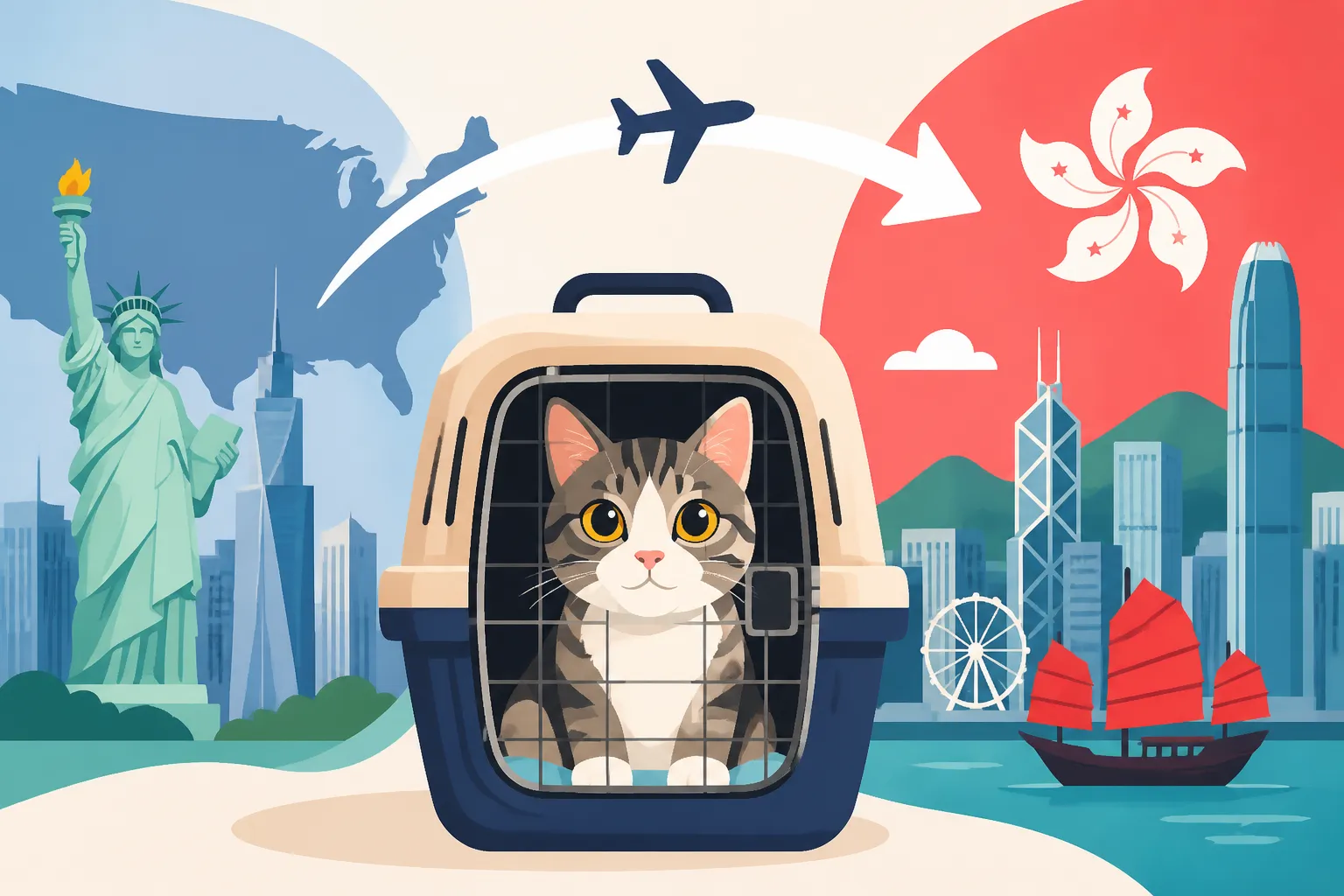
Moving your cat from the United States to Hong Kong often feels like navigating a labyrinth of paperwork while your heart is in your throat, fearing a long quarantine stay. This guide breaks down the specific Group II exemption process, ensuring your feline companion bypasses government facilities and moves straight into your new home, provided every administrative detail is meticulously handled.
Understanding the Group II Exemption for the USA
The Agriculture, Fisheries and Conservation Department (AFCD) in Hong Kong categorizes every country into one of three groups based on their rabies status. The United States is firmly situated in Group II. For you, this is the best possible news short of being in Group I (the rabies-free group like the UK or Australia). Being in Group II means that as long as you fulfill every single requirement, your cat will not have to endure a mandatory four-month quarantine upon arrival. It is a "quarantine-free" status, but it is useful to view it as a "conditional exemption." The exemption is only granted if the paper trail is flawless.
The logic behind the US being in Group II is that while rabies is present in the country, the domestic pet population is considered well-managed and the risk of transmission is strictly monitored. To maintain this status, the AFCD requires proof that your cat has been a resident of the US for at least six months prior to departure (or since birth). If you recently moved your cat to the US from a Group III country like Thailand or mainland China, you cannot immediately use the US exemption. You must wait out that six-month residency period on American soil. You can find more details on how these categories shift in the AFCD Pet Import Rules: Group I, II, IIIA, and IIIB Explained guide.
The emotional toll of a move is high, and the fear of your cat being seized at the airport because of a missing signature is real. Expats can arrive in distress because a local vet in Ohio forgot to include the microchip number on a vaccination record. In the eyes of the AFCD, if it isn't on the paper, it didn't happen. This is why understanding the strictness of the Group II requirements is the foundation of a successful move.
The Paperwork Trail: Microchips and Vaccinations
The timeline for a US-to-HK move starts at least three to four months before your flight. The very first thing you must do—even before you think about crates or tickets—is check your cat's microchip. Hong Kong is very specific. They prefer the 15-digit ISO-compliant chip. If your cat has an older 9-digit or 10-digit AVID chip, it is usually acceptable, but the AFCD staff must be able to read it. If they can't read the chip at the airport, the exemption is void. It is wise to have your vet scan the chip during a routine checkup to ensure it hasn't migrated or become unreadable.
Crucially, any vaccination given before the microchip is implanted is considered invalid by the AFCD. The logic is simple: they need to be 100% certain the vaccine was injected into the specific animal identified by that chip. If you get a rabies shot on Monday and the chip on Tuesday, you are going to have to revaccinate. For your cat’s transition to the city, you should also look at the Essential Health Checklist for Your First 30 Days in Hong Kong to ensure you are prepared for local feline health concerns like heartworm.
The rabies vaccination must be administered at least 30 days before travel but no more than one year prior. This "sweet spot" is where many people trip up. If your cat’s three-year rabies shot was given two years ago, the AFCD will not accept it for the Group II exemption. They require the shot to have been administered within the last 12 months. Additionally, your cat needs the standard F3 or F4 "core" vaccinations (Feline Panleukopenia, Rhinotracheitis, and Calicivirus) within the same 12-month window and no less than 14 days before the flight.
Navigating the AFCD Special Permit Process
Once the vaccinations are in order, you need to apply for the "Special Permit to Import Animals." You can do this yourself via the AFCD’s online portal or by mailing in the AF301 form. The permit is currently HKD 432 for the first animal. It usually takes about five working days to process, and it is valid for six months. Do not wait until the last minute. You need the physical permit (or the official e-permit) to even book your cat's flight, as most airlines will demand to see the permit number before confirming a pet reservation.
When applying for the permit, you’ll need to specify your entry point and the flight details. If you are still in the planning stages and don't have a flight yet, you can provide an estimated date, but you must update the AFCD once the itinerary is locked in. For those who find this level of coordination overwhelming, professional services like Sirelo can be a godsend. They specialize in the logistical heavy lifting of international moves, helping you manage the timing between permit approval and flight booking. For a deep dive into how these logistics compare, see our article on Moving Companies in HK: Man with a Van vs Full Relocation.
The permit will come with a set of "Terms of Permit." Read these as if they are a legal contract—because they are. One of the terms is that you must notify the AFCD's Import and Export office at least two working days before the cat arrives. This ensures an officer is available to meet the cat and verify the documents. If you arrive on a Sunday without prior notification, your cat might have to spend the night in a holding facility until an inspector is on duty Monday morning. You can check the process for other animals if you have a multi-pet household in the Applying for an AFCD Special Permit for Dog Importation guide.
| Requirement | US Group II Timeline | Critical Notes |
|---|---|---|
| Microchip | Must be ISO or AVID | Must be done before any qualifying vaccines. |
| Rabies Vaccine | >30 days and <1 year | 3-year vaccines are NOT accepted if older than 1 year. |
| Core Vaccines | >14 days and <1 year | Feline Panleukopenia, Rhinotracheitis, Calicivirus. |
| Special Permit | Apply ~2 months before | Valid for 6 months; cost is HKD 432. |
| USDA Endorsement | Within 10 days of flight | Requires an accredited vet and USDA APHIS office. |
| AFCD Notification | 48 hours before arrival | Failure to notify leads to arrival delays. |
The USDA Endorsement and the 10-Day Window
This is the phase of the move where stress levels peak. The "Health Certificate" (form VC-DC2) must be signed by your local USDA-accredited veterinarian and then endorsed by the USDA APHIS (Animal and Plant Health Inspection Service) office. The catch? This endorsement must happen within 10 days of your cat’s arrival in Hong Kong.
Because of the 10-day window, you cannot simply mail the papers to the USDA and hope for the best. Most expats use the USDA’s VEHCS (Veterinary Export Health Certification System), which allows for digital submission. However, you still need to ensure your vet is "Category 2" accredited to handle international exports. If they aren't, they cannot sign the form. Once the vet uploads the certificate, the USDA officer reviews it and stamps it. You must then receive the original, embossed, wet-ink version back to travel with the cat.
If you live in a city with a USDA office, like New York or Los Angeles, you might be able to schedule an in-person appointment for the "wet" stamp. If you are in a more remote area, you’ll be relying on FedEx overnight shipping. I have lived through the anxiety of waiting for a FedEx truck at 5 PM when the flight is at 6 AM the next morning. If the document doesn't have that official USDA stamp, the AFCD will treat your cat as a Group III import, which means four months in the government quarantine facility in Pok Fu Lam or Shatin.
Logistics: Cargo vs. In-Cabin Realities
One of the most common misconceptions for Americans moving to Hong Kong is that they can bring their cat in the cabin. While many US domestic flights allow this, Hong Kong is very restrictive. Almost all pets entering Hong Kong from the US must arrive as "Manifest Cargo." This means the cat travels in a pressurized, temperature-controlled hold under its own Air Waybill (AWB).
The only exception is if you are flying with specific airlines that allow "Excess Baggage" pet transport, but even then, the cat is usually placed in the hold, not under your seat. Cathay Pacific, the flagship carrier, is the most experienced with this route, but they strictly follow the Manifest Cargo rule for arrivals into HKIA. You will need to check your cat in at the cargo terminal in the US, which is often a different building than the passenger terminal.
When your cat arrives at Hong Kong International Airport (HKIA), they don't go to the baggage carousel. They are taken to the Cargo Terminal (either HACTL or AAT). From there, an AFCD officer will inspect the cat and the original paperwork. If you’ve done everything correctly, the inspection takes about an hour, and you can pick up your cat right there. For getting your cat from the airport to your new home, you should be aware of the rules regarding Taking Your Pet on Public Transport: Rules and Taxis, as MTR and buses are generally off-limits for animals.
Settling into a Pet-Friendly Hong Kong
Once the airport hurdles are cleared, the challenge of finding a home begins. Hong Kong's real estate market is notoriously "hit or miss" with pets. Many high-rise complexes have deeds of mutual covenant that strictly forbid cats and dogs. Even if a landlord says it’s okay, the building management might have different rules. This is why many expats choose managed living solutions during their first few months.
Brands like Habyt and Blueground offer flexible, high-quality serviced apartments that often have much clearer policies regarding pets than traditional local landlords. They allow you to land, settle your cat into a safe environment, and then take your time scouting permanent neighborhoods. While you are exploring, you can check the Finding Pet-Friendly Parks and Promenades in Hong Kong guide to see where you can eventually take your cat out (if they are the adventurous, leash-walking type).
When you do move to a permanent flat, ensure your lease has a specific pet clause. Tenants have been forced to move out after three months because a neighbor complained about a meowing cat and the lease was silent on pet rights. You can read more about these legal protections in our guide: Can I Keep a Pet in My HK Apartment? "Pet-Friendly" Clauses. Also, remember that the tropical climate can be a shock to a US cat. You will likely need to run a dehumidifier 24/7 during the summer to prevent your cat from developing skin issues. Check out Dealing with Humidity and Mold in Your Apartment for tips on keeping your home environment healthy.
Practical Tips for the Flight and Arrival
A 15-hour flight from Newark or San Francisco is a marathon for a cat. Do not sedate your cat. Most airlines will refuse to fly a sedated animal because it increases the risk of respiratory failure at high altitudes. Instead, focus on crate training. Buy the IATA-approved crate months in advance and make it a "happy place" with familiar blankets and treats. The crate must be large enough for the cat to stand up, turn around, and lie down comfortably.
Attach a clear plastic pouch to the top of the crate containing the original Special Permit and a copy of the Health Certificate. While you carry the originals, having copies attached to the crate ensures that the ground handlers and AFCD staff have immediate access to the necessary info. Also, ensure you have an Octopus card ready for yourself upon arrival so you can easily pay for the van or taxi that will take you and your cat to your accommodation.
If you find yourself overwhelmed by the process, remember that thousands of cats make this journey every year. The key is simply staying organized. If you are worried about your own transition while managing the cat's, you might want to look into Registering Your HKID for Subsidized Public Healthcare Rates early on, so you are covered if the stress of the move gets to you. And always keep an eye on the Using the HK Observatory App for Accurate Weather Warnings because a T8 typhoon can delay cargo shipments, and you’ll want to be prepared for any logistical shifts.
Disclaimer
The information provided in this guide is for informational purposes only and does not constitute legal or professional advice. Import regulations in Hong Kong are subject to change by the AFCD at any time. Always verify current requirements directly with the official Agriculture, Fisheries and Conservation Department website and consult with a professional pet relocator or accredited veterinarian before making travel arrangements.