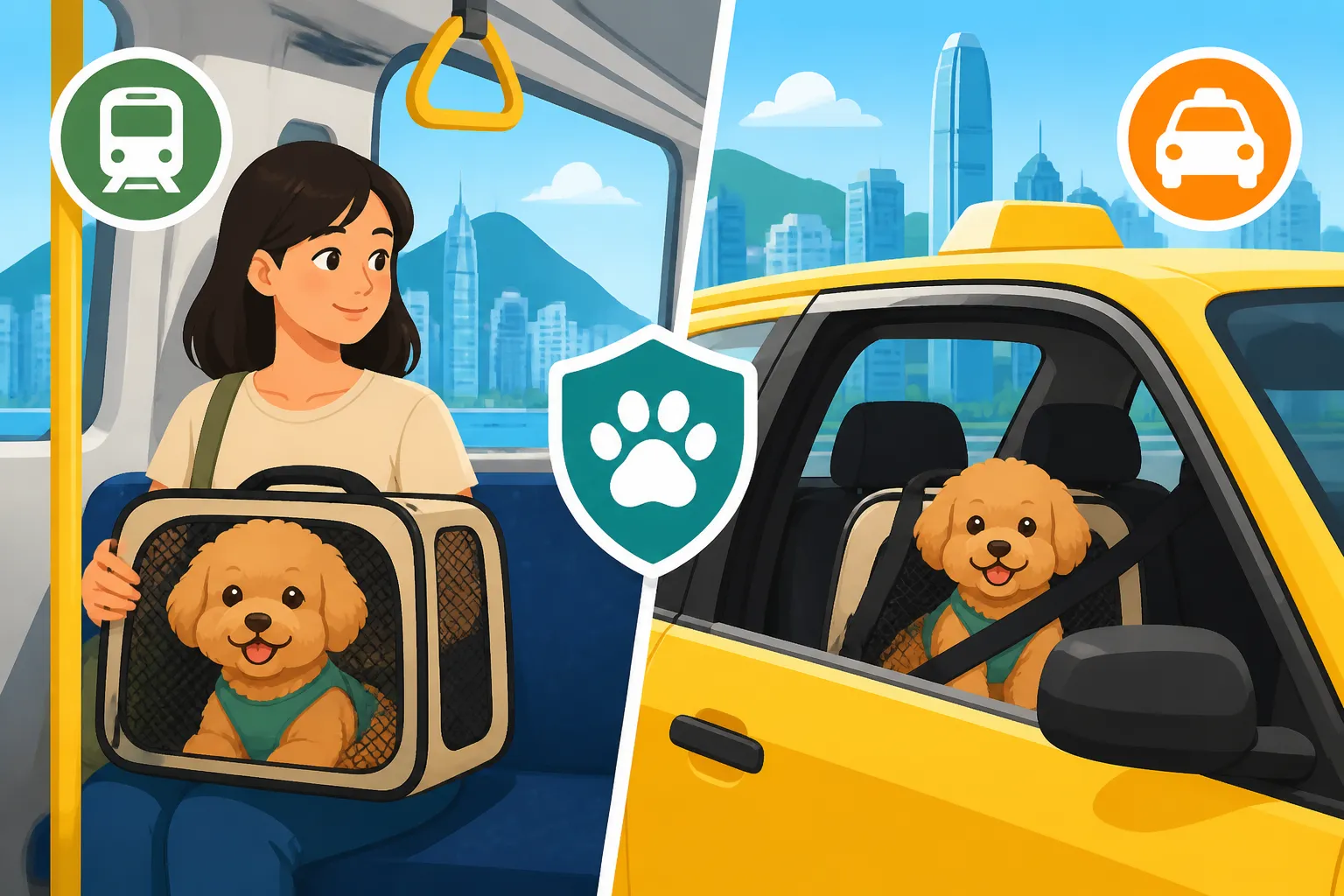
Taking Your Pet on Public Transport: Rules and Taxis
Living in Hong Kong with a dog or a cat is a rewarding experience, but the city’s logistical layout can make simple trips feel like a military operation. Navigating the rigid "no pets" policies on the MTR and franchised buses often leaves owners feeling stranded and frustrated. This guide solves that problem by breaking down the specific rules for every transport mode, sharing veteran tips for taxi etiquette, and highlighting private alternatives to keep your furry companions mobile.
The Harsh Reality of Mainstream Public Transport in Hong Kong
If you are coming from a city like London or New York, the transport restrictions in Hong Kong can be a massive culture shock. In many European cities, it is perfectly normal to see a well-behaved dog sitting under a seat on the subway. In Hong Kong, the MTR (Mass Transit Railway) is the backbone of the city, yet it remains strictly off-limits for pets. This is one of the most significant administrative hurdles for pet owners. According to the MTR by-laws, no person shall bring any animal or other livestock into the railway premises. The only exception to this rule is for guide dogs accompanying the visually impaired.
This restriction extends to the major franchised bus companies like KMB, Citybus, and Long Win. You cannot simply put your cat in a carrier and hop on a double-decker bus. This often leads to a sense of isolation for expats living in areas like Mid-Levels or Discovery Bay who want to visit the dog-friendly cafes of Sai Ying Pun or the hiking trails of the New Territories. For those just arriving in the city, managing these logistics while searching for a home can be overwhelming. Companies like Blueground offer beautifully furnished, pet-friendly apartments that help bridge the gap, but you still need to know how to get your pet to your new front door.
The mini-bus system, both red and green, is generally a "no" as well, though you may occasionally find a red mini-bus driver who is willing to look the other way if your pet is in a secure, small carrier. However, relying on the "kindness of strangers" is a risky strategy when you have a vet appointment or a grooming session scheduled. If you are moving your entire life to the city, including your pets, the process starts much earlier than finding a bus route. Most veterans recommend using a service like Sirelo to manage the massive task of international relocation, ensuring your pet’s crates and documents are handled correctly before you even face the local transport challenge.
Navigating the Ferry System with Pets
The ferry system is the shining exception to Hong Kong’s pet-unfriendly transport rules. If you are living on or visiting the outlying islands, the ferry is often your primary mode of transport, and fortunately, they are quite accommodating. The Sun Ferry routes to Cheung Chau and Mui Wo, as well as the HK Electric ferries to Lamma Island, all allow pets. However, there are very specific rules you must follow to avoid being turned away at the pier.
First, pets are generally restricted to the "Ordinary" or "Slow" ferries. Most "Fast" ferries (the high-speed catamarans) do not allow pets, or if they do, the pet must remain in a carrier and is often restricted to a specific area. On the slow ferries, dogs must be leashed and muzzled, or kept in a carrier. There is also a pet fare involved, which is usually a fraction of the adult fare. You can check the Star Ferry Guide: Fares, Routes, and Using Octopus to see how the iconic cross-harbor journey handles these logistics, as it remains one of the most scenic ways to travel with a small pet in a carrier.
When using the ferries, veteran expat owners suggest arriving at the pier at least 15 minutes early. The boarding process for pets can be slightly different, and during peak weekend hours, the pet-friendly sections can fill up quickly. If you are living in a more flexible housing arrangement, such as those provided by Habyt, you might find yourself exploring different neighborhoods frequently, making the ferry a vital tool in your weekend arsenal.
| Transport Mode | Pets Allowed | Requirements | Typical Cost |
|---|---|---|---|
| MTR | No | Guide dogs only | N/A |
| Franchised Bus | No | Guide dogs only | N/A |
| Star Ferry | Yes | Carrier required | Small Fee |
| Outlying Island Ferry | Yes | Leash/Muzzle or Carrier | 50% of Adult Fare |
| Tram (Ding Ding) | Restricted | Small pets in carriers only | Standard Fare |
| Red/Green Taxi | Yes | Subject to driver; $5 surcharge | Meter + $5 |
| Uber Pet | Yes | Pre-booked via app | Higher than standard Uber |
Taxis and Ride-Hailing the Professional Way
For most pet owners in the city, taxis are the most common way to get around. While the law allows taxi drivers to carry pets, it also gives them the right to refuse a passenger if they feel the animal might soil or damage the vehicle. This creates a stressful "will they, won't they" dynamic when you are standing on a busy street corner. In Hong Kong, there is a statutory surcharge of HK$5 per animal. This is a legal fee, and you should expect to see it added to your final meter reading.
To increase your chances of a successful taxi ride, follow the "Pet Owner's Protocol." Always carry a large towel or a waterproof mat to place on the seat. When you hail a taxi, point to your pet and show the towel to the driver immediately. This signal of responsibility goes a long way in calming a driver’s fears about their car’s upholstery. If you have a large dog, it is often better to use a radio-taxi app or a calling service where you can specify that you are traveling with a large animal.
Uber Pet is another fantastic addition to the Hong Kong market. Unlike standard Uber, where a driver can still refuse a pet, Uber Pet specifically matches you with drivers who are happy to have animals in their cars. It costs a bit more than a standard UberX, but the peace of mind is worth the extra few dollars, especially during a Catching a Taxi During a Typhoon Shift: Surcharges and Rules situation where transport is already scarce. For those who find the taxi system too unpredictable, choosing a central location to live can reduce the need for long trips. Many expats look for Kennedy Town Living: Transport Links and Vibe because the neighborhood is incredibly walkable and dense with pet-friendly amenities.
Private Pet Taxis and Specialized Vans
When a standard taxi isn't enough—perhaps you are moving house, going to the airport, or taking multiple large dogs to the vet—you need a private pet taxi. These are not traditional taxis but specialized van services like GOGOX or Lalamove that have a specific "Pet" option in their apps. These drivers are used to transporting animals and often have vans equipped with crates or easy-clean surfaces.
This is particularly useful when you are dealing with the initial move into your apartment. If you’ve just arrived and are navigating the Essential Health Checklist for Your First 30 Days in Hong Kong, getting your pet to its first local check-up is a priority. Using a van service allows you to sit in the back with your pet, providing comfort during what can be a stressful journey for them. These services are also essential if you are heading to the airport for an international trip, as they can accommodate the large travel crates required for air travel.
For those residing in co-living or flexible spaces like Habyt, these van services are a lifesaver for weekend adventures to the New Territories. If you want to explore the Hiking Trails and Beaches on HK Island or head out to Sai Kung for a day on a junk boat, a private van ensures you won't be stranded at the end of a long, muddy day of hiking when your dog is too tired (and dirty) for a standard red taxi.
Practical Tips for Stress-Free Pet Travel
The key to successfully moving around Hong Kong with a pet is preparation and a thick skin. You will occasionally face rejection from a taxi driver or a stern look from a security guard. Don't take it personally; it's part of the urban experience here. One of the best things you can do is ensure your pet is well-trained and comfortable in a carrier or wearing a muzzle. Even if your dog is the friendliest golden retriever in the world, the law on ferries is clear: they must be muzzled.
If you are just starting your journey in Hong Kong, make sure your housing is sorted before you worry about the bus routes. Check the Can I Keep a Pet in My HK Apartment? "Pet-Friendly" Clauses to ensure your landlord is actually on board with your four-legged roommate. Once your home base is secure, whether it's a long-term lease or a flexible stay through Blueground, you can start mapping out the pet-friendly pockets of the city.
Always carry your Hong Kong Identity Cards (HKID): Registration and Smart IDs and have your pet's vaccination record (the "blue book") on your phone. If you are ever stopped or if there is an incident, having your paperwork in order is crucial. For those who are new to the city and still navigating the Bringing Pets to HK: AFCD Quarantine Groups and Import Permits, remember that the transport rules are just one layer of the puzzle. Once you master the ferry schedules and the "towel trick" for taxis, Hong Kong actually becomes a very manageable place for pet owners.
Planning for the Long Term
If you find that the lack of pet-friendly public transport is a major drain on your lifestyle, you might consider moving to a neighborhood that requires less travel. Areas like Discovery Bay are famous for their pet-friendly atmosphere, where you can use golf carts and the internal bus system is much more relaxed about animals. Alternatively, looking into Southside Living: Repulse Bay, Stanley, and Deep Water Bay offers a more suburban feel where you can often walk to the beach or local shops without needing a vehicle at all.
For those who must commute, the combination of Uber Pet and the ferry system remains the gold standard. While we all hope for a day when the MTR allows small pets in carriers, the current system requires a bit of strategy and a budget for taxis. If you are in the process of Moving Companies in HK: Man with a Van vs Full Relocation, talk to your movers about local pet transport recommendations; often, they have partnerships with local pet taxi drivers who offer better rates for regular customers.
In summary, while the "official" public transport system remains largely closed to pets, the combination of a robust ferry network, a specialized taxi surcharge system, and the rise of pet-specific ride-hailing apps means you are never truly stuck. With a little bit of planning and the right equipment, you and your pet can enjoy everything from the skyscrapers of Central to the quiet beaches of Lantau.
Disclaimer
The information provided in this guide is for general informational purposes only and does not constitute legal or professional advice. Public transport regulations, taxi surcharges, and ferry policies in Hong Kong are subject to change by the Transport Department and individual operators. Always check the latest official by-laws and carrier terms of service before traveling with your pet. The author and publisher are not responsible for any fines, service refusals, or incidents occurring during pet transport.