Scams Targeting Expats: Fake Immigration Calls and WhatsApp Frauds
You arrive in Hong Kong expecting a world of efficiency and neon lights, but you likely didn't expect the constant barrage of predatory phone calls and deceptive messages. This guide breaks down the sophisticated psychological tactics used in fake immigration calls and WhatsApp frauds, providing you with the practical tools to identify red flags and protect your hard-earned finances from local scammers.
The Infamous Immigration Officer Call and Government Impersonation
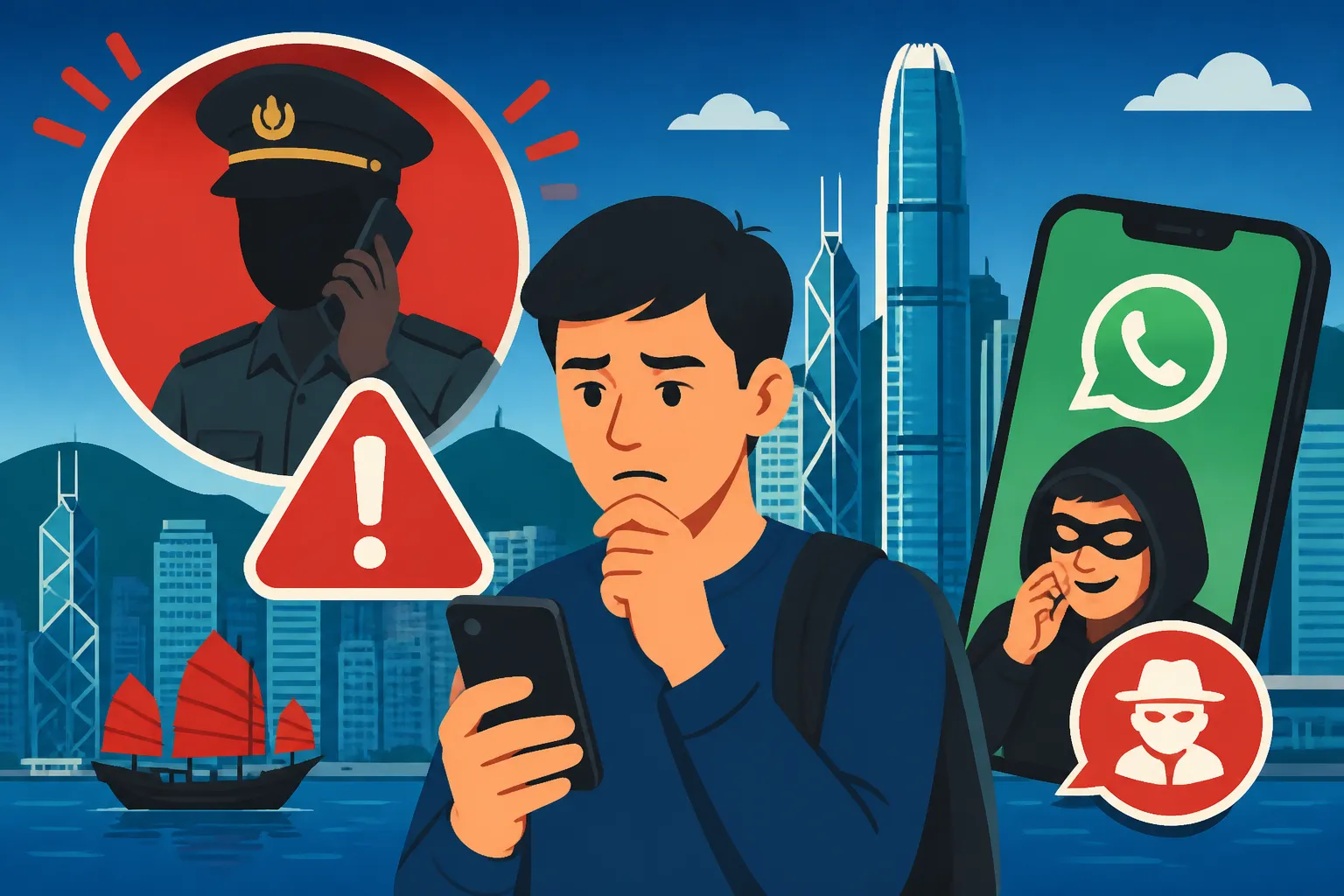
The first time you receive a call from someone claiming to be from the Hong Kong Immigration Department (ImmD), your heart will likely skip a beat. As an expat, your legal right to stay in the city is tied to your visa, making you the perfect target for "authority-based" scams. These calls often begin with a pre-recorded message in Cantonese or Mandarin, claiming that you have an urgent document to pick up or that your visa status is under investigation.
How the Official Script Manipulates Your Fear
The scam usually escalates when you press a button to speak to an "operator." The person on the other end will sound incredibly professional, often providing a fake staff ID number. They might tell you that a suspicious parcel was intercepted in your name in Mainland China, or that your has been flagged for fraudulent activity. The goal is to induce panic. Once you are in a state of high anxiety, they offer a "solution": transferring funds to a "safety account" for verification or paying a "fine" to avoid immediate deportation.
Many newcomers have been convinced the call was real because the caller knew their name or partial HKID digits. It is important to remember that data leaks from various global sources often give scammers these bits of information. They aren't calling from a government office in Wan Chai; they are usually operating from a boiler room in a completely different country, using VOIP technology to spoof local Hong Kong phone numbers.
Why the Real Immigration Department Will Not Call You This Way
The Hong Kong government is quite traditional in its administrative approach. If there is a genuine issue with your visa or your , the Immigration Department will almost always contact you via physical mail. Even if they do call, they will never ask for bank details over the phone, and they certainly will never ask you to transfer money to a personal or "security" bank account via FPS or wire transfer.
Furthermore, real officials will not use messaging apps like WhatsApp or Telegram to conduct official business. If someone claiming to be a police officer or an immigration agent sends you a photo of a "warrant" through a chat app, it is 100% a fraud. Real warrants are served in person, and official investigations are not conducted through encrypted chat platforms. If you are unsure, the best move is to hang up and call the official ImmD general enquiry hotline yourself.
Immediate Steps to Take When You Receive a Suspicious Call
The moment you suspect a call is a scam, hang up. Do not engage, do not try to "troll" them, and most importantly, do not provide any personal information. Scammers often keep lists of "responsive" numbers. If you stay on the line, you are marking yourself as a potential lead for future attempts.
You should also download the "Scameter" app developed by the Hong Kong Police Force. It allows you to search for phone numbers, bank accounts, or URLs to see if they have been reported as fraudulent. When you are still in your , it is easy to feel isolated and vulnerable, but remember that you can always verify these claims by visiting the Immigration Tower in person.
WhatsApp Frauds and the Rise of Social Engineering
WhatsApp is the lifeblood of communication in Hong Kong, used for everything from booking a dentist to chatting with your boss. Because we trust the platform, we often let our guard down. WhatsApp scams in the city have evolved from simple phishing links to complex social engineering schemes that can trick even the most tech-savvy residents.
The Hi Mom and Impersonation Scams
A very common tactic involves a scammer messaging you from an unknown number, pretending to be a family member or a close friend who has lost their phone or had an emergency. They might say, "Hi, I've changed my number, please delete the old one." A few hours or days later, the "emergency" hits—they need money for a medical bill, a lost wallet, or a stuck transaction.
Because expats often have family living across different time zones, these messages can be particularly effective. You might think your sister back home is truly in trouble. Before you even think about sending money, always verify the person's identity through a secondary channel. Call their "old" number or contact another family member to check. Never send funds based solely on a WhatsApp message, no matter how urgent the tone.
Crypto and Investment Group Scams
You might suddenly find yourself added to a WhatsApp group titled something like "Global Wealth Insights" or "HK Investment Club." These groups are filled with "shills"—fake accounts that post screenshots of massive profits from cryptocurrency or gold trading. This is a classic "pig butchering" scam. They build your trust over weeks, encouraging you to deposit small amounts into a fake trading platform.
When you try to withdraw your "profits," the platform will demand a "tax" or a "withdrawal fee." This continues until you have nothing left to give, at which point the group disappears and the "mentors" block you. If you are looking for legitimate ways to manage your finances, it is better to consult a professional or research through regulated institutions rather than random chat groups.
Phishing for Your WhatsApp Account Access
Another dangerous trend is the account takeover. You receive a message from a "friend" (whose account has already been hacked) asking you to send them a 6-digit code that you just received via SMS. That code is actually the verification code to register your WhatsApp account on their device. Once they have access to your account, they will message your entire contact list asking for money, pretending to be you.
To prevent this, enable Two-Step Verification in your WhatsApp settings. This requires a PIN that only you know. If you are busy , the last thing you need is a compromised social account. Staying vigilant about your digital security is just as important as securing your physical home.
| Scam Type | Common Hook | Primary Goal | Red Flag |
|---|---|---|---|
| Immigration Call | "Your visa is expired" or "Illegal parcel found" | Bank transfer to "Safety Account" | Caller asks for money to stop legal action |
| WhatsApp Impersonator | "I lost my phone, this is my new number" | Urgent loan for a fake emergency | Unwillingness to have a voice or video call |
| Rental Fraud | "Premium flat at 50% market rate" | Deposit before viewing the property | Landlord claims to be "out of town" |
| Pig Butchering | "Join our elite investment group" | Deposits into fake trading apps | Guaranteed high returns with no risk |
Housing and Rental Scams: Protecting Your Deposit
Finding a place to live is one of the most stressful parts of moving to Hong Kong. Scammers prey on this desperation by posting fake listings on social media groups or unregulated platforms. These listings often feature beautiful, spacious apartments at prices that seem like a steal for areas like Central or Mid-Levels.
The Out of Town Landlord Tactic
In this scenario, the "landlord" claims they are currently working overseas (often in the UK or Singapore) and cannot show you the flat in person. They will send you high-quality photos—often stolen from legitimate hotel websites or property portals—and tell you that because the flat is in high demand, you must pay a "holding deposit" to secure it.
They might even send you a fake copy of a to make it look official. Once you transfer the money, they stop responding. Never, under any circumstances, pay a deposit for an apartment you or a trusted representative have not physically entered. If you cannot be there in person, use reputable services like Blueground or Habyt, which offer verified, high-quality living spaces without the risk of private landlord fraud.
Verifying the Property and the Owner
To protect yourself when dealing with private rentals, you should conduct a land search through the Land Registry. This costs a small fee but allows you to verify if the person claiming to be the landlord actually owns the property. You can also check if the estate agent is licensed by the Estate Agents Authority (EAA).
If you are shipping your belongings from overseas, ensure you use a vetted service like Sirelo to find reliable movers, as "bait-and-switch" pricing in the moving industry is another form of local scamming. Scammers often pose as cheap movers only to hold your furniture hostage until you pay three times the original quote. Sticking to established brands for housing and logistics is the best way to ensure your transition to Hong Kong is smooth and secure.
Spotting "Too Good to Be True" Listings
If a listing for a flat in a prime location is significantly cheaper than others in the same building, proceed with extreme caution. Scammers rely on the "fear of missing out" (FOMO) to rush you into making a mistake. Compare the price against the for similar properties in the area.
Legitimate landlords in Hong Kong will usually go through an agency or a known co-living platform. If a "landlord" insists on using only WhatsApp and refuses to meet you at a licensed real estate office or at the property itself, it is a major warning sign. Platforms like Habyt and Blueground provide a layer of institutional security that private Facebook listings simply cannot offer.
What to Do If You Have Been Targeted or Scammed
Even the most cautious people can fall victim to these sophisticated attacks. If you realize you have been scammed, time is of the essence. The faster you act, the higher the chance (though it is never guaranteed) that the authorities can intercept the funds.
Contacting the Anti-Deception Coordination Centre (ADCC)
The Hong Kong Police Force operates a 24-hour "Anti-Scam Helpline 18222." This service is staffed by professionals who can give you immediate advice on what to do. If you have just transferred money, they may be able to coordinate with banks to freeze the recipient's account. This is a vital resource for anyone who has been targeted by or other financial frauds.
You should also file a formal police report at the nearest station or through the e-Report Room. Keep all records of the conversation, including phone numbers, chat logs, and bank transfer receipts. While the police are very active in fighting fraud, the international nature of these scams makes recovery difficult, so the focus should always be on prevention.
Securing Your Digital Footprint After an Attempt
If you have accidentally clicked on a suspicious link or provided some personal details, you need to secure your accounts immediately. Change your passwords for your banking apps and email accounts. If you provided your HKID number, be extra vigilant about any mail you receive, as identity theft can lead to scammers attempting to open credit card accounts in your name.
It is also helpful to join expat community groups to stay updated on the latest scam trends. Scammers often cycle through different "scripts," and knowing the current flavor of the month can help you spot a fraud before they even finish their first sentence. Whether it is a call about your or a message about a "lost parcel," being informed is your best defense.
Rebuilding Your Confidence in the City
Being targeted by a scammer can leave you feeling cynical and unwelcome in your new home. Don't let it ruin your experience of Hong Kong. The vast majority of people here are incredibly hardworking and honest. By taking simple precautions—like using verified services for housing and ignoring unsolicited "official" calls—you can focus on enjoying everything this vibrant city has to offer.
Remember to bookmark the official government websites and keep the 18222 helpline number in your phone. If you are ever in doubt, just remember the golden rule of Hong Kong: if an official-sounding person is asking for money over the phone or WhatsApp, it is a scam.
Disclaimer
This guide is for informational purposes only and does not constitute legal or professional financial advice. While every effort has been made to ensure the accuracy of the information provided, scam tactics evolve rapidly. Always verify information through official government channels and consult with the Hong Kong Police Force (Anti-Deception Coordination Centre) if you suspect you have been a victim of fraud.