Recycling in HK: Using the GREEN@COMMUNITY Network
When you first arrive in Hong Kong, setting up your new life is a whirlwind, and sorting out the mundane but necessary things like waste management can feel like a labyrinth. You quickly realize that recycling here isn't quite like the curbside pickups you might be used to back home. It's a common expat frustration, figuring out what goes where and how to even get it there. But don't despair! Hong Kong has made significant strides with its GREEN@COMMUNITY network, a robust system designed to demystify and streamline the recycling process for residents, and trust me, it’s a game-changer once you get the hang of it. This guide will walk you through everything you need to know about navigating recycling in the city, using this fantastic network to make your life a little greener.
Understanding Hong Kong's Recycling Landscape
Moving to a new city often means adjusting to different norms, and waste disposal is definitely one of them in Hong Kong. Many of us arrive with good intentions, wanting to recycle as much as possible, only to be met with a confusing array of public bins or the sheer lack of clear guidance. It's a common narrative, isn't it? You stare at a plastic bottle, then at the general waste bin, wondering if it's even worth the effort if it's all just going to landfill anyway.
The Initial Confusion: Curbside Collection vs. Designated Points
In many Western countries, you simply put out clearly labeled bins on a specific day, and poof, your recycling magically disappears. In Hong Kong, that model is far less common, especially in older buildings or residential areas without dedicated waste management services. You might see some individual building management offices offering basic paper or plastic collection, but it's often inconsistent and varies wildly from one property to the next. For those of us living in older walk-ups or village houses, the options can feel non-existent.
This lack of standardized curbside collection has historically been a significant barrier. Expats often share stories of hoarding recyclables, waiting for a trip to a distant collection point, or simply giving up due to the inconvenience. It's not for lack of caring, but for lack of a coherent, easily accessible system. You're trying to settle into your new flat, perhaps arranged by a relocation service like Sirelo, and the last thing you want to worry about is where to stash your empty milk cartons for weeks on end. This is where the local context really hits differently, as space is at such a premium here that keeping large amounts of waste, even sorted waste, is simply not feasible for most.
Why GREEN@COMMUNITY Was Born: Addressing the Gaps
Recognizing these challenges and the urgent need to boost Hong Kong's recycling rates, the Environmental Protection Department (EPD) launched the GREEN@COMMUNITY network. This initiative wasn't just about putting out more bins; it was about creating a comprehensive, community-based infrastructure that makes recycling convenient, informative, and even rewarding. It aims to bridge the gap between individual desire to recycle and the practical means to do so, moving away from relying solely on private building management or distant, sporadic recycling points.
The idea was to decentralize recycling, bringing dedicated facilities closer to residential areas, operating them with consistent hours, and making them easily identifiable. This shift was crucial, as it tackled the "last mile" problem of recycling where residents often struggled the most. Furthermore, it aligned with broader environmental goals, preparing the city for future waste reduction schemes, such as the now-delayed Municipal Solid Waste (MSW) Charging Scheme, which aims to further incentivize proper waste disposal. This proactive approach shows the city's commitment to creating a greener future, even if the implementation takes a bit of getting used to. For more context on the larger waste strategy, you might want to read up on Waste Management in HK: Recycling and Municipal Solid Waste Rules.
Diving Deep into the GREEN@COMMUNITY Network
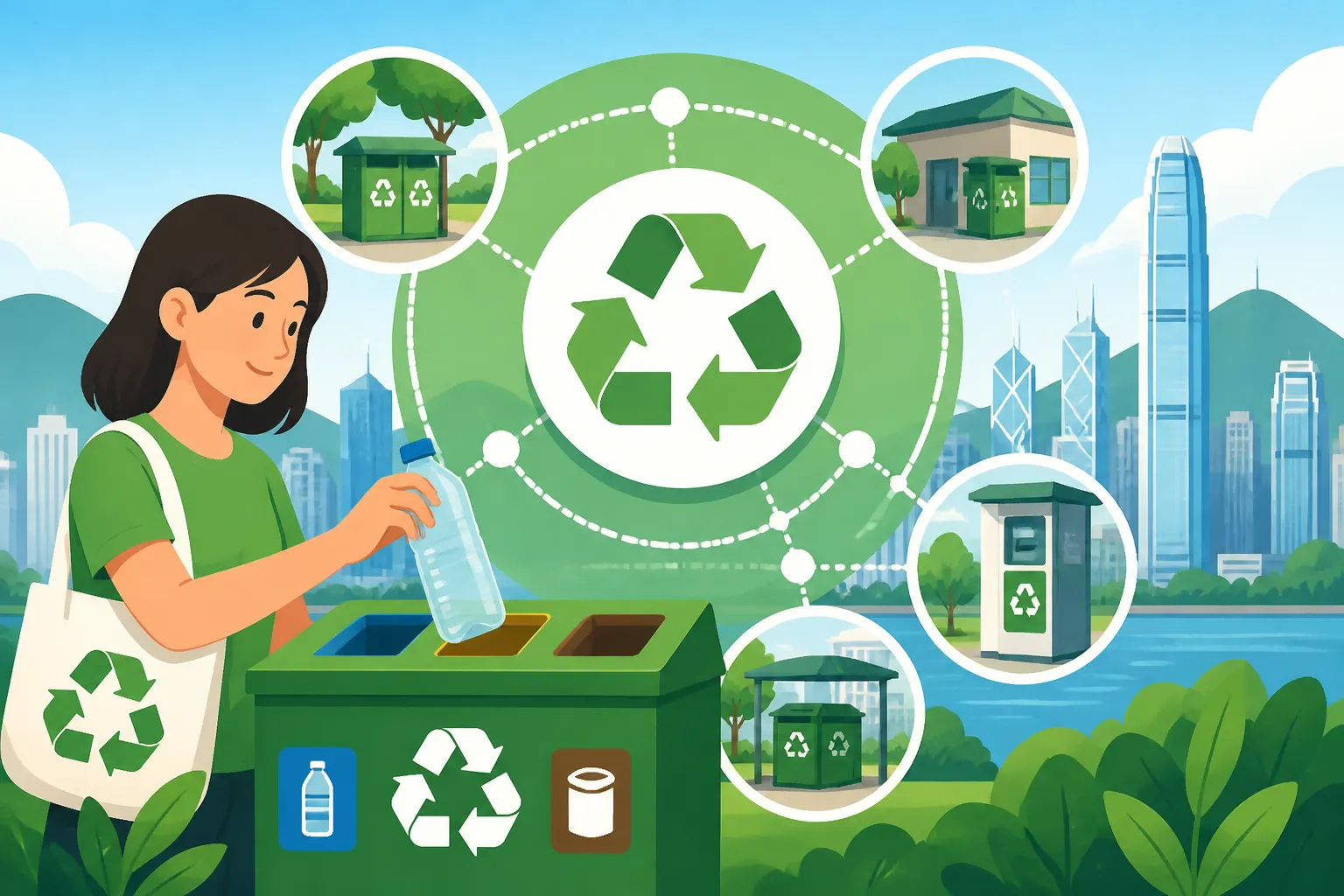
The GREEN@COMMUNITY network is comprised of three main types of facilities: Recycling Stores, Recycling Stations, and Recycling Spots. Each plays a distinct role in ensuring comprehensive coverage across the city, making it easier for everyone, from busy professionals in Central to families in the New Territories, to participate.
Recycling Stores (GREEN@STORE): Your Neighborhood Hubs
Think of the GREEN@STORE as your friendly neighborhood recycling shop. These are typically smaller, permanent facilities embedded within residential areas, often recognizable by their bright green signage and welcoming staff. Currently, there are over 100 GREEN@STOREs across Hong Kong, making them quite accessible. They operate with regular opening hours, usually seven days a week, making it easy to drop off your recyclables on your way to work, after a grocery run, or during a weekend stroll.
What makes GREEN@STOREs particularly great is the human element. They are staffed by knowledgeable personnel who can help you sort your items, answer questions about what's accepted, and even clarify language-specific queries, which can be a huge relief for expats still honing their Cantonese. They accept a wide range of common recyclables, including plastics, paper, metals, glass, and even electronic waste. Many of these stores also act as small community hubs, sometimes hosting workshops or educational events. It's a much more personal experience than just dropping items into an anonymous bin, fostering a sense of community engagement around environmental efforts. If you're living in a serviced apartment from a provider like Blueground during your initial move, check if they offer any interim recycling solutions, but once you're in your permanent home, a nearby GREEN@STORE will become your best friend.
Recycling Stations (GREEN@STATION): Larger Facilities and Educational Spaces
Recycling Stations, or GREEN@STATIONs, are the larger, flagship facilities within the network. These are typically spacious centers, often built with impressive architectural designs, serving a wider district. There are currently 11 of these major stations spread across Hong Kong, offering comprehensive recycling services that go beyond what a typical GREEN@STORE can provide. They usually have designated areas for different types of recyclables, making sorting straightforward once you're there.
Beyond just collection, GREEN@STATIONs are designed to be educational and interactive spaces. They often feature exhibition areas, green workshops, and even small eco-friendly product shops. For families, they can be a great place to teach kids about sustainability. They also tend to accept a broader range of items, including more specialized e-waste or bulky recyclables that smaller stores might not be equipped to handle. Think of them as the regional recycling supercenters, offering a full spectrum of services and resources. They often have dedicated parking areas, which can be a boon for those with larger loads of recycling or those who live a bit further afield. You can find detailed information about their locations and operating hours on the EPD's "Waste Less" website, which is surprisingly user-friendly.
Recycling Spots (GREEN@SPOT): Pop-Up Convenience
Complementing the permanent stores and stations, Recycling Spots (GREEN@SPOTs) offer mobile and flexible collection services. These are essentially temporary collection points, often set up in public spaces like community halls, outdoor plazas, or housing estates on specific days and times. They act as pop-up clinics for recycling, bringing convenience directly to your doorstep, particularly for areas that might not have a permanent GREEN@STORE within easy walking distance.
The beauty of GREEN@SPOTs lies in their adaptability. Their schedules are usually publicized well in advance, often through district councils, housing estate notice boards, or the EPD website. This means you can plan your recycling drop-off around your schedule. While they might not accept every single category that a full GREEN@STATION does, they cover the most common recyclables, making them an excellent option for quick, regular disposals. For those of us living in compact apartments, perhaps even ones found through services like Habyt, where space for holding onto recyclables is limited, these weekly or bi-weekly spots are incredibly helpful for preventing clutter and ensuring things get recycled promptly. Keep an eye on local community announcements or the EPD's "Waste Less" app for the latest schedules in your area.
What Can You Recycle with GREEN@COMMUNITY?
The GREEN@COMMUNITY network accepts a comprehensive range of recyclable materials, organized into seven main categories. This systematic approach helps to clarify what is, and isn't, acceptable, moving past the vague "plastics, paper, metal" labels that can cause so much confusion.
The Seven Major Categories Accepted
Understanding these categories is key to effective recycling in Hong Kong. Here’s a breakdown of what each one includes:
- Plastics (塑膠): This is a big one and often the most confusing. The network generally accepts common plastic bottles, containers (like shampoo bottles, detergent bottles), plastic bags, and even styrofoam packaging. Crucially, they usually accept all types of plastic, identified by resin codes 1-7. This is a significant improvement over older systems that only took certain types. Remember to rinse containers and remove any food residue!
- Paper (紙): All sorts of paper products are welcome, including newspapers, magazines, cardboard boxes, office paper, and even paperback books. However, it's important to keep them dry and clean. Items like waxed paper, carbon paper, or heavily soiled paper (e.g., pizza boxes with grease stains) are usually not accepted.
- Metals (金屬): This category covers aluminum cans, tin cans, and other common metal packaging. Again, a quick rinse is appreciated, especially for food cans. Larger metal items or scrap metal might be better suited for a GREEN@STATION, but smaller household metals are fine at most points.
- Glass (玻璃): Glass bottles and jars of all colors are accepted. Just make sure they are emptied and rinsed. Items like mirrors, ceramic, or window panes are generally not glass recyclables and should not be mixed in.
- Rechargeable Batteries (充電池): This is a critical one for environmental safety. Small rechargeable batteries from electronic devices, power tools, or toys can be dropped off here. This helps prevent hazardous chemicals from leaching into landfills. For larger batteries, especially car batteries, you might need to check with a specialized collection point or the GREEN@STATION.
- Fluorescent Lamps/Tubes (光管/慳電膽): Energy-saving light bulbs and fluorescent tubes contain mercury, so proper disposal is essential. The GREEN@COMMUNITY network provides a safe way to dispose of these items, preventing environmental contamination.
- Small Electrical Appliances (小型電器): This category, often referred to as WEEE (Waste Electrical and Electronic Equipment), includes items like toasters, hairdryers, small fans, kettles, and mobile phones. These items often contain valuable materials that can be recovered and reused, and also hazardous components that need careful handling. For larger appliances like refrigerators or washing machines, specific collection programs exist, often requiring booking a pick-up service.
To help visualize this, here's a quick table:
| Category | Examples Accepted | Examples NOT Accepted (Generally) |
|---|---|---|
| Plastics (塑膠) | PET bottles (water, soda), HDPE (milk, detergent), PP (food containers), plastic bags, Styrofoam | Heavily soiled plastics, medical waste plastics, PVC pipes |
| Paper (紙) | Newspapers, magazines, cardboard, office paper, books | Waxed paper, carbon paper, paper towels, tissue, heavily stained paper (e.g., oily pizza boxes) |
| Metals (金屬) | Aluminum cans, tin cans, metal food containers | Sharp metal scraps, hazardous chemical containers, large industrial metals |
| Glass (玻璃) | Glass bottles (drinks, sauces), jars | Mirrors, ceramics, window glass, light bulbs (non-fluorescent) |
| Rechargeable Batteries | AA/AAA rechargeables, phone batteries, laptop batteries | Alkaline batteries (regular AA/AAA), car batteries |
| Fluorescent Lamps/Tubes | Energy-saving bulbs, fluorescent tubes | Incandescent bulbs, LED bulbs (often accepted as small electricals) |
| Small Electrical Appliances | Toasters, kettles, hairdryers, mobile phones, small fans | Large appliances (fridges, washing machines), items with severe damage/exposed wiring |
Common Items That Still Confuse Expats (and What to Do)
Even with clear categories, some items invariably stump us. For instance, those ubiquitous takeaway containers made of plastic often have food residue, making them tricky. While the GREEN@COMMUNITY network does accept most clean plastic containers, a general rule of thumb is: if it's heavily soiled and difficult to clean thoroughly, it might be better to dispose of it as general waste. Trying to recycle contaminated items can actually spoil an entire batch of otherwise good recyclables.
Another point of confusion is general household batteries (like regular AA or AAA batteries). These are not typically accepted in the "rechargeable battery" category. While some private collection points might take them, generally, they should be disposed of in general waste in Hong Kong, as they are not classified as hazardous waste here. Food waste is another area – Hong Kong is developing food waste recycling programs, but these are separate from the GREEN@COMMUNITY network and usually involve designated food waste bins in specific estates or commercial areas. Always check with the staff at a GREEN@COMMUNITY point if you're unsure; they are incredibly helpful.
How to Make Recycling Easier: Tips and Best Practices
Recycling in Hong Kong doesn't have to be a chore. With a few simple habits and an understanding of the available tools, it can become a seamless part of your daily routine. Especially for those of us navigating a new city, simplifying these tasks can make a big difference.
Pre-Sorting and Cleaning: The Golden Rules
The most crucial step in effective recycling, anywhere in the world, but especially in Hong Kong, is pre-sorting and cleaning your items. This might sound obvious, but you’d be surprised how many people skip this.
Firstly, segregate your waste at home. This means having separate bags or small bins for plastics, paper, metals, and glass. For small Hong Kong apartments, this can be challenging, but even a few canvas bags tucked away can make a difference. Many expats get clever with collapsible bins or designated spots in their utility areas. Companies like Habyt, which provide furnished apartments, often design their units to maximize space, which can indirectly help with setting up a small recycling corner.
Secondly, and perhaps most importantly, clean your recyclables. Food residue is the enemy of recycling. A quick rinse for plastic bottles, glass jars, and metal cans is usually all it takes. For items like plastic takeaway containers, if they're too greasy to clean easily without excessive water, it's often better to just put them in the general waste. This might feel counterintuitive, but sending dirty items to a recycling center can contaminate entire batches, leading to more waste overall. Dry paper and cardboard are also essential; wet or moldy paper cannot be recycled.
Leveraging Technology: The GREEN$ Smart Card and Mobile App
The EPD has introduced an incentive scheme to encourage recycling, centered around the GREEN$ Smart Card. This is a brilliant initiative that makes recycling not just easy, but also rewarding.
Here’s how it works: When you drop off your recyclables at any GREEN@COMMUNITY facility, the staff will weigh your items and award you "GREEN$" points onto your Smart Card. Different materials have different point values, but generally, the more you recycle, the more points you earn. For example, 1 kg of paper might earn you 2 points, while 1 kg of plastic could earn 4 points. These points can then be redeemed for eco-friendly products, groceries, or even daily necessities at the GREEN@COMMUNITY stores themselves. It's a fantastic way to get a tangible benefit from your efforts, and it genuinely motivates people to recycle more. I’ve known many expat families who get a kick out of collecting points and then choosing something useful, turning recycling into a small, positive family activity. You can also track your contributions and rewards through the official EPD "Waste Less" mobile app, which also shows you the nearest GREEN@COMMUNITY locations and their operating hours. This seamless integration of technology is a huge win for convenience.
Overcoming Language Barriers at Recycling Points
One of the initial hurdles for many newcomers can be the language barrier. While English is widely spoken in many parts of Hong Kong, especially in business districts, it's not always a given at every local community recycling point. However, the GREEN@COMMUNITY network has made efforts to be inclusive.
Most GREEN@COMMUNITY facilities have clear signage in both English and Chinese, detailing the types of recyclables accepted. Furthermore, the staff members are generally very experienced in assisting non-Cantonese speakers. They often understand visual cues, and a simple "plastic," "paper," or "glass" accompanied by showing your items is usually enough to get the message across. Don't be shy about asking for help or clarification. A friendly smile and a gesture often go a long way. The EPD's "Waste Less" app also provides information in English, making it easier to prepare your items before you even leave home. This focus on clear communication makes the process far less intimidating than it might seem at first glance.
The Impact of GREEN@COMMUNITY and Looking Ahead
The establishment and expansion of the GREEN@COMMUNITY network represents a significant step forward for Hong Kong's environmental efforts. It's not just about providing infrastructure; it's about shifting cultural habits and making sustainability a more tangible part of daily life for everyone, including the expat community.
The Benefits for Expats and the Environment
For expats, the GREEN@COMMUNITY network has been a revelation. Before its widespread implementation, the options for recycling were often piecemeal, confusing, and inconvenient. Now, with easily accessible GREEN@STOREs and GREEN@STATIONs, and the flexibility of GREEN@SPOTs, it’s far simpler to ensure your waste is properly handled. This means less guilt about environmental impact and a stronger feeling of contributing positively to your new home. Whether you're moving to Hong Kong with all your belongings, perhaps with help from a company like Sirelo, or just setting up a temporary home with Blueground, understanding these facilities from day one can prevent a lot of waste accumulation.
From an environmental perspective, the benefits are clear. Increased recycling rates mean less waste going to already strained landfills, reducing greenhouse gas emissions and conserving natural resources. By diverting valuable materials from the waste stream, the network supports a more circular economy and helps Hong Kong meet its ambitious climate goals. The educational components within the GREEN@STATIONs also play a crucial role in raising environmental awareness across all age groups, fostering a more sustainable mindset for future generations. For more on Hong Kong's overall healthcare, which often intertwines with public health and environmental concerns, check out our guide on Healthcare in Hong Kong: Public vs Private Systems Explained (2027).
Current Challenges and Future Enhancements
While the GREEN@COMMUNITY network is a resounding success, it still faces some challenges. One ongoing hurdle is public awareness and participation. Despite efforts, some residents, both local and expat, are still unaware of the network or haven't fully integrated it into their routines. Continuous outreach and education are vital to ensure maximum utilization. Another challenge lies in maintaining the cleanliness and efficiency of the facilities, especially during peak hours.
Looking ahead, the network is expected to continue its expansion, with more GREEN@STOREs and GREEN@SPOTs popping up in underserved areas. There's also a strong push to enhance the types of materials accepted and to streamline the redemption process for GREEN$ points, making it even more appealing. The impending Municipal Solid Waste (MSW) Charging Scheme, despite its delays, is also expected to further drive participation in recycling once it's fully implemented, as people will have a direct financial incentive to reduce their general waste. This future synergy between economic incentives and accessible infrastructure bodes well for Hong Kong's journey towards becoming a truly greener city. Keeping an eye on government updates and leveraging resources like the EPD website and mobile app will help you stay informed about these exciting developments.
Disclaimer
Please note that while this guide provides comprehensive information based on current regulations and practices, policies regarding waste management and recycling in Hong Kong can evolve. Always refer to the latest announcements from the Environmental Protection Department (EPD) or consult official government websites for the most up-to-date and authoritative information.