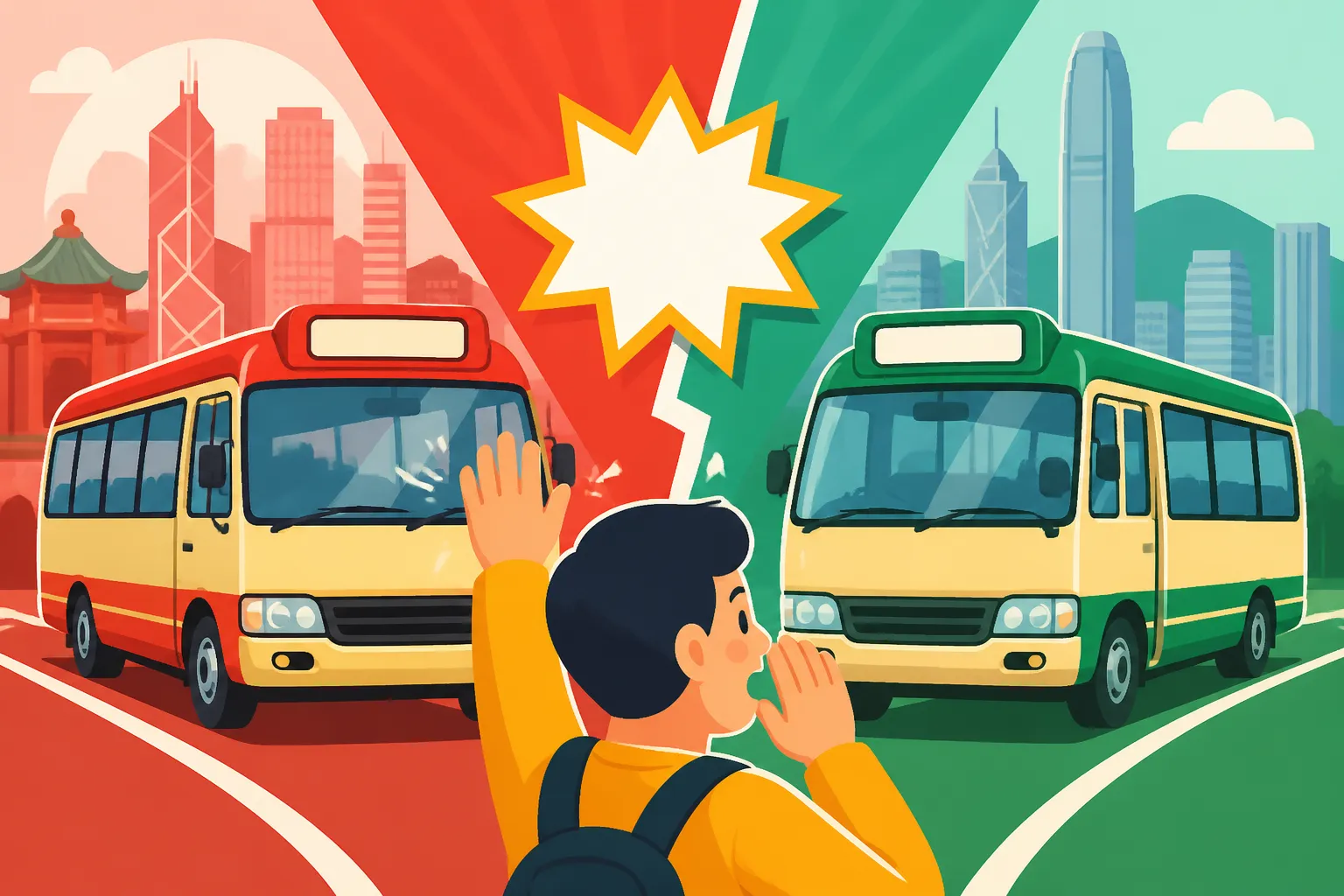
Minibuses in HK: Red vs Green and How to Yell Your Stop
Navigating Hong Kong's labyrinthine public transport system can feel like cracking an ancient code when you first arrive. While the MTR is undeniably efficient and the double-decker buses offer scenic routes, there's a whole other beast that strikes fear (and sometimes, pure joy) into the hearts of newcomers: the minibus. These zippy, often packed, 16-seater vans are ubiquitous, but understanding the difference between the red and green variants – and more importantly, how on earth you actually get off one – is a rite of passage for every expat. This guide will demystify the minibus system, helping you confidently conquer this unique Hong Kong experience.
The Minibus Maze: Understanding Hong Kong's Unsung Heroes
For many of us who've lived here for a while, minibuses are either a godsend for reaching those obscure corners the MTR doesn't touch, or a necessary evil when other transport options are just too slow. They embody a certain chaotic efficiency that is quintessentially Hong Kong.
Why Minibuses are a Hong Kong Staple
Hong Kong's unique geography, with its steep hills, narrow streets, and sprawling urban and rural areas, makes large public transport difficult in certain locales. This is where minibuses shine. They're nimble, quick, and can navigate tight corners and winding roads that larger buses simply cannot. Think about getting to some of the more residential parts of Mid-Levels, or venturing deep into the New Territories to a remote village – often, a minibus is your best, or only, direct route. They fill the gaps in the public transport network, providing vital connections that many rely on daily.
Moreover, they often offer a faster journey than a bus, especially on routes with fewer stops or when traffic is light. Locals often choose them for their speed and directness, cutting down commute times significantly. It's a pragmatic choice in a city where every minute counts, and once you get the hang of them, you'll appreciate that efficiency too.
The Initial Confusion: A Foreigner's First Encounter
I remember my first time trying to figure out a minibus. Standing at a busy street corner, watching the indistinguishable white vans whizz by, each with a sign covered in squiggly Chinese characters – it felt like an impossible riddle. Unlike the clearly marked MTR stations or bus stops, minibuses often pick up and drop off passengers at seemingly random points along their route. This lack of obvious structure can be incredibly intimidating.
Then there's the speed. Minibus drivers are legendary for their swift, decisive driving style. You hop on, they accelerate, and suddenly you're flying through the streets, often with pop music blaring. For a newcomer, it can feel like being strapped into a roller coaster without fully understanding the safety instructions. The apprehension is real, and it's something every expat goes through. Don't worry, you'll soon develop your "minibus legs" and learn to brace yourself for those sharp turns!
Green Minibuses (GMBs): Your Predictable Pathfinders
When you're starting out, Green Minibuses, or GMBs, are your safest bet. They're the more regulated, predictable cousins of the red ones, offering a smoother entry into the world of Hong Kong minibuses.
Fixed Routes and Fares: The Orderly Side
Green minibuses operate on fixed routes, much like regular buses, and their fares are also regulated and non-negotiable. This brings a much-needed sense of order and alleviates a lot of the initial anxiety. You'll find designated green minibus termini or specific stops, often marked by a green sign, especially in areas like Causeway Bay, Mong Kok, or various MTR station exits. These signs will usually list the route number and key destinations, sometimes even in English.
For example, route 10 from Causeway Bay to Pok Fu Lam, or route 8 from Central Pier to Cyberport, are popular GMB routes. Knowing that the route is fixed means you can study a map beforehand, identify your destination, and ride with confidence. The consistency is key, and it removes the guesswork that often plagues other forms of local transport.
Payment Methods and Octopus Integration
The biggest relief for many expats is that Green Minibuses universally accept The Octopus Card: Hong Kong's Essential Transport & Payment Tool. This makes payment incredibly straightforward. You simply tap your Octopus card on the reader when you board, just like on the MTR or a bus. The fare is deducted automatically, and you don't have to worry about having the exact change.
Cash is also accepted, but it's crucial to remember that drivers cannot give change. If your fare is HK$10 and you offer a HK$20 note, you'll get no change back. It's always best to have small denomination coins or a well-charged Octopus card. Sometimes, you'll see a fare table displayed inside the bus, or the driver might announce it, but generally, the Octopus card is your easiest option.
Deciphering Route Numbers and Destinations
Even with fixed routes, figuring out which GMB to take can be a puzzle, especially with the predominantly Chinese signage. Many GMB signs now include English, but not all. The key is to look for the route number, which is usually prominently displayed on the front of the minibus, and often on the side.
Using apps like Citymapper or Google Maps is incredibly helpful here. These apps will tell you which GMB route number to take, where to catch it, and even predict the travel time. Pay attention to the destination displayed on the front of the minibus – if you're going to Sai Kung, look for "Sai Kung" (sometimes transliterated or with the Chinese characters for Sai Kung) on the front sign, along with the route number (e.g., 101M from Hang Hau MTR). It might take a few rides to recognize the characters for your common destinations, but it's a skill worth acquiring.
Red Minibuses (RMBs): The Wild West of Public Transport
Now, for the real adventure: the Red Minibuses, or RMBs. These are where things get a bit more… dynamic. They offer unparalleled flexibility and speed but demand a higher degree of street smarts and a willingness to embrace the unexpected.
Flexible Routes and Dynamic Fares: A Thrill for the Brave
Red minibuses don't operate on truly fixed routes or schedules. While they generally run between two main termini (e.g., from Mong Kok to Causeway Bay), their specific paths can vary based on traffic, driver preference, and passenger demand. This means they might take different streets to avoid congestion, or even deviate slightly if enough passengers request a specific drop-off point along a plausible path.
The fares are also dynamic. While there's a general fare range, the exact price can fluctuate. It might be higher during peak hours, during bad weather (like a typhoon), or if you're getting off at an intermediate stop that the driver decides warrants a slightly different price. You generally pay when you get off, and the driver will tell you the fare. It's not a negotiation, as such, but rather an on-the-spot announcement. This is where a basic grasp of Cantonese numbers comes in handy, though they often flash the price on a small digital display.
Haggling and Cash-Only: The RMB Payment System
Forget your Octopus card for these bad boys; red minibuses are almost exclusively cash-only. This means you absolutely must have small denominations on hand. I cannot stress this enough – carrying HK$10 and HK$20 notes, or a handful of coins, is essential. Drivers do not, and often cannot, provide change for large bills. Trying to pay with a HK$500 note for a HK$15 fare will earn you a glare and potentially a forced overpayment.
The "haggling" isn't really haggling in the traditional sense, but more an understanding of the fluid fare system. For instance, if you're getting off at an early stop, the fare might be slightly less than if you ride all the way to the final destination, but this isn't always the case and is entirely at the driver's discretion. The best approach is to simply have the correct cash ready and pay what the driver indicates.
Identifying Your Stop and Signaling the Driver
This is the big one. Unlike green minibuses with their designated stops, red minibuses will drop you off anywhere along their route, as long as it's safe to pull over and not a restricted area (like a red box or double yellow lines). This means the responsibility is entirely on you to know where you're going and to make your presence known.
Drivers won't stop unless prompted. You need to tell them, clearly and decisively. This is where the infamous "ha yau" comes in, which we'll cover in detail next. Until you're comfortable with that, relying on landmarks or following a navigation app meticulously is crucial. I once missed my stop completely because I was too shy to speak up, ending up in a completely different neighborhood! It's a common expat story, so don't feel bad if it happens to you. For those looking at housing options, remember that places like the apartments offered by Blueground or Habyt might be situated near both green and red minibus routes, giving you more flexibility once you master the system. Consider checking their locations on a map to understand your transport options.
Mastering the Art of the "Stop": How to Yell Your Way Off
This is it. The moment of truth. Getting off a minibus gracefully is a skill that separates the seasoned expat from the newbie.
The Cantonese "Ha Yau": Your Essential Phrase
The magic words you need to know are "Ha Yau!" (下車!), which literally means "get off the vehicle" or "stop now." It's pronounced something like "hah yoh" with a rising tone on "yoh." You need to say it loud enough for the driver to hear, but not so loud that you startle everyone. It's a confident, clear exclamation.
As you approach your stop, keep an eye out and mentally prepare. About 100-200 meters before your desired drop-off point, say "Ha Yau!". If you're unsure, watch what other passengers do. If someone else shouts "Ha Yau!" and it's near your stop, you can just wait. But if no one else is getting off and you're nearing your spot, it's your turn to speak up. Don't be shy; it's expected.
Visual Cues and Local Landmarks
Until you're fluent in Cantonese, or even just confident with "Ha Yau!", relying on visual cues and landmarks is your best strategy. Before you board, look at your destination on a map and identify a distinctive building, shop, or street sign nearby. As you ride, keep an eye out for these landmarks.
For instance, if you're heading to a specific clinic in Central, note the building next to it or the intersection just before it. When you see that landmark approaching, that's your cue to shout "Ha Yau!". Using a GPS app on your phone that shows your location in real-time can be incredibly helpful for this, allowing you to anticipate your stop with greater accuracy. This is especially true when you're exploring different neighborhoods as part of your housing search, or settling into a new apartment found via Sirelo, where understanding local transport links is key.
Common Courtesy and Safety Tips
When you signal your stop, give the driver a reasonable amount of time to react and pull over safely. Don't wait until the last second when you've already passed your destination. Once the minibus stops, exit quickly but carefully. These drivers are on a schedule, and delays are not appreciated.
Always ensure you have a firm grip on the handrails when standing, especially on red minibuses, as they can accelerate and brake quite sharply. If you're seated, keep your seatbelt fastened – some minibuses have them, and it's always a good idea. Also, try to avoid blocking the door or aisle if possible, especially during peak hours, to allow for smooth passenger flow.
Practical Tips for Riding Minibuses in Hong Kong
Minibus culture has its own unwritten rules. Learning them will make your journeys much smoother and more enjoyable.
Rush Hour Realities and Seating Etiquette
During rush hour, minibuses can get incredibly crowded. You might find yourself squeezed in, standing in the aisle (especially on red minibuses where standing passengers are more common, though technically regulated), or even having to wait for several vans to pass before one has space. Patience is key.
When it comes to seating, if there's an empty seat, take it. Don't put your bag on an empty seat if the minibus is filling up; someone will want to sit there. If you're sitting in the back and need to get off, make sure you can maneuver your way to the front quickly when you shout "Ha Yau!". It's a delicate dance, but everyone learns it. If you're carrying shopping bags from Wellcome or ParknShop, try to keep them contained so they don't block the aisle.
Luggage and Accessibility Considerations
Minibuses aren't typically designed for large luggage. If you're carrying a large suitcase, you might find it challenging to board, and some drivers might refuse you if it's too disruptive. For daily commutes or light shopping, it's usually fine. However, if you're moving house or doing a major airport run, you might want to consider a taxi or the Airport Express.
Accessibility for those with mobility issues is also limited. The steps into a minibus can be quite high, and the interior is compact. They are not wheelchair-accessible. If you have specific accessibility needs, other forms of public transport, like the MTR with its dedicated lifts, would be more suitable. This is important to note if you're arriving in Hong Kong and staying in a temporary serviced apartment like those from Blueground or Habyt, and haven't fully assessed your long-term transport needs.
Essential Apps and Resources
To navigate the minibus system effectively, technology is your friend.
- Citymapper & Google Maps: These are indispensable for real-time routing, identifying specific GMB routes and stops, and tracking your journey. They often show minibus stops, route numbers, and sometimes even estimated fares.
- HKeMobility: This official Transport Department app provides comprehensive real-time transport information, including minibuses.
- KMB & Citybus Apps (for connecting services): While these are for large buses, they are useful when you need to connect from a minibus to a major bus route. You can find more information on using these and other public transport options in our guide on Public Transport in HK: MTR, Trams, Buses, and Ferries.
| Feature | Green Minibuses (GMB) | Red Minibuses (RMB) |
|---|---|---|
| Routes | Fixed routes and designated stops | Generally fixed termini, flexible routes between |
| Fares | Fixed and regulated | Dynamic, set by driver, can vary by time/demand |
| Payment | Octopus card accepted (preferred), cash (no change) | Cash only (exact change essential) |
| Signage | Often includes English, route numbers prominent | Mostly Chinese characters, handwritten signs sometimes |
| Stopping | Designated stops, but still need to signal | Anywhere safe along route, must clearly signal |
| Speed | Generally fast and efficient | Can be very fast, prone to sudden acceleration/braking |
| Regulation | More regulated by Transport Department | Less regulated, more informal |
| Luggage | Small bags okay, large luggage difficult | Similar to GMB, even less space for large items |
Minibuses in the Wider Hong Kong Transport Network
Minibuses rarely operate in isolation. They are an integral part of Hong Kong's comprehensive public transport ecosystem.
Connecting with MTR and Other Public Transport
Often, minibuses serve as feeder routes, bringing passengers from residential areas or remote villages to major MTR stations or bus interchanges. For example, many GMB routes in the New Territories will terminate at an MTR station like Tai Po Market or Sha Tin, allowing seamless transfers. Similarly, in areas like Repulse Bay or Stanley, minibuses are a crucial link to the MTR lines on Hong Kong Island.
Planning your journey often involves a combination of different transport modes. You might take a minibus from your apartment to the nearest MTR, then the MTR for a longer journey, and perhaps another minibus to your final destination. Understanding these connections is key to efficient travel across the city. You can find more comprehensive details on how the various systems integrate in our article on Public Transport in HK: MTR, Trams, Buses, and Ferries.
Minibuses for Exploring Off-the-Beaten-Path Locations
One of the great joys of living in Hong Kong is exploring its lesser-known corners, from secluded beaches to quiet hiking trails, and the minibus is often your ticket there. Many GMB routes lead to trailheads, village markets, or scenic viewpoints that are otherwise difficult to access.
For instance, the GMB to Shek O Beach, or the one that takes you deep into Sai Kung Country Park, opens up a world of weekend adventures. These routes often showcase the stunning natural beauty of Hong Kong, far removed from the bustling cityscapes. If you're the adventurous type, a minibus can be your gateway to discovering the hidden gems that make living in Hong Kong so special. Learning to use them is not just about commuting; it's about unlocking the full potential of your new home. For those still deciding Where to Live in HK: Neighborhood Guide for Expat Families, consider how accessible these more adventurous minibus routes are from your potential residential areas.
Ultimately, riding a minibus in Hong Kong is an experience. It’s loud, it’s fast, and it can be a bit intimidating at first. But once you get the hang of "Ha Yau!" and understand the subtle differences between the red and green, you'll find them to be an incredibly efficient and indispensable part of your Hong Kong life. Embrace the chaos, master the shout, and enjoy the ride!
Disclaimer
The information provided in this guide is intended for general informational purposes only and is based on typical experiences and regulations in Hong Kong as of 2026. Transport regulations, routes, and fares can change. Always consult official Hong Kong Transport Department resources or reliable travel apps for the most up-to-date information before planning your journey. This guide does not constitute legal or professional advice.