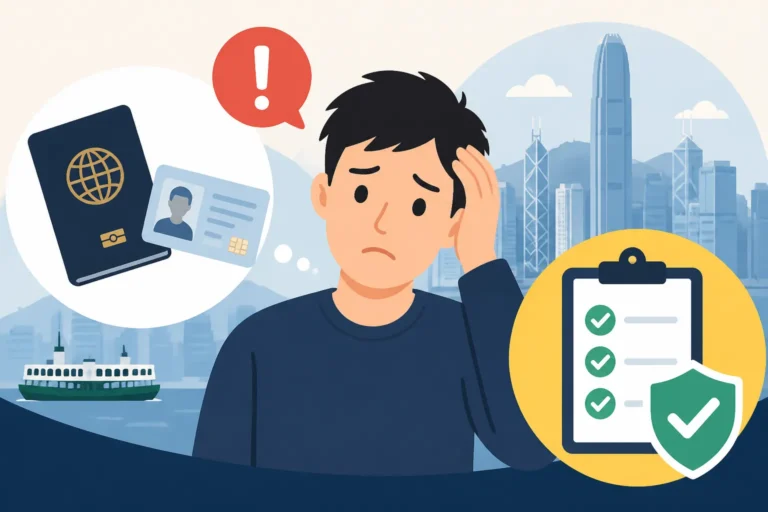
Booking an Appointment for HKID Registration at ImmD Offices
Moving to Hong Kong is an exhilarating whirlwind of skyscraper views, dim sum lunches, and the sudden realization that you need a specific piece of plastic to do almost anything. The Hong Kong Identity Card (HKID) is the pulse of your life here, but securing an appointment can feel like winning the lottery. This guide breaks down the frustratingly opaque booking system, ensuring you secure your slot and navigate the Immigration Department with veteran-level ease.
The Vital Importance of the Smart HKID
The moment you clear customs at the airport with your employment or dependent visa, a countdown begins. Many newcomers are so busy finding an apartment or navigating the MTR that they forget the legal mandate: you must apply for an HKID within 30 days of arrival. It isn't just a bureaucratic "nice-to-have" document; it is a legal requirement for anyone staying longer than 180 days. Without it, you are essentially a ghost in the system, unable to open most bank accounts, sign long-term utility contracts, or access the heavily subsidized public healthcare system.
The Hong Kong Identity Cards (HKID): Registration and Smart IDs system has recently transitioned to a new generation of "Smart IDs" which include embedded chips and enhanced security features. For an expat, this card is your golden ticket. It allows you to use the automated E-Channel Enrollment for Faster Immigration Clearance at the airport and border crossings, meaning you never have to wait in those soul-crushing manual lines again. More importantly, it is the primary document used by employers to verify your right to work.
Beyond the legalities, there is a practical, everyday comfort to having your HKID. In Hong Kong, "Stop and Search" is a legitimate police power. While it doesn't happen to everyone, being caught without your original HKID (or a valid passport with your visa) can lead to a trip to the station that will definitely ruin your Friday night. Getting your appointment sorted early isn't just about compliance; it is about reclaiming your peace of mind so you can focus on enjoying the city.
Preparing Your Documents for the Appointment
Before you even touch the booking website, you need to ensure your paperwork is beyond reproach. The Immigration Department (ImmD) is professional and efficient, but they have zero patience for missing documents. You will need your original passport, your current valid visa (which is now an e-Visa), and the completed application form (ROP1). If you are applying for children, you will need birth certificates and potentially marriage certificates to prove the relationship.
If your original documents are not in English or Chinese, you cannot simply bring them as they are. You will need high-quality, certified translations. This is where services like RushTranslate become essential. They provide the level of accuracy and certification that the ImmD requires, especially for sensitive documents like marriage licenses or birth certificates from non-English speaking jurisdictions. Presenting a poorly translated document is a one-way ticket to a rejected application and another month of waiting for a new appointment.
Digital vs Physical Records
While Hong Kong is becoming increasingly digital, the ImmD still lives and breathes physical verification. Even if you have your e-Visa on your phone, I highly recommend printing a physical copy. The officers often need to stamp or reference these documents quickly. Keeping a dedicated folder with your passport, the Proving Relationship for Dependent Visas: Marriage Certificates and Translations evidence, and your appointment confirmation QR code will save you from a panicked scramble at the reception desk.
The ROP1 Application Form
You can fill out the ROP1 form online before you arrive, which I strongly advise. There are kiosks at the offices, but they are often crowded and the keyboards can be temperamental. By completing it beforehand, you can ensure all details—like your Chinese name (if you have one) and your residential address—are accurately recorded. Note that even if you don't have a permanent address yet, you can use your serviced apartment or hotel address, as you can update it later via the Updating Your Address with the Immigration Department process.
Navigating the ImmD Booking System
The online booking system is the primary hurdle for most expats. You can book via the GovHK website or the Immigration Department mobile app. Slots are released for a 24-working-day rolling period. If you log in at 10:00 AM on a Tuesday, you will likely see a sea of red "Full" icons. The trick is to check the system at exactly midnight Hong Kong time, when the new day's slots are released. This is when the "veteran" expats get their bookings.
If you are moving as a family, the system allows you to book for up to four people in a single time slot. This is crucial. Do not try to book four separate appointments; you will likely end up at different offices or hours apart. Coordination is key. If you are also managing the relocation of a pet, you should check Applying for an AFCD Special Permit for Dog Importation around the same time, as both processes require careful scheduling and physical presence in the city.
Mobile App vs Web Browser
The ImmD mobile app is surprisingly robust, but it can be finicky during peak traffic. It is wise to have both a browser window open and the app ready. The app has a "pre-fill" feature that saves your passport details, which is a lifesaver when you are racing against thousands of other people to grab a 9:15 AM slot at the Wan Chai office. If you find the system completely blocked, consider looking at regional offices like Fo Tan or Yuen Long; they are further away, but the travel time is often less than the weeks you'd wait for a Wan Chai slot.
Standby and Walk-in Realities
Technically, there is a very limited number of "walk-in" quotas available each day for emergency cases or those who truly cannot use the online system. However, relying on this is a massive gamble. People start queuing at the Wan Chai Immigration Tower vs Regional Offices for Renewals as early as 6:00 AM for these handful of spots. Unless your visa is about to expire and you have had a documented technical failure with the booking system, stick to the online appointments.
Choosing the Right Registration Office
Hong Kong has several Registration of Persons Offices. Choosing the right one depends on your schedule and where you are living. The Wan Chai office is the most popular because it is centrally located, but it is also the most chaotic. If you are living in the New Territories or even parts of Kowloon, the regional offices can be a much more pleasant experience with shorter waiting times once you actually arrive for your appointment.
| Office Location | Area Served | Vibe and Tips |
|---|---|---|
| Wan Chai | HK Island | High-speed, very busy. Best if you work in Central. |
| North Point | HK Island | Slightly less frantic than Wan Chai; good for East Island residents. |
| Kwun Tong | Kowloon | Efficient, but the building can be confusing to navigate. |
| Fo Tan | New Territories | Generally the "quietest" office; worth the MTR trip. |
| Yuen Long | New Territories | Modern facility, usually has better slot availability. |
For many, the Wan Chai Immigration Tower vs Regional Offices for Renewals debate comes down to convenience versus sanity. If you choose Wan Chai, give yourself an extra 20 minutes to find the correct elevator bank. The building is a maze of different government departments, and the "Registration of Persons" floor is often packed with people waiting for various types of visas and ID replacements.
Regardless of which office you choose, remember that you are entering a high-security government facility. Be prepared for a bag check and avoid bringing large suitcases. If you have just landed and are staying in Short-Term Serviced Apartments for Your First Month in HK, leave your heavy gear there. The offices are designed for people, not luggage.
The Appointment Experience: What to Expect
When you arrive at the office, look for the "Appointment Booking" line. You will show your QR code or your passport to a staff member who will give you a numbered ticket. This is your life for the next 60 to 90 minutes. You will first be called to a preliminary counter where an officer checks your ROP1 form and your Travel Documents Required for e-Visa Entry at HKIA. If everything is in order, you move to the inner waiting area.
The next stage is the biometric booth. This is where they take your fingerprints—specifically both thumbs—and your photo. A word of advice from someone who has lived here a long time: take the photo seriously. This card will be with you for years, potentially until you apply for Right of Abode (Permanent Residency): The 7-Year Journey. You aren't allowed to wear hats or tinted glasses, and your hair shouldn't cover your eyebrows or eyes. The lighting is notoriously "fluorescent-chic," so dress in a color that doesn't wash you out.
The Interview
After biometrics, you may have a short sit-down with an officer. They will verify your visa status and ask simple questions about your employment or your sponsor. This isn't an interrogation; they are simply ensuring the data entry matches your legal status. If you are on a General Employment Policy (GEP): Standard Work Visas for Expats, they might ask for the name of your company. It is all very routine, provided your paperwork is clean.
The Temporary Receipt (ROP 140)
Once the process is complete, you won't get your card immediately. Instead, you will receive a paper receipt called the ROP 140. Do not lose this. This paper is your legal identity until your actual card is ready (usually about 10 working days later). It contains your new HKID number, which usually starts with a letter like "P" or "R" for new residents. You can use this number to start Registering Your HKID for Subsidized Public Healthcare Rates and even for some bank applications, though some banks insist on the physical card.
Finalizing Your Life in Hong Kong
After your appointment, you will be given a collection date. You don't need a new appointment to collect the card, but you must return to the same office where you applied. You simply scan your ROP 140 at a kiosk, get a number, and wait for a few minutes to be handed your shiny new Smart HKID. Once you have it, the city truly opens up. You can finally link your ID to your The Octopus Card: Hong Kong's Essential Transport & Payment Tool for personalized services or automatic top-ups.
One of the most important things you can do once you have your HKID number is to secure your health. While you now have access to public hospitals, the waiting times can be astronomical. It is wise to have a backup plan like SafetyWing. Their global health insurance is perfect for expats who are in that "in-between" phase or who want the flexibility of private care without the local-only restrictions. Having both an HKID for public emergencies and a solid private policy is the ultimate expat survival strategy.
Planning for the Long Haul
If you have brought your family, you might be looking into International Schools in HK: Curriculums, Debentures, and Applications. Most schools will require your HKID number for the final enrollment of your children. Similarly, if you are a pet owner, you should be coordinating with Pet-Journey to ensure your dog or cat’s local licensing is updated with your new residency details. The HKID is the anchor for all these separate threads of your new life.
Moving Forward
Securing your HKID is a milestone. It marks the transition from being a visitor to being a resident. It is the first step in the 7-Year Journey to Permanent Residency. Keep your card safe, memorize the number (you will write it on every form for the next decade), and enjoy the ease of the E-Channels the next time you fly out of Chek Lap Kok. You have officially cleared the biggest administrative hurdle in the city.
Disclaimer
This guide is intended for informational purposes only and represents the personal experiences and research of the author as of 2026. Immigration policies, booking procedures, and document requirements in Hong Kong are subject to change by the Immigration Department without notice. Always verify the latest requirements on the official GovHK or Immigration Department websites before your appointment. The author and publisher are not responsible for any rejected applications or legal issues arising from the use of this guide.