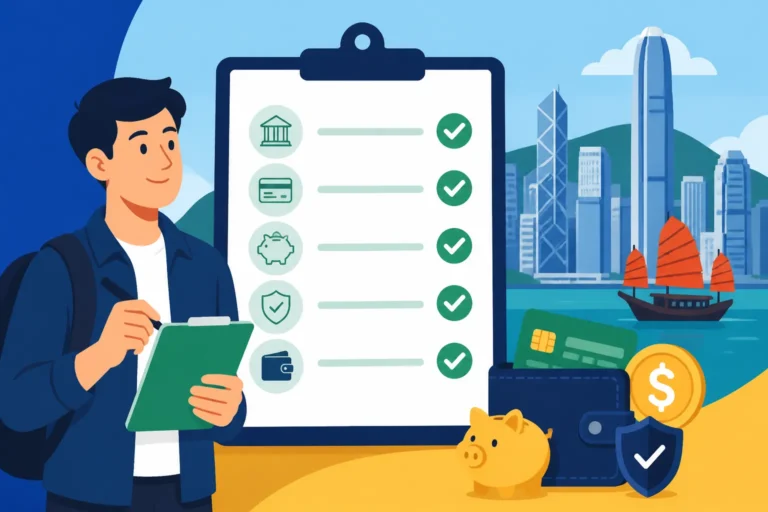
Opening a Traditional Bank Account: HSBC, Standard Chartered, and BOC
Opening a bank account in Hong Kong should be the first thing you do, but the administrative wall you hit can feel like a personal rejection from the city itself. I remember standing in a freezing cold branch in Central for two hours, clutching a stack of papers, only to be told my utility bill wasn't "official" enough. This guide clears the fog on opening a traditional account at HSBC, Standard Chartered, or BOC so you can stop living out of your suitcase.
Why You Still Need a Traditional Bank in the Age of Fintech
While Hong Kong is home to some of the most innovative virtual banks in the world, the traditional "Big Three" still hold the keys to the kingdom. If you are going through the Essential Health Checklist for Your First 30 Days in Hong Kong, you will quickly realize that a traditional bank account is often the anchor for everything else. Landlords, for instance, frequently demand post-dated cheques for rent—a relic of the past that virtual banks often cannot provide. Furthermore, if you plan on eventually applying for a mortgage or a significant personal loan, having a "brick-and-mortar" history counts for a lot in the eyes of local credit officers.
Beyond the paper-heavy requirements of local landlords, there is the sheer convenience of physical infrastructure. Hong Kong is a city of queues, and while virtual banks are great for daily spending, having access to the massive ATM networks of the traditional players is a life-saver. Traditional banks are also essential for larger financial tasks, such as managing your Mandatory Provident Fund (MPF): Contribution Rules and Options or setting up complex direct debits for school fees. Even if you use modern apps for your coffee, your salary will almost certainly need to land in a traditional account first.
The sense of security shouldn't be underestimated either. While virtual banks are regulated, there is a certain psychological comfort in knowing you can walk into a branch and speak to a human being when a large international wire transfer goes missing. For most expats, the strategy is usually "hybrid": keep a traditional account at a place like HSBC for your salary and rent, while using a virtual bank for the perks. You can read more about this in Banking in HK: Opening Accounts, Virtual Banks, and Credit Cards to see how to balance the two.
The Stability of the Big Three
HSBC, Standard Chartered, and Bank of China (BOC) are the pillars of the Hong Kong financial system. They aren't just banks; they are the note-issuing authorities for the Hong Kong Dollar. This means they have a level of institutional backing that is rare elsewhere. When you open an account here, you are entering a system that has weathered typhoons, financial crises, and massive social shifts. For a newcomer, this stability is a vital part of your Financial Checklist for Your First 30 Days in Hong Kong, giving you one less thing to worry about.
Physical Presence and Cash Access
Despite being a global tech hub, Hong Kong still loves cash, especially in wet markets and smaller dai pai dongs. HSBC and Standard Chartered share the JETCO or their own proprietary ATM networks, which are ubiquitous. If you are out in the New Territories or hiking on Lantau, finding a BOC or HSBC ATM is much easier than finding a specialized kiosk. Having a traditional card means you won't be that person at the dim sum restaurant realizing they only take cash or Octopus.
Relationship Building for Future Mortgages
If your plan is to stay in the city long-term, perhaps eventually achieving Right of Abode (Permanent Residency): The 7-Year Journey, your relationship with a traditional bank becomes an asset. When it comes time to buy property, the "big three" look favorably on customers who have seen their salary deposited consistently into one of their accounts for years. They have the data on your spending habits, your tax payments, and your reliability. This history can be the difference between a prime interest rate and a flat-out rejection.
The Big Three Breakdown: HSBC, Standard Chartered, and BOC
Choosing between the giants often comes down to where your office is located or which logo you like best, but there are functional differences. HSBC is the "default" for expats, largely because of their Premier service which allows you to see your global accounts in one dashboard. Standard Chartered is often seen as the "middle ground," offering excellent rewards and a slightly more modern digital interface than the others. Bank of China is the powerhouse of local and mainland connectivity, often boasting the shortest wait times for basic account opening in residential areas.
When you are looking at Everyday Budgeting in HK: Cost of Living Benchmarks (2026), keep in mind that these banks often have "tiers." If you can maintain a balance of HKD 1,000,000, you get the red-carpet treatment. If you are just starting out, you might be looking at a basic "integrated" account. Each bank has its own quirks regarding international transfers, though many expats eventually supplement these with Wise to avoid the steeper hidden exchange rate markups that traditional banks still tend to charge.
HSBC: The Global Choice for Expats
HSBC is practically synonymous with Hong Kong. For an expat, their "Expat" (Jersey-based) or "Premier" services are the gold standard. If you already have an HSBC account in London, New York, or Sydney, they can often help you "pre-open" your Hong Kong account before you even land. This is a massive advantage. However, be warned: their branches in Central and Tsim Sha Tsui are notoriously busy. If you don't have an appointment, expect to spend half your Saturday in a waiting area.
Standard Chartered: The Lifestyle and Rewards Competitor
Standard Chartered often appeals to the younger professional crowd. Their "Simply Cash" or "Cathay" co-branded credit cards are some of the best in the city for earning Asia Miles. Their mobile app is generally considered more intuitive than HSBC's, and they have been very aggressive in competing with virtual banks. If you want a bank that feels a bit more "fintech" but still has the safety of a traditional institution, this is usually the winner.
Bank of China (BOC): Local Dominance and Cross-Border Utility
BOC is the go-to if you find yourself traveling to Mainland China frequently. Their integration with mainland systems is unparalleled. While the English service in smaller branches might be less polished than at HSBC, their "Wealth Management" tier is very competitive. They also have the largest number of branches across the city, making them the most "local" of the three. If you are living in a more local neighborhood in Kowloon or the New Territories, a BOC account is incredibly convenient.
The Bureaucratic Gauntlet: Required Documents and Pitfalls
This is where the "empathetic veteran" in me needs to speak loudly: do not just walk into a bank with your passport and expect an account. Hong Kong's Anti-Money Laundering (AML) laws are incredibly strict. Banks are terrified of the regulators, which means the frontline teller is trained to be suspicious of every document you provide. If you aren't prepared, you'll end up asking Why Was My Bank Account Application Rejected in HK while sitting in a bar in Soho, wondering why your money is stuck in a foreign account.
The most common point of failure is the "Proof of Address." In most countries, a print-out of a PDF from your phone is fine. In Hong Kong, they often want a physical, mailed letter from a utility company or another bank. If you are staying in a serviced apartment, you need a letter from the management company specifically stating you reside there. A lease agreement is usually accepted, but only if it has been stamped by the government. This level of detail is frustrating, but it is the reality of the system.
| Document Type | Requirement Level | Expat Pro-Tip |
|---|---|---|
| Passport | Mandatory | Ensure it has at least 6 months validity remaining. |
| HKID Card | Highly Recommended | You can open with a passport, but many features are restricted. |
| Proof of Address | Mandatory | Must be within the last 3 months; stamped leases are best. |
| Employment Contract | Mandatory | Needs to show your salary and be signed by the employer. |
| Tax ID (TIN) | Mandatory | You must provide your tax number from your home country. |
The Golden Ticket: HKID vs. Passport
While you can open an account with just your passport and a valid entry slip, it is a nightmare. Many banks will limit your daily withdrawal or prevent you from using the full suite of online banking until you return with your physical HKID. If you can wait, the best approach is to get your HKID first. This small plastic card is the "golden ticket" that makes every teller's eyes light up with relief. It proves you are a resident and not just a tourist trying to park cash.
The Address Proof Headache
If you have just arrived, you likely don't have a utility bill in your name. This is a classic Catch-22. To get the bill, you need the bank account; to get the bank account, you need the bill. The workaround is usually a letter from your employer's HR department. A formal, signed letter on company letterhead stating your name, passport number, and residential address is often accepted by HSBC and Standard Chartered as a temporary proof of address. Just make sure the address matches the one on your lease.
Proof of Employment and Tax Status
Since the introduction of the Common Reporting Standard (CRS), banks are legally obligated to know where you pay taxes. You will be asked for your Tax Identification Number (TIN) from your home country. If you are an American, they will also ask you to sign a FATCA form (W-9). Do not try to skip this. The bank will simply refuse to open the account. They also need to see that your income is legitimate, so have a copy of your Hong Kong Work Visas: TTPS, GEP, QMAS, and IANG Explained documentation ready to show you have the legal right to work and earn.
The Appointment and Interview Process
The "interview" is not a job interview, but it can feel like one. The bank officer will ask you why you want the account, what your expected monthly turnover will be, and which countries you will be sending money to. Be honest, but be boring. They are looking for red flags like "I plan to trade large amounts of cryptocurrency" or "I'll be receiving frequent wires from high-risk jurisdictions." They want to see that you are a standard employee with a standard salary who will use the account for standard things like rent and groceries.
Booking an appointment is essential. While some smaller branches might take walk-ins, the main branches in Central, Admiralty, and TST are usually booked out days in advance. Use the bank's mobile app or website to secure a slot. When you arrive, be early. If you miss your number in the queue, you might have to wait another hour. Bring every document in a physical folder; showing things on your iPad is often met with a polite but firm "no."
Booking Your Slot (And Why You Can't Just Walk In)
The banking landscape in Hong Kong is heavily digital, yet physical branch visits for account opening remain the norm for new residents. Most expats find success by booking via the "New to HK" section on the bank's website. If you try to walk in at 12:30 PM on a Monday, you will see a lobby full of people and a "Wait Time: 180 Minutes" sign. Be strategic; Tuesday mornings or Thursday afternoons are usually the quietest times.
The "Interview": Questions They Will Ask
Expect questions like: "What is your occupation?" and "What is the source of your initial deposit?" They might also ask about your Sending Money Home: International Remittances and Forex Rates plans. If you mention you will be sending money to a spouse or parents abroad, that is perfectly fine. They just need to document the "nature of the relationship" with the account. It feels intrusive, but it’s just a box-ticking exercise for the bank's compliance department.
Common Reasons for Rejection
The most common reason for rejection isn't that you are a bad person; it's that your documentation is inconsistent. If your employment contract says you live in Mid-Levels but your address proof is for a place in Discovery Bay, the system will flag it. Another common issue is for self-employed expats or freelancers. If you can't show a steady salary from a local company, the bank may ask for six months of bank statements from your home country or a business registration. If you are struggling with this, consider Starting a Business in HK: Company Incorporation and Freelancing to get your corporate paperwork in order first.
Maximizing Your Account Features Post-Opening
Once the account is open, the fun begins. The first thing you should do is set up Faster Payment System (FPS): How to Use It for Rent and Bills. FPS is a revolutionary system that allows you to send money to anyone in Hong Kong using just their phone number or email address, and it happens instantly. It is free, and every major bank supports it. You will also want to link your account to Linking Your Bank Account to AlipayHK and PayMe. PayMe is HSBC’s social payment app, and it is the way most friends split dinner bills in the city.
Don't forget to ask for a chequebook. Even today, many older landlords and some government departments still only accept cheques for certain payments. It’s better to have it and not need it than to be scrambling for one when your rent is due. You should also check if your bank offers a multi-currency debit card. These allow you to hold USD, GBP, or EUR in your account and spend them directly when you travel without incurring massive conversion fees.
Setting Up FPS and Digital Wallets
FPS is the lifeblood of modern Hong Kong. When you get your bank's app, there will be an option to register your phone number for FPS. Do this immediately. It makes paying back a colleague for lunch or paying a small merchant at a weekend market incredibly easy. It also integrates with your Octopus card, allowing you to top up your balance directly from your phone. This is a massive upgrade over the old way of searching for a 7-Eleven to add cash to your card.
Multi-Currency Accounts and Remittances
Most traditional accounts in HK are "Integrated Accounts," meaning you have one account number for HKD, USD, AUD, and about ten other currencies. This is fantastic for expats. You can keep your savings in your home currency if you are worried about exchange rates. However, for sending that money home, be careful. While the bank makes it look easy, their "FX margin" can be 2-3%. For large sums, using a service like Wise alongside your bank account can save you thousands of dollars over a year.
Credit Card Strategies for New Residents
Getting a credit card as a brand-new expat can be tricky. Even with a high salary, the bank’s automated system might reject you because you have zero local credit history. The "pro tip" here is to apply for a credit card at the same bank where you hold your salary account. Since they can see your income arriving every month, they are much more likely to approve you. If you still face issues, look into Mox vs ZA Bank: Which Virtual Bank is Better for Everyday Spending as they often have easier approval processes for their debit-style credit cards.
Managing Your Global Finances While Based in HK
Living in Hong Kong means navigating a unique tax environment. The city has a territorial tax system, meaning you generally only pay Hong Kong Tax Guide for Expats: Salaries Tax and Filing (2026) on income earned within the city. However, your home country might have different ideas. If you are an American, for example, you are taxed on your global income regardless of where you live. This makes your bank statements very important for your annual filings.
When tax season rolls around, you will need to provide proof of your interest earned and any foreign assets. Services like Taxes for Expats are invaluable for this, as they specialize in the specific intersection of Hong Kong and US (or UK/Canadian) tax law. Having your traditional bank account neatly organized with clear "source of funds" labels will save you a massive headache when your home country’s tax office comes knocking.
Tax Reporting Obligations for Overseas Income
While Hong Kong won't tax you on the rental income you receive from your flat back in Manchester or Melbourne, you still need to be aware of the "disclosure" requirements. Your traditional bank in HK is part of the global reporting network. If you move large amounts of money between your home country and Hong Kong, expect the bank to occasionally ask for "Source of Wealth" documentation. Keep your tax returns and sale-of-property contracts handy just in case.
Lowering the Cost of International Transfers
As a veteran expat, my biggest regret from my first year was using my traditional bank for every single wire transfer. I was losing money on both ends—a flat "cable fee" of HKD 150-200 plus a poor exchange rate. Now, I use the traditional bank for receiving my salary and then use Wise for the actual transfer to my offshore accounts. It’s faster, the rates are transparent, and it integrates perfectly with the local FPS system.
Comparison of Traditional Banking Services
| Feature | HSBC | Standard Chartered | Bank of China (BOC) |
|---|---|---|---|
| Expat Friendliness | Excellent (Premier) | Very Good | Moderate |
| Mobile App UX | Good | Excellent | Basic |
| Branch Density | Very High | High | Highest |
| Int'l Connectivity | Top Tier | High | High (Mainland Focus) |
| Min. Balance (Basic) | Usually None | Usually None | Usually None |
| Reward Programs | Moderate | Excellent (Asia Miles) | Good (Local) |
Disclaimer
This guide is for informational purposes only and reflects the personal experiences and research of the author as of 2026. Banking regulations, document requirements, and fee structures in Hong Kong are subject to frequent change by the Hong Kong Monetary Authority (HKMA) and individual institutions. Always verify current requirements directly with the bank before visiting a branch. The author is not a financial advisor or a legal professional.