Municipal Solid Waste (MSW) Charging Scheme: Current 2026 Status
Ah, Hong Kong. Just when you think you've mastered the MTR, figured out how to hail a taxi during a typhoon, and learned the unspoken rules of queuing, along comes another layer of "admin" to navigate. If you've been living here for a while, you've probably heard the whispers, seen the headlines, and felt the looming presence of the Municipal Solid Waste (MSW) Charging Scheme. It’s been a long time coming, and for many of us, it feels like another puzzle piece in the already intricate tapestry of expat life. This guide will cut through the noise, explaining the current status of Hong Kong's MSW Charging Scheme in 2026, what it means for you, and how to stay on the right side of the rules without losing your mind.
The Long Road to Charging: A Brief History and Purpose
Let's be honest, waste management isn't exactly a dinner party topic, but in a city as densely populated as Hong Kong, it's a critical one. For years, our landfills have been bursting at the seams, filling up at an alarming rate. It’s a classic Hong Kong problem: limited space, immense population, and a consumption culture that generates a staggering amount of waste. The government recognised this challenge decades ago, and the idea of charging for waste was first floated to encourage us all to reduce, reuse, and recycle. It’s a common practice in many other developed cities, aiming to shift the financial burden from general taxation to the polluter-pays principle.
Why Hong Kong Needs MSW Charging
The core reason for introducing MSW charging is quite simple: to incentivize waste reduction. When disposal costs nothing at the point of discard, there's less motivation for individuals and businesses to change their habits. Think about it – we all pay taxes that fund waste collection and disposal, but that cost is hidden. By making the act of throwing away rubbish a tangible expense, the government hopes to foster a more environmentally conscious mindset. It's not just about the money, though that's certainly a big part of it. It's about preserving our precious natural environment, extending the lifespan of our overflowing landfills, and moving towards a more circular economy where resources are valued and reused rather than simply discarded. This is particularly important given Hong Kong’s small land mass and the finite capacity of our current landfill sites.
Beyond the environmental imperative, there's a strong social component. The scheme aims to create a fairer system. Currently, everyone pays the same through general rates, regardless of how much waste they generate. With MSW charging, those who produce more waste will pay more, aligning individual responsibility with environmental impact. This also frees up public funds that can then be reinvested into improving recycling infrastructure, public education campaigns, and supporting green initiatives across the city. It’s a long-term strategy designed to tackle a deeply entrenched problem, hopefully leading to a cleaner, greener Hong Kong for everyone.
The Journey So Far: Key Milestones and Delays
The journey to implement MSW charging has been, to put it mildly, a marathon, not a sprint. The concept has been under discussion for well over a decade, with various proposals, public consultations, and pilot schemes testing the waters. Initially, the government aimed for an earlier launch, but significant logistical challenges and public concerns led to several postponements. These delays weren't just about red tape; they highlighted the sheer complexity of transforming a city's entire waste disposal habit overnight. There were questions about bag availability, enforcement, tourist impact, and critically, whether the recycling infrastructure was robust enough to handle the anticipated increase in recycled materials.
The scheme was formally passed into law as the Waste Disposal (Charging for Municipal Solid Waste) (Amendment) Ordinance in 2021, marking a significant legislative milestone. However, the actual implementation date remained flexible. The government recognised the need for extensive public education and a ramp-up of supporting facilities. We saw trial runs in specific housing estates, community centres, and government buildings, providing valuable insights into the practical challenges and public reception. These trials helped refine the operational details, from the design of the designated garbage bags to the enforcement mechanisms. As of 2026, while the full city-wide rollout has had its fits and starts, there's a clear commitment to getting it right, with ongoing adjustments based on these real-world experiences. It's a reminder that even in Hong Kong, complex policy changes require careful, sometimes frustratingly slow, deliberation.
How the MSW Charging Scheme Works in Practice
Alright, let's get down to the nitty-gritty. The core of the MSW Charging Scheme revolves around two primary charging methods, each designed to suit different residential and commercial setups. It's not a one-size-fits-all approach, and understanding which method applies to you is the first step in navigating this new landscape. For most expats living in smaller apartment blocks or standalone houses, the "by-bag" approach will be your daily reality. However, if you reside in a large estate or a commercial building, the "by-weight" method might be how your building management handles things.
The "By-Bag" Approach: Designated Bags and Labels
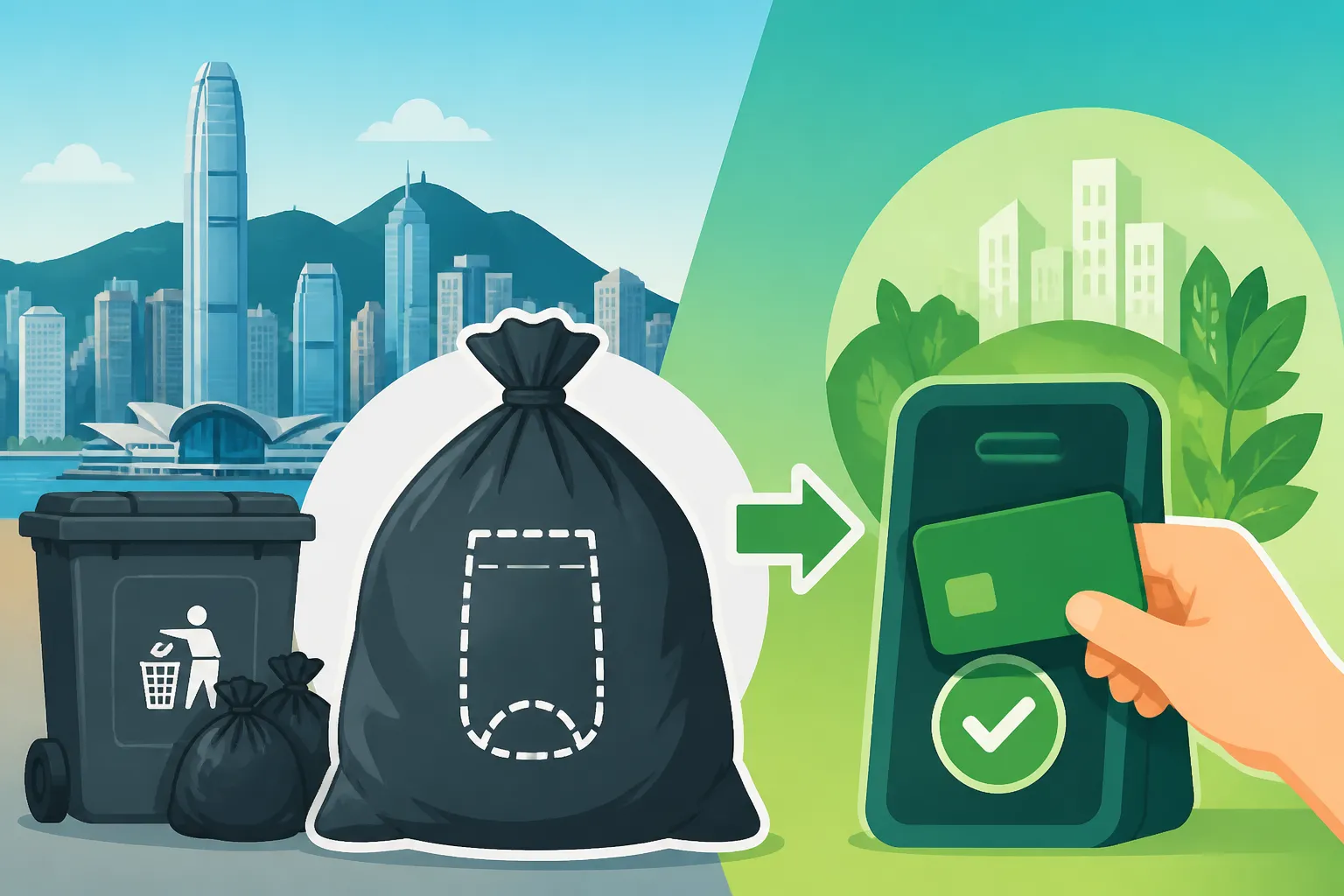
This is the method that will affect the majority of us directly. Under the "by-bag" approach, you are required to dispose of your municipal solid waste using government-designated garbage bags. These bags come in various sizes, from 3 litres all the way up to 660 litres, and you pay for them at the point of purchase. The idea is simple: the more waste you generate, the more bags you'll need, and thus, the more you'll pay. It’s a direct and visible cost, designed to make you think twice before tossing something that could potentially be recycled or reused. The bags are tamper-proof and have a specific design, making them easily identifiable by waste collectors and enforcement officers.
For those larger items that simply won't fit into a designated bag – think old chairs, small appliances, or big cardboard boxes – you'll need to affix a government-designated label. These labels also come with a fee and serve the same purpose as the bags: they indicate that you've paid for the disposal of that specific item. This covers items that are too bulky for standard collection and ensures that even large discards contribute to the charging scheme. The sizes and colours of these labels are distinct, preventing any confusion. It's crucial to use these official bags and labels, as any waste not properly contained or labelled will be considered non-compliant and could lead to fines. This direct economic incentive is truly the cornerstone of the entire scheme, forcing a tangible connection between our consumption and our environmental footprint.
The "By-Weight" Approach: For Larger Residential and Commercial Buildings
Now, if you live in a large multi-block housing estate, a village house complex with a centralised collection point, or work in a commercial building, you might fall under the "by-weight" charging method. In this scenario, individual residents or tenants aren't buying designated bags directly. Instead, the building management or property owners are responsible for paying the waste charge, calculated based on the weight of the municipal solid waste collected from the building. This charge is then typically factored into your monthly management fees or operational costs.
For property managers, this means installing weighbridges or using certified waste collection services that can accurately measure the tonnage of waste generated. The incentive here is for the building management to encourage waste reduction and recycling among its residents or tenants. If the building collectively reduces its waste, the management fees associated with waste disposal could potentially decrease, or at least not increase as much. This approach makes sense for high-density living and commercial hubs where individual bag checks would be logistically impossible. It places the onus on collective responsibility and efficient building-wide waste management strategies. So, while you might not be buying bags yourself, your building's efforts (or lack thereof) will still impact your wallet through your monthly service charges.
What Goes Where: Understanding Waste Classification
Navigating what goes into a designated waste bag versus what should be recycled can be a bit of a mental hurdle, especially when you're used to just tossing everything into one bin. The MSW charging scheme really pushes us to be more mindful about waste classification. Essentially, anything that cannot be recycled or reused and is considered general household waste must go into a designated bag. This includes food scraps, soiled packaging, non-recyclable plastics (like thin plastic bags or certain food containers), broken items, and general refuse.
However, the key to reducing your costs under this scheme, and indeed the whole point of it, is to maximise your recycling efforts. This means separating your waste diligently into categories like paper, plastics, metals, glass, and even specific types of food waste if your building offers a collection point. The Hong Kong government has expanded its GREEN@COMMUNITY network to make recycling more accessible, offering collection points for a wider range of recyclables. Understanding that recyclables are not subject to the MSW charge is paramount. If you throw a perfectly recyclable plastic bottle into a designated garbage bag, you're essentially paying to dispose of something that could have been free to offload at a recycling point. This requires a shift in mindset and habit, but it’s a crucial one for both your wallet and the environment.
Practical Implications for Expats: Your Daily Routine Changes
Moving to Hong Kong already comes with a steep learning curve: from understanding the complex transport network to deciphering local etiquette. The MSW Charging Scheme adds another layer to this, and for us expats, it can feel like yet another "only in Hong Kong" moment. It's not just about buying special bags; it’s about fundamentally rethinking how we handle waste in our daily lives. This means everything from your shopping habits to your kitchen setup might need a tweak.
Sourcing Designated Bags and Labels
One of the immediate questions for anyone will be: where do I even get these designated bags and labels? The government has made efforts to ensure widespread availability. You'll find them for sale at thousands of retail outlets across Hong Kong. This includes major supermarket chains like Wellcome and ParknShop, convenience stores such as 7-Eleven and Circle K, and even some pharmacies and online platforms. The pricing is standardised across all retailers, so you won't find a "deal" on bags by shopping around. They're typically sold in rolls, much like regular bin liners, but with the official branding and pricing.
The process of buying them isn't complex, but it does require a conscious shift from just grabbing any old bin bag. You'll need to know which sizes suit your household's typical waste volume. Many expats, especially those living in smaller apartments, find themselves generating less waste than they might have in larger homes overseas. This might encourage you to opt for smaller bags and empty them more frequently, or even consolidate waste with roommates. It’s also worth noting that the initial rollout might see some teething problems with stock levels at certain stores, so it's always a good idea to keep a small reserve of bags on hand, especially in the early days of the scheme. Think of it like topping up your Octopus card; it's just another essential you need to acquire regularly.
Adjusting to New Collection Schedules and Points
The MSW charging scheme also has implications for waste collection itself. While the fundamental act of waste collection remains, there's an increased emphasis on ensuring only properly bagged and labelled waste is collected. This means that if you're used to leaving your rubbish out at any time or in any type of bag, you'll need to adjust. Many buildings and public collection points will have specific times or days for designated bag collection, and adhering to these will be crucial to avoid having your waste rejected.
For those of us in older walk-up buildings without dedicated refuse rooms, this might mean a more disciplined approach to taking out the trash. Instead of just leaving a bag outside your door, you’ll need to carry it to a designated collection point or wait for the designated collection time. This could involve more frequent trips if you're using smaller bags, or storing waste within your apartment for longer periods if you’re waiting for a specific collection slot. It’s a subtle but significant change that will impact daily routines, especially for busy expat families. Keeping an eye on notices from your building management or District Environmental Hygiene Offices will be key to staying informed about specific schedules in your area.
Navigating Language Barriers and Information Gaps
Let's be real, a common frustration for expats in Hong Kong is the language barrier, and the MSW Charging Scheme is no exception. While government communications are generally available in English, the nitty-gritty details, local notices in your building, or quick questions to local shopkeepers about bag availability might still pose a challenge. Imagine trying to explain in broken Cantonese that you're looking for the specific green waste bags! This is where community groups and expat forums become invaluable resources, sharing practical tips and clarifying any ambiguities.
The government is running extensive public education campaigns, but sometimes the most effective information comes from shared expat experiences. For instance, knowing which particular brand of bins fit the new bags perfectly, or which local recycling points are the most convenient, are details often best exchanged within our communities. Furthermore, for those employing domestic helpers, clear communication about the new rules is paramount. Ensuring they understand the system, where to buy bags, and the importance of recycling will be vital for smooth operation within your household. This is where visuals, simple instructions, and perhaps even a translated guide can go a long way to bridge any information gaps. It's a collective effort, and we'll all need to support each other in this adjustment.
The Financial Impact: What Will it Cost You?
Let's talk money, because for many expats, the cost of living in Hong Kong is already a significant consideration. The MSW Charging Scheme is designed to be an additional, albeit hopefully small, expense, but it's one that can quickly add up if you're not mindful. Understanding the fee structure and the potential financial repercussions of non-compliance is essential for budgeting.
Calculating Costs for Households
The cost of the designated bags is based on volume, generally around HK$0.11 per litre. So, a common 15-litre bag might cost around HK$1.65, while a larger 20-litre bag would be HK$2.20. These prices might seem negligible on their own, but they accumulate. For an average household, let's say generating 20-30 litres of waste per day, that could translate to using one 20-litre bag daily, costing roughly HK$66 per month. If you're a larger family or produce more waste, that figure could easily double or triple.
The real driver of your cost, however, is your waste reduction and recycling habits. If you diligently sort your waste and send all your recyclables to the appropriate collection points, your consumption of designated bags will drop significantly. For instance, a family that composts food waste (if available), separates all plastics, paper, and glass, and only puts truly unrecyclable items into designated bags might find their monthly waste bag expenditure to be quite minimal, perhaps even less than HK$50 a month. Conversely, a household that throws everything into the general waste could see costs quickly escalate to several hundred Hong Kong dollars per month. The power to control this cost truly lies in your hands. It’s a tangible financial incentive to embrace a greener lifestyle.
| Bag Size (Litres) | Approximate Cost (HK$) | Estimated Daily Use | Estimated Monthly Cost (HK$) |
|---|---|---|---|
| 3 | 0.33 | Small individual/desk bin | 10 |
| 10 | 1.10 | Couple, low waste | 33 |
| 15 | 1.65 | Average household, good recycling | 50 |
| 20 | 2.20 | Average household, moderate recycling | 66 |
| 35 | 3.85 | Larger family, moderate recycling | 115 |
Note: Costs are approximate based on HK$0.11/litre and assume consistent daily usage. Actual costs will vary based on individual waste generation and recycling efforts.
Potential Fines for Non-Compliance
This is where the financial impact gets serious. The government isn't just asking nicely; there are penalties for those who don't comply. Anyone found disposing of municipal solid waste without using the designated bags or labels could face a fixed penalty notice of HK$1,500. This isn't a slap on the wrist; it's a significant fine that will certainly get your attention. For more serious or repeated offences, the penalties can be much higher, including fines up to HK$25,000 and even imprisonment for those convicted in court.
Enforcement will be carried out by various government departments, including the Environmental Protection Department (EPD) and the Food and Environmental Hygiene Department (FEHD). They will be monitoring waste collection points, public areas, and even individual buildings to ensure compliance. It's not just about catching people red-handed; surveillance cameras and community reporting can also play a role. The message is clear: the scheme is serious, and avoiding the designated bags is simply not an option. It's far cheaper and less stressful to simply buy the correct bags and adjust your habits than to risk a hefty fine. So, while it's tempting to think you might get away with it, the financial risk is simply not worth it.
How Recycling Efforts Can Reduce Your Bill
As mentioned, the most effective way to manage your MSW charging costs is to reduce your waste by maximising your recycling. Hong Kong has a decent, and continually improving, recycling infrastructure. By separating out paper, plastics, glass, metals, and even textiles, you can significantly reduce the volume of waste that requires a designated bag. This isn't just about saving money; it's about being a responsible resident of Hong Kong.
Think about how much of your current "trash" is actually recyclable. Those countless plastic takeaway containers, soda cans, newspaper flyers, and glass bottles can all bypass the MSW charge if sorted correctly. Embracing the local recycling facilities, such as the GREEN@COMMUNITY network which we'll discuss more, is crucial. It’s a habit change, for sure, but once you get into the rhythm of having separate bins for recyclables in your home, it becomes second nature. Some expats even find satisfaction in seeing how little waste actually ends up in their designated bags. This proactive approach to waste management is not only financially smart but also environmentally sound. You'll not only save money but also contribute to a more sustainable Hong Kong, which, let's face it, is a pretty good feeling.
Beyond the Bags: The Broader Recycling Landscape in Hong Kong
The MSW charging scheme isn't just about making us buy special bags; it's intrinsically linked to Hong Kong's broader efforts to improve its recycling infrastructure and encourage a more circular economy. For expats, understanding this wider landscape is key to effectively navigating the new waste rules and truly making a difference. It's not enough to just use the right bags; we need to embrace the whole system.
The GREEN@COMMUNITY Network and Its Role
The government has been actively expanding its GREEN@COMMUNITY network, which consists of various recycling facilities designed to make sorting and dropping off recyclables more convenient for residents. This network includes:
- Recycling Stations (GREEN@STATIONs): These are larger, permanent centres staffed by trained personnel who can guide you on sorting different types of recyclables. They often have collection points for a wider array of items, including seven types of plastics, paper, metals, glass, regulated electrical equipment (REE), fluorescent lamps, rechargeable batteries, and even clothing. They also offer a "GREEN$ card" system where you can earn points for recycling, which can then be redeemed for daily necessities. It’s a tangible reward for doing the right thing!
- Recycling Stores (GREEN@STOREs): These are smaller, more localised collection points, often operating out of converted shop fronts. They focus on common recyclables and serve as accessible neighbourhood hubs.
- Recycling Spots (GREEN@SMART): These are often mobile collection points or smart recycling bins that operate on specific schedules or are located in easily accessible public spaces. They offer convenience, especially in areas further away from larger stations.
These facilities are crucial because they provide the alternative pathway for your waste. Instead of going into a designated MSW bag, your plastics, paper, and glass can go to a GREEN@COMMUNITY facility, where they are collected, sorted further, and sent for reprocessing. Familiarising yourself with your nearest GREEN@STATION or GREEN@STORE is a game-changer for reducing your waste bill and environmental footprint. You can easily find them through the EPD's website or dedicated mobile apps. This expansion is a direct response to the MSW charging scheme, ensuring that when people are incentivised to recycle, they have the means to do so effectively. For more details on accessing public healthcare facilities or even finding English-speaking general practitioners (GPs) in Central, the government's push for digital accessibility is evident across many public services.
Understanding Recycling Categories: Plastics, Paper, Glass, Metals
One of the biggest hurdles for many new to serious recycling is understanding the specific categories. It's not just "plastic"; it's seven types of plastic. And while the GREEN@COMMUNITY staff are incredibly helpful, a basic understanding can make your life easier.
- Plastics: Hong Kong categorises plastics by their resin codes (numbers 1-7). Common culprits are PET (1) for water bottles, HDPE (2) for milk bottles, PVC (3) (less common now but found in some pipes), LDPE (4) for plastic films, PP (5) for takeaway containers, and PS (6) for styrofoam. Mixed plastics (7) are everything else. You'll often see these numbers stamped on the bottom of plastic items. Most GREEN@COMMUNITY facilities accept all seven types, but it's essential to rinse them clean first.
- Paper: This includes newspapers, magazines, cardboard boxes, office paper, and even paperback books. Again, make sure they are clean and dry. Soiled paper, like pizza boxes with grease stains, is generally not accepted as it contaminates the recycling stream.
- Glass: Glass bottles (beverages, sauces) are collected. Ensure they are rinsed. Ceramics, mirrors, and window panes are typically not accepted in glass recycling, as they have different chemical compositions and melting points.
- Metals: Aluminium cans, tin cans, and other metal scraps are generally accepted. Again, cleanliness is key.
Knowing these categories helps you sort effectively at home, making your trips to the recycling station quicker and more efficient. It's a small change, but it makes a big difference to the quality of recycled materials and the overall success of the scheme.
Challenges and Opportunities for Expats in Recycling
For expats, the recycling journey can present both challenges and unique opportunities. The challenges often stem from smaller living spaces, which make having multiple bins a logistical puzzle. However, many expats embrace clever storage solutions, such as foldable bins or stacking containers. Another challenge can be the sheer variety of local packaging; sometimes it's hard to tell if an item is plastic 5 or plastic 6 without a keen eye!
The opportunity, however, is immense. Many expats come from countries with mature recycling systems and are already predisposed to sorting waste. They can become champions of the scheme within their communities, sharing best practices and encouraging others. For those new to diligent recycling, Hong Kong offers a fantastic chance to adopt sustainable habits. The GREEN$ card scheme, for example, is a fun way to engage with recycling, turning it into a rewarding experience. Furthermore, integrating the recycling routine can be a bonding experience for families and even for domestic helpers, fostering a shared sense of environmental responsibility. If you're looking for ways to reduce your costs and be more environmentally conscious, diving deep into the world of Hong Kong's recycling is a very rewarding step.
Addressing Common Expat Concerns and Misconceptions
Whenever a major policy change like the MSW Charging Scheme rolls out, there's always a flurry of questions, anxieties, and sometimes outright confusion. As an expat, these feelings can be amplified by cultural and language differences. Let's tackle some of the most common concerns raised in expat communities.
"What if my domestic helper doesn't understand the rules?"
This is a very real and valid concern for many expat families. Domestic helpers play an integral role in managing households, including waste disposal. The last thing you want is for them to unintentionally break the rules and incur a fine, or simply struggle with a new system that hasn't been adequately explained. The good news is that the government is acutely aware of this and has produced multilingual educational materials. However, a personal approach is often best.
Firstly, sit down with your helper and explain the scheme clearly. Use visual aids if possible – show them the designated bags, point out the recycling numbers on plastics, and perhaps even take a trip together to the nearest GREEN@STATION. Emphasise the why behind the scheme (environmental protection, avoiding fines) as much as the how. Provide dedicated bins for different recycling categories in your kitchen or utility area. You might also consider writing down simple, step-by-step instructions in their native language or creating a pictorial guide. Many expat Facebook groups share templates for this very purpose. Remember, they are often on the front lines of waste disposal in your home, so their understanding and cooperation are absolutely critical. Providing a little extra support and training now can save a lot of headaches (and potential fines) down the line. It's also worth referencing official resources on topics like the Standard Employment Contract (ID 407) for Domestic Helpers Explained to ensure they are aware of all their employment rights, which can foster a more collaborative environment for discussing such changes.
"I live in a serviced apartment/co-living space, does this apply to me?"
This is a great question, and the answer often depends on the specific arrangements of your serviced apartment or co-living provider. Generally, if your accommodation falls under the "by-weight" charging method, the building management or the serviced apartment operator will be responsible for sourcing the designated bags or paying the tonnage-based fee. This cost will then typically be absorbed into your all-inclusive rent or service charges. You won't be individually purchasing designated bags.
However, even in such arrangements, the spirit of the scheme still applies. Reputable serviced apartment providers like Blueground and co-living operators such as Habyt are actively encouraging their residents to reduce waste and recycle. They might provide separate recycling bins within your unit or on each floor, with clear instructions on what goes where. While you might not face direct fines for improper bagging, your collective efforts will contribute to the building's overall waste volume, which in turn can influence future management fees or the provider's operational costs. It’s always best to clarify the specific waste management procedures with your serviced apartment or co-living provider when you move in or as soon as the scheme rolls out fully in your area. They should be able to provide clear guidelines tailored to their property.
"I'm only here short-term, do I need to worry?"
Another common thought, particularly for those on shorter assignments or just starting their expat journey. The simple answer is yes, you do need to worry, or rather, comply. The MSW Charging Scheme applies to all municipal solid waste generated in Hong Kong, regardless of the residency status of the person generating it. Whether you're here for a few months or planning to settle down for good, the rules apply to your household waste.
For short-term residents, the impact might feel a little less pronounced if you're not fully established, but the penalties for non-compliance are the same. If you're renting a short-term serviced apartment through platforms like Sirelo (or similar short-term rental arrangements), the waste management method (by-bag or by-weight) will depend on the building and provider, as discussed above. However, if you are directly responsible for your waste disposal, you'll need to purchase and use the designated bags. Ignoring the scheme, even for a short stay, could lead to a hefty fixed penalty fine of HK$1,500, which is certainly not a souvenir you want to take home! It’s simply part of living in Hong Kong now, no matter the length of your stay.
Looking Ahead: The Future of Waste Management in Hong Kong
The Municipal Solid Waste Charging Scheme, as it stands in 2026, is a pivotal step in Hong Kong's long-term environmental strategy. But it's important to understand that it's not the final solution; rather, it's a foundational piece of a much larger, evolving puzzle. The government continues to explore and implement complementary initiatives aimed at transforming Hong Kong into a more sustainable city. This includes significant investment in advanced waste treatment facilities, such as the Integrated Waste Management Facilities (IWMF) that use incineration with energy recovery to reduce landfill reliance. These facilities are designed to safely treat non-recyclable waste while generating electricity, turning a problem into a resource.
Furthermore, there's an ongoing push for producer responsibility schemes (PRS) for various products. We've already seen this with regulated electrical equipment (REE) and glass bottles, where consumers pay a small recycling levy at the point of purchase, ensuring that these items are properly collected and recycled at their end-of-life. Similar schemes are being considered for other challenging waste streams. The goal is a comprehensive approach that tackles waste from generation to disposal, encouraging manufacturers to design more recyclable products and consumers to make more sustainable choices. While the MSW charge directly impacts our daily habits, these broader initiatives work behind the scenes to create a more robust and sustainable waste management ecosystem for Hong Kong's future. It's a journey, and we're all playing a part in shaping it.
Disclaimer
The information provided in this guide regarding Hong Kong's Municipal Solid Waste (MSW) Charging Scheme is intended for general informational purposes only and is based on publicly available information as of 2026. While every effort has been made to ensure accuracy and reflect the current understanding of the scheme, policies and regulations are subject to change by the Hong Kong government. Expats are strongly advised to refer to the official websites of the Environmental Protection Department (EPD) and the Food and Environmental Hygiene Department (FEHD) for the most up-to-date and authoritative information, guidelines, and specific implementation details relevant to their particular residential or commercial situation. This guide does not constitute legal or professional advice.