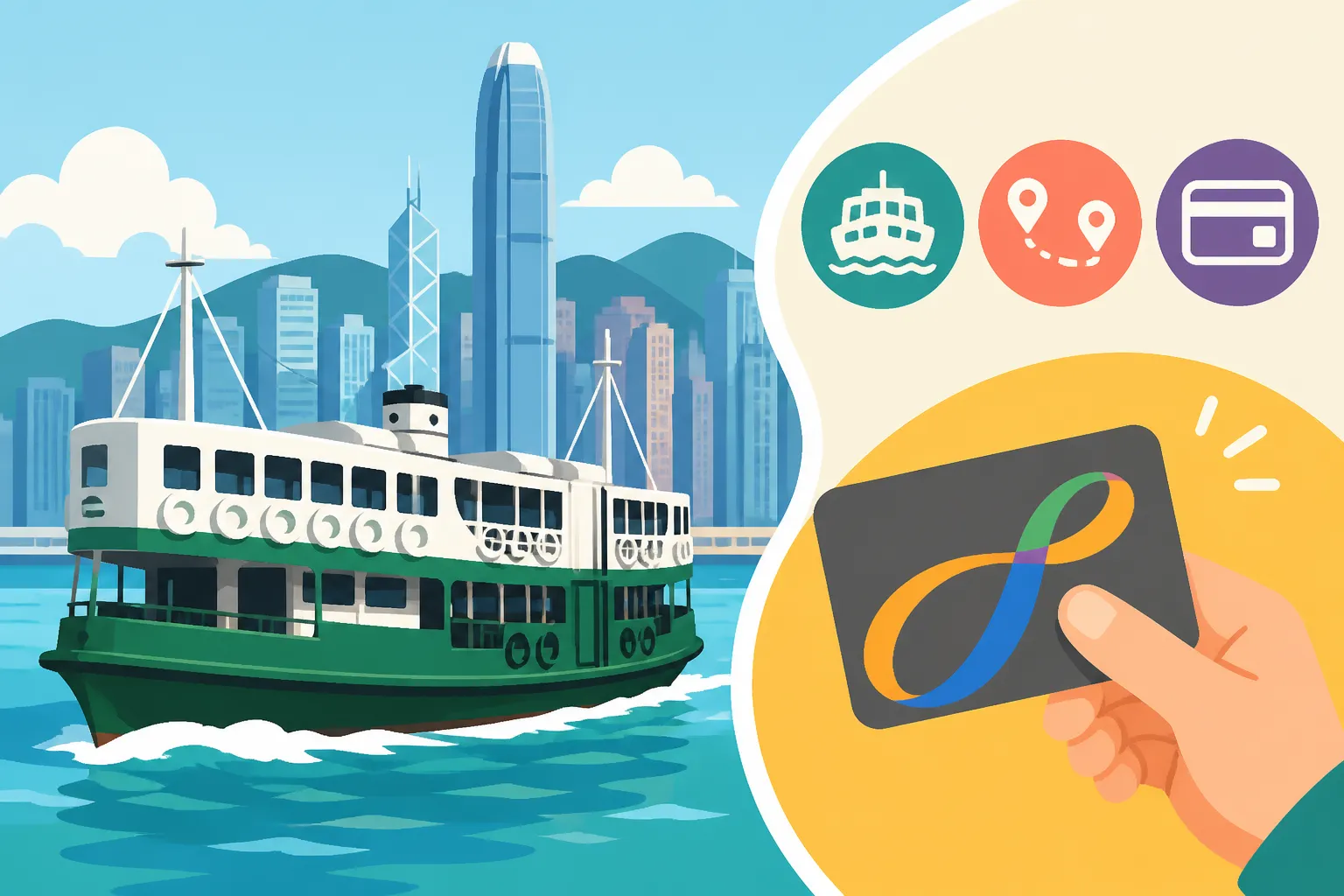
Star Ferry Guide: Fares, Routes, and Using Octopus
Ah, Hong Kong! You’ve probably already discovered that getting around this city can be a whirlwind of MTR lines, double-decker buses, and those iconic red taxis. But if you haven’t yet experienced the simple, undeniable magic of the Star Ferry, then you’re truly missing out on a quintessential Hong Kong moment. It's not just a mode of transport; it’s a living piece of history, a respite from the hustle, and hands down, one of the best ways to cross Victoria Harbour. This guide is going to walk you through everything you need to know about the Star Ferry – from its routes and fares to how to effortlessly tap your Octopus card, so you can embrace this charming journey like a seasoned local.
The Enduring Charm of the Star Ferry: More Than Just a Ride
When you first arrive in Hong Kong, the sheer pace of everything can be a bit overwhelming, right? You're rushing from one place to another, trying to figure out the fastest route. But then there's the Star Ferry, a gentle, rhythmic counterpoint to the city's frantic energy. For generations, it's been the heartbeat connecting Hong Kong Island to Kowloon, offering breathtaking views and a moment of peace. It's an absolute must-do, whether you’ve just landed or have been here for years.
A Brief History and Cultural Significance
The Star Ferry has been plying the waters of Victoria Harbour since 1888. Think about that for a second! Long before the MTR tunnels were drilled or the Cross-Harbour Tunnel was even conceived, these green-and-white boats were the primary link between the burgeoning commercial hub of Hong Kong Island and the growing population of Kowloon. It was founded by a Parsi merchant, Dorabjee Naorojee Mithaiwala, and originally known as the "Kowloon Ferry Company." Later, in 1898, it was acquired by the current Star Ferry Company, Limited.
It's more than just a historical relic; it's woven into the very fabric of Hong Kong's identity. Imagine all the stories these boats could tell – families migrating for work, lovers meeting, tourists marveling at the skyline, and daily commuters making their way to their jobs. It's been recognized by National Geographic as one of the "50 Places of a Lifetime" and still offers an incredible experience for just a few dollars. It's a testament to practicality, tradition, and enduring beauty.
Why the Star Ferry Still Matters to Expats
As expats, we often find ourselves searching for those authentic local experiences that truly help us connect with our new home. The Star Ferry delivers exactly that. While the MTR is undeniably efficient, it’s also an underground experience. On the Star Ferry, you're out on the water, feeling the sea breeze, and getting an unparalleled perspective of Hong Kong's iconic skyline. It’s a moment to pause, breathe, and appreciate the stunning juxtaposition of towering skyscrapers against the natural beauty of the harbour.
For new arrivals, it's an incredibly budget-friendly way to see some of the city's most famous sights, especially if you're still getting your bearings with Everyday Budgeting in HK: Cost of Living Benchmarks (2026). You can take countless photos, feel the spray on your face, and arrive at your destination feeling refreshed rather than crammed. Even for long-term residents, it's a go-to for a quick mental reset or a romantic evening crossing. It reminds you that despite the chaos, there's a timeless charm to Hong Kong that endures.
Understanding Star Ferry Routes: Crossing Victoria Harbour
The beauty of the Star Ferry lies in its simplicity. Unlike the labyrinthine MTR system, there are just a couple of main routes that ferry passengers across the harbour, making it incredibly easy to navigate even on your first try. These routes are straightforward and serve the most popular points on both sides of the harbour.
Central to Tsim Sha Tsui: The Classic Journey
This is the classic Star Ferry route, the one everyone thinks of when they picture the iconic boats. It connects Pier 7 at Central Ferry Piers on Hong Kong Island to the Tsim Sha Tsui Ferry Pier on the Kowloon side. This journey takes approximately 8-10 minutes, depending on the harbour traffic and currents. It's a short ride, but every second offers a panoramic vista that simply doesn't get old.
From Central, you're right in the heart of the financial district, near the IFC towers, the Hong Kong Observation Wheel, and within walking distance of attractions like SoHo and Mid-Levels. Disembarking in Tsim Sha Tsui puts you directly onto the Avenue of Stars, with stunning views of the Hong Kong Island skyline, the Space Museum, the Cultural Centre, and the bustling shopping streets of Nathan Road. It's perfectly positioned for an evening stroll to catch the Symphony of Lights show, or perhaps a trip to explore Top Private Hospitals in Kowloon: Baptist, St. Teresa's, and Union. The ferries run frequently, typically every few minutes during peak hours, and slightly less often late at night, ensuring you rarely have to wait long.
Wan Chai to Tsim Sha Tsui: A Shorter Hop
While the Central route might be the most famous, the Wan Chai to Tsim Sha Tsui route offers an equally delightful, albeit slightly different, experience. This route connects the Wan Chai Ferry Pier to the Tsim Sha Tsui Ferry Pier. It’s often a bit less crowded than the Central route, making it a great option if you prefer a slightly more tranquil journey. The travel time is comparable, also around 8-10 minutes.
The Wan Chai Ferry Pier has undergone some revitalization in recent years, becoming a modern and pleasant facility. From Wan Chai, you're close to the Hong Kong Convention and Exhibition Centre, the Golden Bauhinia Square, and the vibrant dining and nightlife of the Wan Chai district. This route is particularly convenient if you're starting your journey from the eastern side of Hong Kong Island, perhaps after exploring the markets in Causeway Bay or taking care of business in Admiralty. Once you arrive at Tsim Sha Tsui, you have the same access to all the wonders of Kowloon as you would from the Central route. It's a versatile option that many regulars appreciate for its efficiency and charm.
Special Harbour Tours and Excursions
Beyond the daily commuter routes, the Star Ferry also offers some special experiences that are perfect for tourists or those looking for a different perspective of the harbour. The "Star Ferry's Harbour Tour" is a particularly popular option. These tours are typically longer, often lasting about an hour, and take you on a circular route through Victoria Harbour, sometimes with stops at different piers. They offer fantastic opportunities for photography, especially during sunset or in the evening when the city lights up.
These tours usually operate on different, slightly more modern vessels equipped with air conditioning and sometimes even an open-air observation deck. While they cost more than a standard crossing, they provide an excellent overview of the harbour and its landmarks, often with commentary explaining the sights. It's a wonderful way to treat visiting friends and family, or simply to indulge in a relaxed evening out. Make sure to check the specific schedules and fares for these tours at the piers or on the official Star Ferry website, as they can vary.
Navigating Star Ferry Fares: A Budget-Friendly Ride
One of the most delightful surprises for many expats in Hong Kong is just how affordable public transport can be, and the Star Ferry is a shining example. It truly offers one of the best value-for-money experiences in the entire city, especially when you consider the views you get!
Upper Deck vs. Lower Deck: What's the Difference?
You'll notice that the Star Ferry often has two decks: the upper deck and the lower deck. The fares for these decks are slightly different, with the upper deck usually being a bit more expensive. But what's the actual difference, beyond the price?
The upper deck offers slightly better views and is often preferred by tourists and those who enjoy feeling more exposed to the harbour elements. The seating is usually aligned to face forward or backward, giving you a clear sightline over the water. It can feel a bit more open and spacious. The lower deck, while slightly cheaper, is often enclosed or semi-enclosed, and the views can be partially obstructed by the ferry's structure or the waves. The seating on the lower deck is typically bench-style, running along the sides.
Honestly, for a ride that's only 8-10 minutes, the difference isn't massive. Many regulars opt for the lower deck for the marginal cost saving, or simply because it’s slightly faster to board and disembark. If it's a particularly hot or rainy day, the lower deck might also offer more shelter. However, if it's your first time, or if you're looking for those postcard-perfect photos, splashing out the extra HKD 0.50 for the upper deck is probably worth it! Just walk to the appropriate boarding gate as indicated by the signs at the pier.
Adult, Child, and Senior Fares
The fare structure is incredibly simple and caters to different age groups. Adult fares are the standard, but there are significant discounts for children and senior citizens.
- Adult Fares: These are the regular fares for anyone between the ages of 12 and 64. As of my last check, a weekday adult fare for the upper deck from Central to Tsim Sha Tsui is typically around HKD 3.20, and the lower deck is around HKD 2.60. Weekends and public holidays usually incur a slightly higher fare, perhaps HKD 4.20 for the upper deck and HKD 3.60 for the lower deck. These are truly incredible prices for a memorable experience!
- Child Fares: Children aged 3 to 11 years old can travel at a reduced fare. This is usually about half the adult fare, making it extremely family-friendly.
- Senior Fares: Senior citizens (aged 65 or above) also enjoy heavily subsidized fares, often paying a nominal amount, sometimes as low as HKD 1.00. Make sure they have their Senior Citizen Octopus card or a valid HKID to prove their age.
- Free for Toddlers: Children under 3 years old typically ride for free.
These fares are incredibly stable, though it's always good practice to check the official Star Ferry website or the signs at the pier for the most up-to-date pricing.
Here’s a quick overview of approximate single-journey fares (these are illustrative and subject to change, always check at the pier):
| Route (Direction) | Deck | Weekday Adult (HKD) | Weekend/Holiday Adult (HKD) | Child (HKD) | Senior (HKD) |
|---|---|---|---|---|---|
| Central – TST | Upper | 3.20 | 4.20 | 2.20 | 1.90 |
| Central – TST | Lower | 2.60 | 3.60 | 1.80 | 1.90 |
| Wan Chai – TST | Upper | 3.20 | 4.20 | 2.20 | 1.90 |
| Wan Chai – TST | Lower | 2.60 | 3.60 | 1.80 | 1.90 |
Note: Fares are approximate and subject to change. "Senior" typically refers to those aged 65 or above. Children under 3 generally travel free.
Monthly Tickets and Tourist Passes
While the individual fares are already very low, if you're a frequent commuter or just love taking the ferry every day, the Star Ferry also offers a monthly pass. This can be a great option for those who use the ferry regularly, especially for work or school. The monthly pass typically offers unlimited travel for a calendar month, making it even more economical. You'd purchase these at the customer service counters at the piers.
For tourists, there are sometimes combined passes that include the Star Ferry along with other attractions or transport options. While the Star Ferry doesn't have its own dedicated tourist pass, it's often included in broader Hong Kong travel passes that cover things like MTR journeys, bus rides, and even attractions. These can be useful if you plan on doing a lot of sightseeing and want to simplify your ticketing. However, for most expats, a regular Octopus card is more than sufficient for all public transport, including the Star Ferry. If you're wondering about other tourist options, you might find The Octopus Card: Hong Kong's Essential Transport & Payment Tool helpful for comprehensive information on this ubiquitous card.
Seamless Travel with Your Octopus Card
The Octopus card is truly Hong Kong's magic wand for payments, and it's absolutely indispensable for using the Star Ferry. If you haven't got one yet, make it your first mission after getting your Hong Kong Identity Cards (HKID): Registration and Smart IDs. It’s accepted almost everywhere, from convenience stores to public transport, and makes your life incredibly easy.
Tapping In and Out: The Simplicity
Using your Octopus card on the Star Ferry is as simple as it gets. When you approach the boarding gate, you'll see turnstiles with Octopus readers. Simply tap your card on the reader, wait for the green light and the "doot" sound, and the gate will open. There's no need to tap out when you exit at your destination, as it's a single-fare system per crossing. This means you only tap once when you board.
This simplicity is one of the reasons public transport in Hong Kong is so efficient. You don't have to fumble for change, worry about exact fares, or deal with paper tickets. Just tap and go! It’s reliable, quick, and almost universally understood, even if you don't speak a word of Cantonese.
Topping Up Your Octopus Card: Essential Knowledge
It's crucial to keep your Octopus card topped up to avoid any last-minute panic at the ferry gate. Fortunately, topping up is incredibly easy and can be done at numerous locations across the city.
- MTR Stations: Every MTR station has add-value machines and customer service counters where you can top up your card with cash.
- Convenience Stores: 7-Eleven, Circle K, and VanGO convenience stores (found on almost every corner) all offer Octopus card top-up services. Just hand your card and cash to the cashier.
- Supermarkets: Major supermarket chains like Wellcome and ParknShop also have top-up facilities at their checkout counters.
- Star Ferry Piers: You can also top up your Octopus card directly at the customer service counters at the Star Ferry piers themselves. Some piers might have add-value machines too.
- Auto-Add Service: For ultimate convenience, you can link your Octopus card to a credit card via the "Automatic Add-Value Service" (AAVS). This automatically reloads your card when its balance falls below a certain amount, ensuring you never run out of funds. This is a popular option for many long-term expats, and you can learn more about it in Topping Up Your Octopus Card: Cash, App, and Credit Card Auto-Add.
What to Do if Your Octopus Card is Low or Lost
Imagine this: you're rushing to catch a ferry, tap your Octopus card, and hear that dreaded "bloop-bloop" sound, indicating insufficient funds. Don't panic!
- Low Balance: If your balance is slightly low (but still positive), the Star Ferry, like other public transport, often allows for a "negative balance" of up to HKD 35. This means you can still make one trip even if your card goes into the negative, provided it had a positive balance when you tapped in. You’ll just need to top it up before your next journey.
- No Balance: If your card has absolutely no credit, you won't be able to pass. In this case, you'll need to quickly top up at a nearby convenience store, an MTR station, or the ferry pier's customer service counter. Keep a few spare coins or a small banknote on hand as a backup, just in case you need to buy a single-journey token if topping up isn't immediately possible.
- Lost Card: Losing your Octopus card is a pain, but not the end of the world. If you have a personalized Octopus card (linked to your HKID), you can report it lost and get the remaining value transferred to a new card, minus an administration fee. For anonymous cards, unfortunately, the value is typically lost. It's always a good idea to register your card if possible, especially if you carry a significant balance. For more in-depth advice on what to do, refer to What to Do If You Lose Your Personalized Octopus Card.
Beyond the Ride: Star Ferry Pier Facilities and Nearby Attractions
The Star Ferry piers aren’t just places to catch a boat; they’re vibrant hubs of activity, often surrounded by great food, shopping, and iconic Hong Kong sights. Spending a little time exploring them is part of the experience.
Central Pier 7: Connections and Conveniences
Central Pier 7, specifically, is where most of the Star Ferry action happens on the Hong Kong Island side. It's part of the larger Central Ferry Piers complex, which houses ferries to various Outlying Islands.
- Location & Access: It's a short walk from the Central MTR station (Exit A, then follow the elevated walkways towards the piers) and the Hong Kong MTR station. This network of pedestrian bridges makes it easy to get there without battling street traffic.
- Facilities: At Pier 7 itself, you'll find ticket booths (for cash payments or monthly passes), customer service counters, and typically a few small snack shops or kiosks where you can grab a drink or a quick bite. There are also clean public restrooms available.
- Nearby Attractions: Immediately surrounding Pier 7, you're spoiled for choice. The Hong Kong Observation Wheel offers stunning panoramic views. Tamar Park, a large waterfront park, is perfect for a leisurely stroll or a picnic. You're also just a stone's throw from IFC Mall, one of Hong Kong's premier shopping destinations, and the entrance to the Mid-Levels Escalator, which can take you up to explore SoHo and its array of restaurants and bars. If you are planning an evening out or a family outing, Central Pier 7 is a fantastic starting point.
Wan Chai Ferry Pier: Revitalization and Access
The Wan Chai Ferry Pier, while historically less prominent than Central, has seen considerable upgrades and is now a modern, inviting gateway.
- Location & Access: The pier is located near the Hong Kong Convention and Exhibition Centre. It's a bit further walk from the Wan Chai MTR station than Central Pier 7 is from its corresponding MTR, but it's still easily accessible by foot or a short tram ride from deeper into Wan Chai.
- Facilities: The revitalized pier typically features a more contemporary design, with comfortable waiting areas, digital information displays, and often a selection of cafes or food stalls. It’s generally quite clean and well-maintained.
- Nearby Attractions: Besides the Convention Centre, the pier is close to Golden Bauhinia Square, a significant landmark symbolizing Hong Kong's return to China. The bustling streets of Wan Chai, with their mix of traditional markets, modern eateries, and nightlife, are just a short walk away. This area also offers good connections to the "Ding Ding" trams for exploring Hong Kong Island. If you're looking for more general public transport options, Public Transport in HK: MTR, Trams, Buses, and Ferries offers a full overview.
Tsim Sha Tsui Ferry Pier: Gateway to Kowloon
The Tsim Sha Tsui (TST) Ferry Pier is arguably the most vibrant of the three, as it's a major tourist magnet and transport interchange on the Kowloon side.
- Location & Access: Located at the southern tip of the Tsim Sha Tsui peninsula, it's easily reachable from the Tsim Sha Tsui MTR station (Exit E) or East Tsim Sha Tsui MTR station, both connected by underground walkways. Many buses also terminate here.
- Facilities: The pier itself is usually bustling, with multiple kiosks selling snacks, drinks, souvenirs, and even traditional Hong Kong street food. There are also public restrooms and plenty of seating, though it can get crowded.
- Nearby Attractions: You step off the ferry directly onto the Avenue of Stars, which offers some of the best views of the Hong Kong Island skyline and is home to tributes to Hong Kong's film industry. Adjacent to the pier are the Hong Kong Cultural Centre, the Hong Kong Space Museum, and the Hong Kong Museum of Art. Canton Road, famous for its luxury shopping, is just a short stroll away, as is the bustling Nathan Road with its myriad shops and restaurants. It's truly a central hub for exploration and entertainment on the Kowloon side.
Practical Tips for a Smooth Star Ferry Experience
Even something as simple and charming as the Star Ferry can benefit from a few insider tips to make your experience even better. We've gathered a few things that can save you a bit of hassle.
Avoiding Peak Hours and Crowds
While the Star Ferry is generally efficient, like any popular transport option in Hong Kong, it can get crowded during peak hours.
- Morning Commute: Between 7:30 AM and 9:30 AM, you'll find many people crossing from Kowloon to Central for work.
- Evening Commute: From 5:30 PM to 7:30 PM, the flow reverses, with people heading back to Kowloon.
- Lunchtime Rush: Around 12:30 PM to 2:00 PM, you might see a smaller surge of people going for lunch meetings or quick errands.
- Weekends/Holidays: Tourist hotspots like the Tsim Sha Tsui pier can be particularly busy all day on weekends and public holidays.
If you have flexibility, try to ride outside these times for a more relaxed experience. Mid-morning (10 AM – 12 PM) or mid-afternoon (2 PM – 4 PM) are generally excellent times to enjoy a less crowded ferry and get better photos. Evenings after 8 PM also tend to be quieter, offering spectacular night views of the city.
Weather Considerations: Typhoons and Rain
Hong Kong's weather can be dramatic, especially during typhoon season (typically May to November). The Star Ferry is an open-air experience, so weather can definitely impact your ride.
- Typhoons: When a strong typhoon signal (T8 or above) is hoisted, ferry services, like most public transport, will be suspended for safety reasons. It's crucial to pay attention to local weather warnings. You certainly don't want to be stranded! For general information on preparing for severe weather, check out Navigating Medical Emergencies During T8 Typhoons or Black Rainstorms.
- Heavy Rain: Even without a typhoon, Hong Kong can experience torrential downpours. During a Black Rainstorm Warning, for instance, outdoor activities can become difficult. While ferries might still operate, you'll want to take shelter on the lower deck, and visibility for photos will be poor.
- Humidity: In summer, it can be incredibly humid. While the sea breeze on the ferry is a welcome relief, dress appropriately in light, breathable clothing.
Always check the weather forecast before you head out, especially if you're planning a scenic ride or a harbour tour. The Hong Kong Observatory website and app are excellent resources for real-time weather updates.
Photography and Best Views
The Star Ferry offers some of the most iconic photo opportunities in Hong Kong. Here’s how to make the most of it:
- Time of Day:
- Daytime: Great for clear shots of the skyline and architectural details.
- Sunset: Absolutely magical. The colours of the sky changing over the city are breathtaking. This is often the busiest time, but worth it.
- Nighttime: The Symphony of Lights show (8 PM nightly) can be seen from the ferry, though you might prefer a dedicated harbour tour or a spot on the TST waterfront for the full experience. The illuminated skyscrapers are stunning anytime after dark.
- Which Side to Sit On:
- If going from Central to TST, sit on the right-hand side for the best views of Hong Kong Island as you depart and approach TST.
- If going from TST to Central, sit on the left-hand side for the best views of the Kowloon skyline as you depart and the Hong Kong Island skyline as you approach.
- Upper Deck: Provides an unobstructed view and is generally better for photography.
- Be Prepared: Have your camera or phone ready, but also take a moment to simply enjoy the view with your own eyes. Sometimes, the best memories aren't captured by a lens, but by simply being present.
The Star Ferry isn’t just a ride; it’s an experience that truly connects you to the heart of Hong Kong. Enjoy your crossings!
Disclaimer
Please note that all information provided in this guide, particularly regarding fares, schedules, and regulations, is subject to change. While we strive to offer the most up-to-date and accurate advice based on current knowledge and publicly available information, policies can be altered by relevant authorities (e.g., The Star Ferry Company, Hong Kong Transport Department) without prior notice. Always verify the latest details directly with the service provider or official government websites before making your travel plans. This guide is for informational purposes only and does not constitute professional advice.