Elderly Care Support: Nursing Homes and Domestic Helper Training
Seeing your parents' health decline while navigating the vertical jungle of Hong Kong is an isolating experience that no guidebook prepares you for. I remember the panic of realizing my spare room was too small for a hospital bed and my helper wasn't trained for insulin injections. This guide explores the realistic paths for elderly care, from specialized helper training to navigating the complex nursing home system.
The Cultural Shift: Why Elderly Care in Hong Kong Feels Different
In many Western countries, moving into a retirement village is seen as a proactive, social lifestyle choice. In Hong Kong, the narrative is starkly different. Filial piety is the cornerstone of local culture, meaning there is an immense social pressure to keep elderly relatives at home for as long as humanly possible. As an expat, you might find yourself caught between your own cultural expectations of professional care and the local reality where multi-generational living is the default. This often leads to a "hidden" care system that relies heavily on domestic helpers who may not have been hired with nursing in mind.
Navigating this transition requires a shift in how you view "support." In the beginning, you might just need someone to help with groceries, but as mobility decreases, the logistical challenges of Hong Kong—the steep hills of Mid-Levels, the narrow doorways in older Tong Laus, and the frantic pace of the MTR—become genuine barriers. Many expats struggle because they waited for a crisis to occur before looking into the specialized support systems available. Proactive planning isn't just about medical needs; it’s about preserving the dignity of your loved ones in a city that can feel quite unforgiving to the elderly.
The Multi-Generational Household Reality
The vast majority of elderly care in Hong Kong happens within the four walls of an apartment, often assisted by a Foreign Domestic Helper (FDH). While this keeps the family together, the physical environment is often the first hurdle. Most Hong Kong flats are not designed for "aging in place." You’ll likely need to consider home modifications like grab bars in the bathroom, removing threshold strips between rooms, and ensuring there is enough space for a walker or wheelchair.
Furthermore, the social dynamic of a multi-generational household can become strained when a parent’s cognitive health declines. It is vital to find Finding English-Speaking General Practitioners (GPs) in Central who can perform regular geriatric assessments and provide the necessary documentation if you eventually need to apply for government-subsidized services. Without these records, you are essentially invisible to the Social Welfare Department (SWD) system.
Navigating the Language Barrier in Care Settings
For expat families, the language barrier is perhaps the most significant source of anxiety. Most public sector frontline staff at community centres speak Cantonese as their primary language. While medical professionals in the Hospital Authority (HA) Guide: Accessing Public Healthcare for Expats are usually fluent in English, the daily social workers and home-care assistants might not be. This can lead to a sense of exclusion for the elderly person if they cannot communicate their basic needs or social preferences.
To mitigate this, many expat families lean toward private care options or ensure their domestic helper acts as a bridge. However, relying on a helper for medical translation is risky. It is often better to seek out NGOs that specifically cater to the English-speaking community or to hire private geriatric care managers who can navigate the bureaucracy on your behalf. These managers can be a lifesaver when you're trying to coordinate between a private specialist and a public hospital ward.
Domestic Helper Training: Your First Line of Support
If you’ve decided to keep your parent at home, your domestic helper will likely become the primary caregiver. It is a massive mistake to assume that a helper who is great with children will instinctively know how to manage a senior with complex needs. Caregiving for the elderly involves specific physical techniques—such as safe lifting to avoid back injuries—and medical knowledge like monitoring blood pressure or Managing Chronic Conditions: Diabetes and Hypertension in HK.
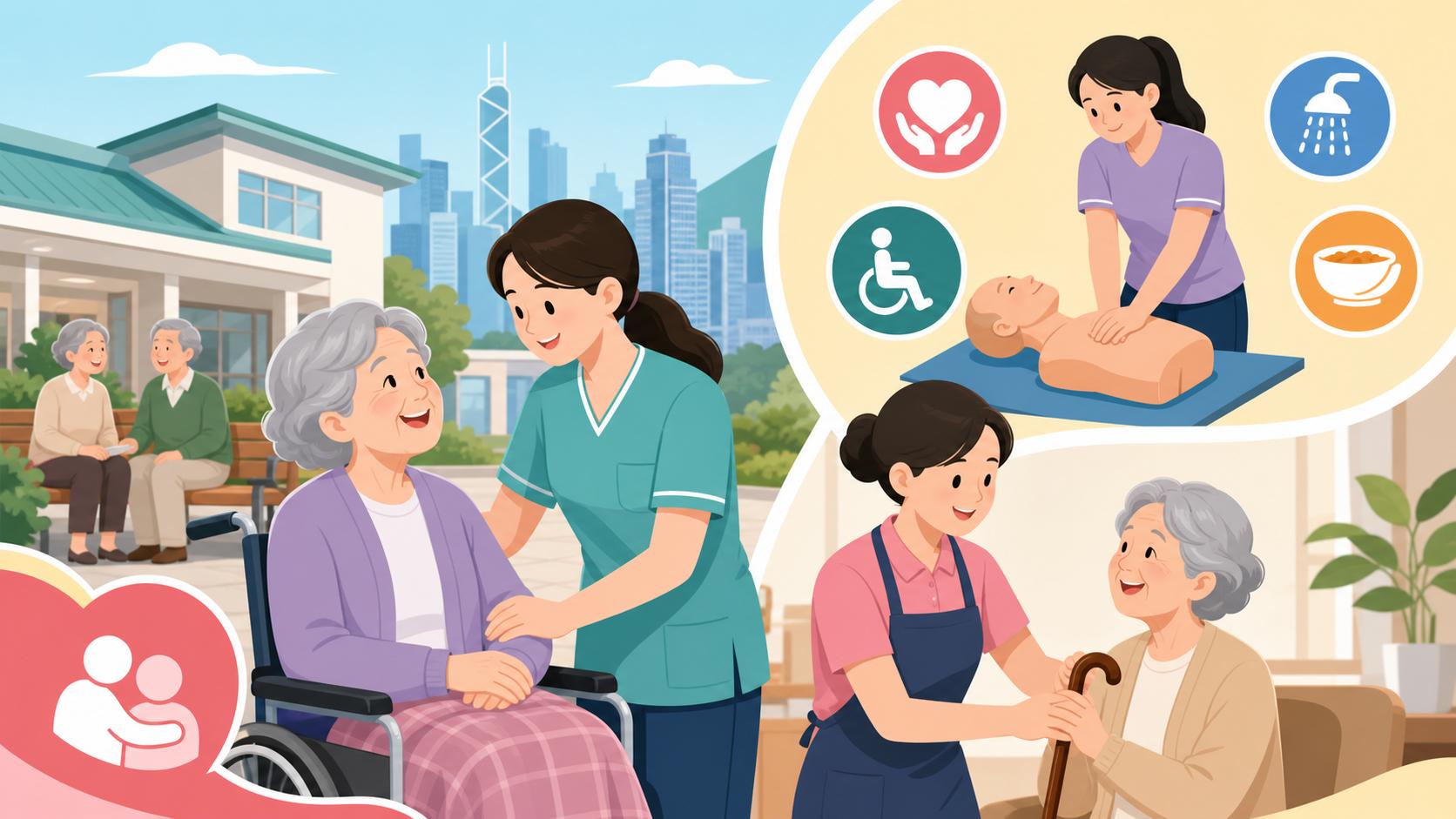
Investing in professional training for your helper is the best way to ensure your parent’s safety and your helper’s mental well-being. Several organizations in Hong Kong offer "Elderly Care Certificates" that cover everything from dementia communication to palliative care basics. When a helper feels competent, the quality of care skyrockets, and the risk of "caregiver burnout" (which is very real in the confined spaces of Hong Kong apartments) decreases significantly.
Specialized Training Courses for Senior Care
Organizations like the Hong Kong Red Cross and various private nursing agencies offer intensive weekend workshops for domestic helpers. These courses typically focus on the "Big Three" of elderly care: mobility, nutrition, and hygiene. I highly recommend looking for courses that include CPR and Choking First Aid Courses for Foreign Domestic Helpers specifically tailored for the elderly, as the techniques differ slightly from those used on younger adults.
Beyond the physical, some NGOs provide training on the emotional aspects of aging. If your parent is dealing with early-stage Alzheimer’s or Parkinson’s, the helper needs to understand that "difficult" behavior is a symptom of the disease, not a personal attack. This psychological grounding makes a world of difference in the household atmosphere. You might also look into specialized apps or virtual platforms that offer bite-sized training modules that the helper can review during their rest periods.
Legal Responsibilities and Insurance Needs
When your helper's duties shift from general housework to intensive caregiving, you must review your insurance coverage. Standard domestic helper insurance often has very low limits for specialized medical liability. If your helper is administering medication or assisting with medical devices, the stakes are higher. It’s worth checking if your policy covers the helper in a more "nursing-adjacent" role.
Additionally, for the elderly family member themselves, having robust medical coverage is non-negotiable. While the public system is a great safety net, the wait times for geriatric specialists can be months long. Using a plan from Cigna Global can help bridge the gap, allowing for faster access to private diagnostic tools and more comfortable Private Hospitals in Hong Kong: Admission, Costs, and Insurance if an acute issue arises. For visiting relatives or those in transition, a shorter-term solution like SafetyWing can provide a layer of protection, though it's important to read the fine print regarding pre-existing conditions common in seniors.
Managing the Helper-Senior Dynamic
One of the most challenging aspects I've witnessed is the "clash of wills" between an aging parent who values their independence and a helper who is tasked with keeping them safe. A parent might resent being "watched" or helped in the shower. To manage this, it’s helpful to frame the helper’s role as an "assistant to their independence" rather than a supervisor.
Regular meetings between you, the helper, and the parent (if possible) are essential. Use these times to adjust the routine. Perhaps the parent wants more autonomy over their breakfast but needs full help with their evening walk. Setting these boundaries early prevents the helper from feeling like they are "policing" the senior, which is a major cause of domestic friction.
| Support Option | Best For | Typical Cost (HKD) | Key Advantage |
|---|---|---|---|
| Trained Helper | Early-stage care & companionship | $5,000 – $8,000/mo | Stays in own home |
| Day Care Centres | Socialization & therapy | $50 – $200/day | Professional supervision |
| Private Nursing Home | Intensive medical needs | $20,000 – $60,000/mo | 24/7 clinical care |
| Home Nursing (Part-time) | Specialized medical tasks | $300 – $800/hour | Clinical expertise at home |
Nursing Homes and Residential Care: Navigating the Options
There often comes a point where home care is no longer safe or feasible, particularly with advanced dementia or severe physical disability. In Hong Kong, nursing homes are officially called Residential Care Homes for the Elderly (RCHEs). Navigating this system is notoriously difficult because the "waitlist" for subsidized government beds can be three to five years long. For most expats, this means looking at the private market, which varies wildly in quality.
When touring facilities, don’t just look at the lobby. Ask to see the ratio of staff to residents and check the "Star" rating provided by the Social Welfare Department. The private sector in Hong Kong includes everything from high-end "hotel-style" facilities in places like Happy Valley to very basic, crowded rooms in older neighborhoods. You need to be extremely diligent in your research to ensure the facility meets international standards of care.
Public vs. Private Care Homes
The public (subsidized) homes are high quality and very affordable, but as mentioned, the wait is often longer than the resident's remaining lifespan. To even get on the list, the senior must be a Hong Kong Permanent Resident and pass a "Standardised Care Need Assessment." If you are here on a work visa and your parent is on a dependent visa, you will likely be ineligible for the subsidized rates and will be funneled into the private system.
Private homes offer immediate availability but come with significant price tags. At the premium end, you are paying for space—something that is a true luxury in Hong Kong. In a mid-range private home, your parent might be in a partitioned room rather than a private suite. It’s vital to understand what the monthly fee covers; often, items like adult diapers, specialized meals, and even certain medications are billed as extras, which can add $5,000 to $10,000 to the base price.
Quality Control and the "Star" Rating System
The Social Welfare Department operates a "Service Quality Group" scheme and a star-rating system for RCHEs. This is your best tool for objective comparison. A 5-star rating indicates the highest level of staffing and safety compliance. When you visit, look for the "Accredited" seal from the Hong Kong Association of Gerontology.
Pay close attention to the "smell test" and the activity level of the residents. Are people sitting slumped in wheelchairs in front of a TV, or are there active physiotherapy sessions and social hours? In a city as dense as Hong Kong, access to outdoor space or even a large window with a view can drastically impact a senior’s mental health. Don’t be afraid to ask for a "trial stay" of a week or two before signing a long-term contract.
Costs and Financial Planning
Financial transparency is not always a given in the private care sector. You should request a detailed price list that includes "incidental charges." Families can be blindsided by "escort fees"—where the home charges $500 every time a staff member has to accompany the resident to a hospital appointment.
If your parent has a Voluntary Health Insurance Scheme (VHIS): Coverage and Tax Benefits plan, check if it covers any "post-hospitalization" care or "rehabilitative" stays. While VHIS is primarily for hospital treatments, some "Flexi" plans offer limited benefits for nursing home recovery. If you are still in the planning stages, you might wonder, Can I Buy VHIS for My Overseas Dependent Parents?—the answer is generally yes, provided they meet the residency and underwriting requirements, and it can be a vital part of your long-term financial strategy.
Community-Based Support and Day Care Centres
Not every senior needs a residential home. Hong Kong has a robust network of community-based support that many expats overlook. These services are designed to support the family as much as the senior. From "Meals on Wheels" to day care centres where your parent can spend 8 hours a day engaging in physiotherapy and mahjong, these options can extend the "home-stay" period by years.
The challenge is that these services are often localized. You need to find the District Elderly Community Centre (DECC) or the Neighborhood Elderly Centre (NEC) in your specific catchment area. These centres are the "hubs" for all government elderly services. Even if you don't plan on using their services immediately, registering your parent with the local DECC is a smart move, as it gets them into the system for future needs.
District Elderly Community Centres (DECCs)
DECCs provide a wide range of services, including counseling, educational activities, and even support groups for caregivers (including helpers). For an expat parent, the "Elderly Academy" classes—which might cover anything from smartphone use to calligraphy—can be a great way to fight the loneliness that often accompanies aging in a foreign city.
The social workers at these centres can also help you apply for the "Elderly Health Care Vouchers." These are annual subsidies provided by the government to help seniors pay for private primary care, including dental and optometry. While the amount isn't huge, every bit helps when you're managing the high cost of living in Hong Kong.
Integrated Home Care Services
If your parent is staying home but your helper needs a break or specific assistance, you can apply for Integrated Home Care Services. This includes things like:
- Escort services for medical appointments.
- Home-delivered meals (often with specific dietary options).
- Personal care (showering assistance).
- Home safety assessments by occupational therapists.
These services are highly subsidized, but there is usually a "means test" or a functional assessment required. For expat families, the primary benefit is often the occupational therapy assessment. Having a professional walk through your flat and point out exactly where your parent is likely to trip or fall is invaluable.
Preparing for the Future: Legal and Administrative Steps
The most difficult part of elderly care is the realization that a crisis will eventually happen. In Hong Kong, the legal system regarding mental capacity and healthcare proxy is quite specific. If you haven't set up the proper paperwork while your parent is still of sound mind, you might find yourself locked out of their bank accounts or unable to make medical decisions if they become incapacitated.
The "Enduring Power of Attorney" (EPA) is the most critical document you need. Unlike a general power of attorney, an EPA remains valid even if the person becomes mentally incapable. Without this, you may have to apply to the "Guardianship Board," which is a slow and emotionally draining legal process.
Advance Directives and End-of-Life Planning
Hong Kong has made significant strides in acknowledging a person’s right to refuse life-sustaining treatment. An "Advance Directive" allows your parent to specify their wishes regarding medical intervention. This is particularly important because, in the high-pressure environment of a public A&E ward, doctors will often default to aggressive life-saving measures unless there is a clear, legal document stating otherwise.
I have sat through many heart-wrenching conversations with families who didn't know their parent's wishes. It is much better to discuss End-of-Life Care, Advance Directives, and Hospices in Hong Kong over a quiet dinner now than in a hospital hallway later. These documents should be kept in a place where your domestic helper can easily find them to show to paramedics if an emergency occurs at home.
Mental Capacity and Guardianship
If a parent’s cognitive health declines to the point where they can no longer manage their own affairs and no EPA is in place, the Guardianship Board can appoint a legal guardian. This person (often a family member) is given the legal authority to make decisions about the senior’s residence, medical treatment, and daily finances.
This process involves medical reports and a hearing. It can be particularly complex for expat families if the "next of kin" lives overseas. If you are the primary caregiver in Hong Kong, ensure your parent’s Finding English-Speaking General Practitioners (GPs) in Central has a clear history of their cognitive state. This documentation is the bedrock of any guardianship application. Being prepared isn't about being morbid; it's about being a fierce advocate for the person who once looked after you.
Disclaimer
The information provided in this guide is for general informational purposes only and does not constitute legal, financial, or medical advice. Elderly care laws and healthcare policies in Hong Kong are subject to change. Always consult with qualified professionals, such as geriatric specialists, elder law attorneys, or the Social Welfare Department, regarding your specific family situation and legal obligations.