How to Remove a Sold Vehicle from Your HKeToll Account
Selling a car in Hong Kong is often a victory over a mountain of paperwork, but many expats forget the final digital hurdle that can drain their bank accounts. Leaving your sold vehicle linked to your HKeToll account means you are essentially sponsoring the new owner's commutes through the city's tunnels. This guide ensures you sever that financial tie.
The Administrative Headache of Selling a Car in Hong Kong
If you have spent any time navigating the licensing offices in Admiralty or Sha Tin, you know that the Transport Department (TD) operates on a mix of high-tech systems and very traditional paper-trail requirements. When you sell a car, the focus is usually on the "Notice of Transfer of Ownership" (Form TD25). You meet the buyer, exchange the keys, sign the forms, and breathe a sigh of relief. However, in the era of "Free-Flow Tolling," the transaction is not actually complete until you log into your digital portal.
Many expats have been surprised by small charges appearing on their credit card statements weeks after their car was sold. This happens because the HKeToll system identifies the vehicle by its license plate and the physical "Vehicle Tag" affixed to the windshield. If the new owner zips through the Western Harbour Crossing before you have de-linked the car, the system simply bills the account holder on file—which is you. Unlike the old days of handing over a physical toll tag or cash, this digital link is invisible but very active.
Between the stress of Car Ownership Costs in HK: Parking, Insurance, and Registration and the logistical nightmare of moving, it is easy to let this slip. If you are in the middle of a major relocation and using Sirelo to ship your household goods, your mind is likely on shipping containers, not tunnel tolls. But trust me, taking five minutes to update your HKeToll profile will save you a dozen "Please refund me" WhatsApp messages to a buyer who may or may not be cooperative.
Why HKeToll Is Often Forgotten During the Sale
The primary reason people forget is that HKeToll feels like a "set it and forget it" service. When you first underwent Registering for HKeToll: Navigating HK's Cashless Tunnels, you likely linked it to your credit card or a bank account via the Faster Payment System (FPS). Because the charges are often small—HK$25 here, HK$40 there—they don't always trigger an immediate fraud alert from your bank. By the time you notice, the new owner might have racked up a few hundred dollars in tolls.
Furthermore, there is a common misconception that once the Transport Department processes the change of ownership, the HKeToll account updates automatically. It does not. The HKeToll system and the Transport Department’s ownership database are linked for verification, but the responsibility to manage "Vehicle Management" within the app remains strictly with the account holder.
Financial Risks of an Active Account
The most obvious risk is the direct financial loss of paying for someone else’s travel. However, there is a secondary risk: disputes. If the new owner fails to register the vehicle under their own HKeToll account, the system may flag the vehicle for "unpaid tolls." If your name is still associated with that license plate in the HKeToll portal, you might receive the notifications and legal warnings.
Even if you have moved into a serviced apartment provided by Blueground or Habyt and no longer need a car, an unresolved HKeToll account can follow you. It’s part of your digital footprint in Hong Kong, much like your HKID or your utility bills. Keeping it clean is essential for your Essential Health Checklist for Your First 30 Days in Hong Kong when you arrive, and just as important when you are scaling back or leaving.
Step-by-Step Guide to De-linking Your Vehicle
The process of removing a vehicle is relatively straightforward, provided you have your login credentials handy. You can perform this through the HKeToll website or the mobile app. I personally recommend the app, as the interface is slightly more intuitive for quick administrative tasks.
Using the HKeToll Mobile App
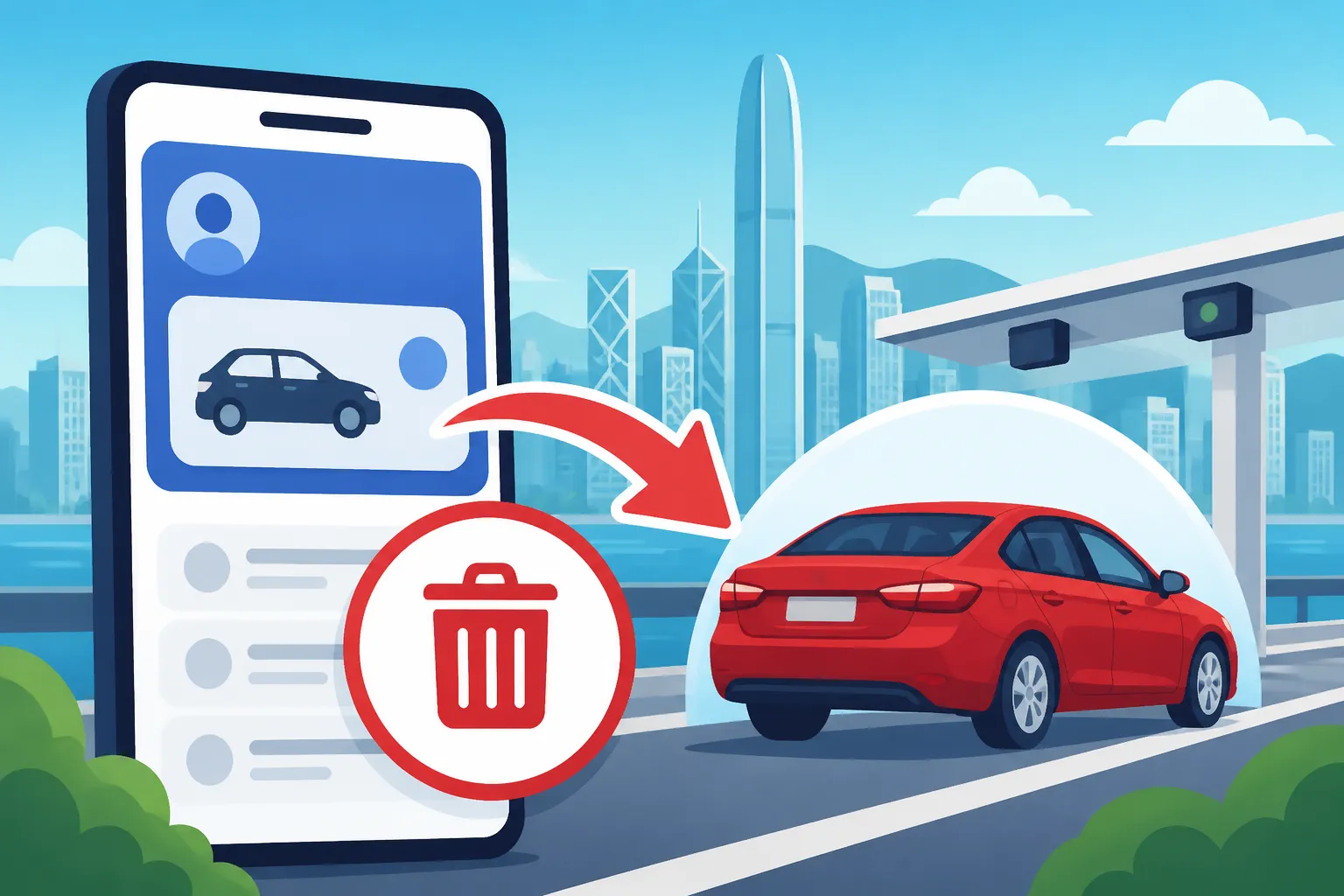
First, log in to your account. On the main dashboard, you will see a section labeled "Vehicle Management." When you click into this, a list of all vehicles currently linked to your account will appear. If you were a multi-car household, ensure you are selecting the correct license plate number.
Once you select the vehicle you have sold, look for the "Remove Vehicle" or "De-link" button. The system will ask you for a reason for the removal. Select "Vehicle Sold/Transferred." You may be asked to provide the date of the transfer. It is a good idea to have a photo of the signed TD25 form on your phone just in case you need to verify the exact date of the handover. After confirming, you should receive a push notification and an email confirming that the vehicle is no longer associated with your account.
Desktop Portal Method
If you prefer using a computer, the process is similar. Navigate to the official HKeToll website and log in using your account ID and password. Under the "Management" tab, find your vehicle list. The desktop version often provides a more detailed view of your transaction history, which is helpful if you need to see exactly when the last "legitimate" toll was charged to your card.
Click on the "Action" button next to the sold vehicle and choose "Remove." A common pitfall here is failing to click "Confirm" on the final pop-up window. Always check your email inbox for a confirmation receipt. If you don't get that email, the vehicle is likely still linked. This is also a good time to check Filing BIR60 via eTAX: Step-by-Step Guide for Expats if you are doing other administrative housekeeping, as managing your government accounts in one go is much more efficient.
Handling the Physical Vehicle Tag
A question I get asked a lot is: "Should I peel the tag off the windshield?" The answer is no. The HKeToll Vehicle Tag is designed to stay with the car for its entire lifespan in Hong Kong. When you sell the car, the tag goes with it. The new owner will simply link that existing tag to their own HKeToll account.
If you peel it off, you are actually making life harder for the buyer, who will then have to apply for a replacement tag (which costs money after the first free one). Your security is guaranteed by the digital de-linking in the app, not by the physical removal of the sticker. Just make sure you’ve done your part in the "Vehicle Management" section of the portal, and you are safe.
Post-Sale Checklist and Common Pitfalls
Even after you click "Remove," there are a few nuances to be aware of. Hong Kong’s systems are efficient, but they aren't always instantaneous across all platforms.
Timing Your De-registration
The best time to remove the vehicle is the moment you hand over the keys. If you wait until the next morning, the new owner might drive through a tunnel on their way home, and you will be billed. I suggest doing it while you are still at the Transport Department or sitting in the car completing the sale.
If you are moving to a car-free lifestyle in a central area, perhaps living in a Blueground unit where everything is walkable, you might even consider closing your HKeToll account entirely if you don't plan on driving again. However, if you think you might rent a car or buy another one later, it’s better to keep the account open but empty of any vehicles.
Dealing with Auto-Pay Discrepancies
Sometimes, a toll charge might be "in flight" when you remove the vehicle. This means the car passed through the tunnel at 2:00 PM, you removed the vehicle at 2:15 PM, but the bank doesn't process the charge until 4:00 PM. In this scenario, you are still liable for that toll because the car was yours at the time of the crossing.
If you see charges that occurred after you de-linked the car, you must contact HKeToll customer service immediately. They are surprisingly responsive. You can use the "Inquiry" function in the app to upload your transfer of ownership document. They can usually reverse the charge and bill the new owner instead, though it can take a few weeks to process.
| Action Item | Responsible Party | Timeline |
|---|---|---|
| Sign TD25 Form | Seller & Buyer | Day of Sale |
| Submit Paperwork to TD | Buyer (usually) | Within 72 Hours |
| De-link from HKeToll | Seller | Immediately at Handover |
| Update Insurance | Seller | Immediately at Handover |
| Cancel Auto-Pay (Optional) | Seller | After final toll clears |
The Role of the Transport Department
Remember that HKeToll is a service provider managed under the guidance of the Transport Department. If there is a major dispute—for example, if the buyer never registers the car and you start receiving fines—you may need to visit a Licensing Office in person. Bring your copy of the "Notice of Transfer" (the blue or yellow carbon copy). This is your ultimate legal shield. It proves that as of a specific hour and date, you were no longer the "Registered Owner."
While you are there, you might also want to check on other transport-related tasks, such as Converting an Overseas Driving License to a HK License (TD637) if you have family members arriving soon, or ensuring your address is updated for all government communications.
Staying Organized in the Expat Fast-Lane
Living in Hong Kong requires a high degree of digital literacy. Whether it is Topping Up Your Octopus Card: Cash, App, and Credit Card Auto-Add or managing your HKeToll account, the city expects you to be "always on." When you are transitioning between homes, perhaps moving from a large family house in Sai Kung to a more streamlined Habyt co-living space, these small digital threads can become a tangled mess if not handled.
If you find the HKeToll app frustrating, remember that it is still a massive improvement over the old system of stopping at booths or using the bulky "Autotoll" tags that required a monthly subscription fee. HKeToll is free to use; you only pay the tolls themselves. Removing a sold vehicle is the final step in a responsible car ownership journey in Hong Kong.
Final Reminders for Sellers
Before you close this chapter of your Hong Kong life, double-check that you have also:
- Cancelled your car insurance policy (you might be entitled to a pro-rata refund).
- Cancelled your parking space monthly permit.
- Removed any personalized Octopus cards from the car's sun visor or glove box.
- Cleared your "stored value" in any other tunnel-specific apps if you used them.
If you ever find yourself wondering What Happens if You Miss a Tunnel Toll Payment on HKeToll? because you forgot to top up your account for your new car, the app will send you plenty of reminders. The system is designed to be fair, but it is not automated enough to know you’ve sold your car unless you tell it.
Hong Kong is a city of movement. Whether you are upgrading to a new Tesla or moving into a high-rise and relying on the MTR, keeping your administrative house in order is the best way to ensure your Everyday Etiquette and Safety in Hong Kong: A Survival Guide remains stress-free. Take the five minutes to de-link your vehicle today—your bank account will thank you.
Disclaimer
This guide is provided for informational purposes only and does not constitute legal or professional advice. While every effort has been made to ensure accuracy based on 2026 regulations, HKeToll policies and Transport Department requirements may change. Always verify procedures directly with the official HKeToll website or the Hong Kong Transport Department.