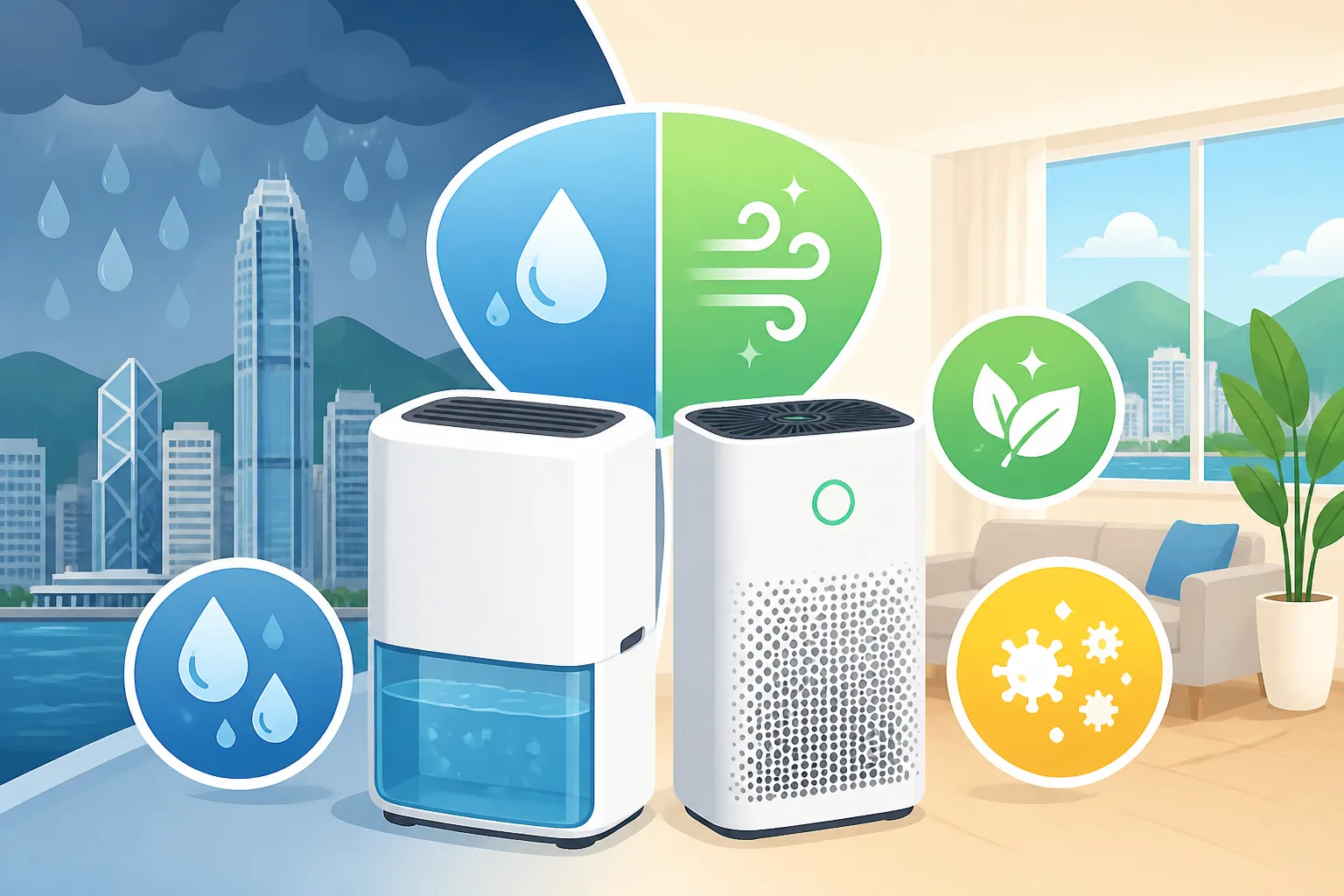
Buying Dehumidifiers and Air Purifiers for HK Weather
If you have just arrived in Hong Kong, you likely expected the skyscrapers and the dim sum, but you might not have been prepared for your leather shoes growing a fuzzy green coat of mold within a week or the heavy, particulate-laden air during a smoggy afternoon in Causeway Bay. This guide solves the dual challenge of navigating Hong Kong’s oppressive humidity and urban pollution by helping you select the right dehumidifiers and air purifiers for your new home.
The Battle Against Hong Kong Humidity: Why You Need a Heavy-Duty Dehumidifier
In many parts of the world, a dehumidifier is a luxury or a seasonal tool used in a damp basement. In Hong Kong, it is a critical survival appliance. During the "spring" months—which really feel like living inside a warm, wet sponge—humidity levels frequently hover between 90% and 100%. Without a machine running 24/7, your walls will literally "sweat," your expensive camera lenses will develop internal fungus, and your clothes will never feel truly dry.
When you first move into a space, perhaps through a provider like , you might find that while the aesthetics are perfect, the local climate remains your biggest adversary. Even if you are utilizing for a seamless relocation of your existing goods, I strongly advise against bringing dehumidifiers from North America or Europe. The voltage is different, but more importantly, the capacity of Western "household" units often pales in comparison to the industrial-strength needs of a flat in Mid-Levels or Sai Kung.
Understanding Capacity and Tank Size
The most common mistake expats make is buying a unit that is too small for their square footage. Manufacturers usually list capacity in liters per day (e.g., 20L/Day or 30L/Day). However, these ratings are often calculated under "ideal" laboratory conditions. In a real Hong Kong apartment during a humid spell, a 20L unit might only pull 10L of water.
You must also consider the tank size. If you buy a compact, stylish machine with a 2-liter tank, you will find yourself waking up at 3 AM to empty it because the "Tank Full" sensor has shut the machine off, allowing the humidity to spike while you sleep. Look for units with at least a 4-liter or 5-liter tank, or better yet, a model that allows for continuous drainage via a hose into your floor drain. This is particularly important if you are often away for work and leave the machine running to protect your furniture.
Compressor vs. Desiccant Models
There are two main technologies on the market: compressor-based and desiccant-based. In Hong Kong, compressor models are the gold standard. They work like a refrigerator in reverse, cooling a coil to condense moisture out of the air. They are highly energy-efficient and work best in the warm, humid conditions that define our local climate for nine months of the year.
Desiccant models use a chemical to absorb water and then heat it to release it into the tank. While they are quieter and work better in very cold temperatures (below 15°C), they also blow out significantly warmer air. In a tiny Hong Kong bedroom, a desiccant dehumidifier can raise the room temperature by 3-5 degrees, making it unbearable without simultaneous air conditioning. If you are worried about the cost of electricity while running these machines, you should check our guide on Setting Up Utilities: Electricity, Water, Gas, and Broadband in HK to understand how tariffs work during peak summer months.
Combatting Urban Air Quality: Choosing the Right Air Purifier
While humidity ruins your belongings, the air quality in Hong Kong can take a toll on your health. We face a combination of roadside nitrogen dioxide from buses, regional smog from the Pearl River Delta, and high pollen counts. If you live near a major thoroughfare like Hennessy Road or the Island Eastern Corridor, an air purifier isn't just for people with asthma; it's for anyone who wants to avoid a layer of black dust settling on their coffee table every morning.
Many expats moving into managed apartments provided by companies like find that these spaces are often equipped with basic filtration, but if you are sourcing your own, you need to look at the specific filters involved. High-rise living in Hong Kong often means dealing with Air Quality and Health: Managing Asthma During High Pollution Days, and a generic "ionizer" simply won't cut it.
HEPA Filters and CADR Ratings
The heart of any air purifier is the HEPA (High-Efficiency Particulate Air) filter. To be effective against the fine PM2.5 particles prevalent in Hong Kong, you need a true HEPA filter (H13 grade or higher). This is the only way to trap the microscopic soot and allergens that bypass your body's natural defenses.
When shopping at stores like Fortress or Broadway, pay attention to the CADR (Clean Air Delivery Rate). This number tells you how many cubic meters of air the machine can clean per hour. A common pitfall is buying a high-end, expensive machine designed for a small office and placing it in a large open-plan living room. The air will never be fully cycled, rendering the device ineffective. For those trying to manage their Everyday Budgeting in HK: Cost of Living Benchmarks (2026), remember that the ongoing cost of replacement filters can often exceed the initial price of the machine over two years.
Smart Features and Maintenance
In the modern Hong Kong apartment, "smart" air purifiers have become the norm. These units have built-in lasers to detect air quality and will automatically ramp up the fan speed when they sense pollutants—like when you’re cooking or when the wind shifts to bring in smog from the North.
Maintenance is where most people fail. In a city as dusty as ours, pre-filters (the mesh screen that catches hair and large dust) need cleaning every two weeks. If you neglect this, the motor will strain, your electricity bill will rise, and the HEPA filter will clog prematurely. This is especially true for pet owners who are Bringing Pets to HK: AFCD Quarantine Groups and Import Permits, as dander and fur can quickly overwhelm a standard filtration system.
Where to Shop and Practical Living Tips
Buying electronics in Hong Kong is an experience in itself. You have the choice between massive, reliable chains and the frantic, bargain-heavy streets of Kowloon. If you want a warranty and English-speaking service, stick to the major retailers in malls. However, for those looking to save money, there are other avenues.
Best Retailers and Second-hand Options
For the latest models from brands like Panasonic, Mitsubishi, or Dyson, head to the big chains. However, always check the price on Price.com.hk first. This site is the local "bible" for electronics pricing and will show you the "street price" at smaller independent shops in places like Buying Electronics in Sham Shui Po vs Chain Retailers. You can often save 20-30% by visiting a small shop in a computer center, though you should confirm the warranty is a "Hong Kong General Agent" warranty rather than "Parallel Import" (grey market).
Because the expat community is so transient, the second-hand market for dehumidifiers is robust. Sites like AsiaXpat or Facebook groups (e.g., "Hong Kong Moms" or "HK Second Hand") are filled with people leaving the territory who need to sell their machines quickly. Just ensure you test the machine before buying; a dehumidifier that has been stored poorly can develop a musty smell that is impossible to remove. If you are buying used, make sure you know the Moving Companies in HK: Man with a Van vs Full Relocation options to get your heavy new purchase home safely.
Managing Mold and Apartment Care
Even with the best dehumidifier, you must be proactive. In the height of summer, never leave your windows open if the air conditioning or dehumidifier is on; you are essentially trying to dehumidify the entire South China Sea. If you spot mold starting on a ceiling or behind a wardrobe, treat it immediately with a bleach solution or specialized anti-mold spray.
Many residents find that humidity leads to health issues, necessitating visits to Dermatologists in HK: Coping with Humidity and Eczema or general practitioners. Proper appliance use can mitigate these risks. Additionally, remember to keep up with Air Conditioner Maintenance: Cleaning Schedules and Landlord Disputes, as your AC unit actually acts as a secondary dehumidifier. If the drainage line is clogged, it can leak into your walls, creating a breeding ground for the very mold you're trying to avoid.
| Feature | Dehumidifier | Air Purifier |
|---|---|---|
| Primary Function | Removes moisture/water from the air | Removes dust, smoke, and allergens |
| Best For | Preventing mold and protecting clothes | Improving respiratory health and odors |
| Essential Spec | L/Day Capacity & Tank Size | HEPA Grade & CADR Rating |
| Maintenance | Emptying water tank & cleaning filters | Replacing HEPA/Carbon filters every 6-12 months |
| Noise Level | Moderate to High (Compressor hum) | Low to Moderate (Fan noise) |
| Energy Use | High (200W – 500W) | Low (20W – 60W) |
Final Thoughts on Home Environment
Investing in high-quality air treatment is part of the "hidden tax" of living in such a vibrant, high-density city. While the initial outlay of HK$3,000 to HK$6,000 for a pair of good machines might feel steep, it is significantly cheaper than replacing a HK$20,000 leather sofa or paying for repeated medical consultations for chronic coughs.
As you settle in, you might also want to look into Recycling in HK: Using the GREEN@COMMUNITY Network to properly dispose of the massive amount of cardboard and plastic wrap that comes with new appliance deliveries. Staying comfortable in Hong Kong is all about managing the elements you can control within your four walls, allowing you to enjoy the incredible life this city offers outside of them.
Disclaimer
The information provided in this guide is for general informational purposes only and does not constitute professional advice. Appliance specifications and local regulations in Hong Kong are subject to change. Always consult with a qualified technician or the manufacturer's guidelines before purchasing or installing high-voltage electrical equipment. We do not guarantee the performance of any specific brand or retailer mentioned.