Using the Star Ferry Token Machine Without an Octopus
Standing at the Tsim Sha Tsui pier while the iconic green-and-white ferry honks its departure can be stressful if you suddenly realize your Octopus card is out of funds or missing. For tourists and new residents, navigating the physical token machines is a vital skill that saves you from missing the best cross-harbor commute in the world. This guide ensures you never get stuck at the turnstile.
The Mechanics of the Star Ferry Token Machine
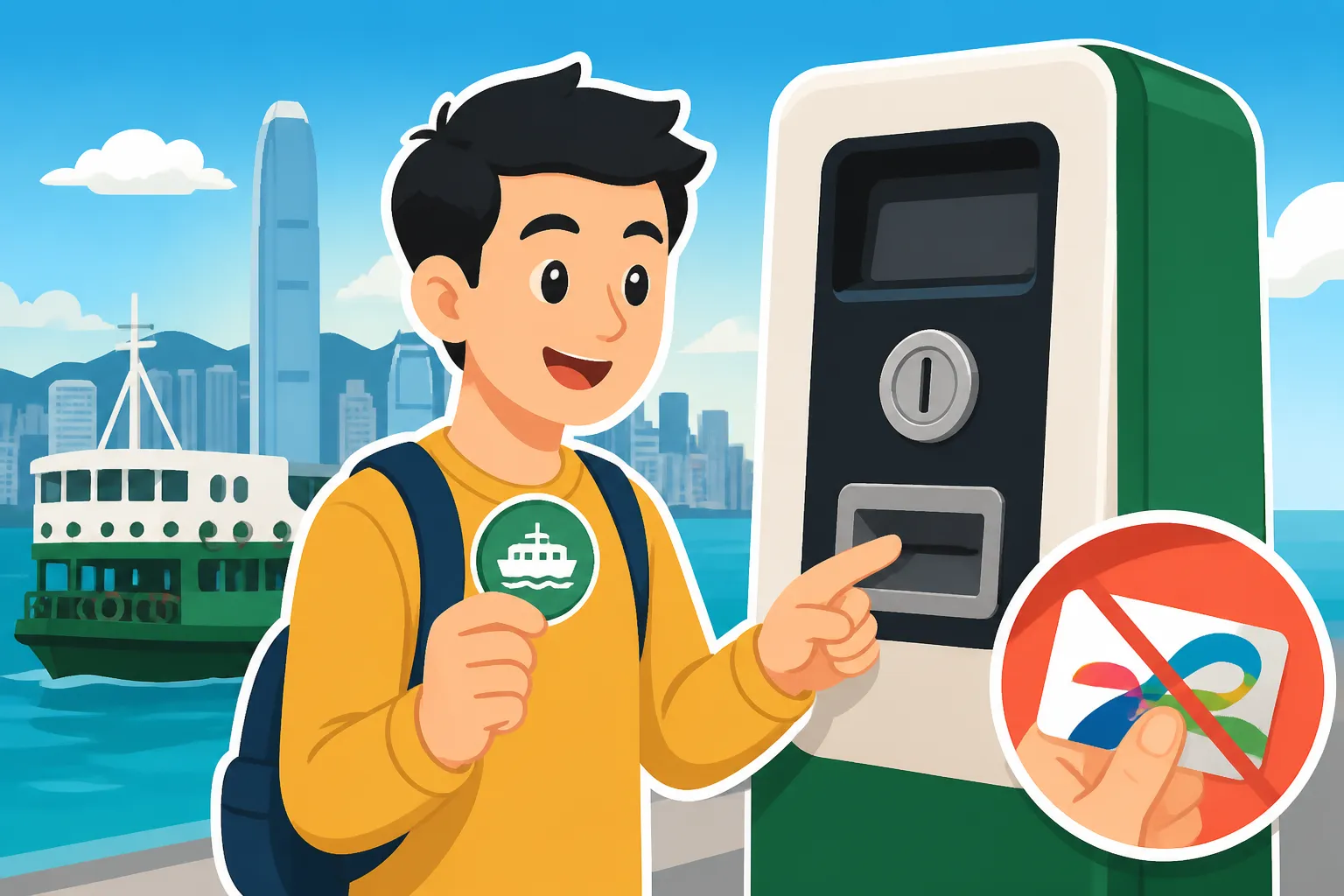
When you first approach the Star Ferry piers in Central, Tsim Sha Tsui, or Wan Chai, you will notice a row of sturdy, somewhat utilitarian-looking machines near the entrance gates. For those who have lived here through the sweltering summers and the T8 typhoons, these machines are a reliable fallback when digital systems fail. Using them is straightforward, but there are nuances to the hardware that can trip up the uninitiated, especially during the humid months when sensors can be a bit temperamental.
The machines are designed to be bilingual, offering instructions in both Traditional Chinese and English. Your first step is to check the screen to ensure the machine is active. Usually, a simple touch or the selection of your desired fare category wakes it up. You will be presented with choices based on age—Adult, Child, or Senior—and occasionally by deck level, depending on which pier you are standing at. In Tsim Sha Tsui, for instance, you have the choice between the Upper Deck and the Lower Deck. The Upper Deck offers air conditioning and a superior view, while the Lower Deck puts you closer to the rhythmic splashing of the Victoria Harbour waves and the smell of diesel and sea salt.
Once you select your category, the machine will display the total amount due. This is where most people encounter their first hurdle. While Hong Kong is rapidly digitizing, these token machines are classic pieces of infrastructure. They primarily thrive on coins and small-denomination notes. If you are carrying a HK$500 "big monkey" note, you are going to have a hard time. The machines typically prefer HK$10 or HK$20 notes and a variety of coins. If you are just starting your journey and perhaps staying in Short-Term Serviced Apartments for Your First Month in HK, keeping a small stash of coins is a veteran move that will save you time in these exact scenarios.
Accepted Payment Methods and Coin Specifics
The token machine is a traditionalist. It generally accepts HK$0.10, HK$0.20, HK$0.50, HK$1, HK$2, HK$5, and HK$10 coins. However, from personal experience, the machines can be picky about the condition of the coins. A heavily tarnished HK$2 coin might be spat back into the change tray several times before the machine finally relents and accepts its fate. If you find yourself in this loop of frustration, try rubbing the coin against your jeans or a dry cloth to clean the edges; the sensors in the Tsim Sha Tsui pier machines are notoriously sensitive to the city’s high humidity.
For those using banknotes, the machines are usually calibrated for the newer series of HK$10 and HK$20 bills. If your note is excessively crinkled or has a small tear, the machine will likely reject it. It is always wise to carry a few crisp bills if you know you'll be relying on tokens. If the machine simply won't cooperate, there is usually a staffed counter nearby, though they are becoming rarer as the system pushes toward automation.
If you are currently in the process of relocating and working with international movers like Sirelo, you might find yourself without your usual local tools for a few days. During this transitional period, mastering the token machine is part of the "initiation" into Hong Kong life. It represents the bridge between the old-school charm of the territory and its high-tech future. Once the payment is accepted, a small, circular plastic token—usually green—will clatter into the tray. This is your ticket. You don't "tap" this; you insert it into the slot at the turnstile, which "swallows" the token as you pass through.
Star Ferry Routes and Fare Structure
Understanding the cost of the ferry is essential because the token machines require exact or near-exact change. Unlike the MTR, where fares are calculated by distance, the Star Ferry uses a flat-rate system based on the route and the day of the week. Prices are significantly higher on weekends and public holidays, which can catch newcomers off guard. If you have already read through our Star Ferry Guide: Fares, Routes, and Using Octopus, you know that the "weekend" rate actually starts on Saturdays.
The Central to Tsim Sha Tsui route is the most popular, and for good reason. It offers the classic skyline view. If you are living in Kowloon Hotspots: Kowloon Tong, Ho Man Tin, and TST, this ferry will likely become a staple of your social life. The Wan Chai to Tsim Sha Tsui route is slightly longer and often used by commuters heading to the North Point or Causeway Bay areas. Note that the Wan Chai pier only has one deck level, so the fare selection on the machine is simpler there than at the multi-tiered Central or TST piers.
| Route | Category | Weekday Fare (HKD) | Weekend/Holiday Fare (HKD) |
|---|---|---|---|
| Central – TST (Upper Deck) | Adult | $5.00 | $6.50 |
| Central – TST (Lower Deck) | Adult | $4.00 | $5.60 |
| Wan Chai – TST | Adult | $5.00 | $6.50 |
| All Routes | Child (3-12) | $2.90 | $3.90 |
Note: Fares are subject to periodic adjustments by the Transport Department. Always check the display on the machine for the most current rates.
Why Decks Matter When Buying Tokens
The choice between Upper and Lower deck is more than just a price difference; it’s a lifestyle choice. The Upper Deck is enclosed, providing a respite from the humidity. If you are heading to a business meeting in Central after just arriving and perhaps settling into a professional space provided by Blueground, you’ll want the Upper Deck to keep your suit crisp. The token machine for the Upper Deck is located on the elevated walkway level at the TST and Central piers.
The Lower Deck token machines are located at the ground level (sea level). This deck is open-air, allowing the sea breeze—and occasionally the sea spray—to hit your face. It is significantly cheaper and preferred by many locals and photographers who want an unobstructed view of the water. However, keep in mind that the engine noise is much louder on the lower deck. If you buy a Lower Deck token, you cannot use it to enter the Upper Deck gate, and vice versa. The turnstiles are physically separated, so make sure you are standing in front of the correct machine for the level you wish to board.
When you are navigating the city and perhaps looking into Public Transport in HK: MTR, Trams, Buses, and Ferries, the ferry stands out as the most economical way to cross the harbor, even with the weekend price hikes. The token machine effectively acts as a gatekeeper to this experience. For those who have not yet secured their permanent ID, knowing how to use these machines is a vital part of Everyday Etiquette and Safety in Hong Kong: A Survival Guide.
When the Machine Fails: Alternatives and Contingencies
While the Star Ferry token machines are generally reliable, they are not infallible. Occasionally, a machine will go "Out of Service" or run out of tokens. In these instances, you have a few options. If you have your phone with you, most turnstiles have now been upgraded to accept QR code payments via AlipayHK or WeChat Pay. You simply scan your code at the scanner located just above the token slot.
However, if your phone is dead—a common occurrence after a long day of navigating the city's hilly terrain—you will need to find the "Manual Sign-In" or the customer service booth. Not all piers have a 24-hour manned booth, so if you are traveling late at night, the token machine might be your only hope. This is why many expats living in Habyt coliving spaces recommend always keeping a "emergency" HK$20 note tucked behind your phone case or in your wallet.
For those who are in the city for the long haul, relying on tokens every day is inefficient. While the novelty is charming for the first week, you will eventually want to streamline your life. Most of us transitioned to digital payments within the first few days. If you haven't done so yet, you should look into Buying the Standard, Tourist, or Mobile Octopus Card to avoid the coin-fumble altogether. The Octopus card is not just for the ferry; it's the lifeblood of the city's economy.
Dealing with Large Groups and Visitors
If you have family visiting and you are playing the role of the veteran tour guide, the token machine can be a bit of a bottleneck. Buying six tokens one by one while a crowd of commuters sighs behind you is a uniquely "Hong Kong" pressure. In this scenario, it is often better to have one person handle the machine while the others stay back.
Remember that children under three travel for free and do not require a token. For elderly visitors, if they have an Elder Octopus card, the fare is heavily subsidized, but if they are using the token machine, they must select the "Senior" category to get the discounted rate. This is a common point of confusion for tourists who assume all seniors get the discount automatically; the machine needs you to tell it who you are. Ensuring your guests are prepared is a key part of our Essential Health Checklist for Your First 30 Days in Hong Kong philosophy—mental health includes avoiding unnecessary stress in public transport queues!
If you are staying in a managed apartment by Blueground, they often provide local guides that explain these small logistical hurdles. But nothing beats the hands-on experience of successfully coaxing a token out of a stubborn machine on a Friday night in Tsim Sha Tsui. It makes you feel like a true local.
Living the "Ferry Life" as a Resident
For many expats, the Star Ferry is more than just a way to get from A to B; it is a moment of Zen. If you have moved your belongings with Sirelo and finally settled into your new flat, the ferry ride becomes a transition between the chaos of the office and the comfort of home. Using the token machine might seem like a chore, but it connects you to a century-old tradition.
If you are currently exploring Short-Term Serviced Apartments for Your First Month in HK, try to find a place that allows you to incorporate the ferry into your daily routine. Living on the Island but working in Kowloon (or vice versa) gives you a mandatory seven-minute break on the water twice a day. It is one of the few places in the city where you are forced to sit still and look at the horizon.
The token machines themselves are a reminder of the city's layers. You have the high-tech, ultra-fast MTR tunnels running beneath the harbor, and yet, the physical plastic token and the clanking turnstile remain. It is a testament to the "if it ain't broke, don't fix it" mentality that exists alongside Hong Kong's obsession with the new.
Transitioning from Tokens to Octopus
Eventually, the charm of the token machine will wear off, especially when you are running late for a dinner in Soho. Once you have your The Octopus Card: Hong Kong's Essential Transport & Payment Tool, you will find that the turnstile experience becomes seamless. You simply tap your card or your Apple Watch, and you are through.
However, keep the knowledge of the token machine in your back pocket. There will come a day when you forget to top up your Octopus, or the system experiences a rare glitch. On that day, you will be the person calmly feeding coins into the machine while others stand confused. It is these small bits of local knowledge that truly make you a veteran of the Hong Kong streets.
Whether you are here for a few months in a Habyt room or planning a seven-year stay to earn your permanent residency, mastering the small things—like the ferry token—is what makes the administrative hurdles of the city feel manageable. It’s about navigating the system with empathy for yourself and the people around you.
Disclaimer
This guide is intended for informational purposes for expats and tourists in Hong Kong. While we strive for hyper-local accuracy, ferry fares, machine interfaces, and payment technologies are subject to change by the "Star" Ferry Company, Limited and the Hong Kong Transport Department. Always refer to the official signage at the piers for the most current regulations and pricing.