Public Libraries in HK: Borrowing Books with Your HKID
Living in Hong Kong often means sacrificing physical space for a prime location, leaving very little room for a sprawling personal library. Many expats arrive only to realize that their shoebox apartment cannot accommodate their book collection, making the local public resource system an absolute lifesaver. This guide provides a deep dive into using the Hong Kong Public Libraries (HKPL) to access millions of titles, digital resources, and quiet study spaces using nothing more than your HKID.
Unlocking the City with Your HKID
When you first land in the city and navigate the complexities of Renting in Hong Kong: Apartments, Leases, and Tenant Rights, you quickly learn that every square foot is precious. I remember moving into my first flat in Sheung Wan and realizing my collection of hardbacks was literally taking up the space where a dining table should be. This is where the Hong Kong Public Libraries (HKPL) system becomes your best friend. Instead of buying books that you’ll eventually have to pay Sirelo to ship across the world when you relocate, you can tap into a massive, free network of literature and media.
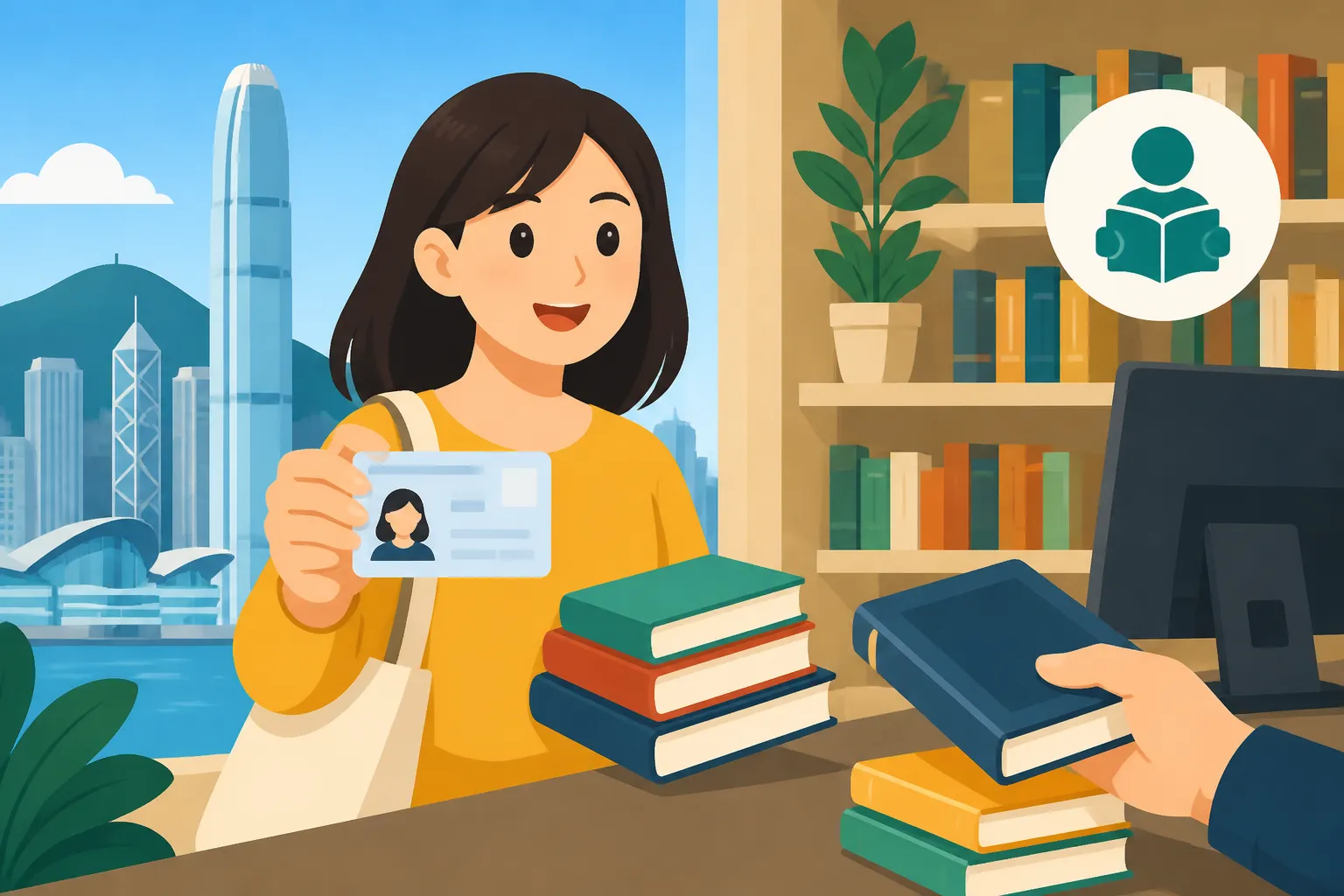
The most powerful tool in your pocket isn't your credit card; it's your Hong Kong Identity Card. Most newcomers don't realize that your smart HKID can be used as a library card. This integration is a stroke of administrative genius that saves you from carrying yet another piece of plastic in your wallet. However, it isn't automatic. You must visit a branch to "activate" the library functionality on your chip. This is a separate step from your initial registration at the Immigration Department, so don't assume you're ready to borrow just because you have the card.
The 30-Day Rule and Your First Registration
Timing is everything in this city. You are legally required to follow The 30-Day Rule for Registering a New HKID After Arrival, and once that card is in your hand, the library should be your next stop. To register, you simply head to the customer service counter of any public library branch. You will need to bring your original HKID and a proof of address—usually a utility bill or a bank statement. If you are still in the process of Setting Up Utilities: Electricity, Water, Gas, and Broadband in HK, a signed tenancy agreement is usually sufficient for the librarians to verify your residency.
The process is remarkably efficient. You fill out a short form (Form HKPL 1), choose whether you want to use your HKID or a separate library card, and set a six-digit password for online services. I highly recommend opting for the HKID integration. It streamlines the self-service kiosk experience, as you only need to insert your ID card and enter your PIN to check out a stack of books. For those living in co-living spaces like Habyt, where you might be sharing an address with several others, ensure your proof of address clearly shows your name and specific room or flat number to avoid any hiccups during the verification process.
Why the HKID is Better than a Separate Library Card
While the HKPL offers a traditional plastic library card, using your HKID is the "pro move" for any veteran expat. The smart ID chip is incredibly durable and integrates with the self-service kiosks found in every branch. This is particularly useful because Hong Kongers value efficiency above all else. During peak hours, the counters can have long queues, but the HKID kiosks are usually moving fast. Furthermore, if you lose a dedicated library card, you have to pay a replacement fee and go through the hassle of re-application. If you lose your HKID, you’re already going to be at the Immigration Tower for a replacement, and the library link can be restored easily.
Another hidden benefit of the HKID link is the digital integration. When you use your ID, your account is seamlessly tied to the "HA Go" and "iAM Smart" ecosystems, which are becoming the backbone of Everyday Etiquette and Safety in Hong Kong: A Survival Guide. This allows you to manage your loans, renewals, and even pay small fines through the integrated government apps. It’s a level of digital convenience that makes the transition to life in the 852 feel much smoother, especially when you are already dealing with the stress of a new job and a new culture.
Navigating the HKPL System: Locations and Layouts
The HKPL network is surprisingly vast, consisting of 71 fixed libraries and 12 mobile libraries. Whether you are living in a high-rise in Mid-Levels or a village house in the New Territories, you are rarely more than a 15-minute MTR or bus ride away from a branch. Each library has its own personality. Some are tucked away inside municipal services buildings alongside wet markets, while others are architectural landmarks in their own right. Understanding the hierarchy of these branches—Central, District, and Small—will help you manage your expectations regarding book selection and facilities.
The Central Library in Causeway Bay
The Hong Kong Central Library in Causeway Bay is the crown jewel of the system. If you haven't visited yet, it is a massive, 12-story building overlooking Victoria Park. For an expat, this is the ultimate sanctuary. The English language collection here is staggering, spanning everything from the latest New York Times bestsellers to obscure academic journals. It is also one of the few places in the city where you can find a comfortable chair and a view without having to buy a HK$60 latte.
The Central Library also houses specialized collections, such as the Map Library and the Language Learning Centre. If you are currently Learning Cantonese vs Mandarin for Career Growth in HK, the Language Learning Centre offers booths with software and audio-visual materials that are free to use. I spent many Saturday mornings there during my first year, trying to wrap my head around Cantonese tones while watching the trams rattle by below. It’s an invaluable resource for anyone trying to integrate more deeply into the local culture.
District and Small Libraries: Finding Your Local Branch
While the Central Library is great for a big weekend trip, the District libraries are where you will do your day-to-day borrowing. Places like the Lockhart Road Library in Wan Chai or the City Hall Library in Central are conveniently located for office workers. These branches are often located within the same buildings as public sports centers and cooked food markets. It’s a very "local" experience to return a book and then head downstairs for a bowl of wonton noodles or a quick game of badminton.
Small libraries and mobile libraries serve the more remote areas. If you’ve opted for a more spacious lifestyle by Living in Sai Kung and Clearwater Bay: Space vs Commute, you might rely on the mobile library trucks that visit specific neighborhoods on a weekly schedule. These smaller outposts may not have a massive shelf selection, but they serve as pick-up points for the "Reserve" system. You can browse the entire HKPL catalog online, pay a small HK$3.3 fee, and have any book in the territory delivered to your local small branch or mobile stop. It is an incredibly cost-effective way to read specific titles without the premium price tag of local English bookstores.
Borrowing, Renewals, and Fines: The Practical Side
The logistics of the HKPL system are strictly enforced but very fair. As a registered borrower, you can take out up to 8 items at a time. This includes books, magazines, and back-issues of periodicals. The standard loan period is 14 days. For someone living in a flexible, serviced apartment through Blueground, where you might be moving every few months, the library is much better than buying books that add weight to your luggage. However, you must be diligent about the calendar, as the system is automated and doesn't take "I was busy at the office" as an excuse for lateness.
Loan Limits and Item Durations
While 8 items might seem like a lot, it goes quickly if you are a fast reader or if you are borrowing for your children. The 14-day limit is standard, but you can renew items up to five times, provided no one else has placed a "reserve" on them. This means you could potentially keep a book for up to 70 days. This is perfect for those thick historical biographies or technical manuals you might need while Starting a Business in HK: Company Incorporation and Freelancing. Just remember that the renewal must be done on or before the due date.
The system also allows you to borrow from one branch and return to another. This is a lifesaver for commuters. You can pick up a book at the Central Library on your way home from work and return it to the Aberdeen Public Library on your weekend hike. This flexibility is part of what makes the HKPL so accessible. Just be aware that some specialized items, like certain reference materials or high-demand AV equipment, may have different rules or may only be available for "in-library" use.
Avoiding Late Fees and Using the Book Drop
Fines in Hong Kong are relatively low—HK$1.5 per day per item for adult books—but they can add up if you forget a whole stack. To avoid this, I highly recommend downloading the "My Library" official app. It sends push notifications a few days before your books are due. If you find yourself unable to reach a library during opening hours, every branch has a "Book Drop" box located outside the entrance. Many MTR stations, including major hubs like Central, Kowloon Tong, and Nam Cheong, also have standalone Book Drop boxes.
Returning books at an MTR station is the ultimate convenience. You don't even have to leave the station or tap your Octopus card. Just look for the big green boxes near the exits. However, note that books returned via MTR drops may take a day or two to be processed and cleared from your account. If you are returning a book on its actual due date, it is safer to use the drop box at a physical library branch or use the self-service machine inside to ensure the return is recorded instantly. This attention to detail is vital for maintaining a clean record, which is a small but important part of Everyday Etiquette and Safety in Hong Kong: A Survival Guide.
Digital Libraries and E-Resources for Busy Expats
Perhaps the most underrated feature of the HKPL is its digital collection. In a city where humidity can lead to Dealing with Humidity and Mold in Your Apartment, physical books can sometimes suffer if not stored properly. Digital books, however, don't grow mold. The HKPL provides access to several massive e-book platforms that you can use on your tablet, phone, or Kindle (if it supports the right formats). For the modern expat, this is the most convenient way to stay updated with global literature without adding clutter to your home.
Libby, OverDrive, and the HKPL App
The library integrates with Libby and OverDrive, which are the gold standards for e-borrowing. Once you have your HKID and your library password, you can sign into these apps and browse thousands of English titles. The selection is surprisingly current. I’ve often found books that were just released in the UK or US available for digital loan in Hong Kong within weeks. This is a fantastic way to save money, as English books in Hong Kong retail stores are often marked up significantly due to shipping and import costs.
Beyond just books, the "My Library" app allows you to access "e-Magazines" through platforms like PressReader and RBdigital. This gives you free access to the full digital layouts of magazines like The Economist, Vogue, National Geographic, and The New Yorker. If you were to subscribe to all of these individually, you’d be spending thousands of dollars a year. With your HKID, it's all part of the service. It’s the perfect way to pass the time on a long commute from Family-Friendly Discovery Bay (DB) and Lantau Island into the city.
Accessing International Newspapers and Journals
For those who need to stay informed for professional reasons, the HKPL offers access to the ProQuest and Factiva databases. These are powerful tools usually reserved for university students or high-end corporate researchers. They allow you to search through decades of archives from newspapers like The Wall Street Journal, The Financial Times, and the South China Morning Post. If you are researching The Tech and Finance Sectors in HK: Salaries and Expectations for a new job, these databases are a goldmine of information.
Accessing these resources from home is simple. You log in through the HKPL website using your HKID number and your PIN. This remote access means you can do deep-dive research from your sofa without ever stepping foot in a library. It’s one of the best "hidden" perks of being a resident. Whether you are a student, a freelancer, or just a curious reader, the depth of academic and journalistic material available for free is one of the reasons why Hong Kong remains a global hub for information.
Study Spaces and Facilities: Working Beyond Your Flat
If you are living in a compact studio or a co-living space like Blueground, finding a quiet place to focus can be a challenge. Coffee shops are often loud and have "no laptop" policies during peak lunch hours. This is where the public library study rooms become essential. They offer a level of silence that is hard to find elsewhere in this bustling metropolis.
The Student Study Room System
During the "exam season" (usually March to May), the competition for seats in the library study rooms is legendary. The HKPL operates a session-based system where you have to apply for a "Student Study Room Admission Card." While it's aimed at local students, anyone with a library account can use the facilities outside of the peak exam periods. Even during the peak months, there are often "public" seating areas with desks that are available on a first-come, first-served basis.
The etiquette in these rooms is very strict. No food, no phone calls, and no "saving" seats with a bag while you go out for a two-hour lunch. If you leave your seat for more than 15-20 minutes, don't be surprised if your belongings have been moved by staff to make way for someone else. This disciplined environment is actually quite helpful for productivity. If you are working on your Quality Migrant Admission Scheme (QMAS): Scoring and Strategies application or a complex business plan, the focused atmosphere of a library study room is far superior to a noisy cafe.
Printing, Scanning, and Wi-Fi Access
Most branches offer reasonably priced printing and scanning services. In an age where most things are digital, you still occasionally need a physical copy of a document for Hong Kong Visas and Immigration: The Complete 2027 Guide or to sign a lease. Instead of buying a bulky printer that will just collect dust, you can save your files to a USB drive and print them at the library for a few cents per page.
The Wi-Fi in public libraries is provided by "Wi-Fi.HK," the government's free wireless network. While it is generally reliable for basic browsing and emails, it might not be fast enough for high-definition video calls or large file uploads. If you are a digital nomad or someone who needs high-speed internet for work, you should check out Co-working Spaces and Networking Events for Entrepreneurs in HK for more robust options. However, for everyday tasks and research, the library Wi-Fi is more than adequate and completely free.
Comparing Library Access and Living Options
| Feature | Central Library (CWB) | District Libraries (e.g., Wan Chai) | Small/Mobile Libraries |
|---|---|---|---|
| English Collection | Massive (Multiple Floors) | Moderate (Usually 1-2 Aisles) | Limited (Request via Reserve) |
| Study Spaces | Hundreds of Desks | 20-50 Desks | Minimal or None |
| Special Facilities | Language Lab, Map Room | Basic PC Stations | Book Drop Only |
| Best For | Deep Research & Day Trips | Daily Commuter Returns | Remote Neighborhoods |
| Registration | Customer Service Counter | Customer Service Counter | Online or via Truck Staff |
Summary of the Library Experience
The Hong Kong Public Library system is one of the city's most egalitarian and efficient services. For an expat, it bridges the gap between the limitations of a small apartment and the desire for a rich intellectual life. By simply linking your HKID to the library system, you gain access to a world-class collection of books, magazines, and digital resources that would cost a fortune to curate privately. It’s not just about borrowing books; it’s about claiming your space in the city, finding a quiet corner to think, and utilizing the public infrastructure to make your life in Hong Kong more affordable and enjoyable.
Whether you are here for a year or a decade, make the library a part of your routine. Use the app to reserve the latest thrillers, spend an afternoon browsing the archives in Causeway Bay, or simply use the MTR book drops to stay on top of your reading list. In a city that is always moving at 100 miles per hour, the library offers a rare and beautiful opportunity to slow down, for free.
Disclaimer
This guide is for informational purposes only. Library policies, loan limits, and fine rates are subject to change by the Hong Kong Leisure and Cultural Services Department (LCSD). Always check the official HKPL website for the most current regulations, holiday closing times, and branch locations. The mention of specific brands or residential options is based on local expat experience and does not constitute a legal endorsement. Be sure to verify your specific visa and residency status before applying for government-linked services.