Managing Dengue Fever and Mosquito Bites in the New Territories
Moving from a high-rise in Mid-Levels to a village house in the New Territories sounds like a romantic escape until the first summer rains hit and the mosquitoes move in. I remember my first week in Tai Po, looking at my welt-covered ankles and wondering if I had made a massive mistake moving so close to the brush. This guide provides the realistic, actionable steps you need to protect your family from mosquito-borne illnesses and navigate the local healthcare system if a bite turns into something more serious.
Understanding the Dengue Risk in the New Territories
The New Territories (NT) offers a lifestyle that is a world away from the concrete canyons of Hong Kong Island, but that extra space comes with significant ecological trade-offs. As an expat, you likely moved to places like Sai Kung, Clearwater Bay, or the northern reaches near Fanling for the greenery and the hiking trails. However, that very greenery is the primary breeding ground for the Aedes albopictus mosquito, a highly adaptive species that is the primary vector for Dengue Fever in our region. Unlike some other mosquitoes that only bite at night, this particular variety is a daytime feeder, meaning your afternoon garden tea or morning walk to the MTR is when you are most at risk.
The climate in Hong Kong has become increasingly conducive to these pests. With summers stretching longer into October and the humidity levels frequently hovering above 80 percent, the mosquito lifecycle in the NT is almost continuous. Standing water is the enemy here. Even the smallest amount of water trapped in a discarded soda can, a clogged roof gutter, or the saucer of a potted plant can host hundreds of larvae. In the village environments of the New Territories, where drainage can sometimes be less efficient than in the city, the risk of localized clusters of Dengue Fever remains a persistent seasonal concern that the government monitors through the Ovitrap Index.
When you are Living in Sai Kung and Clearwater Bay: Space vs Commute, you quickly learn that the government’s Food and Environmental Hygiene Department (FEHD) is quite active, but they cannot manage every private garden or rooftop. It is not uncommon for the government to declare certain districts as high-risk areas during the peak of the rainy season. This is why having a robust insurance plan, such as those offered by Cigna Global, becomes essential; if a local outbreak occurs near your home, you want the peace of mind that you can access the best diagnostic facilities without worrying about the immediate financial hit.
The Climate Factor Why the NT is a Hotspot
The topography of the New Territories, characterized by dense subtropical vegetation and narrow valleys, creates microclimates that trap humidity. In areas like Yuen Long or the wetlands of Tin Shui Wai, the air often feels heavy and still, providing the perfect environment for mosquitoes to thrive without being dispersed by the coastal winds that keep the Island a bit clearer. During the transition between the dry winter and the humid spring, there is a sudden explosion in the mosquito population that often catches new arrivals off guard.
Furthermore, the New Territories is home to many abandoned agricultural plots and construction sites. These areas often have uneven ground where rainwater pools for weeks. If you are living in a newer development near a construction zone, your risk is statistically higher. The government often carries out "fogging" or pesticide spraying in these zones, but the effectiveness is temporary. For digital nomads or those on shorter assignments staying in the NT, having travel-ready coverage like SafetyWing can be a lifesaver, ensuring that if you do contract a fever while exploring the more remote parts of the territory, you aren't stuck navigating the public system alone.
Identifying the Culprit Aedes albopictus
It is helpful to know exactly what you are looking for. The Aedes albopictus, often called the "Forest Day Mosquito" or "Tiger Mosquito," is easily identifiable by the distinct white stripes on its black body and legs. This isn't the lazy mosquito that buzzes around your ear at 3 AM; this is a stealthy, aggressive biter that stays low to the ground. Most bites occur on the ankles and calves, often before you even realize a mosquito is in the vicinity.
The danger of this specific mosquito lies in its ability to transmit the Dengue virus after biting an infected person. While Hong Kong does not have the massive endemic levels seen in some Southeast Asian neighbors, "local" cases (where the person hasn't traveled recently) occur every year in the New Territories. This means the virus is circulating within our local mosquito population. This transition from "imported" to "local" risk is the primary reason why the Department of Health is so vigilant about mosquito control in village clusters.
Personal Protection and Effective Repellents
Standard bug sprays you might find in your home country don't always cut it against the resilient Tiger Mosquitoes of the New Territories. I have found that "natural" patches and citronella bracelets are largely decorative when you’re deep in the Lantau or Sai Kung brush. To truly protect yourself, you need to look at the active chemical ingredients and understand how they interact with the Hong Kong heat. Sweat will wash off most repellents within an hour, meaning reapplication is the most frequent mistake expats make.
When shopping at local outlets, you must distinguish between the various products. You will find that Pharmacies and Medication in HK: Prescriptions and OTC Rules are quite straightforward, and most major chains like Watsons or Mannings stock high-concentration DEET and Picaridin products. If you have sensitive skin, Picaridin is often the preferred choice as it is less greasy and doesn't have the "chemical" smell that DEET carries, yet it is equally effective at masking the carbon dioxide and skin odors that attract mosquitoes.
| Active Ingredient | Effective Duration | Best Used For | Notes |
|---|---|---|---|
| DEET (30%+) | 6-8 Hours | Heavy jungle hiking / NT Villages | Can damage plastics and synthetic fabrics |
| Picaridin (20%) | 6-8 Hours | Everyday use / Dining outdoors | Odorless and non-greasy; safe for gear |
| IR3535 | 3-5 Hours | Light urban walking | Good for short trips; less effective in deep NT |
| Oil of Lemon Eucalyptus | 2-4 Hours | Organic preference | Effective but requires very frequent reapplication |
Choosing the Right Chemical Barrier
For those living in the New Territories, I recommend a two-tiered approach. For your daily commute or "popping to the shops," a Picaridin-based spray is usually sufficient. However, if you are planning on doing some gardening or taking the kids to a playground near the woods, you need something stronger. High-percentage DEET is the gold standard for a reason. While some are wary of the chemicals, the risk of a Dengue infection—which can lead to weeks of debilitating fatigue or even hemorrhagic complications—far outweighs the temporary discomfort of a strong repellent.
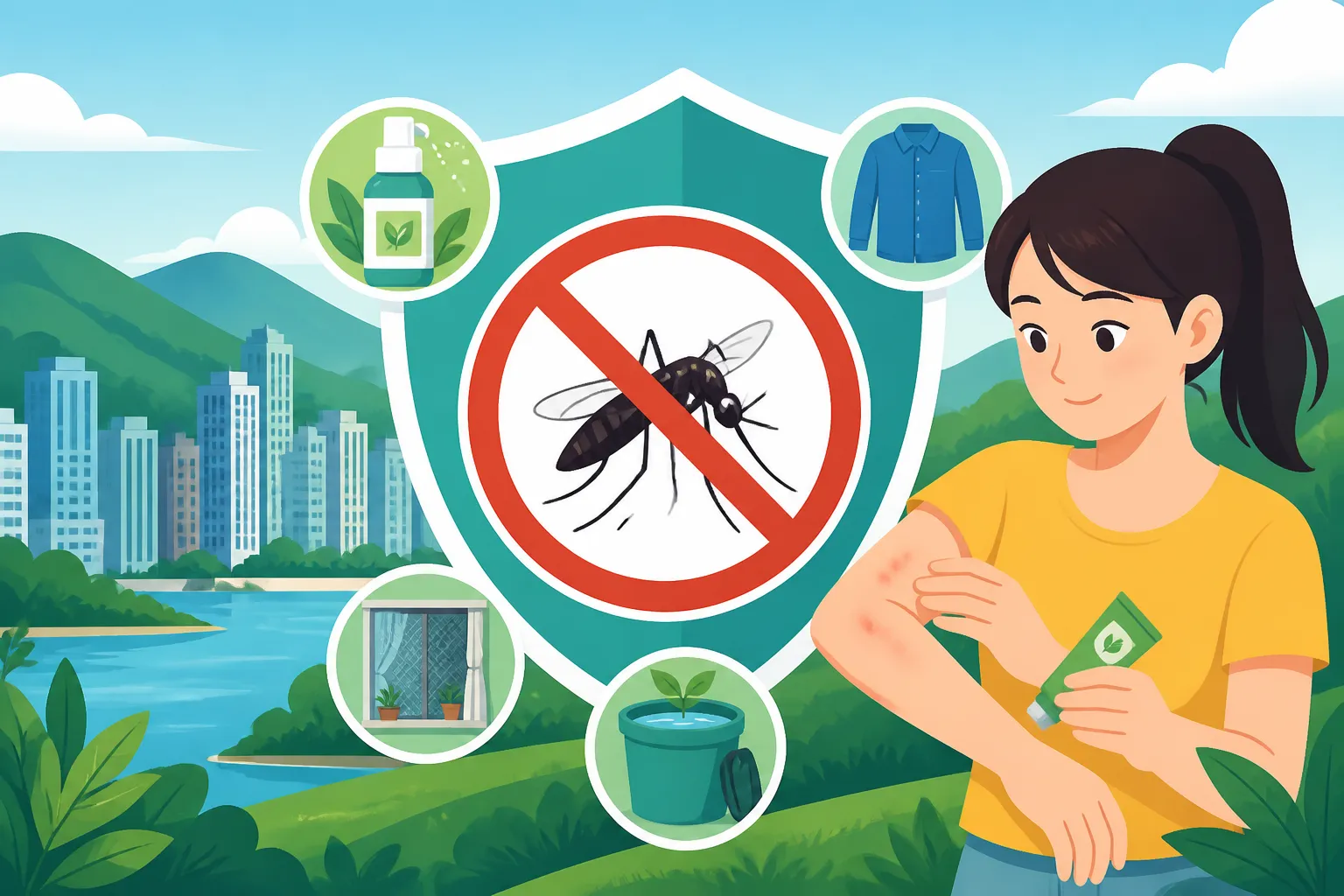
Don't forget to treat your clothing as well. Permethrin-treated clothing is a secret weapon for those living in the more rural village houses. You can buy sprays to treat your own clothes, and the protection lasts through several washes. This is particularly useful for children who might be resistant to having sprays applied directly to their skin every few hours. Since Finding Expat-Friendly Pediatricians and Family Doctors can take a bit of time when you first arrive, preventing the need for a visit is always the best strategy.
Dressing for the Humid Jungle
It sounds counterintuitive in 34-degree heat with 90 percent humidity, but long sleeves and trousers are your best defense. The key is the material. Seek out "cool-tech" or linen fabrics that allow for airflow while providing a physical barrier. In the New Territories, the fashion for many veteran expats is "hiker chic"—breathable long pants tucked into socks when the Ovitrap Index is particularly high.
The color of your clothing also matters. Mosquitoes are attracted to dark colors, particularly black and deep blue, which stand out against the horizon. Wearing light-colored, loose-fitting clothing makes you less visible to them and keeps you cooler. If you are hosting a BBQ in your garden, consider providing a "mosquito station" for guests with various sprays and perhaps some electric mosquito coils. It’s a standard part of NT hospitality that helps keep everyone safe while enjoying the rare outdoor space that Hong Kong offers.
What to Do If You Suspect Dengue Fever
If you develop a sudden high fever after living in the NT, do not ignore it. Dengue is often nicknamed "bone-break fever" because of the intense muscle and joint pain that accompanies it. My first experience with a high fever in Hong Kong was terrifying because I didn't know whether to wait it out or rush to the hospital. In the New Territories, your nearest facility might be a public hospital like Prince of Wales in Sha Tin or Tuen Mun Hospital, but the wait times can be daunting.
Understanding Healthcare in Hong Kong: Public vs Private Systems Explained (2027) is crucial here. If you have comprehensive coverage like Cigna Global, you can opt for private outpatient clinics or private hospitals like Union Hospital in Tai Wai, which serves the NT. Private facilities generally offer faster turnaround times for the NS1 antigen test, which can detect Dengue within the first few days of symptoms. Early detection is vital, as it allows doctors to monitor your platelet count—the most critical metric in managing Dengue.
Recognizing the Early Warning Signs
Dengue doesn't usually start with a cough or a runny nose. It hits you with a hammer. The hallmark symptoms include a sudden fever (often up to 40°C), severe headache (especially behind the eyes), and that signature joint pain. You might also notice a faint pink rash that appears on the chest and limbs a few days into the fever. If you find that paracetamol isn't bringing the fever down, or if you feel unusually lethargic, it is time to seek medical help.
One critical warning: avoid Aspirin or Ibuprofen if you suspect Dengue. These can interfere with blood clotting and increase the risk of internal bleeding if your platelet count drops. Stick to paracetamol until a doctor confirms your diagnosis. For families, Finding English-Speaking General Practitioners (GPs) in Central or their satellite clinics in the NT can provide a quick initial assessment before you decide whether a hospital admission is necessary.
Navigating the Healthcare System for Testing
If your fever becomes unmanageable or if you see signs of dehydration, you should head to the nearest Accident & Emergency (A&E) department. Even if you prefer the private system, sometimes the public system is the most equipped for infectious disease protocols. Be prepared for the billing structure; Hospital Authority Fees: Eligible Persons (EP) vs Non-Eligible Persons (NEP) vary wildly depending on whether you hold a valid HKID.
Once at the hospital, you will be triaged. If you are lucky enough to be in the NT during a storm, remember the rules for Navigating Medical Emergencies During T8 Typhoons or Black Rainstorms. Most public hospitals will keep you for observation if your platelet count shows a downward trend. This is where your insurance really matters. While the public ward is affordable and efficient, it lacks the privacy and comfort of private rooms. Having a plan that covers private hospitalization ensures you can recover in a quieter environment, which is essential when dealing with the extreme fatigue Dengue causes. For those traveling or on temporary visas, SafetyWing offers a flexible way to handle these unexpected medical emergencies.
Safeguarding Your Home Against Mosquito Infestation
In the New Territories, your home is your fortress, but it's a leaky one when it comes to insects. Village houses are notorious for gaps in window frames and doors. I spent my first winter in a village house installing magnetic mesh screens on every single opening. It was a tedious weekend project, but it changed my life. Without screens, you are essentially inviting the entire local ecosystem into your bedroom every time you want a breeze.
Managing your immediate environment is a legal and social responsibility in Hong Kong. If the FEHD finds breeding grounds on your property, you can actually be fined. Beyond the legalities, your neighbors in the village will appreciate your diligence. A single neglected bucket of water in your "garden" (which is often just a concrete patch in many NT houses) can affect the health of everyone on your street.
The Village House Dilemma Eliminating Breeding Grounds
The most common hiding spots for larvae are not always obvious. Check the "U-traps" in your floor drains, especially if you have a balcony or a rooftop that doesn't get used daily. Pouring a small amount of diluted bleach or eco-friendly oil into these drains once a week prevents mosquitoes from laying eggs. Also, keep an eye on your air conditioner's condensation tray. If the drainage pipe is blocked, that stagnant water is a five-star hotel for mosquitoes.
If you have a garden, be ruthless with your plants. Bromeliads and other plants that hold water in their leaves are beautiful but dangerous in a Dengue-prone area. If you must keep them, you need to flush them with a hose daily. For larger properties, consider investing in a high-quality mosquito trap (the kind that uses CO2 and heat to mimic human presence). While expensive, they can significantly "thin out" the local population over a few weeks. This is especially relevant when Emergency Medical Services in HK: Calling 999 and A&E Wards are busy; the less you need to call them, the better.
Working with the Food and Environmental Hygiene Department (FEHD)
The FEHD is actually a great resource for expats. If you notice a massive influx of mosquitoes and suspect there is a breeding ground on public land near your house—like an overgrown nullah (drainage channel) or abandoned lot—you can call the 1823 government hotline. They are surprisingly responsive and will often send a team to inspect the area and apply larvicide.
They also provide educational materials in English that you can share with your domestic helper or landlord. Ensuring everyone who works at or maintains your home understands the importance of "empty the vases, scrub the pails" is the only way to maintain a mosquito-free zone. Remember, mosquito control in the New Territories is a marathon, not a sprint. It requires a weekly routine of inspection and prevention that, while annoying, becomes second nature after your first full summer in the NT.
Disclaimer
This article is for informational purposes only and does not constitute professional medical advice, diagnosis, or treatment. Always seek the advice of your physician or other qualified health provider with any questions you may have regarding a medical condition. Never disregard professional medical advice or delay in seeking it because of something you have read on this website. The healthcare landscape in Hong Kong, including fees and policies, is subject to change.