Prescription Drug Laws: Bringing Foreign Medication into Hong Kong
Arriving at Hong Kong International Airport with a suitcase full of specialized medication is enough to make any expat break into a cold sweat, especially with the city's reputation for strict customs enforcement. I still remember clutching my own bag of asthma preventers during my first move, terrified that a bored official might mistake my daily inhalers for something illicit. This guide clarifies the complexities of Hong Kong’s pharmacy laws, ensuring you can bring your necessary treatments across the border without legal headaches.
Navigating the Legal Framework of Hong Kong Pharmacies
The first thing you will notice when walking through the streets of Mong Kok or Central is the sheer number of shops selling medicine. However, for a newcomer, the distinction between a "Drug Store" and a "Registered Pharmacy" is not immediately obvious, and getting it wrong can lead to significant frustration when you are trying to refill a foreign script. In Hong Kong, the law is very specific about who can dispense what, and understanding these categories is the first step to staying compliant.
The Significance of the Rx Logo and Registered Pharmacists
In Hong Kong, only premises that display the "Rx" logo—a red and white symbol—are legally authorized to dispense prescription-only medicines. These shops are formally known as "Authorized Sellers of Poisons." While the name sounds intimidating, it simply means they are regulated to handle potent medications. More importantly, these shops must have a registered pharmacist on duty for a set number of hours each day. If you walk into a shop that looks like a pharmacy but lacks the Rx sign, you are likely in a "Medicine Store" or "Drug Store." These shops can sell over-the-counter (OTC) items like cough drops or bandages, but they cannot legally dispense your blood pressure medication or antidepressants.
When you are first settling in, I highly recommend checking the Pharmacies and Medication in HK: Prescriptions and OTC Rules to understand exactly where to go. I’ve had many friends waste hours standing in line at a local dispensary only to be told they don't have a pharmacist on-site to validate their needs. Always look for that red Rx sign and ensure the pharmacist’s registration certificate is displayed on the wall before you hand over your documents.
Controlled Substances and the Dangerous Drugs Ordinance
Hong Kong maintains a very strict "Dangerous Drugs Ordinance," which covers everything from high-strength painkillers to certain psychiatric medications. If your foreign medication falls under this ordinance, the rules for bringing it into the country become much more stringent. This isn't just about narcotics; it includes many stimulants used to treat ADHD and certain types of potent sleep aids. The Customs and Excise Department does not take "I didn't know" as a valid excuse.
If you are carrying anything that could be considered a controlled substance, you must ensure it is for your personal use and that the quantity is "reasonable." For most expats, this means a supply lasting between one and three months. If you try to bring in a two-year supply of a controlled stimulant, you are likely to be flagged for suspected trafficking. Navigating this requires a balance of transparency and preparation, which we will break down in the customs section below.
The Role of the Department of Health in Drug Registration
Every single pharmaceutical product sold in Hong Kong must be registered with the Pharmacy and Poisons Board. This means that even if a drug is legal in the UK, US, or Australia, it might not be "registered" here. When you bring in foreign medication, you are essentially bringing in an "unregistered" drug for personal use. While the government allows this under specific exemptions, it explains why you cannot simply walk into a Watsons or Mannings and find the exact same brand or formulation you used back home.
Bringing Medication Through Hong Kong Customs
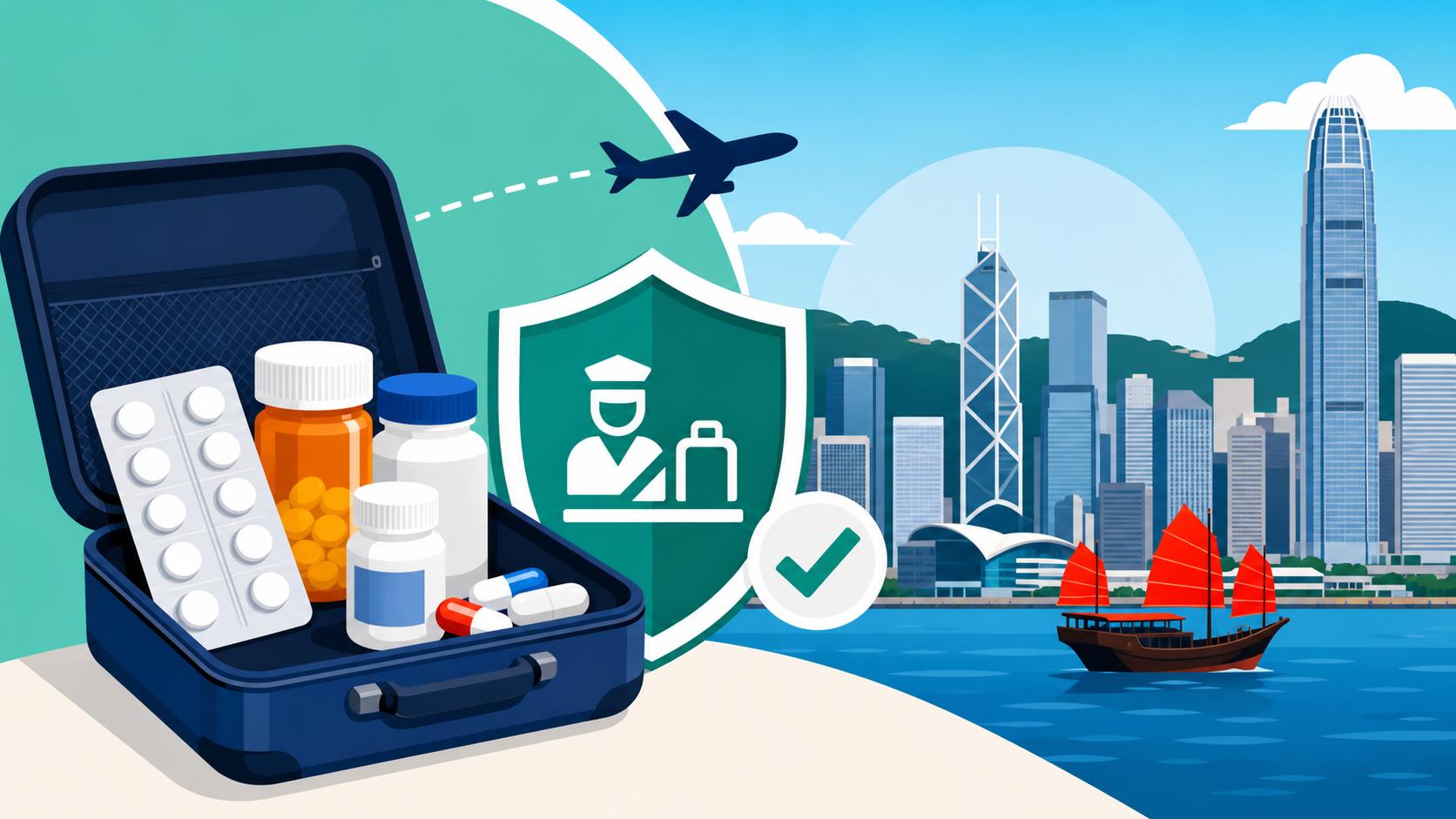
The actual act of walking through the "Nothing to Declare" channel with a bag of meds is where the anxiety peaks. I’ve found that the best way to handle Hong Kong Customs is through extreme organization. They aren't looking to take away a sick person's medicine, but they are looking for people flouting the Declaring Prescription Drugs at HK Customs: Forms and Limits regulations. Being able to produce the right paperwork in seconds is the difference between a five-minute check and a three-hour interrogation.
The Personal Use Exemption and Reasonable Quantity
Hong Kong law allows travelers to bring in a "reasonable quantity" of pharmaceutical products for personal use without an import license. But what does "reasonable" mean? In my experience, and according to the general consensus among the expat community, anything up to a three-month supply is rarely questioned. If you are a resident and need more, you are expected to see a local doctor and get a local prescription.
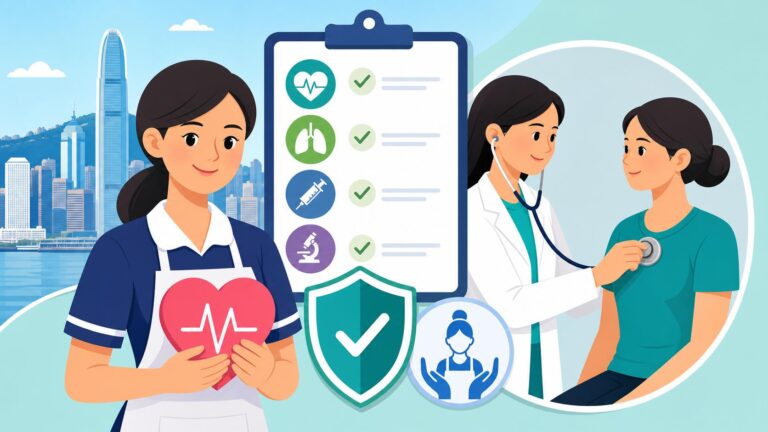
If you are moving here permanently, you should include your medication planning in your Essential Health Checklist for Your First 30 Days in Hong Kong. Don't wait until you have two pills left to realize that your specific brand of heart medication isn't stocked in the city. The goal of the personal use exemption is to bridge the gap while you find a local healthcare provider, not to facilitate the long-term import of foreign drugs.
Documentation Requirements: Doctor Letters and Original Packaging
Never, ever decant your pills into those little plastic "days of the week" organizers before you fly. This is a massive red flag for customs. All medication must remain in its original pharmacy packaging with the dispensing label clearly visible. This label should show your name, the name of the medication, and the dosage.
Furthermore, you must carry a letter from your prescribing physician. This letter should be on official letterhead, written in English (or translated), and it should state your diagnosis, the necessity of the medication, and the prescribed dosage. If you are carrying "Dangerous Drugs" or injections (like insulin), this letter is not optional—it is your shield. I always keep a digital copy on my phone and a physical copy inside the bag with the medicine. This transparency usually satisfies any customs officer who might take an interest in your luggage.
Choosing Between the Red and Green Channels
When you arrive at HKIA, you have to choose a channel. If you are carrying a standard supply of non-controlled medication (like birth control, standard blood pressure meds, or asthma inhalers) and you have your doctor’s letter, the Green Channel is generally acceptable. However, if you are carrying anything that falls under the "Dangerous Drugs" category or a very large quantity of any medication, it is often safer to go through the Red Channel and declare it.
Declaring your medication isn't an admission of guilt; it’s an act of good faith. Most of the time, the officer will look at your doctor's letter, glance at the original packaging, and wave you through. If you go through the Green Channel and are randomly searched, and they find a large stash of undeclared controlled substances, the tone of the conversation changes instantly. When in doubt, declare. It might take an extra ten minutes, but it buys you peace of mind.
Prohibited and Restricted Substances in 2026
Hong Kong’s list of prohibited substances has evolved significantly in recent years. What was legal a few years ago might land you in a prison cell today. The city has a zero-tolerance policy for certain substances that are increasingly common in the West, and the penalties are severe. If you are moving from a jurisdiction where cannabis or certain derivatives are legal, you need to pay very close attention to this section.
The Absolute Ban on CBD (Cannabidiol)
As of 2023, and strictly enforced through 2026, CBD is classified as a "Dangerous Drug" in Hong Kong. There is zero tolerance. It doesn't matter if your CBD oil contains 0% THC, it doesn't matter if it was prescribed by a world-leading neurologist for epilepsy, and it doesn't matter if it’s just a skin cream. If customs finds it, you can be arrested for possession or trafficking of a dangerous drug.
The penalties for trafficking (which includes bringing it into the country) can be life imprisonment and a massive fine. There have been news reports of travelers being caught with a single bottle of CBD gummies and facing life-altering legal battles. If you have any products containing hemp or CBD, leave them at home. There are no exceptions for medical use for travelers. For those who rely on such treatments, you will need to discuss alternative, legal medications with a local specialist upon arrival.
Challenges with ADHD Medications and Stimulants
If you or your children rely on medications like Ritalin, Concerta, or Vyvanse, you are entering a difficult legal area. These are strictly controlled in Hong Kong. While you can bring a personal supply (usually 30 days is the safest limit for these), you cannot easily get them refilled without a local psychiatric evaluation. Many expats find that Finding ADHD Diagnoses and Medication (Ritalin/Concerta) in HK is one of the most time-consuming administrative hurdles of their first few months.
Because these drugs are stimulants, they are treated with high suspicion. You must have your psychiatrist's letter and the original prescription. Be prepared for the fact that a local GP cannot simply "rewrite" your foreign script. You will almost certainly be referred to a specialist, and the waiting times in the public system are long, while private costs can be high. This is where having a robust international plan from a provider like Cigna Global or SafetyWing is invaluable, as they can help cover the costs of these essential specialist consultations.
Codeine and Strong Painkillers
The rules surrounding codeine have tightened significantly. Many "over-the-counter" painkillers available in other countries that contain low doses of codeine are strictly "Pharmacy Only" or "Prescription Only" in Hong Kong. If you are carrying a large amount of strong painkillers like OxyContin or Tramadol, you are in the high-risk category for customs. These must be declared, and your documentation must be flawless. Hong Kong is currently very sensitive to the global opioid crisis and is hyper-vigilant about preventing these drugs from entering the local black market.
| Medication Type | HK Status | Documentation Needed | Tips |
|---|---|---|---|
| Standard Meds (Asthma, BP) | Generally Legal | Original pack + Label | Use Green Channel for small amounts. |
| Insulin / Injectables | Restricted | Doctor's letter for needles | Keep in a cool bag; declare if asked. |
| ADHD Stimulants | Controlled | Psych letter + Passport match | Bring 30 days max; book a local psych early. |
| CBD / Hemp Products | STRICTLY BANNED | None (Do not bring) | Even trace amounts can lead to arrest. |
| Strong Painkillers | Heavily Controlled | Original script + Doctor's letter | Declare at the Red Channel. |
| Antibiotics | Prescription Only | Original script | Are Antibiotics Available Over-the-Counter in Hong Kong? – No. |
Refilling Your Prescriptions Locally
Once your initial "bridge" supply of medication runs out, you have to enter the local medical ecosystem. This can be a bit of a culture shock. In many countries, you can get a "repeat" prescription that lasts six months. In Hong Kong, especially in the private sector, doctors often prefer to dispense the medication themselves directly from their clinic, and they may only give you a one or two-month supply at a time.
Finding English-Speaking GPs for Your First Local Script
Your first port of call will be a General Practitioner. If you are living on Hong Kong Island, Finding English-Speaking General Practitioners (GPs) in Central is relatively easy, but be prepared for the price tag. Private clinics in Central or Tsim Sha Tsui are efficient but expensive. They will review your medical history, look at your foreign doctor's letter, and then issue a local prescription.
A unique quirk of the Hong Kong system is that most private doctors have an in-house pharmacy. You see the doctor, pay the bill, and the nurse hands you your pills right there. This is convenient, but it means you often pay a premium for the convenience. If the medication is very expensive, you can ask for a written prescription to take to an external "Rx" pharmacy, which might save you a few hundred dollars.
Public vs. Private Costs for Chronic Medication
The cost difference between the public and private sectors in Hong Kong is staggering. If you have a HKID, you can access the public system where a three-month supply of chronic medication might only cost you a nominal fee of $15 per drug. However, getting an appointment in the public system for a non-urgent condition can take months. You should read the Hospital Authority (HA) Guide: Accessing Public Healthcare for Expats to understand how to register and what to expect.
In the private sector, you are paying market rates. For common drugs, this is fine. For specialized biological drugs or rare treatments, the costs can run into the tens of thousands of dollars per month. This is why it is critical to ensure your employer-provided insurance or your private policy from SafetyWing or Cigna Global includes outpatient "prescribed medicine" coverage. Without it, your monthly pharmacy bill could easily exceed your utility bills.
Dealing with Brand Availability Issues
It is very common for the specific brand of medication you've used for a decade to be unavailable in Hong Kong. The local market is smaller, and pharmaceutical companies don't always register every brand here. Your local doctor will likely suggest a "generic" or an "equivalent" brand. For most people, this is fine, but if you have sensitivities to specific fillers or binders, this can be an issue.
If you absolutely must have a specific brand that isn't registered in Hong Kong, a local doctor can sometimes apply for a "named patient" import permit from the Department of Health. This is a complex and expensive process, and most doctors will only do it if there is a clinical reason why the locally available alternatives won't work. Before you move, check with your current doctor to see if there is a common generic alternative you can try, so you aren't experimenting with new meds while also dealing with the stress of a move.
Managing Emergencies and Routine Refills
Life happens. You might lose your bag, a typhoon might delay your refill, or you might simply forget to pack enough. In these moments, you need to know how to navigate the system fast. Hong Kong is a 24-hour city in many ways, but pharmacy services are more regulated than you might expect.
Accessing 24-Hour Pharmacies and Hospital Services
If you run out of life-essential medication (like insulin or heart meds) in the middle of the night, your best bet is the Accident & Emergency (A&E) department of a hospital. While A&E is for emergencies, they can dispense a "stat" dose or a small supply to get you through until the morning. You can find more details in our guide on Private Hospitals in Hong Kong: Admission, Costs, and Insurance.
For non-emergencies, some Watsons and Mannings locations have pharmacists on duty later than others, but "24-hour pharmacies" with a pharmacist on-site are rare. Most local pharmacies close by 8 PM or 9 PM. If you are stuck on a Sunday, look for the larger malls in tourist areas like Causeway Bay, as their pharmacies often have longer hours. If you are in the public system, you can learn How to Get Repeat Prescriptions from a Public Hospital Pharmacy to avoid waiting for a doctor's appointment every time you need a refill.
Traveling Out of Hong Kong with Medication
As an expat, you will likely be using Hong Kong as a base for travel around Asia. Each country has its own rules. Japan is notoriously strict about certain stimulants (even some over-the-counter cold meds are banned), and Thailand has its own controlled substance list. Always carry your meds in your carry-on luggage (never checked) in case your suitcase is lost, and always keep a copy of your Hong Kong prescription with you.
If you are planning a long trip and need a larger supply of medication, talk to your Hong Kong doctor at least two weeks in advance. They may need to write a special note or check if they have enough stock to give you a three-month supply at once. Most insurance providers, including Cigna Global, are accustomed to these requests from travelers and can provide "vacation overrides" if necessary.
Summary Table of Key Resources for Expats
| Need | Action | Recommended Resource |
|---|---|---|
| First 30 Days Prep | Checklist of all meds | Essential Health Checklist for Your First 30 Days in Hong Kong |
| Finding a Pharmacy | Look for the Rx sign | Pharmacies and Medication in HK: Prescriptions and OTC Rules |
| Refilling ADHD Meds | Book a private psychiatrist | Finding ADHD Diagnoses and Medication (Ritalin/Concerta) in HK |
| Lowering Costs | Register for public health | Hospital Authority (HA) Guide: Accessing Public Healthcare for Expats |
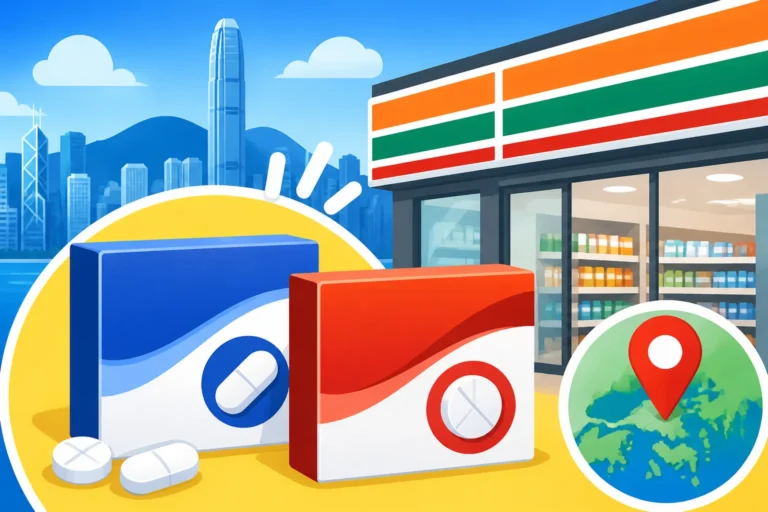
| Buying Simple Meds | Go to Watsons/Mannings | Finding Ibuprofen and Paracetamol Brands in HK Convenience Stores |
| Customs Rules | Check the latest limits | Declaring Prescription Drugs at HK Customs: Forms and Limits |
Disclaimer
This guide is for informational purposes only and does not constitute legal or medical advice. Hong Kong’s pharmaceutical laws and customs regulations are subject to frequent updates. Always consult with the Hong Kong Department of Health or the Customs and Excise Department directly before traveling with medication to ensure compliance with the most current statutes. For medical concerns, always seek the advice of a qualified healthcare professional.