Hospital Authority Fees: Eligible Persons (EP) vs Non-Eligible Persons (NEP)
Navigating the registration desk at a public hospital in Hong Kong can feel like a high-stakes interrogation when you are already dealing with a fever or a broken bone. I remember my first visit to the Queen Mary A&E ward, clutching my passport and praying my visa status meant I wouldn't be charged the "tourist" rate. This guide clarifies exactly how your residency status dictates your medical bills so you never face a surprise five-figure invoice.
Defining the Status: Who is an Eligible Person?
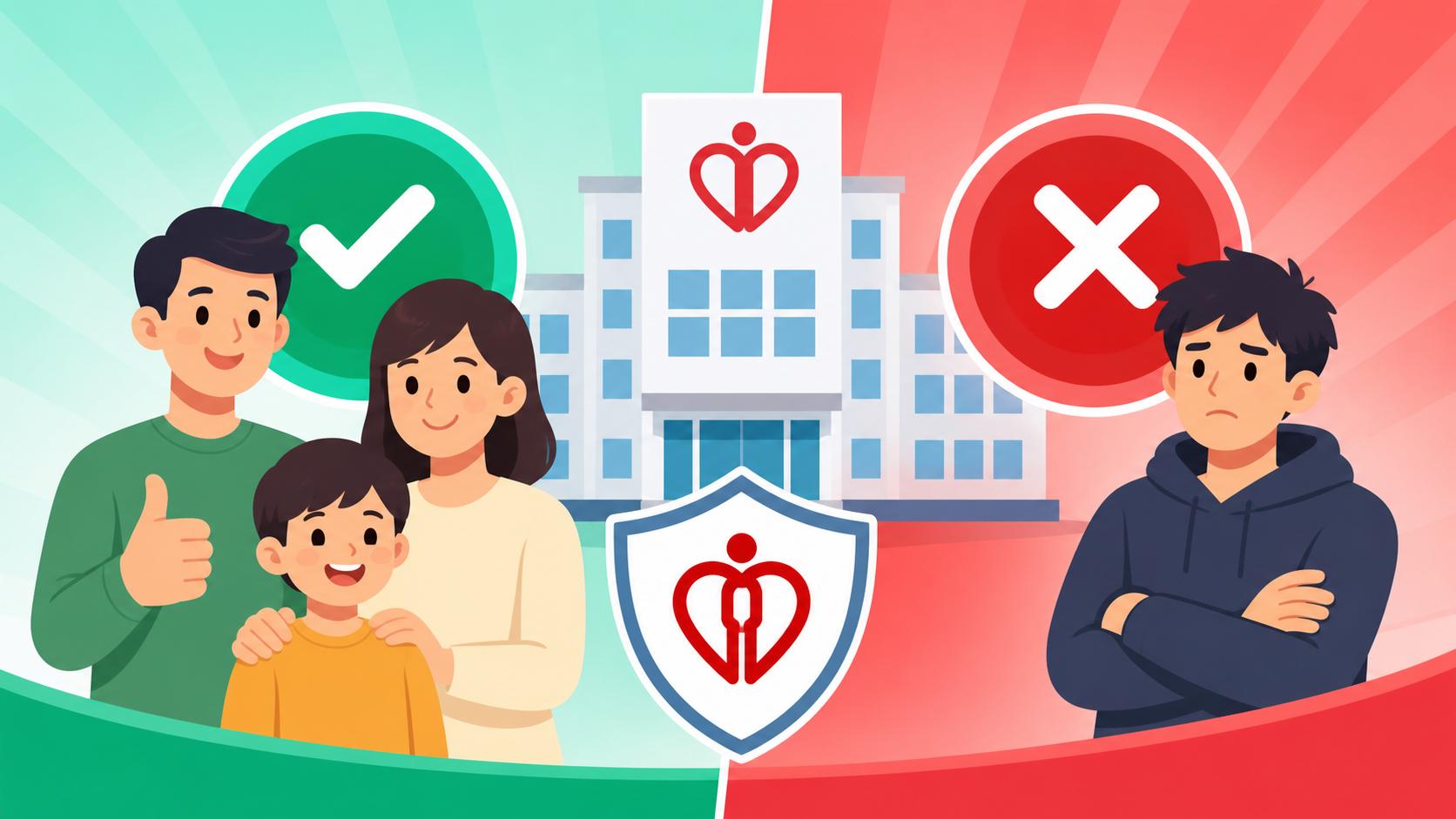
Understanding whether you fall into the "Eligible Person" (EP) or "Non-Eligible Person" (NEP) category is the most important factor in determining your healthcare costs in Hong Kong. This distinction is not just about having a visa; it is about the specific type of documentation you carry and your legal right to reside in the city at that moment. The Hospital Authority (HA) is very strict about these definitions, and the difference in billing is staggering.
The HKID Gateway: Holders of Valid Identity Cards
To be considered an Eligible Person, you must generally be a holder of a Hong Kong Identity Card issued under the Registration of Persons Ordinance. This includes both Permanent Residents (those with the "Right of Abode") and non-permanent residents who are in the city on valid employment, dependent, or student visas. Many expats assume that because they haven't reached the 7-year mark for permanent residency, they will be charged higher rates. This is a common misconception. As long as your HKID is valid and you are legally residing here, you are an EP.
However, there is a catch. If your visa has expired or if you are in the middle of a "visa run" while waiting for a renewal, your status might temporarily revert to NEP. It is vital to keep your physical HKID on you at all times. When you arrive at a public clinic, the first thing they do is swipe that card. If the system shows your status as "inactive" or if you only have a photocopy, you might be billed the higher rate until you can prove your eligibility. This is why Registering Your HKID for Subsidized Public Healthcare Rates should be one of your top priorities the moment you receive your card from the Immigration Department.
Children and Dependents: Age and Residency Rules
The rules for children are slightly more nuanced. Children under the age of 11 who are Hong Kong residents are considered Eligible Persons even if they do not yet have a physical HKID. In these cases, you will need to present the child's Hong Kong birth certificate or a valid travel document with an endorsement showing their residency status. Parents can end up scrambling at 2 AM in an A&E ward because they forgot their child’s birth certificate; always keep a high-quality scan on your phone as a backup, though the physical document is often required for the initial registration.
For dependents who are not children—such as elderly parents brought over on a dependent visa—their eligibility starts the day their visa is activated and their HKID is issued. If they are visiting you on a standard tourist visa, they are strictly Non-Eligible Persons. This is a critical distinction for expat families to understand. Bringing a parent over for a three-month visit without travel insurance like SafetyWing can be a massive financial risk, as they will be charged the full NEP rates for any medical emergency that arises during their stay.
The Temporary Resident Dilemma: Tourists and Short-term Visitors
If you are in Hong Kong on a visitor visa, whether for business or pleasure, you are classified as a Non-Eligible Person. The Hospital Authority does not offer subsidies to those who do not contribute to the local tax system or hold long-term residency. This applies even if you are the spouse of a high-earning expat but haven't yet secured your dependent visa. The logic is simple: the public system is a taxpayer-funded resource reserved for those with a legal, long-term stake in the community.
NEP status also applies to individuals from Mainland China who do not hold a one-way permit for residence in Hong Kong. For many years, the city has managed high demand from non-residents, particularly in maternity services, which led to the implementation of the NEP "Package" system. If you find yourself in this category, even a simple consultation can cost ten times what an EP would pay. For those in the middle of moving or awaiting visa approvals, having a global plan from a provider like Cigna Global ensures that you aren't left paying these astronomical public "tourist" rates out of pocket.
The Financial Gap: Comparing EP and NEP Rates
The price discrepancy between an Eligible Person and a Non-Eligible Person is designed to reflect the true cost of medical services. While EPs pay a nominal "co-payment" that is heavily subsidized by the government, NEPs pay the full cost of the bed, the staff, the equipment, and the overhead. When you look at the numbers, it becomes clear why the Hospital Authority (HA) Guide: Accessing Public Healthcare for Expats is so essential for budgeting your life in the city.
Accident and Emergency (A&E) Fees
The most common point of entry into the public system is the A&E department. For an Eligible Person, a visit to the A&E costs a flat rate of HK$180. This fee covers the consultation, basic diagnostic tests (like a standard X-ray), and the initial medications provided. It doesn't matter if you are there for twenty minutes or six hours; the price remains the same. It is one of the best deals in global healthcare, provided you can handle the wait times.
For a Non-Eligible Person, that same visit costs HK$1,230. This is just the "entry fee." If you require specialized scans, specific treatments, or complex procedures, the costs can escalate beyond this base rate. Some tourists have been shocked to receive a bill of over HK$2,000 for a minor stitch-up and a tetanus shot. It is a stark reminder that while the public system is "public," it is certainly not free for everyone. Understanding Accident and Emergency (A&E) Triage Categories in Public Hospitals can also help you understand why, as an NEP, you might be paying more for a service that feels quite slow.
General Outpatient (GOPC) vs. Specialist (SOPC) Costs
General Outpatient Clinics (GOPCs) are for minor ailments like the flu or cold. For EPs, the cost is a mere HK$50 per consultation. This includes the doctor's time and the medication. Compare this to an NEP, who must pay HK$445 per visit. While HK$445 might still seem affordable compared to private US healthcare, it is nearly nine times the local rate. For many expats, Using the HA Go App for Booking Public Outpatient Clinics is the most efficient way to access these $50 appointments, but only if you have your EP status verified in the system.
Specialist Outpatient Clinics (SOPCs) are where the gap widens further. An EP pays HK$135 for the first appointment and HK$80 for subsequent follow-ups. There is also a small fee for each medication prescribed (usually HK$15 per item). For an NEP, the first specialist consultation starts at HK$1,190. If you have a chronic condition requiring regular specialist visits, being an NEP is financially unsustainable. This is where How Specialist Referrals Work in the HK Public System becomes a vital piece of knowledge, as the referral must be handled correctly to maintain the EP subsidy.
Inpatient Charges: Wards, Medication, and Surgery
This is the area where the EP/NEP distinction can mean the difference between a minor inconvenience and financial ruin. For an EP, an acute bed in a general ward costs an initial "admission fee" of HK$75 and a daily maintenance fee of HK$120. This includes all meals, nursing care, and standard medications. If you are hospitalized for five days, your total bill would be around HK$675.
An NEP, however, is charged a daily rate of HK$5,100 for a general ward bed. This does not include surgery, special procedures, or high-cost medications. A five-day stay for an NEP would cost at least HK$25,500 just for the bed alone. If surgery is required, the costs can easily hit six figures. In these scenarios, the Healthcare in Hong Kong: Public vs Private Systems Explained (2027) guide becomes incredibly relevant, as many people realize that if they are going to pay thousands of dollars, they might prefer the comfort of a private facility.
| Service Category | Eligible Person (EP) Fee | Non-Eligible Person (NEP) Fee |
|---|---|---|
| A&E Attendance | HK$180 per visit | HK$1,230 per visit |
| General Outpatient (GOPC) | HK$50 per visit | HK$445 per visit |
| Specialist Outpatient (SOPC) | HK$135 (1st), HK$80 (Follow-up) | HK$1,190 per visit |
| Inpatient (General Ward) | HK$75 (Admin) + HK$120/day | HK$5,100 per day |
| Inpatient (Intensive Care) | HK$120 per day | HK$24,400 per day |
| Dressing or Injection | HK$19 | HK$100 |
Navigating the Public System as an Eligible Person
Being an "Eligible Person" is a privilege in the Hong Kong system, but it requires a bit of administrative diligence to keep it smooth. The Hospital Authority operates like a massive, well-oiled machine, but if your paperwork is out of order, the machine grinds to a halt. From my experience, the key to navigating this is knowing exactly what to bring and how to use the digital tools provided.
Registration Requirements and Document Checklists
Every time you visit an HA facility, you must register at the shroff (the payment counter) or the registration desk. If you are an EP, the system needs to see your original HKID. Many people have tried to show a photo of their ID on their phone, and while some kind clerks might let it slide once, most will insist on the physical card. If you have just arrived and are waiting for your ID, you must bring your passport and the landing slip provided by Immigration that shows your permitted stay and visa type.
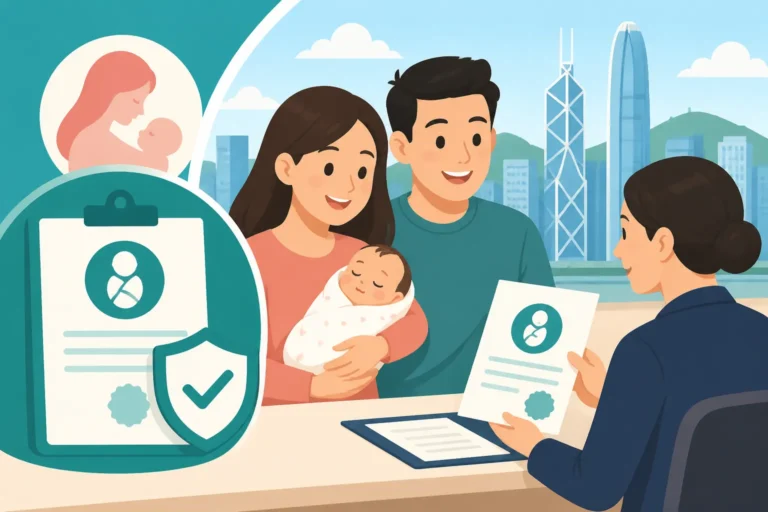
For those on dependent visas, you must also prove your relationship if the system hasn't been updated. This is particularly true for newborns. Until the birth is registered and you have the certificate, you will likely be paying the NEP rate and then claiming a refund later once the status is confirmed. Dealing with Prescription Drug Laws: Bringing Foreign Medication into Hong Kong is another area where EP documentation matters; if you are bringing in medication to a public hospital for a doctor to review, they need to verify your residency to ensure you aren't trying to circumvent the system.
The "Hidden" Costs: Medication and Prosthetics
Even as an EP, the system is not 100% "free." While the consultation and the bed are subsidized, there are "self-financed items" (SFI) that you must pay for. These include high-cost drugs that are not on the standard HA Drug Formulary, as well as prosthetic devices, pacemakers, or certain types of stents. If you need a specialized hip replacement, the surgery and the hospital stay will be cheap, but the physical prosthetic could cost you tens of thousands of dollars.
It is important to ask your doctor if any of the treatments they are recommending fall under the SFI category. The HA does have a "Samaritan Fund" to help those who cannot afford these items, but the means-testing is very strict. For most expats, this is why having a supplementary insurance policy from Cigna Global is so valuable—it covers the "gaps" that the public system leaves behind, such as these high-cost self-financed medical items.
Using the HA Go App for Billing
The HA Go app has been a game-changer for managing healthcare in Hong Kong. Once you have registered as an EP at a hospital counter and "activated" your account (which requires a staff member to verify your HKID), you can manage almost everything from your phone. You can see your upcoming appointments, check your lab results, and most importantly, pay your bills.
No more standing in long queues at the shroff after a tiring doctor's visit. You can simply walk out, and a few hours later, the bill will appear in the app. You can pay via credit card, Apple Pay, or FPS. This app is the primary way I manage my family's health now. It also keeps a record of all your past payments, which is incredibly useful for tax season or when you need to provide proof of treatment for an insurance claim.
Why "Eligible" Doesn't Always Mean "Free": Waiting Times and Limitations
While the low cost of being an EP is attractive, it comes with a significant trade-off: time. The public system is under immense pressure, and being an Eligible Person means you are joining a very long queue. You have to be prepared for the reality of a system that prioritizes based on need, not on who arrived first.
Triage Categories and A&E Wait Times
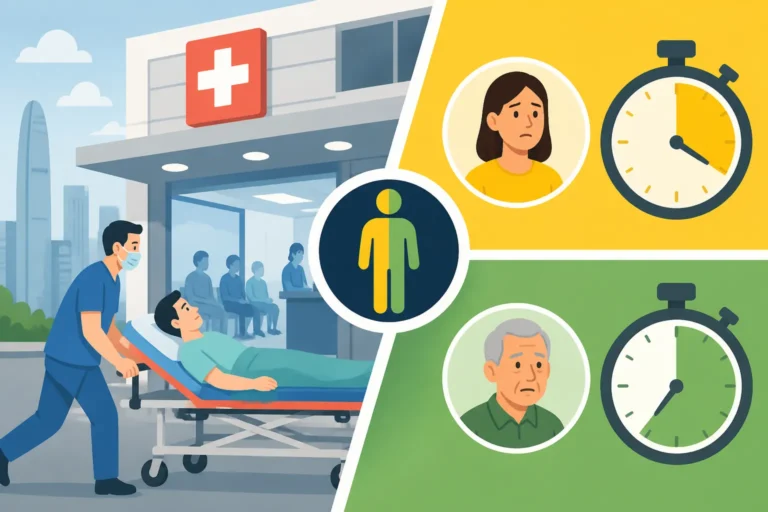
When you arrive at the A&E and pay your HK$180, you are immediately seen by a triage nurse. They will categorize you into one of five levels: Critical, Emergency, Urgent, Semi-urgent, and Non-urgent. If you are in the first two categories, you will be seen almost instantly. If you are "Semi-urgent" (like a simple fracture or a high fever), you could be waiting for many hours.
The Hospital Authority displays live wait times on their website and on screens in the waiting rooms. It is not uncommon to see wait times exceeding 8 hours at popular hospitals like Queen Elizabeth or Prince of Wales. This is the "hidden cost" of the public system. For those who value their time or have a non-life-threatening but painful condition, Finding English-Speaking General Practitioners (GPs) in Central for a private consultation is often worth the extra money.
Specialist Referrals: The Months-Long Queue
If a GP at a public clinic decides you need to see a specialist—say, an orthopedist for a knee issue—they will issue a referral. As an EP, you will take this referral to the SOPC and get an appointment. However, for "stable" cases, the waiting time can be measured in years. I’ve seen referrals for routine scans or non-urgent surgeries that are scheduled for 18 to 24 months in the future.
This is the primary reason why even "Eligible" expats often maintain private health insurance. If you need an MRI to diagnose a sports injury, you can wait 18 months in the public system for a HK$135 appointment, or you can pay HK$6,000 to have it done tomorrow at a private facility. Understanding Private Hospitals in Hong Kong: Admission, Costs, and Insurance is crucial here; the public system is your safety net for major trauma and chronic illness, but the private system is your fast track for quality of life.
When to Consider Private Insurance
Given the wait times and the "self-financed" costs, relying solely on the public system can be risky. If you are an NEP, insurance is a mandatory requirement to avoid bankruptcy. If you are an EP, insurance is a "luxury" that quickly becomes a necessity if you develop a condition that the public system deems "non-urgent."
Providers like SafetyWing are excellent for those on the move or those who are in between visa statuses (and thus might be billed as NEPs). For long-term residents, a comprehensive plan from Cigna Global provides access to the private network, where wait times are non-existent and the facilities feel more like hotels than hospitals. Even if you are an EP, having the option to skip a 2-year queue for a surgery is something most people find worth the premium.
Special Circumstances and Exemptions
There are rare cases where the strict EP/NEP rules are adjusted or where assistance is available. The Hong Kong government does not want people dying in the streets because they can't afford the $1,230 A&E fee, but they also have to protect the system from abuse.
Emergencies and Life-Saving Treatment
In a true life-or-death emergency, the public hospitals will treat you first and ask questions later. If you are unconscious and brought in by an ambulance, the clinical team will perform all necessary life-saving procedures regardless of your residency status. However, the bill will still be generated based on your eligibility. If you are an NEP, you will still be charged the NEP rates for the surgery and the ICU bed once you are stabilized.
It is a common myth that Emergency Medical Services in HK: Calling 999 and A&E Wards are "free" for everyone. The ambulance ride itself is currently free for all, but the hospital care that follows is strictly billed. If you cannot pay the bill upon discharge, the hospital will work with you on a payment plan, but they will not simply waive the fee because you are a visitor.
Medical Fee Waivers for Low-Income Residents
For EPs who are facing extreme financial hardship, the Hospital Authority has a medical fee waiving mechanism. This is primarily aimed at recipients of Comprehensive Social Security Assistance (CSSA), but other low-income groups can also apply. This process involves a rigorous assessment by a Medical Social Worker who looks at your household income, assets, and medical needs.
As an expat, it is highly unlikely you would qualify for these waivers, as most visas (employment or dependent) require proof of financial self-sufficiency. However, it is good to know that the safety net exists for the most vulnerable members of the community. For the rest of us, the best way to manage costs is to ensure our HKID status is always up to date and that we have a solid understanding of how the Hospital Authority (HA) Guide: Accessing Public Healthcare for Expats applies to our specific situation.
Comparison of EP and NEP Hospitalization Costs
When you are hospitalized, the costs can spiral quickly if you aren't an EP. Below is a realistic breakdown of what a 3-day stay for a moderate procedure might look like in the public system.
| Item | EP Estimated Cost | NEP Estimated Cost |
|---|---|---|
| Admission Fee | HK$75 | Included in daily rate |
| 3 Days General Ward | HK$360 | HK$15,300 |
| Standard Surgery Fee | Subsidized (Minimal) | HK$20,000 – HK$100,000+ |
| Diagnostic Scans (MRI/CT) | HK$0 – HK$1,000 | HK$5,000 – HK$15,000 |
| Standard Medication | HK$15 per item | Full Market Price |
| Total Estimated Bill | HK$450 – HK$1,500 | HK$40,000 – HK$130,000+ |
Disclaimer
This guide is intended for informational purposes only and does not constitute legal or financial advice. Hospital Authority fees and eligibility criteria are subject to change by the Hong Kong government. Always verify current rates and your personal residency status directly with the Hospital Authority or the Immigration Department before seeking non-emergency medical treatment.