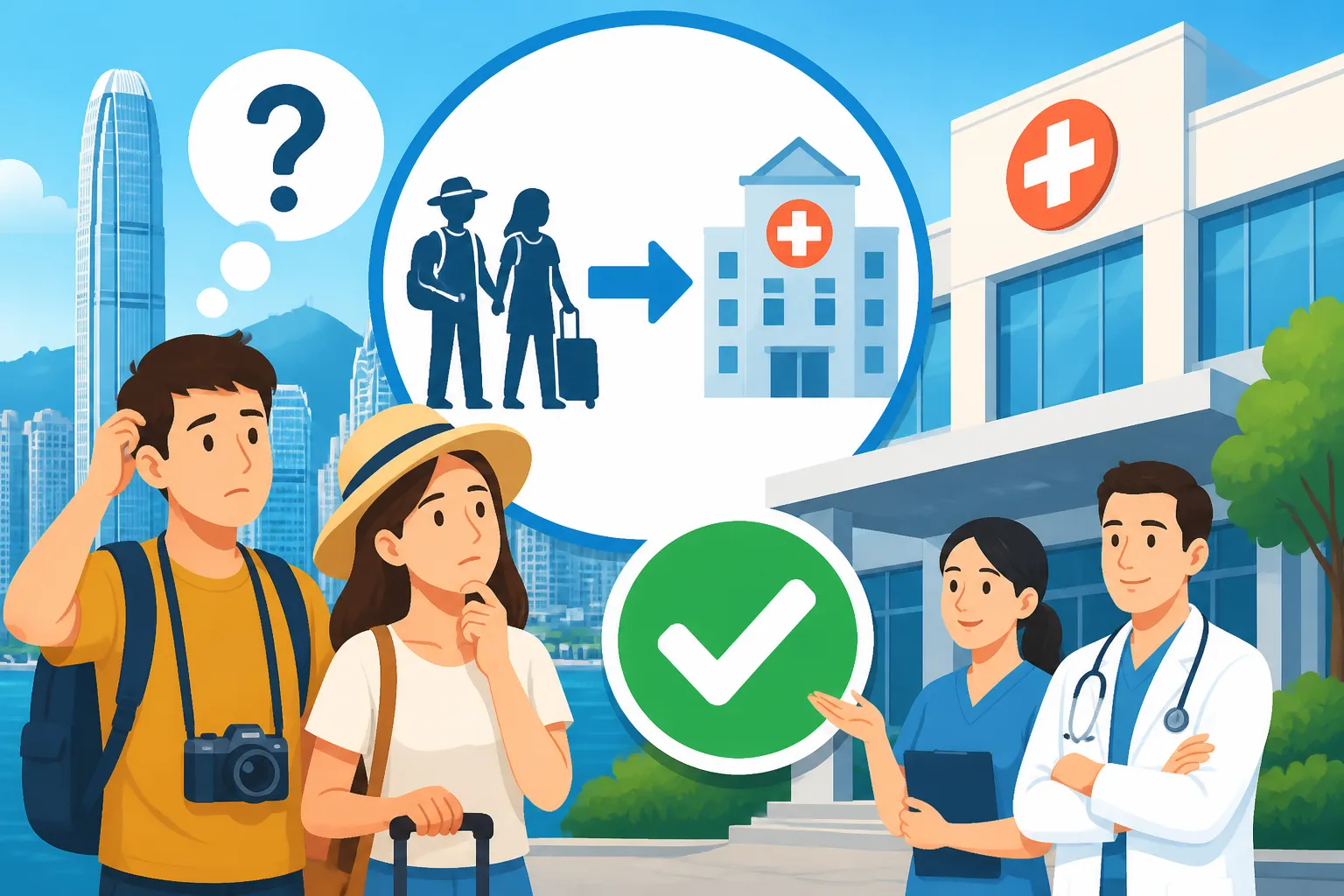
Can Non-Residents (Tourists) Use the Public Hospital System?
Finding yourself or a visiting family member in need of urgent medical care while in Hong Kong is a stressful scenario that catches many off guard. I remember the panic when my visiting uncle tripped in Soho and needed stitches; we weren't sure if a public hospital would even look at his passport. This guide clarifies exactly how tourists can navigate the public healthcare system and what it will cost.
The Divide Between Eligible and Non-Eligible Persons
The first thing you need to understand about the Hong Kong healthcare landscape is the strict categorization of patients. The system is managed by the Hospital Authority (HA), and they divide every person who walks through their doors into two camps: Eligible Persons (EP) and Non-Eligible Persons (NEP). If you are a tourist or a non-resident visitor, you fall squarely into the Non-Eligible Person category. This distinction is the single most important factor in determining your experience and your final bill.
Eligible Persons are typically those holding a valid Hong Kong Identity Card (HKID). This includes permanent residents, expats on employment or student visas, and even their dependents. For these individuals, the government heavily subsidizes the cost of care, often covering over 90% of the actual expenses. If you are an expat reading this for a guest, you likely already know the benefits of Registering Your HKID for Subsidized Public Healthcare Rates which allows you to access $180 HKD A&E visits. However, a tourist does not have this luxury.
Non-Eligible Persons include anyone visiting on a landing slip, tourists, and even non-resident family members who haven't secured a dependency visa. While the public system is legally obligated to provide life-saving emergency care to anyone regardless of their status, they are not obligated to provide it at a subsidized rate. This means that while a public hospital will never turn you away in a life-or-death situation, they will charge you the "at-cost" rate, which is significantly higher than what a local pays. This is a common point of confusion for visitors who have heard that Hong Kong has "cheap" public healthcare; it is only cheap if you have the right plastic card in your wallet.
For more context on how the two systems operate side-by-side, you might want to look into Healthcare in Hong Kong: Public vs Private Systems Explained (2027). The public system is designed as a safety net for the local population, and the pricing for tourists is intentionally set to discourage non-residents from using public resources for non-urgent issues, thereby keeping wait times manageable for taxpayers.
The Financial Reality of Tourist Healthcare Costs
If you are a tourist entering a public Accident and Emergency (A&E) department, the price jump is immediate. While a resident pays a nominal fee, a non-resident is charged a flat rate just to see the triage nurse and the doctor. This fee does not include specialized tests, imaging, or medications in many cases. It is a "gatekeeper" fee that ensures the visitor is aware they are entering a system where they are not the primary stakeholders.
The Hospital Authority updates its fee structure periodically, and by 2026, these costs have remained substantial to reflect the true cost of medical labor and resources in one of the world’s most expensive cities. For instance, an A&E visit for a non-resident is several times more expensive than for a resident. If that visit leads to an admission, the costs escalate per day. You are charged for the bed, the "maintenance" (food and nursing care), and then additional fees for every procedure performed. It is a far cry from the nearly-free experience residents enjoy.
| Service Category | Eligible Person (Resident) | Non-Eligible Person (Tourist) |
|---|---|---|
| A&E Visit (per attendance) | ~HK$180 | ~HK$1,230 |
| General Inpatient (per day) | ~HK$120 | ~HK$5,100 |
| Intensive Care (per day) | ~HK$120 | ~HK$24,400 |
| Specialist Outpatient (first visit) | ~HK$135 | ~HK$1,190 |
| Dressing or Small Injection | ~HK$19 | ~HK$100 |
Detailed breakdowns can be found in our Hospital Authority Fees: Eligible Persons (EP) vs Non-Eligible Persons (NEP) guide, but the takeaway for a tourist is clear: public healthcare is not "free" for you. In fact, for minor issues like a sore throat or a small cut, you might actually find that visiting a private General Practitioner in a neighborhood clinic is faster and potentially comparable in price once you factor in the long wait times at public hospitals.
It is also vital to note how the billing works. Public hospitals generally require payment upfront for A&E services for non-residents. If you are admitted, they may ask for a significant deposit. If you are worried about the payment methods, you should check Do Public Hospitals Accept Credit Cards, Alipay, or WeChat Pay? to ensure you have the means to settle the bill before being discharged. Unlike some Western systems, the HA is quite efficient at debt collection and may involve immigration records if bills are left unpaid.
Navigating the Accident and Emergency Wards
If you do decide to use the public system—perhaps because of a serious injury where a private hospital might not have the same level of trauma equipment—you need to understand the triage system. Every patient is assessed by a nurse upon arrival and assigned a category from 1 to 5. Category 1 is "Critical" (life-threatening), while Category 5 is "Non-urgent."
As a tourist with a non-urgent issue, you will almost certainly be placed in Category 4 or 5. In a busy hospital like Queen Mary in Pok Fu Lam or Queen Elizabeth in Jordan, this can result in a wait time of six to twelve hours. The system prioritizes clinical need, not the ability to pay or the status of your visa. For a deep dive into what these numbers mean on the waiting room screen, read Accident and Emergency (A&E) Triage Categories in Public Hospitals.
During these long waits, the environment can be overwhelming. Public wards are often crowded, and while the clinical care is world-class, the "amenities" are minimal. If you are used to private healthcare in your home country, the lack of privacy and the brisk, no-nonsense attitude of the staff might be a cultural shock. This is where having a plan matters. If the situation is not life-threatening, many tourists find that Private Hospitals in Hong Kong: Admission, Costs, and Insurance offer a much more comfortable experience, albeit at a higher price point than even the NEP public rates.
In a true emergency, calling 999 is the correct course of action. The ambulance will take you to the nearest public hospital with an A&E department. A common question I get from visitors is, Is the Ambulance Free in Hong Kong for Tourists and Expats?. The answer is generally yes for the transport itself, but the moment you enter the hospital doors, the charges for the medical consultation and treatment begin. You should be prepared to provide a passport or a copy of it for registration immediately upon arrival at the hospital.
The Importance of Insurance and Direct Billing
Because the costs for Non-Eligible Persons are so high, traveling to Hong Kong without comprehensive insurance is a massive risk. While the public system is excellent, it is not set up to handle "direct billing" with foreign insurance companies easily. Most public hospitals will require you to pay the bill yourself using a credit card and then seek reimbursement from your provider later. This can be a hurdle if you face a $50,000 HKD bill for a multi-day stay.
This is where having a robust international policy or high-quality travel insurance becomes a lifesaver. Providers like SafetyWing are specifically designed for digital nomads and travelers who might need to navigate these high-cost hubs. They understand the "pay-and-claim" nature of many international systems. If you are an expat living here and hosting family, ensuring they have a policy from SafetyWing before they land at HKIA can save you from having to personally guarantee their hospital deposits.
For those who are moving to Hong Kong or staying for extended periods as visitors (perhaps on a prolonged visitor visa), a more permanent solution like Cigna Global might be appropriate. Cigna Global offers the kind of coverage that private hospitals in Hong Kong recognize, often allowing for "guarantee of payment" letters that bypass the need for you to swipe your own card for large sums.
When you show up at a facility like Queen Mary, you might ask, Can I Use My Foreign Health Insurance Card at Queen Mary Hospital?. The short answer is: you can use it to claim the money back, but don't expect the hospital to call your insurer in London or New York to settle the bill on your behalf. They expect the patient to settle the account. This is a stark difference from the private sector, where many clinics in Central and Tsim Sha Tsui have established direct billing ties with major international insurers.
If you find yourself needing specialized care rather than an emergency room, the public system's referral process is another hurdle. You cannot simply walk into a public specialist clinic as a tourist. You usually need a referral from a local doctor. To understand this process better, read How Specialist Referrals Work in the HK Public System. For most tourists, it is significantly easier to book a private specialist directly, as the public wait times for "Non-urgent" specialist appointments can be months or even years.
Practical Steps When a Tourist Falls Ill
If you are currently with a tourist who needs help, your first step should be to assess the severity. If they can walk and talk and are not in severe pain, avoid the public A&E. Instead, look for a private 24-hour clinic. There are several located in major districts like Causeway Bay and Mong Kok. These will be more expensive than the "resident" rate at a public hospital but will save you hours of sitting in a plastic chair in a crowded waiting room.
If you must use the public system, ensure the visitor has their passport and a form of payment ready. For those who need to access non-emergency services, like a simple check-up or a prescription refill, the public system is even more difficult to navigate as a non-resident. You are often better off visiting a private GP. You can find more information on this in our Hospital Authority (HA) Guide: Accessing Public Healthcare for Expats.
Finally, keep in mind that the Hong Kong medical system is highly professional but also highly bureaucratic. The staff at public hospitals are dealing with incredible volumes of patients. Being polite, having your documents ready, and understanding that you will be charged the NEP rate will make the process much smoother. If the language barrier is a concern, don't worry too much; most doctors in the public system are fluent in English, though support staff may primarily speak Cantonese.
Disclaimer
This article is for informational purposes only and does not constitute medical or legal advice. Healthcare costs and policies in Hong Kong are subject to change by the Hospital Authority. Always check the official Hospital Authority website for the most current fee schedules and emergency protocols. If you are experiencing a medical emergency, dial 999 immediately. Use of international insurance like Cigna Global or SafetyWing should be verified against your specific policy terms and conditions.