Waste Management in HK: Recycling and Municipal Solid Waste Rules
One of the trickiest parts of settling into Hong Kong as an expat, after you’ve navigated the visa maze and found a flat that doesn’t require selling a kidney, is figuring out the waste management system. It's often vastly different from what we're used to back home, leading to confusion, frustration, and sometimes, a bit of guilt as you stand there, recycling in hand, wondering where on earth it’s supposed to go. This guide aims to clear up the mystery, from the upcoming Municipal Solid Waste (MSW) charging scheme to everyday recycling.
Understanding Hong Kong's Waste Landscape
When you first arrive in Hong Kong, the sheer energy and efficiency of the city are palpable. However, beneath the gleaming skyscrapers and bustling streets, there's a quieter, more pressing challenge: waste. It’s a reality that hits home for many expats when they start managing their own household waste, often in much smaller living spaces than they’re accustomed to.
The Scale of the Problem: Daily Waste Generation and Landfills
Hong Kong is a city of over 7 million people, and as you can imagine, that generates a colossal amount of waste every single day. The Environmental Protection Department (EPD) regularly publishes statistics, and the numbers are often startling. We're talking thousands of tonnes of municipal solid waste heading to our three operational landfills daily: West New Territories (WENT), South East New Territories (SENT), and North East New Territories (NENT). These landfills are massive, but they're also rapidly filling up, which is a major environmental and land-use concern for a city as compact as Hong Kong. The government has been trying for years to expand these facilities or develop new ones, but land scarcity and public opposition make it a constant uphill battle. This unsustainable rate of waste generation is precisely why the city is pushing for more comprehensive waste reduction and recycling efforts.
Why Expats Find it Confusing: Language Barriers and Differing Rules
For many of us, the waste management system in Hong Kong feels like a riddle wrapped in an enigma, particularly if you're fresh off the plane. Back home, you might have specific coloured bins for different recyclables, clear guidelines, and maybe even collection services right at your doorstep. Here, it can be a patchwork of different rules and expectations. What one building management deems acceptable, another might not. The signage at local recycling points might be primarily in Cantonese, and the sheer variety of plastics, for instance, can be baffling.
Adding to this complexity is the fact that many expats come from countries with well-established and often stringent recycling programmes. The initial lack of obvious, city-wide, curbside recycling in Hong Kong can be quite a culture shock. It's not that Hong Kong doesn't recycle; it's that the system operates differently, often requiring a proactive effort to seek out collection points and understand local nuances. Whether you're moving into a compact studio or a larger family apartment, figuring out the logistics of waste sorting in a limited space is a common first hurdle. Companies like Blueground or Habyt, offering serviced apartments, often have their own internal waste management systems, which can be a good starting point for new arrivals before they move into long-term rentals and face the full complexity.
The Municipal Solid Waste (MSW) Charging Scheme: What You Need to Know
This is the big one, the game-changer that Hong Kong has been discussing, planning, and debating for well over a decade. The Municipal Solid Waste (MSW) Charging Scheme is designed to tackle the city’s overflowing landfills head-on by implementing a "polluter-pays" principle. It's a fundamental shift in how we manage our waste, aiming to incentivize reduction and recycling.
How the Scheme Works: "Polluter Pays" Principle and Designated Bags
At its core, the MSW Charging Scheme will require households and businesses to pay for the municipal solid waste they dispose of. The idea is simple: the more you throw away, the more you pay. This is intended to encourage everyone to reduce their waste at the source and increase their recycling efforts.
The primary method of charging will be through the use of designated garbage bags. Imagine this: instead of using any old black bin bag, you’ll need to purchase specific, government-issued bags of various sizes, with the cost of waste disposal embedded in the price of the bag. These bags will be available for purchase at common retail outlets like supermarkets, convenience stores, and post offices. For larger items that don't fit into these bags, or for premises that use large waste containers, there will likely be weight-based charges or special labels to affix. The details of these labels and how they will be purchased and used for oversized items are crucial for implementation, and the EPD has been working on clarifying these aspects. The logic here is clear: if you have to pay for each bag, you're more likely to think twice before tossing something that could be recycled or reduced.
Timeline and Implementation Status (2026 update)
The MSW Charging Scheme has seen its fair share of delays and postponements. Originally planned for late 2023 or early 2024, it was further postponed, with the government citing concerns about the economic environment and public readiness. As of early 2026, the implementation date is still under review and has not yet been set in stone. The government has been conducting various public engagement activities and pilot schemes to iron out the logistical kinks and address public concerns. It’s a massive undertaking, requiring widespread public education, distribution networks for the bags, and adjustments across all sectors of society. While the "polluter pays" principle remains the long-term goal, the precise start date remains fluid. This is a common frustration for expats and locals alike, as it creates uncertainty. You might find yourself checking the news regularly, or asking your building management for the latest updates on the Municipal Solid Waste (MSW) Charging Scheme: Current 2026 Status.
Impact on Households and Businesses: Practical Implications and Budgeting
When the scheme eventually rolls out, it will affect every single household and business in Hong Kong. For residents, it means an additional, albeit small, item to factor into your everyday budgeting in HK: Cost of Living Benchmarks (2026). The cost per designated bag is designed to be affordable but noticeable enough to encourage behavioural change. You'll need to allocate space for both the new designated bags and your recycling efforts, which, in Hong Kong's compact flats, is easier said than done.
Businesses, particularly those in food and beverage or retail, will also face significant adjustments. They'll need to manage their waste more efficiently, potentially investing in new recycling infrastructure or food waste decomposition units. Property management companies, which play a huge role in waste collection for many residential estates, will be on the front lines of implementation, needing to educate residents and ensure compliance. This shift will require a collective effort and a willingness to adapt from everyone, from individual residents to large corporations.
Recycling in Hong Kong: A Deep Dive
While the MSW charging scheme is still on the horizon, recycling is very much a present reality in Hong Kong, albeit one that requires a bit of detective work for newcomers. The system has evolved significantly over the years, and there are more options available now than ever before.
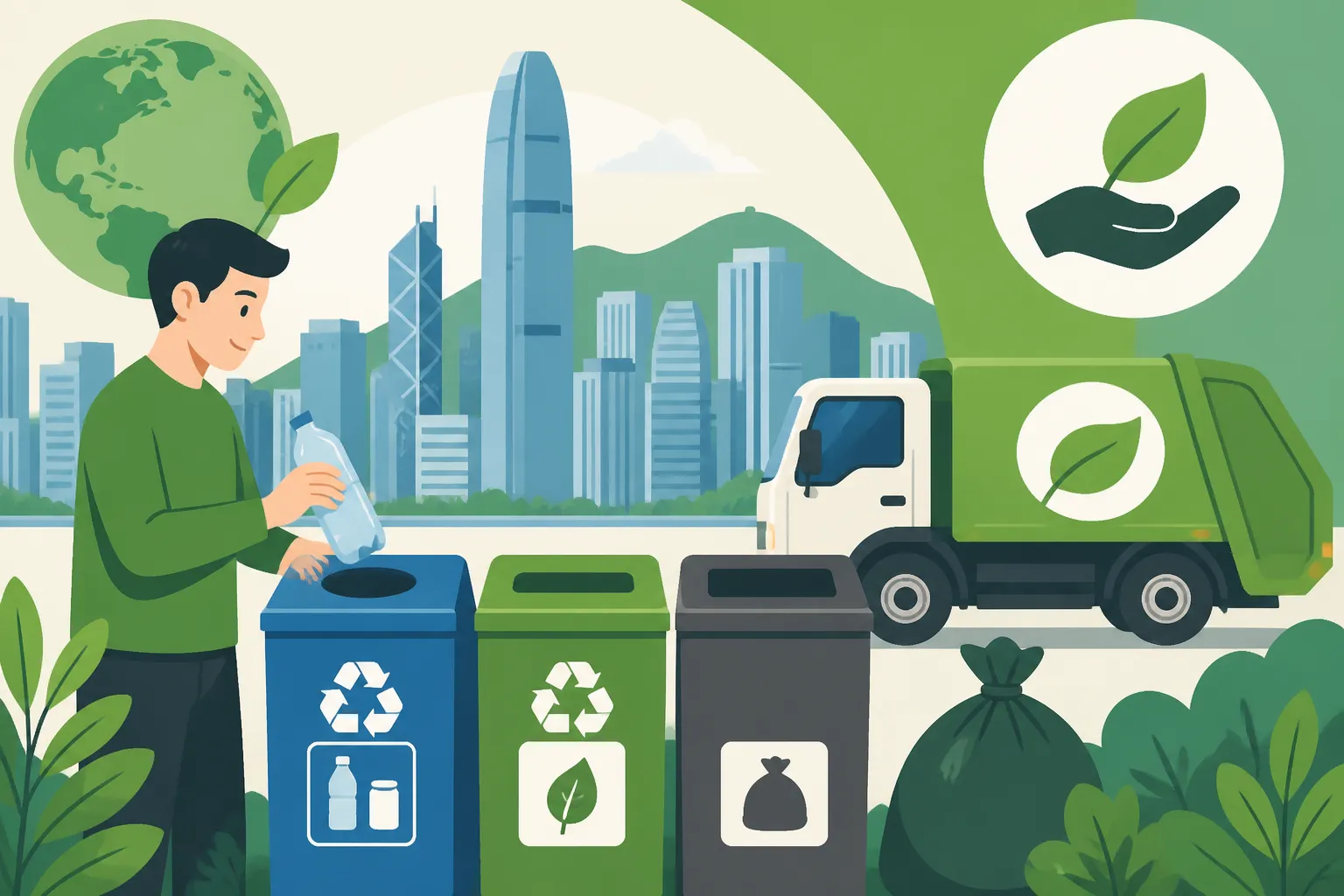
Types of Recyclables Accepted: Plastics, Paper, Metals, Glass, Food Waste
Understanding what can and cannot be recycled is often the first hurdle. Generally, Hong Kong's recycling programmes focus on common materials:
- Plastics: This is where it gets tricky. Traditionally, only plastics coded 1 (PET, like water bottles) and 2 (HDPE, like milk jugs and detergent bottles) were widely accepted. However, the EPD's "GREEN@COMMUNITY" network aims to accept all seven types of plastics (1-7), which is a huge step forward. Always check the symbol on the plastic item – a triangle with a number inside. Rinse them clean before recycling.
- Paper: This includes newspapers, magazines, cardboard boxes, and office paper. Make sure they are dry and clean. Avoid recycling paper that's heavily soiled with food or grease, as this can contaminate the entire batch.
- Metals: Aluminium cans (soft drink cans) and tin cans (food cans) are readily accepted. Again, give them a quick rinse.
- Glass: Glass bottles and jars of various colours are collected. Remove caps and rinse them out.
- Food Waste: This is a growing area of focus. Separate food waste collection points are becoming more common, often through dedicated bins in housing estates or at GREEN@COMMUNITY centres. This waste is often processed into compost or energy.
- Other Recyclables: Items like rechargeable batteries, fluorescent lamps, and small electrical appliances often have their own specific collection points, which we'll delve into shortly.
The GREEN@COMMUNITY Network: Collection Points and Community Recycling Centres
The government's flagship recycling initiative is the GREEN@COMMUNITY network. This comprises a growing number of community recycling centres (GREEN@HOME) and recycling stations (GREEN@STATION) across all 18 districts of Hong Kong. These centres are designed to be convenient one-stop shops for residents to drop off a wide range of recyclables.
The GREEN@HOME centres are larger facilities, often with staff on hand to guide you, educational displays, and even incentive programmes where you can earn "Green Points" for your recyclables, which can then be redeemed for daily necessities. GREEN@STATIONs are smaller, more distributed collection points, making it easier for residents to recycle regularly. The network specifically aims to collect all seven types of plastics, paper, metals, glass, regulated electrical equipment (REE), fluorescent lamps, rechargeable batteries, and food waste. It’s a significant improvement over the older, more fragmented recycling bins. You can use the EPD website or their mobile app to Recycling in HK: Using the GREEN@COMMUNITY Network to find your nearest facility.
Private Recycling Initiatives and Drop-off Points
Beyond the government's efforts, many private organisations and housing estates also run their own recycling programmes. Some large residential complexes have dedicated recycling bins within their buildings, sometimes even collecting specific items not covered by the standard government schemes. Always check with your building management – they are your primary source of information for waste disposal within your estate.
Furthermore, some environmental NGOs and commercial enterprises offer specialised recycling services. For example, some supermarkets have collection bins for plastic bags or specific types of packaging. Mobile phone companies often have drop-off points for old handsets and batteries. Keep an eye out for these, especially in commercial areas like Central, Tsim Sha Tsui, or Causeway Bay. The key is to be observant and ask around; you'll be surprised by how many options pop up once you start looking.
Here's a quick overview of common recyclables and where they typically go:
| Recyclable Type | Typical Collection Points | Key Considerations |
|---|---|---|
| Plastics (all 7 types) | GREEN@COMMUNITY (GREEN@HOME, GREEN@STATION), some housing estates, select private collection points | Rinse clean, check plastic code. Bags, films, bottles. |
| Paper (cardboard, newspapers, office paper) | GREEN@COMMUNITY, street-side bins, some housing estates | Keep dry and clean. Remove any food residue. |
| Metals (aluminium, tin) | GREEN@COMMUNITY, street-side bins, some housing estates | Rinse cans clean. |
| Glass (bottles, jars) | GREEN@COMMUNITY, dedicated glass recycling bins (often green cages), some housing estates | Remove caps, rinse clean. |
| Food Waste | GREEN@COMMUNITY (dedicated bins), some housing estates (often pilot programmes) | Separate from other waste. Check if your building participates in a scheme. |
| E-Waste (REE) | GREEN@COMMUNITY, WEEE GO collection points, designated retailers (e.g., electronics stores) | Check for WEEE GO labels. For larger items, arrange collection. |
| Rechargeable Batteries | GREEN@COMMUNITY, electronics stores, public libraries, MTR stations | Do not dispose of with general waste. |
| Fluorescent Lamps | GREEN@COMMUNITY, designated hardware stores | Handle with care to prevent breakage. |
Beyond Basic Recycling: Special Waste Items
Sometimes, it's not just about bottles and paper. There are certain types of waste that require special handling due to their size, composition, or potential hazard. Navigating these can be particularly challenging for expats, who might not be familiar with the local regulations.
E-Waste Disposal: Appliances and Electronics
In our highly digital age, electronic waste (e-waste) is a growing problem. Old phones, laptops, blenders, and even air conditioners don't belong in general rubbish bins. Hong Kong has implemented the Producer Responsibility Scheme on Waste Electrical and Electronic Equipment (WEEE), which provides a legal framework for the proper disposal and recycling of certain regulated electrical equipment (REE).
This means that when you buy a new REE item (like an air-conditioner, refrigerator, washing machine, television, computer, printer, scanner, or monitor), the seller is legally obligated to offer a free removal service for an old item of the same type. This "1-for-1" exchange is incredibly helpful. For other e-waste, you can take them to the GREEN@COMMUNITY facilities or look for designated collection points under the WEEE GO programme, which arranges free collection services for specific types of e-waste from residents. Never just dump your old electronics; they contain valuable materials that can be recovered and hazardous substances that need to be safely managed.
Bulky Waste: Furniture and Large Items
Moving apartments, or just finally getting rid of that ancient sofa, means dealing with bulky waste. This isn't something you can just leave by the curb. Most residential buildings, especially those managed by a property company, will have a designated area or process for bulky waste disposal. This usually involves informing your building management in advance and potentially paying a small fee for them to arrange collection. They often have specific days or times when these items are picked up.
If you're unsure, ask your building's concierge or management office. They can guide you through the proper procedure. For those looking to be more environmentally friendly, consider donating still-usable furniture to charities or selling it second-hand through platforms like Carousell or AsiaXpat. This not only diverts waste from landfills but can also help other residents on a budget. When you are considering your next move, especially when engaging relocation services like Sirelo, discussing bulky waste disposal early on can save a lot of headaches.
Hazardous Waste: Batteries, Chemicals, and Medical Waste
Certain items simply cannot go into either the general rubbish or standard recycling bins due to their hazardous nature. These include:
- Rechargeable Batteries: These contain heavy metals and chemicals that can harm the environment if not disposed of correctly. You can find dedicated collection boxes for rechargeable batteries at most GREEN@COMMUNITY centres, major shopping malls, public libraries, and many electronics retailers.
- Dry Cell (Non-rechargeable) Batteries: While less hazardous than rechargeable ones, it's still best to dispose of them properly. Many of the same collection points for rechargeable batteries will also accept dry cells.
- Fluorescent Lamps and Compact Fluorescent Lamps (CFLs): These contain small amounts of mercury and should be recycled separately. GREEN@COMMUNITY facilities and some hardware stores have specific collection points for them.
- Chemicals: Household chemicals, paints, solvents, and pesticides should never be poured down drains or tossed in the trash. The EPD occasionally organises special collection events for household hazardous waste. Check their website for details, or consult with your building management for advice on responsible disposal.
- Medical Waste: Sharps (needles), expired medications, and certain medical supplies require very specific disposal methods. Never put these in regular bins. Expired or unused medications can sometimes be returned to pharmacies, or you can check with the Hospital Authority or private clinics for guidance on proper disposal.
Practical Tips for Expats: Navigating Daily Waste Management
Getting into the rhythm of Hong Kong's waste management system can take some adjustment, but it's entirely manageable. Here are some actionable tips to help you integrate seamlessly.
Sorting at Home: Setting Up Your Bins
Living in a Hong Kong flat often means dealing with limited space, which can make setting up multiple bins for sorting feel like a luxury. However, a little creativity goes a long way. Instead of bulky bins, consider:
- Stackable Bins: These are great for small spaces, allowing you to separate paper, plastics, and general waste vertically.
- Bags for Each Category: Dedicate reusable shopping bags or smaller plastic bags for different types of recyclables. When one fills up, simply take it to the nearest collection point.
- Under-Sink Solutions: Utilise the space under your kitchen sink for smaller recycling containers.
- A "Clean Waste" Bin: Keep a separate bin or bag for items that need a quick rinse (like plastic bottles or metal cans) before being added to your main recycling bag.
The key is to develop a routine that works for your living space and schedule. Don't try to go from zero to perfectly sorted overnight. Start with one or two categories, like plastics and paper, and gradually expand as you get comfortable. Remember, the goal is to make it easy enough that you stick with it.
Finding Your Nearest Recycling Points: Online Tools and Apps
Gone are the days when finding a recycling bin felt like a treasure hunt. The EPD has made significant strides in providing accessible information:
- EPD Website: The Environmental Protection Department's website (www.epd.gov.hk) has a dedicated section for waste management, including an interactive map of all GREEN@COMMUNITY facilities (GREEN@HOME and GREEN@STATIONs), as well as other public recycling points.
- Mobile Apps: The EPD also has mobile applications that can help you locate the nearest recycling points based on your current location. These apps often provide details on what materials are accepted at each site.
- Google Maps: A simple search for "recycling near me" or "GREEN@COMMUNITY" on Google Maps can also yield surprisingly good results, often showing location, opening hours, and accepted materials.
- Community Forums: Expat groups on Facebook or forums like AsiaXpat are often excellent resources. Residents share tips on local collection points, especially for niche items, and can provide up-to-date information specific to your neighbourhood.
Language and Community Engagement: Asking Your Building Management
One of the best resources for navigating waste management in Hong Kong is your building management or concierge. They are familiar with the specific arrangements for your building, whether it's designated collection areas, special arrangements for bulky waste, or information on nearby recycling points.
Don't be shy about asking. Even if there's a language barrier, a simple translation app can bridge the gap, or you can often find English-speaking staff. Many expat families also rely on their domestic helpers, who often have a better grasp of local practices and can be invaluable in managing household waste effectively. Building a good rapport with your building management and engaging with your local community will make the whole process much smoother. When companies like Sirelo help you relocate, they might even provide initial guidance on these practicalities.
Challenges and Frustrations: The Expat Perspective
Let's be real – living in Hong Kong, while exciting, often comes with its unique set of challenges. Waste management is no exception. Many expats share similar frustrations, and it’s important to acknowledge them.
Space Constraints in Hong Kong Flats: Where to Put Multiple Bins
This is perhaps the biggest and most universal groan-inducing challenge. Hong Kong apartments are renowned for their efficient, albeit compact, design. Trying to fit even two small bins for general waste and recycling can feel like a game of Tetris. If you're looking to separate paper, plastic, glass, and metal, you might feel like your kitchen or living room is turning into a mini-recycling depot.
The temptation to just toss everything into one bin is strong, especially when you're exhausted after a long day. This is where clever storage solutions, small stackable bins, or simply using sturdy reusable bags that can be tucked away come in handy. It requires a mindset shift, away from the large, multi-compartment bins often found in larger homes. Remember to also properly maintain your air conditioner to avoid mold and ensure good ventilation in your small space.
Inconsistent Information and Enforcement: Different Estates, Varying Rules
One of the most perplexing aspects is the lack of a fully standardised, city-wide system that is consistently enforced everywhere. While the EPD has its GREEN@COMMUNITY network, many housing estates and private buildings have their own rules, or lack thereof. You might move from an estate with excellent internal recycling facilities to one where residents are expected to find external drop-off points for everything.
This inconsistency can lead to confusion and frustration, as what you learned in your previous neighbourhood might not apply in your new one. Always treat your building management as your first point of contact for waste rules specific to your residential complex. Unfortunately, not all management companies are equally proactive or transparent with their waste management policies. This is an area where ongoing government education and clearer guidelines for property managers would greatly benefit the expat community.
The Role of Property Management: Your Primary Point of Contact
As mentioned, your property management office (or concierge) is often the most critical link in your waste management chain. They dictate how waste is collected within your building, where the rubbish chutes are, if there are any internal recycling bins, and how bulky waste is handled. In some cases, they might even offer insights into nearby food waste collection points or specialised recycling services.
However, their level of support and engagement can vary widely. Some property managers are incredibly helpful and provide clear bilingual instructions, while others might offer minimal guidance. It's often up to residents to proactively seek information. Being aware of your Renting in Hong Kong: Apartments, Leases, and Tenant Rights also includes understanding your responsibilities and the building’s rules regarding waste. If you’re considering moving, it's worth asking about waste management practices during your apartment viewing or when speaking with the estate agent.
The Future of Waste Management in HK
Despite the current challenges, Hong Kong is not standing still when it comes to waste. There's a clear recognition from the government that significant changes are needed to ensure environmental sustainability for future generations.
Government Initiatives and Targets: Long-term Plans and Infrastructure
The Hong Kong government has a comprehensive Waste Blueprint for Hong Kong 2035, which sets out a vision of "Waste Reduction, Resources Circulation, Zero Landfill." This ambitious plan aims to reduce per capita municipal solid waste disposal by 40-45% and increase the recovery rate of MSW to about 55% by 2035.
Key initiatives include:
- Continued Expansion of the GREEN@COMMUNITY Network: More recycling centres and stations are being rolled out to ensure better accessibility across the city.
- Development of I·PARKs: These are large-scale, modern waste treatment facilities, such as the Integrated Waste Management Facility (IWMF) that uses advanced incineration technology to turn waste into energy, significantly reducing landfill reliance.
- Food Waste Treatment Facilities: The O·PARK network focuses on turning food waste into valuable resources like biogas and compost. There are plans to expand these facilities to handle a larger proportion of the city's food waste.
- Public Education and Engagement: Ongoing campaigns aim to raise public awareness about waste reduction, reuse, and recycling.
These long-term plans demonstrate a commitment to moving beyond just landfilling and towards a more circular economy where waste is seen as a resource.
How Expats Can Contribute More: Advocacy and Conscious Consumption
As expats, we have a unique opportunity to contribute to Hong Kong's environmental goals. Beyond diligently sorting our waste and utilising recycling facilities, we can:
- Reduce at the Source: The most effective waste management starts by not generating waste in the first place. Choose products with minimal packaging, use reusable bags, bottles, and coffee cups. Support local businesses that prioritise sustainable practices. When doing your grocery shopping, consider Wet Markets vs Supermarkets: Where to Get Fresh Produce and reduce plastic packaging from your supermarket haul.
- Support Local Initiatives: Look for farmers' markets, bulk food stores, or zero-waste shops that offer alternatives to heavily packaged goods.
- Educate Others: Share your knowledge and enthusiasm for recycling with friends, colleagues, and even building management. Collective effort is crucial.
- Advocate for Change: Join local environmental groups, participate in community clean-ups, or simply provide feedback to the EPD on how waste management could be improved. Our diverse perspectives can be valuable.
- Consider Sustainable Lifestyle Choices: From your wardrobe to your daily commute, making conscious choices reduces your overall environmental footprint. For example, exploring Public Transport in HK: MTR, Trams, Buses, and Ferries can significantly reduce your carbon footprint compared to private transport.
Ultimately, navigating waste management in Hong Kong requires patience, persistence, and a willingness to adapt. It might not always be as straightforward as you'd like, but by understanding the system, actively participating in recycling, and embracing the "reduce first" mindset, you can make a tangible difference in keeping this vibrant city beautiful and sustainable.
Disclaimer
The information provided in this guide is intended for general informational purposes only and does not constitute legal or professional advice. Waste management policies and regulations in Hong Kong are subject to change. Always refer to the official websites of the Environmental Protection Department (EPD) and consult with your building management or relevant authorities for the most accurate and up-to-date information.