Buying the Standard, Tourist, or Mobile Octopus Card
Ah, the sheer chaos of arriving in a new city, trying to figure out the local currency, fumbling with exact change for a bus, or staring blankly at a complex MTR ticket machine. It's a rite of passage for many expats and tourists in Hong Kong, and frankly, it can be a bit overwhelming! But fear not, because Hong Kong has a secret weapon that smooths out most of these daily payment woes: the Octopus card. This guide is going to walk you through everything you need to know about getting your hands on one, comparing the various options available, and making sure you’re ready to tap and go like a seasoned local.
The Indispensable Octopus Card: Your Hong Kong Companion
When you first land in Hong Kong, you’ll quickly notice almost everyone is just tapping a card or phone at turnstiles, checkout counters, and even vending machines. That's the Octopus card in action – it's more than just a payment method; it's practically a way of life here. Without it, you’ll find yourself constantly digging for coins or struggling with foreign card transactions, making simple tasks a minor headache.
Why Every Expat and Tourist Needs an Octopus Card
Believe me, I've been there. The first few days in Hong Kong, I was constantly apologising to bus drivers for not having exact change or holding up queues at the MTR because I hadn't quite mastered the ticket machine interface. That all changed the moment I got an Octopus. This little card isn't just for public transport; it's your go-to for convenience stores like 7-Eleven and Circle K, most fast-food chains, many supermarkets, vending machines, car parks, and even some smaller shops and cafes. It's truly ubiquitous. You’ll see locals tapping it without a second thought, and you’ll want to be doing the same. It makes daily transactions effortless, eliminating the need to carry stacks of small bills or worry about foreign transaction fees on your credit card for every coffee or ferry ride. It truly simplifies your daily life, whether you're here for a short visit or settling in for the long haul. If you want a deeper dive into its overall functionality, check out our comprehensive guide on The Octopus Card: Hong Kong's Essential Transport & Payment Tool.
How the Octopus Card System Works
At its core, the Octopus card is a rechargeable, stored-value smart card that uses RFID (Radio Frequency Identification) technology. This fancy term simply means you just tap the card or your mobile device against a reader, and the payment is processed instantly. There's no swiping, no chip-and-PIN, no waiting for a connection – just a quick "doot" sound and you’re done. The value is deducted directly from the card, and you can easily add more funds when your balance gets low. It's incredibly efficient, designed for the fast-paced nature of Hong Kong life, and once you get used to it, you'll wonder how you ever managed without it. Think of it as your personal, portable wallet for all those small, everyday purchases.
Deciphering Your Octopus Options: Standard vs. Tourist vs. Mobile
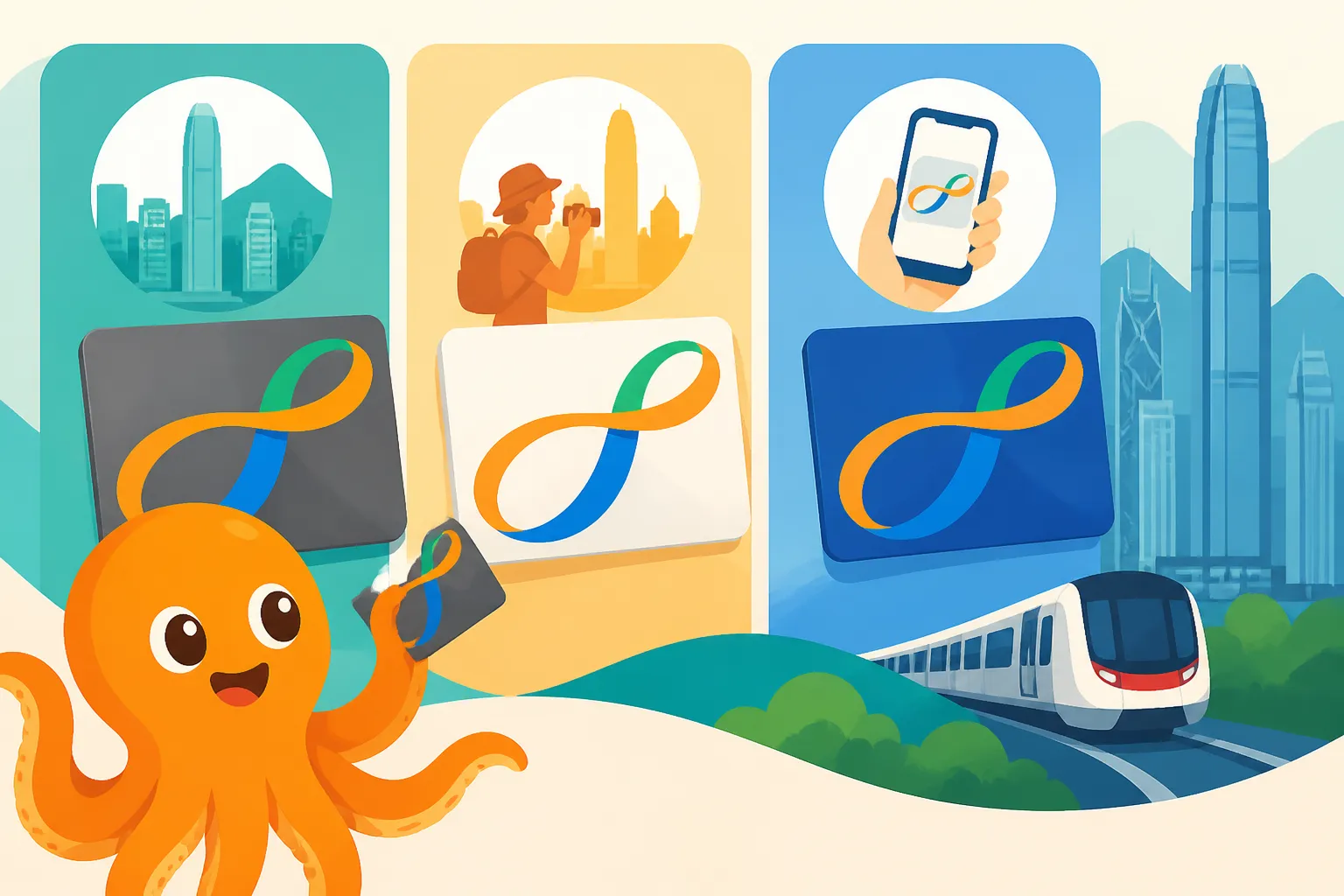
Navigating the various types of Octopus cards can be a bit confusing at first, as there isn't just one "universal" option. Each type caters to slightly different needs, whether you're a long-term resident, a frequent visitor, or someone who prefers everything on their phone. Let’s break down the main contenders so you can pick the one that's perfect for you.
The Standard Octopus Card: The Local's Choice
This is probably the most common type you’ll see locals using. It’s a deposit-based card, meaning when you first get it, you pay a refundable deposit, usually HKD 50, plus the initial stored value you want. For instance, you might pay HKD 150 upfront for a card with HKD 100 stored value and a HKD 50 deposit.
Pros of the Standard Octopus:
- Refundable Deposit: The biggest advantage is that you get your HKD 50 deposit back (minus a small service fee if you return it within 90 days of issue) when you eventually leave Hong Kong or no longer need the card. This makes it very cost-effective for long-term stays.
- Wider Acceptance (Potentially): While all Octopus cards are widely accepted, the Standard Octopus has been around the longest and is deeply integrated into the system.
- Personalisation Options: While not often done by new arrivals, standard cards can be personalized with your name, which can be useful for linking to public transport monthly passes or for easier recovery if lost.
- Longevity: These cards are designed for continuous use over years, making them ideal for residents.
Cons of the Standard Octopus:
- Physical Card: You have another card to carry around, which might not be ideal if you prefer a minimalist wallet.
- Managing Top-ups: While easy, you still need to remember to top it up. This can be mitigated with auto-add services later, but initially, it’s a manual process.
Where to Buy: You can easily pick up a Standard Octopus card at any MTR Customer Service Centre (located at every MTR station), or at major convenience stores like 7-Eleven or Circle K. Just tell them you want a "Standard Octopus card" and how much initial value you'd like to put on it.
The Tourist Octopus (Sold Tourist Octopus): Convenience for Short Stays
For those visiting Hong Kong for a shorter period, the Tourist Octopus, often referred to as the "Sold Tourist Octopus" to differentiate it from the deposit version, is a fantastic option. These cards don't require a deposit; you simply buy the card outright for a set price, which usually includes a small amount of pre-loaded value. They often come with attractive themed designs, making them a nice souvenir!
Pros of the Tourist Octopus:
- No Deposit Hassle: You pay one upfront price and don't need to worry about reclaiming a deposit later. This is incredibly convenient if you're only in Hong Kong for a few days and don't want the fuss of a refund process.
- Immediate Use: Just buy and go!
- Souvenir Value: The unique designs make them a charming keepsake of your trip.
- Availability: Readily available at popular tourist spots and transport hubs.
Cons of the Tourist Octopus:
- Non-Refundable: The card itself cannot be returned for a refund of its purchase price, only any remaining stored value. So, if you're staying longer, a Standard Octopus might be more economical in the long run.
- Higher Upfront Cost: The initial purchase price covers the card itself (e.g., HKD 39-89), which is essentially a non-refundable fee.
Where to Buy: You can find these at the MTR Airport Express Customer Service Centre, many 7-Eleven and Circle K stores, and other select retailers catering to tourists. They’re often displayed prominently with their unique designs.
Mobile Octopus: The Future in Your Hand
For the tech-savvy expat or tourist, the Mobile Octopus is a game-changer. This option allows you to add an Octopus card directly to your mobile wallet, like Apple Pay on an iPhone or Samsung Pay on a compatible Android device. No more physical card required!
Pros of the Mobile Octopus:
- No Physical Card: Reduce clutter in your wallet and one less thing to lose. Your phone is usually with you anyway.
- Direct Top-Up: You can top up your Mobile Octopus directly from your linked credit or debit card through your phone's wallet app or the Octopus App. This means no more hunting for cash or an MTR machine when your balance is low. This is arguably the biggest convenience for many. For specific instructions on how to set this up, check out our guide on Adding the Digital Octopus Card to Your Apple Wallet.
- Enhanced Security: If your phone is passcode-protected, your Octopus is too. If you lose your phone, you can usually suspend your mobile wallet remotely.
- Convenience: Tap your phone or smartwatch against readers, just like a physical card.
Cons of the Mobile Octopus:
- Device Dependency: Requires a compatible smartphone (typically iPhone 8 or newer with the latest iOS, or select Samsung Galaxy models).
- Battery Life: If your phone dies, so does your payment method. Always keep an eye on your battery!
- Initial Setup: While straightforward, it can be a bit more involved than simply buying a physical card, requiring linking payment methods.
- Universal Acceptance (Minor Caveat): While almost all readers accept it, very old readers in some obscure locations might theoretically prefer a physical card, though this is rare in Hong Kong's modern payment landscape.
How to Set Up:
- For iPhone (Apple Pay): Open the Wallet app, tap the "+" icon, select "Octopus," and follow the prompts to add a new card or transfer an existing physical Octopus card (Standard or Tourist, if eligible) to your device. You'll need to link a credit/debit card for top-ups.
- For Samsung Pay: Open the Samsung Pay app, tap "Add," select "Octopus," and follow the instructions to set up your card.
The Mobile Octopus is definitely my preferred option these days, especially with the ease of topping up directly from my phone. It’s part of a broader trend towards digital payments, which is rapidly expanding in Hong Kong.
Getting Your Octopus: Step-by-Step Guide and Practical Tips
So you’ve decided which type of Octopus card is right for you. Now, let’s get down to the nitty-gritty of actually acquiring and using it. The process is designed to be user-friendly, but a few insider tips can make it even smoother.
Purchasing and Initial Top-Up
For most new arrivals, I highly recommend starting with a Standard Octopus Card from an MTR Customer Service Centre. They're accustomed to dealing with non-Cantonese speakers, and the process is very simple.
Step-by-Step at an MTR Customer Service Centre:
- Locate a Centre: These are found at virtually every MTR station. Look for the "Customer Service" sign.
- Approach the Counter: There might be a queue, but it usually moves quickly.
- State Your Request: Simply say, "I'd like to buy an Octopus card," or "Standard Octopus, please."
- Initial Value: The staff will ask how much initial value you want to load. The minimum stored value is usually HKD 50, which, combined with the HKD 50 deposit, means an initial payment of HKD 100. You can, of course, add more, like HKD 100 or HKD 200, making your initial payment HKD 150 or HKD 250 respectively.
- Payment: You'll typically pay in cash for the initial purchase. Hand over the money, and you'll receive your card and any change.
- Ready to Go! Your card is activated and ready for use immediately.
If you opt for a Tourist Octopus, the process is similar at convenience stores, just be clear you want the "Sold Tourist Octopus" (or point to the specific design you like). For a Mobile Octopus, the setup is entirely within your phone’s wallet app, as detailed earlier.
Topping Up Your Octopus: Never Get Stuck!
Running out of funds on your Octopus card right before hopping on a bus or trying to buy a drink can be a real pain. Luckily, topping up is incredibly easy, with both traditional and modern digital methods available. For a deeper dive, check out our guide on Topping Up Your Octopus Card: Cash, App, and Credit Card Auto-Add.
Traditional Top-Up Methods (Cash Only):
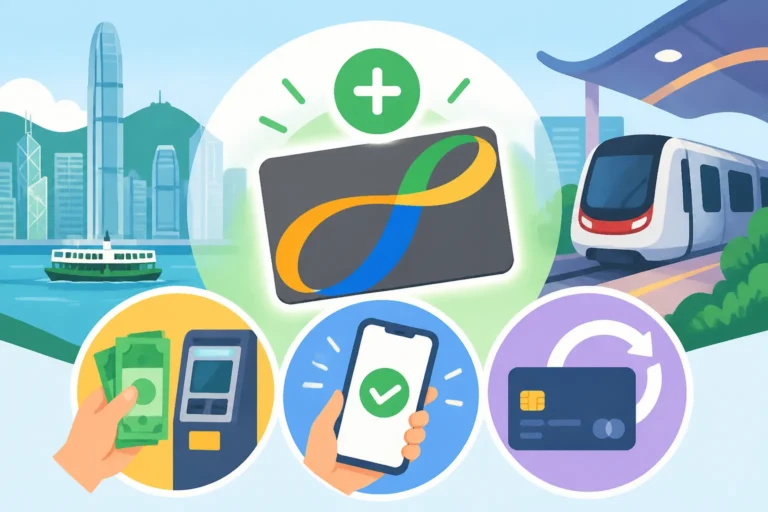
- MTR Add Value Machines (AVM): These machines are found in every MTR station. They accept HKD 50 and HKD 100 banknotes. Simply place your Octopus card on the reader, insert cash, and wait for the transaction to complete.
- Convenience Stores: 7-Eleven, Circle K, and VanGO stores all offer Octopus top-up services. Just hand your card and cash (any denomination) to the cashier and tell them "Top up Octopus, please" (or "八達通增值," if you want to try some Cantonese!).
- Supermarkets and Pharmacies: Many Wellcome, ParknShop, Mannings, and Watsons outlets also provide top-up services at their checkout counters.
Digital Top-Up Methods (for Mobile Octopus and via Octopus App):
- Octopus App: If you have a Mobile Octopus or even a physical card linked to the Octopus App (available on iOS and Android), you can top up directly using:
- Faster Payment System (FPS): Link your bank account for instant transfers.
- Credit/Debit Cards: Link your Visa, Mastercard, or American Express for direct top-ups.
- Bank Apps: Many local Hong Kong bank apps allow you to top up Octopus directly.
- Auto-Add Service: This is a fantastic feature for long-term residents. You can link your Octopus card to a designated credit card, and when your Octopus balance drops below zero, it will automatically top up a pre-set amount (e.g., HKD 250 or HKD 500). This means you truly never run out of funds! You typically apply for this service through your bank or directly with Octopus.
Managing Your Card and Refunds
Even after you've mastered tapping and topping up, understanding how to manage your card, check balances, and eventually get a refund is important.
Checking Your Balance:
- MTR Readers: All MTR gates display your remaining balance after you tap through.
- Octopus App: If your card is linked, the app shows your real-time balance and transaction history.
- Convenience Stores: Most cashiers can check your balance if you ask.
- Octopus Enquiry Machines: Found in MTR stations, these machines give a detailed printout of your last 10 transactions and current balance.
Refund Process for Standard Octopus:
If you have a Standard Octopus card and are leaving Hong Kong, you can get your HKD 50 deposit and any remaining stored value refunded.
- Where to Refund: Go to any MTR Customer Service Centre. For the ultimate convenience before flying out, you can get a refund at the Airport Express Customer Service Centre at Hong Kong International Airport. If you plan to refund your card at the airport, our guide on How to Refund Your Octopus Card Deposit at the Airport provides specific details.
- Fees: A small service fee (currently HKD 11) is charged if you refund a Standard Octopus within 90 days of issue. After 90 days, no fee is charged. If the card has a stored value exceeding HKD 500, you might be asked to fill out a form, and the refund could take a few weeks to be mailed or transferred to you, though most everyday balances are refunded on the spot.
What Happens if You Lose Your Card?
- Physical Card: If you lose a non-personalized Standard or Tourist Octopus, unfortunately, the funds are gone, just like losing cash.
- Personalised or Mobile Octopus: This is where the digital options shine. If you lose a personalized card or your phone with a Mobile Octopus, you can report it to Octopus Customer Service. They can typically suspend the card and potentially recover any remaining value, though this process has certain conditions and timeframes. Our article on What to Do If You Lose Your Personalized Octopus Card has more specific advice.
Maximizing Your Octopus Experience: Beyond Basic Transport
The Octopus card is much more than just a convenient way to pay for your commute. It offers subtle perks and integrates into various aspects of Hong Kong life, and knowing these can further enhance your daily experience.
Octopus Perks and Discounts
While the Octopus doesn't have a traditional "rewards program" in the way a credit card might, it offers several benefits that add up over time, especially if you're a frequent user of public transport.
- MTR Fare Rebates and Interchange Discounts: The MTR system is designed to reward frequent Octopus users. You'll often receive automatic fare rebates when you reach a certain number of rides within a period, or discounts when transferring between different MTR lines or between MTR and other public transport like buses or minibuses within a specific timeframe. These are automatically applied, so you might not even notice them, but they definitely help save a few dollars here and there over the course of a week or month. For more detailed information on navigating the city's rail system, refer to our MTR Network Guide: Maps, Fares, and Interchange Stations.
- Public Transport Fare Subsidy Scheme: For long-term residents and those with an HKID, the government offers a Public Transport Fare Subsidy Scheme. If your monthly public transport expenses exceed a certain amount (e.g., HKD 400), you can claim a subsidy for the excess amount, up to a maximum. This requires a registered Octopus card and can be collected from MTR stations or other designated points. While primarily aimed at residents, it’s worth noting for those planning extended stays. To understand the broader context of getting around, you might find our guide on Public Transport in HK: MTR, Trams, Buses, and Ferries useful.
- Merchant Offers: Occasionally, specific merchants or chains will have special promotions for Octopus payments, such as a small discount on certain items or bonus points for their own loyalty programs. Keep an eye out for these in stores or on the Octopus website. Beyond transit, using the Octopus at convenience stores and supermarkets is a daily norm, and you can learn more about this in Using the Octopus Card at 7-Eleven and Supermarkets.
Troubleshooting Common Octopus Issues
Even the most efficient systems can have a hiccup now and then. Here are a few common issues you might encounter and how to resolve them.
- "Insufficient Funds" at the MTR Gate: This is probably the most common (and slightly embarrassing) scenario. If your card doesn't have enough value to cover the fare, the MTR gate won't open, and you'll hear an alert.
- Solution: Don't panic! Simply go to an Add Value Machine or a Customer Service Centre within the station, top up your card, and then try again. You won't be penalized for trying to exit with insufficient funds.
- Damaged Card: Physical Octopus cards are quite durable, but sometimes they can get bent, scratched, or stop working due to internal damage.
- Solution: Take the damaged card to an MTR Customer Service Centre. They can check if it's genuinely faulty and, if so, transfer the remaining value to a new card. If the card is too damaged to read, they might need to send it for processing, which can take a few weeks, but your funds will eventually be recovered.
- Transaction Disputes: Very rarely, you might notice a discrepancy in your transaction history.
- Solution: Use the Octopus App or an Octopus Enquiry Machine to get a detailed transaction record. If you still believe there's an error, contact Octopus Customer Service directly. They have robust systems for tracking transactions and can investigate.
Comparison Table and Key Considerations
Choosing the right Octopus card really boils down to your individual circumstances. To help you make a quick decision, here’s a handy comparison table.
| Feature | Standard Octopus Card | Sold Tourist Octopus Card | Mobile Octopus (Apple/Samsung Pay) |
|---|---|---|---|
| Initial Cost | HKD 50 deposit + value | Card price (HKD 39-89) + value | Free (transfer existing) or add new |
| Deposit Refundable? | Yes (minus fee if < 90 days) | No | N/A (no physical card) |
| Best For | Expats, long-term residents | Short-term tourists, souvenirs | Tech-savvy users, daily commuters |
| Purchase Location | MTR Stations, 7-Eleven | Tourist outlets, 7-Eleven | Apple Wallet, Samsung Pay apps |
| Top-Up Options | Cash, Auto-add, Octopus App | Cash, Auto-add, Octopus App | Mobile wallet, Octopus App, Cash |
| Physical Card? | Yes | Yes | No |
| Lost Card Recovery? | Only if personalized | No | Yes (via mobile wallet provider) |
Choosing the Right Octopus for Your Stay
- For the Long-Term Expat: The Standard Octopus Card is almost always the best choice. The refundable deposit and seamless integration into daily life make it the most economical and practical option for continuous use. You can also link it to the auto-add service for ultimate convenience.
- For the Tourist (1-2 Weeks): The Sold Tourist Octopus is perfect. The slight upfront cost for the card is a small price to pay for the sheer convenience of not having to deal with a deposit refund when you’re rushing to catch your flight. Plus, it makes for a cool souvenir!
- For the Digital Native / Tech Enthusiast: If you're comfortable using your phone for everything, the Mobile Octopus is incredibly liberating. The ability to top up instantly from anywhere is a massive benefit, and removing one more physical card from your wallet is a definite plus. Just remember to keep your phone charged!
Future-Proofing: Octopus and Digital Payments
Hong Kong is a city constantly evolving, and its payment landscape is no exception. While the physical Octopus card remains incredibly popular, the push towards digital payments is undeniable. The Mobile Octopus is a clear example of this, offering a glimpse into a cashless future. Other digital payment systems, like PayMe, AlipayHK, and WeChat Pay, are also prevalent, especially in retail, but for sheer transport and small-value convenience, the Octopus system still reigns supreme. Understanding these broader payment trends can help you manage your finances in Hong Kong effectively, and you might want to look into Faster Payment System (FPS): How to Use It for Rent and Bills for other digital payment contexts.
Ultimately, getting an Octopus card is one of the first and most crucial steps you'll take to truly feel at home and navigate Hong Kong with ease. It cuts down on fumbling, streamlines your daily routine, and lets you focus on enjoying this incredible city. Add it to your Financial Checklist for Your First 30 Days in Hong Kong – you won't regret it!
Disclaimer
The information provided in this guide is for general informational purposes only and is subject to change. While we strive to keep it accurate and up-to-date, rules and regulations regarding Octopus cards, fees, and services may be updated by the Hong Kong government or Octopus Cards Limited. Always refer to official sources or contact Octopus Customer Service for the most current information.