AlipayHK vs Mainland Alipay: What is the Difference?
As an expat in Hong Kong, you’ve probably seen locals zapping QR codes for everything from their morning coffee to their weekly groceries. It's truly a cash-lite society here, but the world of digital payments, especially when it comes to the Alipay family, can be a real head-scratcher. Many newcomers find themselves utterly confused, wondering if the Alipay they used on a recent trip to Shenzhen is the same as the one everyone uses in Central. Spoiler alert: they’re not, and understanding the differences is crucial to navigating both Hong Kong and mainland China with ease. This guide will walk you through the distinct worlds of AlipayHK and Mainland Alipay, clearing up the confusion so you can pay like a local, no matter which side of the border you're on.
The Core Distinction: Separate Ecosystems for Separate Jurisdictions
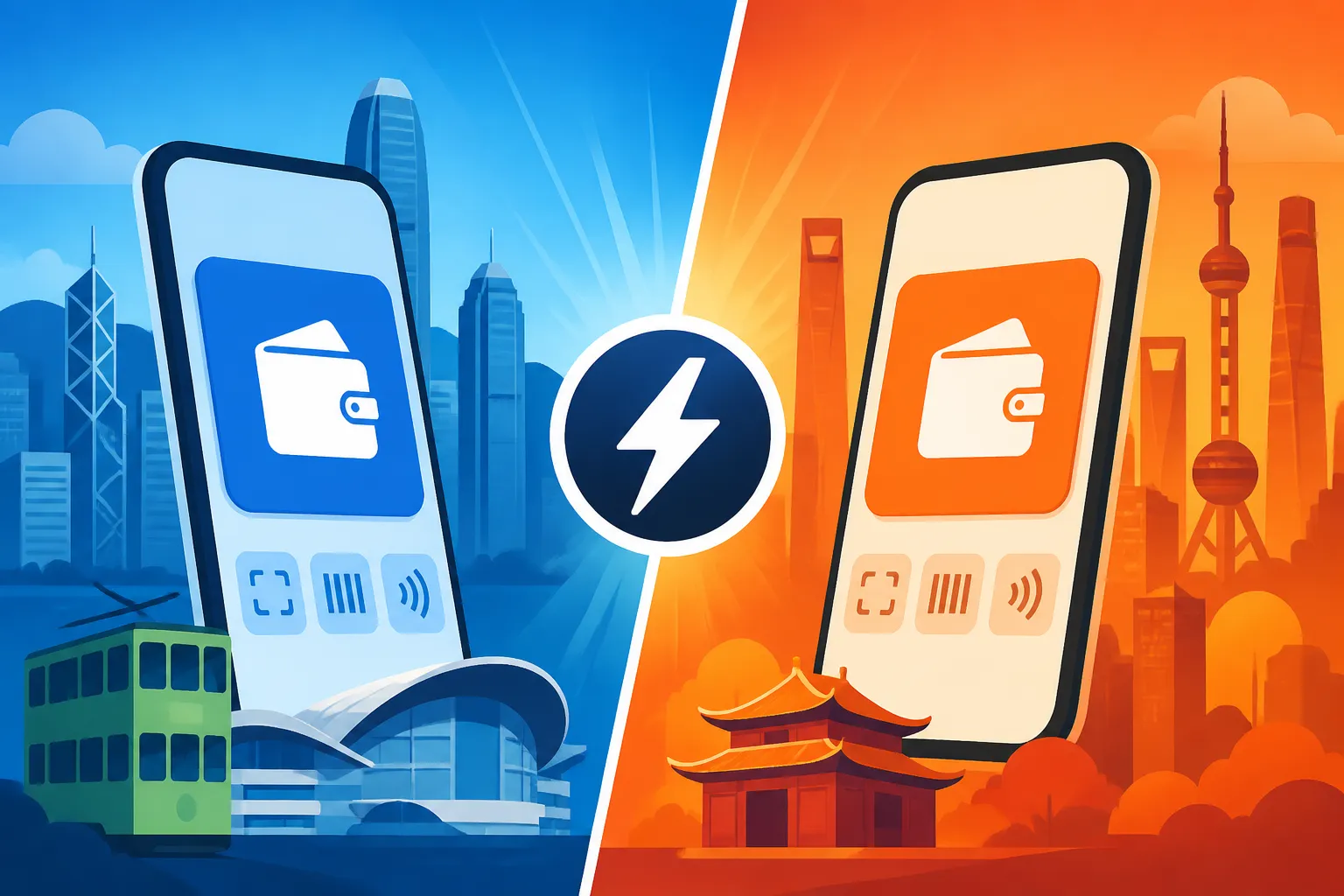
Let's cut right to the chase: AlipayHK and Mainland Alipay are fundamentally distinct entities. Think of them less as two versions of the same app and more like two cousins living in different countries, speaking slightly different languages, and having their own sets of rules. While both share the familiar Ant Group branding and core QR-code payment technology, their operational frameworks, user bases, and regulatory environments are entirely separate. This segregation is less about technical limitations and more about the unique economic and political landscape of Hong Kong versus mainland China.
Why Two Alipays? A Historical and Regulatory Perspective
The existence of two distinct Alipay platforms boils down to a blend of historical development, regulatory autonomy, and market strategy. Hong Kong, as a Special Administrative Region (SAR) with its own currency, legal system, and financial regulations, operates independently from mainland China in many respects. When Ant Group, the fintech giant behind Alipay, decided to expand into Hong Kong, it couldn't simply port its mainland platform over due to these distinct regulatory requirements. Instead, they launched AlipayHK, a separate entity designed specifically to comply with Hong Kong's monetary authority rules and cater to the local market needs.
This parallel development allowed AlipayHK to integrate with Hong Kong's banking infrastructure, embrace the local currency (HKD), and even offer services tailored to the SAR's unique lifestyle, like MTR payments or public utility bills. Meanwhile, Mainland Alipay continued to thrive under the People's Bank of China's regulations, catering to the massive consumer market there. It’s a bit like how different countries have different electrical outlets even though they both deliver power – same function, different specifications for local conditions.
Ownership and Operational Independence
While both platforms ultimately fall under the umbrella of Ant Group, their operational teams and data handling practices are distinct. AlipayHK is operated by Alipay Financial Services (HK) Limited, a licensed Stored Value Facilities (SVF) operator regulated by the Hong Kong Monetary Authority (HKMA). This means it adheres to Hong Kong's robust financial oversight, including data privacy laws and anti-money laundering regulations. Mainland Alipay, on the other hand, operates under the regulatory purview of mainland Chinese authorities, which have different rules regarding data sovereignty and financial transactions. This separation is crucial for expats concerned about how their financial data is managed and which jurisdiction's laws apply to their transactions.
AlipayHK: Your Daily Driver in the SAR
For anyone living in or frequently visiting Hong Kong, AlipayHK is your go-to digital wallet. It’s seamlessly integrated into daily life here, offering convenience that can genuinely simplify your routine. Forget fumbling for cash or counting coins; AlipayHK brings a new level of efficiency to your financial interactions within the city.
What AlipayHK Offers Expats
AlipayHK isn't just a payment app; it's a comprehensive lifestyle platform tailored for Hong Kong. As an expat, you'll find it indispensable for numerous everyday tasks. Its primary function, of course, is mobile payment, allowing you to scan QR codes at checkout counters or display your own code for merchants to scan. Beyond that, it integrates deeply with public services and private vendors. You can use it to pay utility bills like electricity, water, and gas, which often saves you a trip to a convenience store or bank.
It also supports payments for a growing number of public transport options, including the MTR, buses, and even some taxis, making your commute much smoother. Imagine just scanning a code to board the MTR without needing an Octopus card top-up. You can even use it for peer-to-peer transfers to friends, splitting bills for dinner or sending money for shared expenses. Many local food delivery services and online retailers also accept AlipayHK, further cementing its role in your daily life.
Registering and Funding Your AlipayHK Account
Setting up AlipayHK as an expat is relatively straightforward, especially if you have a Hong Kong Identity Card (HKID). You’ll typically download the app from your local app store and register using your Hong Kong mobile number. The key to unlocking its full features and higher transaction limits is real-name verification, which usually involves scanning your HKID. For those new to the city, ensure you register your HKID for subsidized public healthcare rates before diving too deep into other administrative tasks.
Once verified, funding your AlipayHK account is quite flexible:
- Linking a Hong Kong Bank Account: This is the most common and convenient method. You can link your local bank accounts from institutions like HSBC or Standard Chartered, allowing for direct transfers to top up your wallet.
- Credit Cards: You can link your Visa or Mastercard issued by local or international banks. While convenient, be mindful of any potential transaction fees your bank might charge for e-wallet top-ups.
- Cash Top-up: For those who prefer cash, you can top up your AlipayHK balance at numerous convenience stores across Hong Kong, including 7-Eleven and Circle K, as well as designated AlipayHK kiosks. Just tell the cashier how much you want to add, scan your QR code, and pay with cash.
- Faster Payment System (FPS): AlipayHK is integrated with Hong Kong's FPS, allowing you to top up directly from any linked HK bank account quickly and efficiently. For instance, if you receive your salary into your HK bank account, you can easily transfer funds to your AlipayHK wallet using FPS. This is a common method for everyday budgeting in HK.
It’s worth noting that while services like Wise are excellent for international money transfers to your Hong Kong bank account, they don't typically offer direct top-ups to AlipayHK. You'd use Wise to transfer funds into your HK bank, and then link that bank account to AlipayHK.
Ubiquitous Use Across Hong Kong
AlipayHK’s acceptance footprint in Hong Kong is vast and continues to grow. You’ll find its distinctive blue QR codes in:
- Public Transportation: From the MTR gates to many KMB and Citybus routes, and increasingly even in taxis, AlipayHK offers a smooth way to pay your fare. It complements or sometimes even replaces the need for an Octopus card.
- Retail Stores: Major supermarket chains like Wellcome and ParknShop, countless convenience stores, and a huge array of small shops, boutiques, and restaurants accept AlipayHK. You'll even find it in department stores and shopping malls.
- Online Platforms: Many local e-commerce sites and food delivery apps integrate AlipayHK as a payment option.
- Markets and Small Vendors: Even some wet market stalls and street vendors now display AlipayHK QR codes, though cash is still king in some of these smaller operations.
Mainland Alipay: Crossing the Digital Divide
Now, let's talk about Mainland Alipay. This is the original, colossal digital payment platform that revolutionized commerce across mainland China. It’s an absolute necessity if you plan to travel, work, or conduct any significant transactions north of the border. However, getting it to work smoothly for foreigners has historically been a significant challenge.
Mainland Alipay's Features Beyond Borders
Mainland Alipay isn't just about scanning and paying; it's a super-app offering an almost unimaginable array of services. Within mainland China, you can use it for:
- Ubiquitous Mobile Payments: Scan QR codes at virtually any merchant, from high-end malls to street food stalls.
- Ride-Hailing: Integrate with Didi Chuxing for taxis and private car services.
- Food Delivery: Order meals from platforms like Meituan and Ele.me.
- Bill Payments: Pay everything from electricity and water to phone bills and even school fees.
- Travel and Entertainment: Book train tickets, flights, hotels, movie tickets, and even theme park passes.
- Investment and Financial Services: Access wealth management products, insurance, and micro-loans (though these are often restricted for non-Chinese citizens).
Essentially, if it involves money or services in mainland China, Mainland Alipay probably has a hand in it.
The Persistent Verification Challenge for Foreigners
Here’s where many expats hit a wall: full access to Mainland Alipay's features requires real-name verification, which traditionally necessitates a mainland Chinese bank account and a mainland Chinese phone number. Getting these as a foreigner without a long-term visa or established residence can be incredibly difficult. Many expats share frustrating stories of trying to open bank accounts or even get a local SIM card without the correct documentation or a residential address, often being turned away by banks. The system is designed primarily for its domestic user base, and foreign passports often don’t fit neatly into the verification algorithms.
Tourist Solutions: Simplified Access (and Their Limitations)
Recognizing the hurdles for international visitors, Alipay has introduced some solutions to make its mainland app more accessible. The most notable in recent years has been the ability to link international credit cards directly to the Mainland Alipay app.
- Linking International Credit Cards: You can now download the standard Mainland Alipay app and attempt to link your Visa, Mastercard, or JCB credit card. This allows you to pay at merchants that accept Alipay, and the system often handles the currency conversion automatically. This is a massive improvement over past limitations.
- "TourCard" / "Tour Pass" (Historical/Evolving): Historically, there were options like the "Tour Pass" or "TourCard" mini-program within Alipay, allowing foreigners to load funds onto a virtual prepaid card using international cards for a limited period. However, these specific initiatives can change and evolve. It’s always best to check the latest guidance from Alipay or trusted expat forums right before your trip, as such features are subject to frequent updates and might have transaction limits.
While these solutions certainly make it easier for tourists to make payments, they often come with limitations. Transaction limits might be lower than for fully verified accounts, and access to the full suite of "super-app" services like ride-hailing or certain booking functions might still require a mainland bank account. This is where the distinct nature of the two Alipays becomes most apparent.
Deciphering the Core Differences for Seamless Transacting
Let's lay out the fundamental distinctions between AlipayHK and Mainland Alipay in a practical, expat-focused way. Understanding these will save you a lot of grief.
Account Setup and Verification Journey
For AlipayHK, if you have a Hong Kong ID and a local phone number, registration and full verification are quite straightforward. It's designed for residents and long-term visitors here. You scan your HKID, maybe take a selfie, and you're good to go.
Mainland Alipay, for full functionality, still heavily leans on a mainland Chinese ID card, a mainland bank account, and a mainland phone number for real-name verification. While linking international credit cards has simplified payments, achieving the deep integration and higher limits that local users enjoy remains a challenge for most foreigners. This is why many expats living in Hong Kong still find themselves carrying cash or using other payment methods when they cross the border, or relying on friends with mainland accounts.
Funding Your Wallet: Local vs. International Sources
With AlipayHK, your funding options are primarily tied to Hong Kong's financial ecosystem: local bank accounts, Hong Kong-issued credit cards, and cash top-ups in HKD.
For Mainland Alipay, historically, it was almost exclusively mainland Chinese bank accounts or cash top-ups at mainland banks. The recent ability to link international credit cards is a significant shift, but it means your primary funding source is an overseas card, which then gets converted to RMB. This is a vital difference, especially if you're trying to manage your finances between two different currencies.
Where Each Wallet Reigns Supreme
This is perhaps the most practical distinction. AlipayHK is universally accepted in Hong Kong. If a merchant accepts QR code payments, chances are they'll take AlipayHK (or WeChat Pay HK, its local rival). It's built for the Hong Kong market, in Hong Kong Dollars.
Mainland Alipay dominates mainland China. It's the primary, almost sole, digital payment method there. Don't expect to use your AlipayHK app to scan a QR code in Shanghai, and conversely, your Mainland Alipay won't work in a Hong Kong 7-Eleven. This geographic lock is a critical point to remember for any cross-border travel.
Navigating Currency and Fees
AlipayHK operates exclusively in Hong Kong Dollars (HKD). All transactions are in HKD, and your wallet balance is in HKD.
Mainland Alipay operates primarily in Renminbi (RMB), also known as the Yuan (CNY). When you link an international credit card to Mainland Alipay, your bank will handle the currency conversion from your home currency to RMB. This means you'll be subject to your credit card's foreign transaction fees and exchange rates, which can sometimes be less favourable than using a dedicated money transfer service like Wise for larger sums or international transfers to a local bank account. If you're managing money across borders, knowing the implications of these currency conversions and fees is essential, especially when it comes to Taxes for Expats and declaring your income and assets.
Here’s a quick summary of the key differences:
| Feature | AlipayHK | Mainland Alipay |
|---|---|---|
| Primary Jurisdiction | Hong Kong SAR | Mainland China |
| Currency | Hong Kong Dollar (HKD) | Renminbi (RMB/CNY) |
| Verification for Expats | HKID + HK mobile number (relatively easy) | Mainland bank account + phone (traditionally difficult, improving for payments) |
| Funding Methods | HK bank accounts, HK credit cards, cash top-up (HKD), FPS | Mainland bank accounts, now international credit cards (via conversion) |
| Acceptance | Ubiquitous in Hong Kong | Ubiquitous in mainland China |
| Super-App Features | Payments, utilities, transport, P2P | Payments, ride-hailing, food delivery, travel, investments (extensive) |
| Data & Regulation | Hong Kong Monetary Authority (HKMA) | People's Bank of China (PBOC) |
Navigating the Digital Wallet Landscape as an Expat
So, which Alipay do you need? Or do you need both? The answer, like much of expat life, depends entirely on your personal circumstances and habits.
Which One Do You Really Need?
- If you only live in and travel within Hong Kong: You absolutely need AlipayHK. It will simplify your life immensely and is accepted almost everywhere. You don’t need Mainland Alipay unless you frequently cross the border.
- If you frequently travel to mainland China (for work, family, or leisure): You will likely need both. AlipayHK for your daily life in Hong Kong, and Mainland Alipay (with an international credit card linked, or ideally, a mainland bank account if you can manage it) for your trips across the border. Trying to rely on cash or international credit cards exclusively in mainland China can be incredibly frustrating.
- If you are a short-term tourist in Hong Kong: AlipayHK is highly recommended. Many tourists find it convenient for MTR and local purchases. If you also plan to visit mainland China, consider linking your international credit card to Mainland Alipay for those visits.
Remember, having both apps on your phone is perfectly fine. They operate independently, so there’s no conflict.
Alternatives to Alipay for Everyday Transactions
While Alipay is dominant, Hong Kong offers a vibrant digital payment ecosystem, and it’s wise to diversify your options, especially if you hit snags with Alipay verification or preference.
- Octopus Card: This is Hong Kong’s original and still widely used stored-value card. It’s perfect for all public transport, convenience stores, and many smaller shops. You can even get a digital Octopus on your phone now. Consider reading our guide on The Octopus Card: Hong Kong's Essential Transport & Payment Tool to understand its full potential.
- PayMe by HSBC: This peer-to-peer payment app is incredibly popular in Hong Kong, primarily for sending and receiving money between friends. It's directly linked to your local bank account, making it super easy to use for splitting bills or small transfers. Many small businesses also accept PayMe.
- WeChat Pay HK: AlipayHK's main competitor, WeChat Pay HK, operates on a very similar principle. If you're already using WeChat for messaging, it might be a natural fit. It also has a mainland China counterpart (WeChat Pay) which, like Alipay, has separate operational rules for foreigners.
- Credit/Debit Cards: Most larger establishments, supermarkets, and international chains accept Visa and Mastercard. However, smaller local shops and wet markets often prefer cash or QR code payments.
Ultimately, mastering Hong Kong’s payment landscape involves understanding these distinctions. It’s not just about which app to download, but which digital wallet truly fits your unique expat journey here and beyond. When managing your finances, whether it's understanding Hong Kong Tax Guide for Expats: Salaries Tax and Filing (2026) or how to optimize your international transfers, being savvy with your digital wallets is just another piece of the puzzle.
Disclaimer
The information provided in this guide is for general informational purposes only and does not constitute financial, legal, or immigration advice. While we strive to keep the information up-to-date and correct, rules and regulations regarding digital payment systems, banking, and immigration in Hong Kong and mainland China are subject to change without notice. Always consult with relevant authorities, financial institutions, or legal professionals for advice tailored to your specific situation.