Can You Use Medical Vouchers (HCVS) as an Expat Senior?
Finding your feet in the Hong Kong healthcare system as you get older can feel like trying to navigate the Mid-Levels escalators during rush hour—confusing, fast-paced, and occasionally exhausting. I remember sitting with a retired friend in a tiny coffee shop in Sheung Wan as he stared at a private clinic bill, wondering if there was any government relief available for someone who wasn't born here. This guide solves the mystery of the Elderly Health Care Voucher (HCVS) for expat seniors, detailing exactly who qualifies, how to claim your credits, and where the limits lie.
Understanding the Elderly Health Care Voucher Scheme
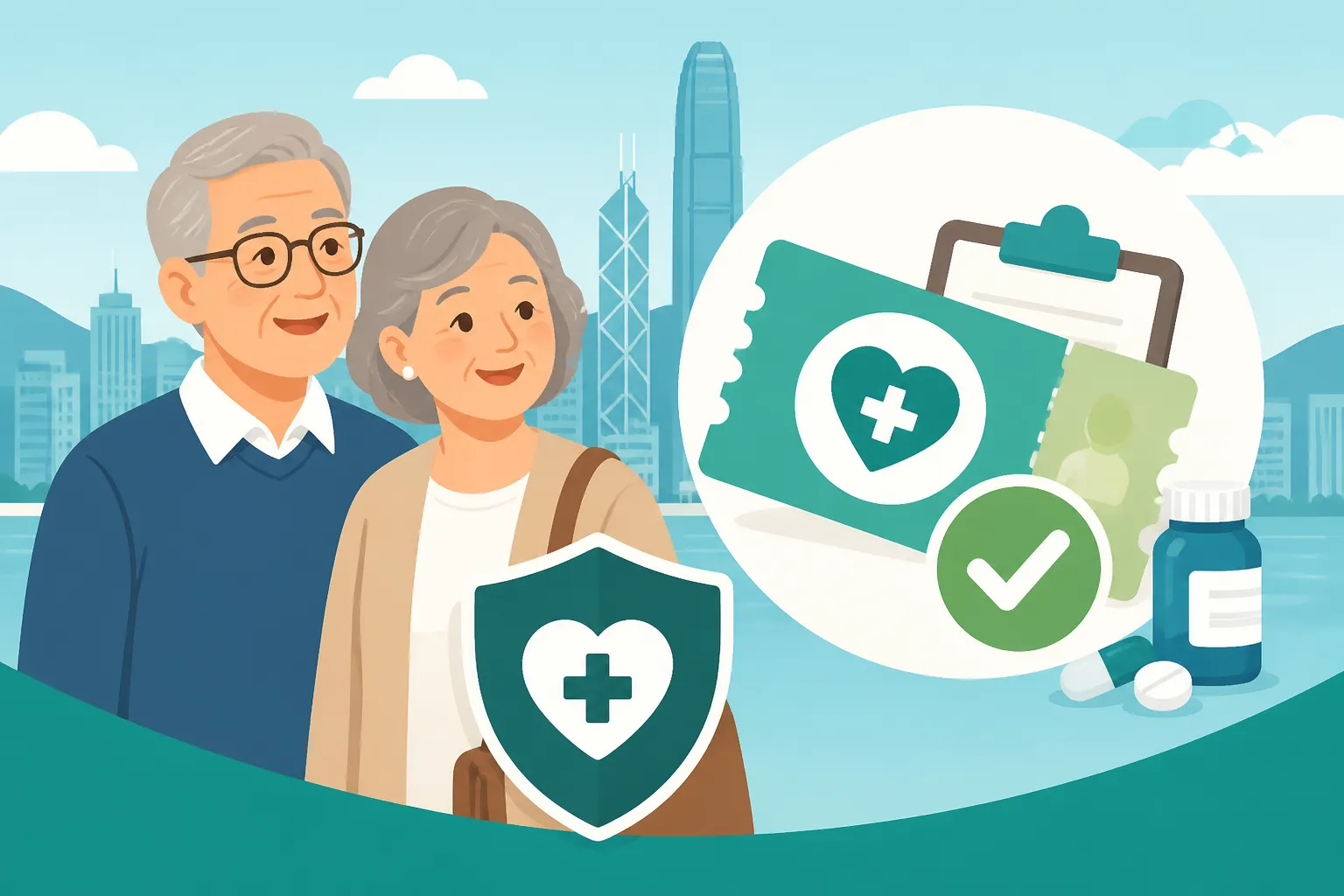
The Elderly Health Care Voucher (HCVS) scheme was introduced by the Hong Kong government with a very specific goal: to encourage seniors to use private primary care services rather than clogging up the public hospital wards for minor ailments. For an expat, the concept of "vouchers" can be misleading. You don't receive a booklet of paper coupons in the mail; instead, the system is entirely digital and linked directly to your Hong Kong Identity Card (HKID).
When you reach the age of 65, the government begins depositing a set amount of digital credits into an account associated with your HKID. In 2026, the standard annual voucher amount is HK$2,000. These credits can be used to pay for—or subsidize—consultations with private doctors, dentists, and even practitioners of Traditional Chinese Medicine (TCM) in HK: A Guide for Foreigners. The beauty of the system is its flexibility, but the frustration often stems from the initial registration and knowing which clinics actually participate in the program.
It is important to remember that these vouchers are intended for primary care, meaning preventative check-ups or treating acute illnesses like the flu. They are not designed to cover major surgeries or long-term hospital stays. For those larger concerns, most expats still rely on comprehensive plans from providers like Cigna Global to ensure they have access to the Private Hospitals in Hong Kong: Admission, Costs, and Insurance without facing astronomical out-of-pocket expenses.
Eligibility Requirements for Expat Seniors
The question I hear most often is: "Do I need to be a Permanent Resident to get these vouchers?" The short answer is usually yes, but let's dive into the "expat reality" of that requirement. To be an "Eligible Person" for the HCVS, you generally must hold a valid Hong Kong Identity Card. However, the system is specifically tied to your status as an "Eligible Person" under the Hospital Authority Fees: Eligible Persons (EP) vs Non-Eligible Persons (NEP) guidelines.
The HKID and Residency Status
To qualify for the HCVS, you must be aged 65 or above and hold a valid Hong Kong Permanent Identity Card. If you are in Hong Kong on a specialized visa—such as a dependent visa or a work visa—and have not yet hit your seven-year mark for Right of Abode, you may find yourself in a gray area. Generally, the vouchers are reserved for those who have established permanent residency. If you are a non-permanent resident, you still have access to the public system at subsidized rates, but the annual HK$2,000 voucher drop is typically restricted to those with the "A" symbol on their HKID, denoting right of abode.
This distinction is a common point of irritation for expat retirees who have moved here to be with children but haven't yet reached the seven-year residency milestone. If you fall into this category, you won't have the digital credits waiting for you. This makes having a solid international insurance backup like SafetyWing even more critical, as it provides a safety net while you wait for your permanent status to kick in. You should also ensure you are Registering Your HKID for Subsidized Public Healthcare Rates as soon as you arrive, even if the vouchers aren't yet available to you.
Age Verification and Documentation
The age of eligibility is strictly 65. The government uses the birth date listed on your HKID to determine when you enter the scheme. On your 65th birthday, you become eligible to use the vouchers for that calendar year. You do not need to "apply" in the traditional sense to start receiving the credits; the account is created automatically in the Central Health Care Voucher Scheme (CHVS) database.
However, your first visit to a participating doctor will involve a "registration" process where the clinic links your physical HKID to the digital system. Many expats get flustered at the reception desk because they expected a letter in the mail. Just bring your HKID to a clinic displaying the HCVS logo, and the staff will handle the backend setup for you.
How the Voucher Credits Accumulate
One of the most user-friendly aspects of the HCVS is that the credits are cumulative. You don't "lose" the money if you don't get sick in a particular year. If you don't spend your HK$2,000 this year, it rolls over to the next. However, there is a ceiling.
The Accumulation Cap
As of 2026, the maximum amount of voucher credits you can hold in your account at any given time is HK$8,000. If you already have HK$7,000 in your account and the new year's HK$2,000 is issued, you will only receive HK$1,000, bringing you to the HK$8,000 cap. The remaining HK$1,000 is effectively forfeited.
This is why it is advisable for expats to use their vouchers for routine maintenance. Don't save them for a rainy day that might never come; use them for your Annual Health Screening Packages (Body Checks): Where to Go or your yearly dental cleaning. It’s better to use the "free" money for prevention than to let it vanish because you hit the cap.
Spending Limits on Specific Services
While you can use the vouchers for various services, there are occasionally pilot programs that offer "bonus" vouchers for specific health goals. For example, the government has previously offered additional credits if you spend at least HK$1,000 on preventative care, like hypertension or diabetes management. Keep an eye on the official HCVS website or ask your GP about the "Primary Healthcare Blueprint" updates, as these can effectively increase your annual spending power.
| Service Category | Typical Usage | Can You Use Vouchers? |
|---|---|---|
| General Practitioner (GP) | Flu, infections, minor injuries | Yes |
| Specialist Consultations | Cardiology, Dermatology, etc. | Yes (if registered) |
| Dental Care | Cleaning, fillings, extractions | Yes |
| Optometry | Eye exams, Prescription glasses | Yes |
| Physiotherapy | Post-injury recovery | Yes |
| Occupational Therapy | Mobility assistance | Yes |
| Hospital Inpatient | Surgery, overnight stays | No |
Where You Can and Cannot Use Vouchers
The HCVS is strictly for the private sector. You cannot use these vouchers to pay for fees at public hospitals or clinics managed by the Hospital Authority. This confuses people because the public system is already so heavily subsidized. The vouchers are meant to give you an alternative to the long wait times in the public sector.
Participating Private Clinics
You can only use your vouchers at clinics that have enrolled in the scheme. Look for the HCVS sticker (a round logo with a blue and orange "v" shape) on the clinic door. Many Finding English-Speaking General Practitioners (GPs) in Central and other expat-heavy areas like Discovery Bay or Repulse Bay are enrolled because they cater to a significant senior population.
Beyond GPs, you can use the vouchers for Dental and Eye Care in Hong Kong: Costs, Clinics, and Coverage. This is particularly helpful because dental care is not subsidized in the public system for adults except for emergency extractions. Using your vouchers at a private dentist for a routine scaling can save you several hundred dollars a year.
Excluded Services and Goods
There are strict rules about what the vouchers cannot buy. You cannot use them to solely purchase medication at a pharmacy or to buy medical equipment like wheelchairs or hearing aids. You also cannot use them to pay for purely cosmetic procedures. The vouchers must be used for a professional consultation. If the doctor prescribes medication during that consultation, the vouchers can cover the cost of the drugs dispensed by that clinic, but you can't take the vouchers to a Watsons or Mannings to buy over-the-counter supplements.
For expats who split their time between Hong Kong and their home country, note that these vouchers are generally only for use within the Hong Kong Special Administrative Region. While there have been pilot schemes for use at specific facilities in the Greater Bay Area (like the University of Hong Kong-Shenzhen Hospital), they cannot be used internationally. This is where a global policy from Cigna Global becomes indispensable, as it travels with you across borders.
The Practical Process: Using Your Vouchers Step-by-Step
Using the vouchers is designed to be "contactless" and paper-free, but the first time can feel a bit bureaucratic. Here is exactly how it goes down at the clinic.
- Check Participation: Before you book, ask, "Do you accept the Government Elderly Health Care Vouchers?" Even if they have the sticker, it’s good to confirm.
- Present Your HKID: When you arrive at the reception, hand over your HKID. The staff will swipe it to check your balance in the digital system.
- The Consultation: See your doctor or specialist as usual.
- Signing the Consent Form: After the visit, the staff will generate a consent form. It will state how much of the bill is being covered by the vouchers and what the remaining balance is (if any). You must sign this—it’s the government's way of ensuring the clinic isn't fraudulently claiming your credits.
- Record of Use: You will be given a small slip of paper (or an SMS/email notification) showing how many vouchers you used and your remaining balance.
If your bill is HK$800 and you have HK$2,000 in vouchers, you can choose to pay the full HK$800 with vouchers, leaving a HK$0 balance to pay in cash. Alternatively, if you want to save some vouchers for a later date, you can pay HK$400 in vouchers and HK$400 in cash. The choice is yours.
Why Expats Still Need Private Insurance
While the HCVS is a fantastic "bonus" for expat seniors, it is by no means a replacement for health insurance. A single MRI or a specialist consultation for a chronic condition can easily wipe out your entire HK$8,000 accumulated balance in one afternoon.
Covering the Gap
Most expat-friendly GPs in Central or Tsim Sha Tsui charge between HK$600 and HK$1,200 per consultation. If you require diagnostic tests or follow-up visits, the annual HK$2,000 subsidy from the government covers perhaps two or three visits. For anything more serious, you are back to paying full private rates. This is why maintaining a policy with SafetyWing or Cigna Global is the standard practice for the international community. These vouchers act as a "deductible reducer" rather than a primary source of funding.
Navigating Chronic Conditions
As we age, managing issues like hypertension or high cholesterol becomes a monthly expense. While you can use vouchers for your regular GP check-ups, the cost of specialized drugs or frequent monitoring can exceed the government’s contribution. By combining the HCVS with a private insurance plan, you can use the vouchers for your day-to-day outpatient visits and rely on your insurance for inpatient care or high-cost specialist referrals. If you are just starting your journey in the city, check out the Healthcare in Hong Kong: Public vs Private Systems Explained (2027) for a broader view of how these pieces fit together.
Common Pitfalls and Tips for Expat Seniors
After years of helping newcomers, I’ve noticed a few recurring themes where people get tripped up.
- The Joint Account Myth: Unlike some other social schemes, you cannot "pool" vouchers with your spouse. Your HK$2,000 is yours, and theirs is theirs. You cannot use your credits to pay for your partner's dental work.
- Optometry Limits: While you can use vouchers for eye exams and glasses, there is often a cap on how many credits can be used specifically for optometry in a two-year period (currently HK$2,000 every two years). This is to prevent people from spending their entire balance on expensive designer frames.
- Checking Your Balance: You don't have to go to a clinic to check your balance. You can check it online through the HCVS website or the "eHealth" mobile app. I highly recommend downloading the eHealth app; it’s the most efficient way to track your medical records and voucher balance in one place.
- The 7-Year Wait: If you are 65 but have only lived in HK for four years, don't get discouraged. You won't get the vouchers yet, but you still benefit from the world-class public hospitals in Hong Kong: admission, Costs, and insurance system. Just be sure your visa status allows you to be classified as an "Eligible Person" to avoid the much higher "Non-Eligible" fees.
Disclaimer
The information provided in this guide is for educational and informational purposes only and does not constitute legal, financial, or professional medical advice. Eligibility for government schemes in Hong Kong is subject to change by the Department of Health. Always verify your current status and the latest policy updates directly with the Official Health Care Voucher Scheme website or the Hong Kong Immigration Department. Under no circumstances should this guide be used as a substitute for professional insurance consultation or medical diagnosis.