Can Husbands Stay Overnight in HK Public Maternity Wards?
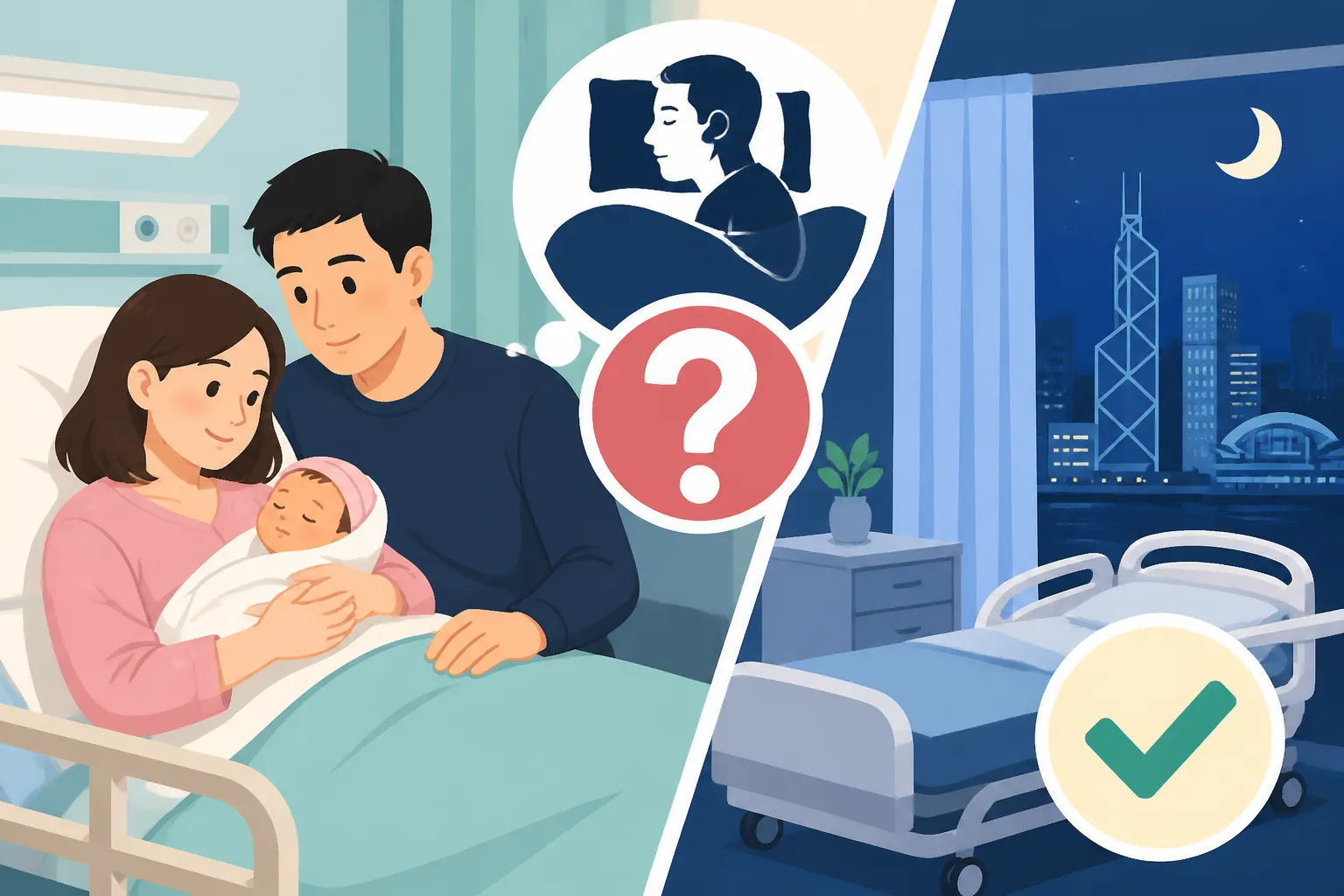
The moment the nurse points to the clock and tells your husband it is time to leave, just hours after you have welcomed a new human into the world, is a sharp reality check. I remember that sinking feeling at Queen Elizabeth Hospital when the adrenaline was fading and the realization hit that I was on my own for the night. This guide breaks down the strict overnight stay policies in Hong Kong public maternity wards and explores the practical alternatives for expat families.
The Structural Reality of Public Maternity Wards in Hong Kong
When you step into a public maternity ward managed by the Hospital Authority, the first thing you notice is the efficiency and the lack of space. These wards are designed to provide high-quality medical care to a massive population at an incredibly low cost, but that efficiency comes at the expense of personal privacy and family comfort. Unlike the private birthing suites you might see in Western countries or even in Hong Kong’s private sector, public wards are communal.
The Open Ward Configuration
Most public maternity units, such as those at Prince of Wales or Queen Mary Hospital, utilize an open-ward layout. This means you will likely be in a room with four to eight other new mothers, separated only by thin curtains. In this environment, having men present overnight is considered a significant privacy violation for the other women in the room, many of whom are breastfeeding or recovering from surgery. This cultural and structural norm is the primary reason why husbands are required to leave once the official visiting hours conclude.
Visiting Hours vs Overnight Presence
In the public system, the distinction between "support during labor" and "postnatal stay" is very clear. While the system has become more progressive regarding partners being present in the labor room, that support ends the moment you are wheeled into the postnatal ward. Typically, visiting hours are restricted to specific windows, often between 6:00 PM and 8:00 PM, though these can change based on current health protocols. Outside of these windows, the ward is a female-only space, staffed by midwives and nurses. If you are a first-time mother, the prospect of navigating those first 24 hours alone can be daunting, but it is the standard procedure for anyone utilizing the Hospital Authority (HA) Guide: Accessing Public Healthcare for Expats services.
Why Husbands Generally Cannot Stay Overnight
It is easy to feel frustrated by these rules, especially when you are exhausted and just want your partner’s help with a crying newborn. However, understanding the "why" behind the policy can help manage the emotional transition. The public health system operates on a philosophy of collective well-being over individual preference.
Privacy and Cultural Sensitivities
Hong Kong is a densely populated city where modesty and privacy in shared spaces are highly valued. In a ward where mothers are frequently undressing to breastfeed or having their surgical wounds checked by nurses, the presence of a non-medical male can cause significant discomfort to others. The Hospital Authority prioritizes a "safe space" for all recovering women. This is a stark contrast to what you might find if you look into Private Hospitals in Hong Kong: Admission, Costs, and Insurance, where private rooms are the norm and partners are welcomed.
Resource and Staffing Constraints
Public hospitals are often operating at or near 100% capacity. There is simply no physical room for extra beds or chairs for partners to sleep on. Furthermore, the nursing staff is stretched thin; their focus is on the clinical safety of the mothers and babies, not on managing the needs of additional family members staying in the wards. For those who find this deal-breaker, exploring Maternity Packages at Private Hospitals: What to Budget in 2026 early in the pregnancy is essential, as these facilities allow for 24/7 partner presence.
Exceptions to the Rule and Private Room Options
While the general rule is a firm "no" for overnight stays in public wards, there are a few nuances that every expat should know. These exceptions are rare and often depend on the specific hospital and your clinical situation.
Private and Semi-Private Rooms in Public Hospitals
Some public hospitals, like Queen Mary (the teaching hospital for HKU), do have a very limited number of private or semi-private rooms available for "Eligible Persons" (those with a valid HKID). If you manage to secure one of these rooms, the rules are slightly more relaxed, and in some cases, a female companion might be allowed to stay, though it is still rare for husbands to be granted overnight access even here. You should check the current Hospital Authority Fees: Eligible Persons (EP) vs Non-Eligible Persons (NEP) to see the price jump for these "private" upgrades within the public system.
Labor and Delivery Support
It is important to note that husbands are generally allowed to stay with the mother during the active stages of labor in the delivery room. This is known as "husband's presence" and is encouraged as long as the delivery is proceeding normally. However, if an emergency C-section is required, the husband is usually asked to wait outside. Once the baby is born and the initial skin-to-skin contact is over, the mother is moved to the ward and the husband is sent home. For many, this sudden separation is the hardest part of the Maternity and Childbirth in HK: Public Wards vs Private Packages experience.
Comparing the Birth Experience: Public vs Private
If having your partner stay overnight is a non-negotiable part of your birth plan, you need to look at the differences between the systems immediately. Many expats choose a hybrid approach or opt for private insurance like Cigna Global to cover the substantial costs of a private hospital.
| Feature | Public Maternity Ward | Private Maternity Suite |
|---|---|---|
| Overnight Stay for Husband | Strictly Prohibited | Encouraged / Standard |
| Room Type | Shared (4-8 people) | Private or Semi-Private |
| Visiting Hours | Highly Restricted (e.g., 2 hours/day) | Flexible / 24 Hours |
| Cost (HKID Holders) | Approx. HKD 120 per day | HKD 60,000 – HKD 200,000+ |
| Midwifery Support | High (Staff-led) | Personalized (Doctor-led) |
| Breastfeeding Support | Strong (WHO Baby-Friendly) | Variable (Depends on hospital) |
Managing Expectations for Your Birth Plan
If you decide to stick with the public system for its excellent medical safety record and low cost, you must prepare mentally for the solo nights. This is especially true for those who have had a Prenatal Care via the Maternal and Child Health Centres (MCHC) experience, which is equally efficient but minimalist.
Preparing for the Solo First Night
The first night is usually the most intense. You will be learning to latch a baby, your body will be recovering, and you will be surrounded by the sounds of other babies crying. Pack a high-quality power bank, noise-canceling headphones (to use when the baby is in the nursery or sleeping), and plenty of easy-to-eat snacks. Your husband can bring fresh supplies during the brief visiting hours. Reviewing Public Maternity Wards: What to Pack for Your Hospital Bag will ensure you have everything you need to be self-sufficient.
Communication Strategies
Since your partner cannot be there to help with the baby or offer emotional support in person, use technology. Ensure you have a local SIM card with plenty of data. Most public hospitals have Wi-Fi, but it can be spotty in the older wards. Video calls are a lifeline. If you are worried about the medical jargon or the instructions from the nurses, keep a notebook by your bed to write down questions for your husband to research or to ask the doctors during the morning rounds when he isn't there.
Insurance and the Private Alternative
For many expat families, the "no-husband" rule in public hospitals is the primary driver for seeking private care. However, private maternity care in Hong Kong is among the most expensive in the world. This is where having a robust international health insurance policy becomes critical.
Companies like Cigna Global often have maternity modules that cover private hospital packages, but these usually come with a 10-to-12-month "waiting period." This means you must have the policy in place long before you conceive. If you are already pregnant and looking for options, some providers like SafetyWing offer specialized travel or expat medical insurance that can help with complications, though routine maternity might be excluded.
If you are currently evaluating your options, look into Private Health Insurance Plans Beyond VHIS for Expat Families. While the Voluntary Health Insurance Scheme (VHIS): Coverage and Tax Benefits is great for general health, the limits on maternity are often too low for a full private hospital birth. Cigna Global offers much higher limits that can cover the exorbitant fees at Matilda or the Hong Kong Adventist Hospital, where your husband will have a sofa bed right next to you.
Essential Preparation for Expats in the Public System
If the public system is your path, make sure your administrative ducks are in a row. The system is incredibly rigid; if you don't have the right paperwork, your partner might even struggle to get into the delivery room.
- Registration: Ensure you have completed Registering Your HKID for Subsidized Public Healthcare Rates. Without this, you will be charged the "Non-Eligible Person" rate, which is thousands of dollars more per day.
- The App: Download the "HA Go" app. This is how you will manage appointments and, in some hospitals, even see your bills. It is a vital tool for Using the HA Go App for Booking Public Outpatient Clinics.
- The Blood Test: Make sure your partner has his blood group and relevant screening documents ready if the hospital requires them for delivery room access.
- The Departure: Discuss the Registering Your Newborn's Birth at the HK Births Registry process beforehand, as your husband will likely be the one doing the legwork while you are recovering at home after discharge.
Relying on the public system for maternity is a trade-off. You are getting world-class obstetricians and neonatal intensive care units (NICU) that are often better equipped than private ones, for a fraction of the price. However, you are trading away the comfort of having your partner by your side during those first few nights of parenthood. For some, the cost savings and medical peace of mind are worth it; for others, the support of a partner in a private room is worth every cent of a Cigna Global premium.
Frequently Asked Questions About Public Postnatal Wards
Can my husband bring me food?
Yes, usually during visiting hours. The food in public hospitals is famously "functional" (lots of congee and steamed rice). Most expat mothers rely on their partners to bring in nutritious, appetizing meals.
Will the nurses help me with the baby at night?
Public hospitals in Hong Kong are strong proponents of "rooming-in," meaning the baby stays with you. While the midwives will help with breastfeeding and medical checks, they expect you to handle the basic care of the infant. This is why the absence of a husband is felt so acutely.
What if I have a C-section?
The rule remains the same. Even if you have limited mobility after a major surgery, you will be expected to manage in the ward without a personal companion. The nursing staff will assist with the baby more frequently in these cases, but your husband will still be asked to leave at the end of visiting hours.
Are there any "family-friendly" public hospitals?
Some hospitals are more modern than others. For example, the new towers at certain hospitals have slightly better facilities, but the core policy regarding male partners staying overnight is a Hospital Authority-wide regulation that rarely sees exceptions.
If you are still on the fence, I highly recommend visiting the Top Private Hospitals in Kowloon: Baptist, St. Teresa's, and Union or those on the Island to see the difference in room style. For many, the visual of a shared public ward is enough to make them reconsider their insurance options with SafetyWing or Cigna Global.
Disclaimer
This guide is for informational purposes only and reflects the general policies of the Hong Kong Hospital Authority as of 2026. Hospital policies can change due to public health situations or individual facility upgrades. Always verify current visiting hours and partner policies directly with your assigned hospital during your prenatal check-ups.